The best RV trips in the country are not lists of parks. They are loops, because an RV rewards routes that never backtrack. The great American drives cluster into a handful of archetypes, and which one fits you depends less on scenery than on two numbers: your rig’s length and how far ahead you booked. There is a third number most guides skip, which is the distance from your driveway to the start of the loop, and it is the one that decides whether you drive there or have the rig shipped and fly.
The Five Loops That Earn It
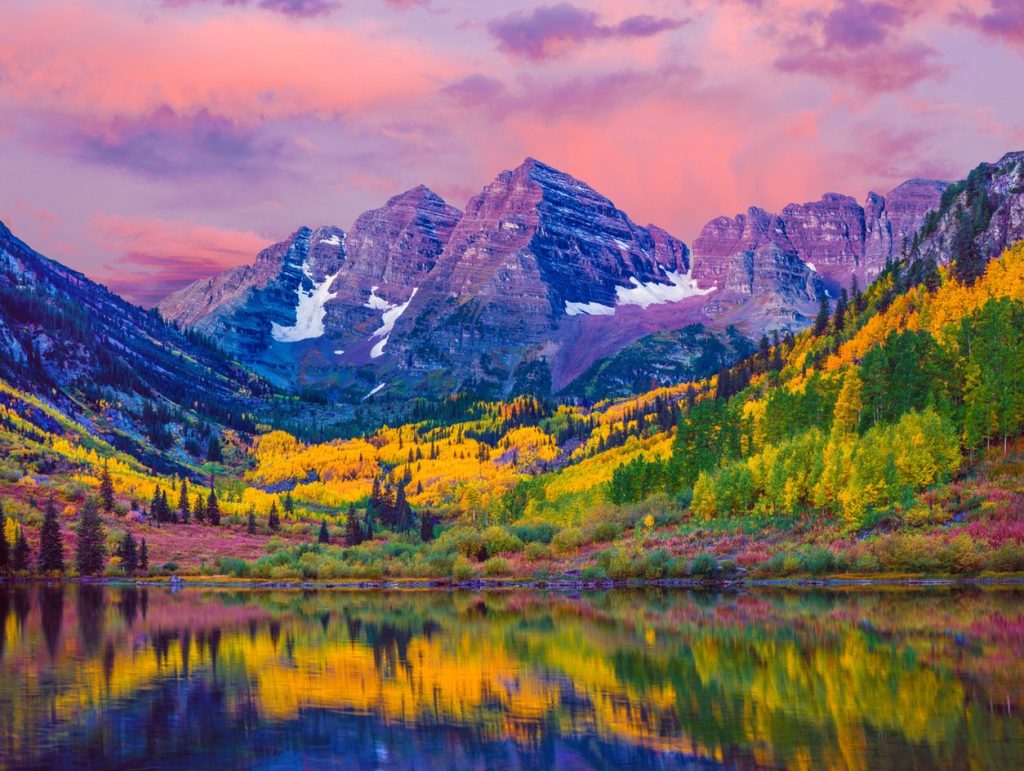
- Utah’s Mighty Five. Zion, Bryce, Capitol Reef, Arches and Canyonlands in one arc, with Moab as the natural midpoint. Best in spring and autumn.
- The Pacific Northwest coast. Olympic, the Oregon coast and the redwoods, with Crater Lake as the inland detour. Summer only for the high country.
- The Blue Ridge and Smokies. Shenandoah, the Parkway and Great Smoky Mountains, at its best in October.
- The Great Lakes circle. Michigan’s two peninsulas, Pictured Rocks and the Wisconsin shore. A summer loop with real distances between stops.
- The desert Southwest. Grand Canyon, Sedona, Joshua Tree and Death Valley, a winter loop when everywhere else is closed.
The Two Numbers That Decide Everything
Length first. Many national park campgrounds cap combined length in the low thirties of feet, and some of the most beautiful sites take nothing over twenty-five. A forty-foot fifth wheel sees a different set of parks from a twenty-four-foot Class C, and the loop should be chosen with that in mind rather than discovered at the entrance station. Booking window second. Federal campground reservations open months in advance and the popular ones fill within minutes of opening. A loop planned in February for July is a loop that will happen. One planned in June is a loop of private campgrounds outside the parks.
The Third Number: Distance to the Start
An owner in Ohio who wants the Mighty Five has 1,700 miles of interstate before the first red rock, at RV fuel mileage, at RV speeds, over the Rockies in whatever weather the calendar delivers. That is four days each way before the trip begins and after it ends, and for many owners it is the reason the loop stays on the list rather than happening.
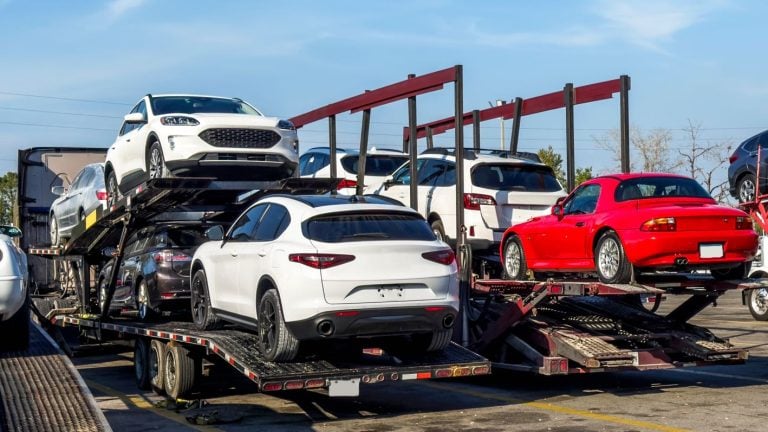
The alternative is to ship the rig to the start and fly. A motorhome can travel by driveaway, with a qualified driver operating it to a campground or a dealer near the trailhead. A travel trailer or fifth wheel ships as a towed unit behind a carrier’s tractor, or on a flatbed if it cannot be towed. Our RV and camper transport page explains both methods and the equipment involved. The owner flies to Salt Lake City, collects the rig, drives the loop that was the point of the trip, and either ships it home from the far end or has it shipped back from where the loop closed.
Motorhome or Towable: What Changes
A motorhome moving by driveaway has to be road legal for the trip: current registration and insurance, sound tires, working lights, and enough fuel to reach the first stop. The driver adds highway miles to the odometer, which some owners accept and some do not, and the coordinator can quote a flatbed alternative for the ones who do not. A travel trailer or fifth wheel is a towed load, so the hitch type, the brake controller compatibility and the tire condition decide which tractor is sent. Both kinds need the true travel height, including rooftop air conditioners, antennas and solar panels, because a height error is a bridge problem on the route rather than a paperwork problem at pickup. Propane is turned off at the tank for either method.
How an RV Ships
Preparation is the same for either method. Empty and clean the tanks, turn the propane off at the tank, secure every cabinet and drawer, retract the slides and the awning, and remove anything loose from the roof. Give the coordinator the true travel height, including air conditioners and antennas, because that decides the route. Photograph the rig on all sides and the roof if you can reach it, the day before pickup. The bill of lading at pickup and delivery is the record.
Delivery goes to a campground with a lot a large truck can enter, a dealer, or a storage yard near the start of the loop. Your coordinator confirms which before dispatch. Large rigs may need oversize permits on some routes, and those are itemized in the quote before you confirm.
Timing It
RV transport demand peaks from May through August, alongside the parks themselves. Book three to four weeks ahead for a summer start and two to three in the shoulder seasons. Match the delivery to your campground reservation with a day of slack, so a weather delay on the carrier’s route does not cost you a site you booked in February.
Common Questions
Can a motorhome travel with things inside? Personal belongings are not covered by carrier cargo insurance. Fixed equipment stays. Loose gear should travel with you or be secured and declared.
Driveaway or flatbed for a motorhome? Driveaway is usually the practical choice for an operable motorhome and adds miles to the odometer. Flatbed suits a rig that does not run or an owner who wants no miles added.
How is a fifth wheel shipped? As a towed unit behind a carrier’s tractor with the right hitch, or on a flatbed if the running gear or the dimensions rule out towing.
Can I ship the rig one way and drive it home? Yes. Many owners ship to the far start and drive the loop toward home, or the reverse.
Do oversize rigs need permits? Some do, depending on width and height and the states on the route. Any permit cost is itemized in the quote before you book.
Get a Quote
RVs go through the freight desk. Put the rig, its dimensions, both addresses and your dates into the freight quote calculator, or call (866) 452-3657 and a coordinator who moves rigs to the parks every summer will plan it with you. No deposit is taken until a carrier is assigned to your order.