
Box Truck vs. Cargo Van: The Quick Answer
Choose a box truck when you need volume and dock-style loading: a separate cargo box on a truck chassis, a roll-up rear door, and often a lift gate or ramp, with the biggest 26-foot models rated to around 26,000 pounds gross vehicle weight. Choose a cargo van when you need a smaller, drivable-anywhere workhorse: an enclosed van body you can load through rear and side doors, park in a normal spot, and run all day on delivery routes. The dividing line for most businesses is simple: bulky freight, pallets, and furniture favor the box truck; parcels, tools, and trades work favor the van.
Below is what each vehicle actually is, the differences that matter, and how to move either one across the country when you buy, sell, or relocate it.

What Is a Box Truck?
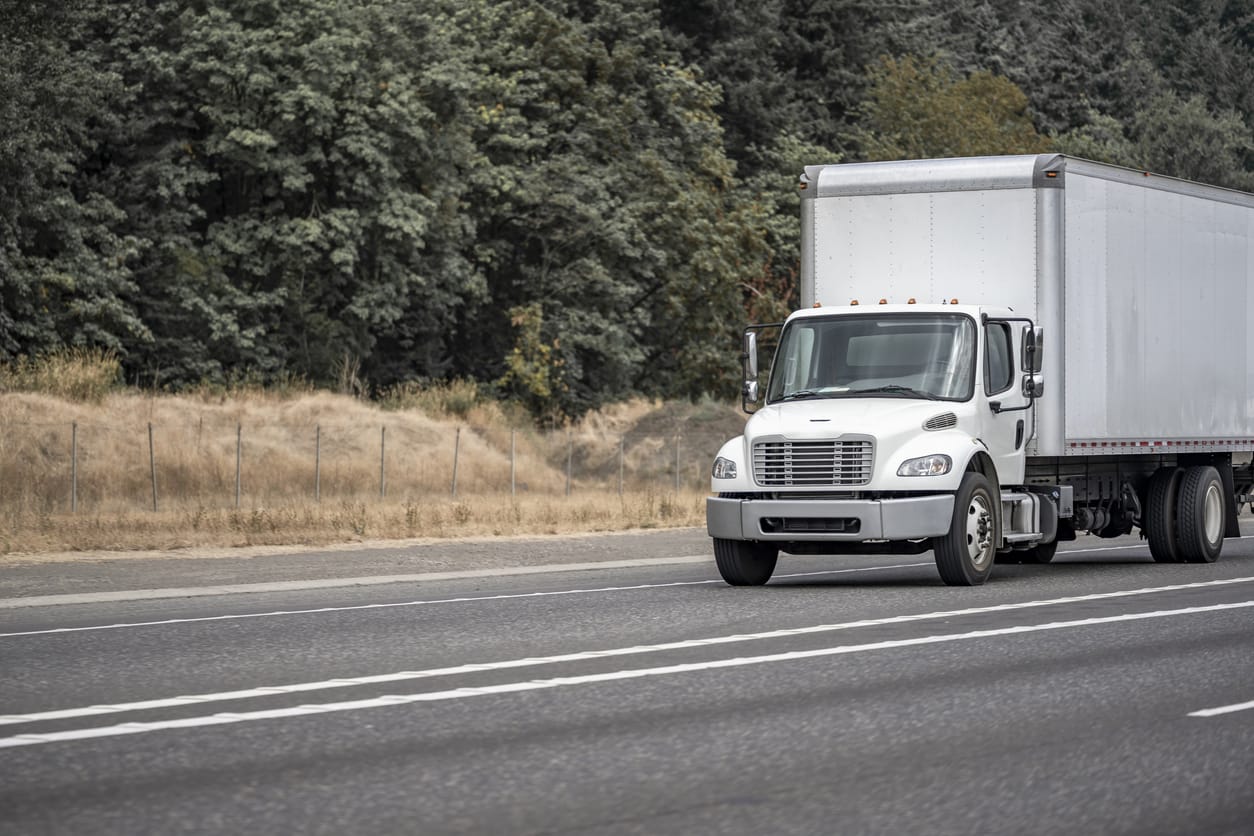
A box truck, also called a straight truck or cube truck, is a truck chassis carrying a separate, rectangular cargo box behind an enclosed cab. You typically cannot walk from the cab into the box; access is through the roll-up rear door, often with a lift gate or pull-out ramp for dock-free loading. Common lengths run roughly 10 to 26 feet, and payloads range from about 3,000 pounds in the small models to roughly 10,000 pounds in the largest.
Box trucks are the workhorses of local freight and moving: furniture, appliances, palletized goods, dry and refrigerated freight. In the U.S., models at or under 26,000 pounds GVWR can generally be driven without a commercial driver’s license, which is exactly why the 26-foot rental truck is the size everyone recognizes.
What Is a Cargo Van?
A cargo van is a light-duty commercial van with a unibody design: cab and cargo area in one shell, rear and sliding side doors, usually no rear windows or back seats. The dominant models are the Ford Transit, Ram ProMaster, Mercedes-Benz Sprinter, and Chevrolet Express; “Sprinter” is technically the Mercedes-Benz nameplate, though people casually apply it to the whole high-roof class.
Vans win on maneuverability, fuel economy, and access: they fit in standard parking spaces, load at bumper height, and high-roof versions let workers stand inside. Trades outfit them with shelving and racks; couriers run them because a driver can be in and out of the side door dozens of times a day. Fleet buyers replace them on short cycles, which keeps the used market full of late-model examples.

Key Differences That Matter
- Capacity: box trucks carry more, in both volume and weight. A 26-foot box swallows a three-bedroom move; a cargo van tops out around a studio apartment or a day’s parcels.
- Loading: box trucks load like a dock: roll-up rear door, lift gate or ramp, box floor at truck height. Vans load like a car: bumper-height floor through rear or side doors, easier for one person and small items.
- Body construction: the box is a separate compartment from the cab on a box truck; a van is one continuous body, which is why vans drive more like large cars.
- Drivability and parking: vans fit residential streets, garages with clearance, and normal spaces. A box truck needs planning in dense areas.
- Licensing: both are generally drivable on a regular license at or under 26,000 pounds GVWR; the largest box trucks sit right at that line.
- Operating cost: vans cost less to buy, fuel, and insure. The box truck earns its cost only when you actually need its capacity.

Which One Is Right for Your Business?
- Movers, furniture and appliance dealers, freight routes: box truck. The lift gate and cube capacity pay for themselves.
- Contractors, electricians, plumbers, mobile services: cargo van. Secure tool storage, shelving, and go-anywhere size.
- Couriers and last-mile delivery: cargo van for parcels; step up to a box truck only if you routinely deliver bulky items.
- Growing fleets: many businesses run both and dispatch by load. Nothing says you must choose once.
Licensing, DOT Numbers and Who Can Drive What
This is the practical dividing line between the two, and it catches new operators more often than any specification does.
A cargo van and most box trucks under 26,001 pounds gross vehicle weight rating can be driven on an ordinary license. Cross that figure and the driver needs a commercial license, which is why so many rental and vocational box trucks are rated at 25,999 pounds. If you are buying, look at the GVWR plate rather than the marketing copy.
Operating authority is separate from licensing. A vehicle used commercially in interstate commerce generally needs a USDOT number, and that threshold sits at 10,001 pounds gross, which a loaded box truck passes easily and a heavily loaded van can reach. Carrying certain cargo, or operating for hire, brings further requirements.
Weight also brings inspections, hours of service rules for the driver, and in many states fuel tax reporting on interstate runs. None of it is difficult, but it is the difference between a van you simply drive and a truck you operate as a regulated vehicle, and it belongs in the purchase decision rather than being discovered afterwards.
What Each One Actually Costs to Run
Purchase price is the smaller half of the comparison.
A cargo van returns something in the mid to high teens of miles per gallon in real use; a box truck is roughly half that, and a diesel box truck is heavier on maintenance when it needs it. Tires are larger and more expensive. Commercial insurance costs more on the heavier vehicle, and parking a 26 foot box truck is a genuine cost in a city where a van fits an ordinary space.
Against that, a box truck carries several times the volume, which changes how many trips a job takes. The honest comparison is cost per delivery rather than cost per mile, and for a business doing dense urban drops the van frequently wins even though it looks less capable on paper.
Need the Truck or Van Moved? That Is Our Job
Bought a box truck at auction two states away, relocating a fleet, or selling a van to an out-of-state buyer? Ship A Car, Inc. transports commercial vehicles nationwide: cargo van shipping, box trucks, and full fleet relocations. Driving a newly purchased work vehicle hundreds of miles adds engine hours, fuel, and a day of your time; a transport quote is usually the smarter math.
Frequently Asked Questions
Do you need a CDL to drive a box truck?
Generally not at or under 26,000 pounds GVWR, which covers the common 26-foot rental class. Above that threshold, yes. State rules and endorsements can vary, so verify for your configuration.
How much can a cargo van carry?
Payloads commonly run from roughly 1,500 to 4,000 pounds depending on model and configuration, with cargo volumes up to about 400-500 cubic feet in extended high-roof vans.
Can a box truck or cargo van be shipped instead of driven?
Yes. Smaller vans ride standard carriers; taller box trucks move on flatbed, step-deck, or specialized equipment depending on height and weight, the same way we handle dump trucks and other work vehicles.
Which is cheaper to operate?
The cargo van, consistently: purchase price, fuel, insurance, and maintenance all run lower. Choose the box truck for capacity, not economy.
The Bottom Line
Match the vehicle to the load: box truck for volume and dock-style freight, cargo van for agility and trades work. And when the vehicle itself needs to move across the country, get a real-time, no-obligation quote from Ship A Car, Inc. with the specialized transport calculator or by calling (866) 452-3657.