How Vehicle Size Affects What You Pay to Ship a Car
A carrier sells two things, deck space and payload, and your vehicle consumes both. That single sentence explains almost every price difference between one car and another on the same route. Once you know how the two interact, a quote stops looking arbitrary and you can see which of your choices actually move it.
The Two Constraints
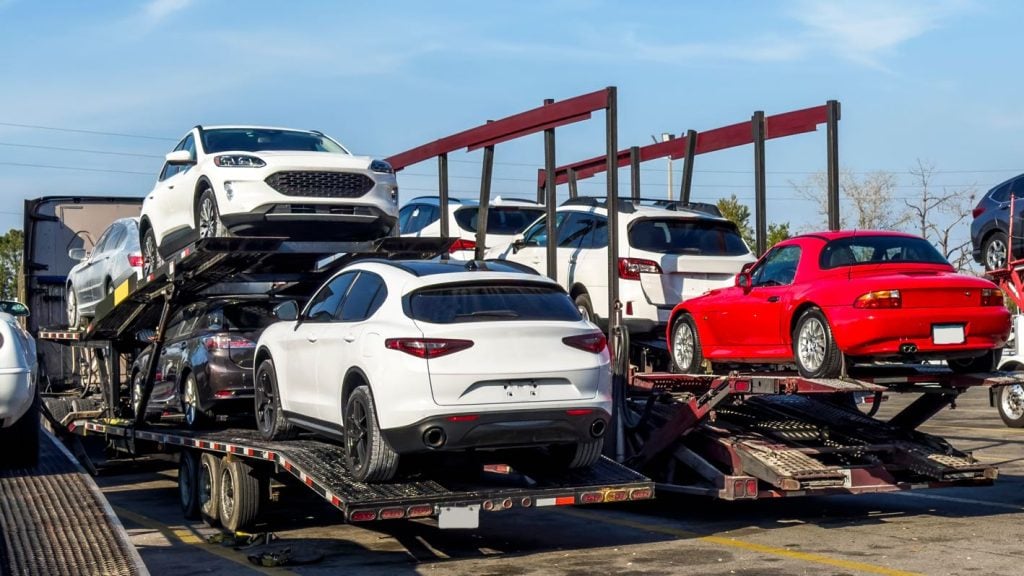
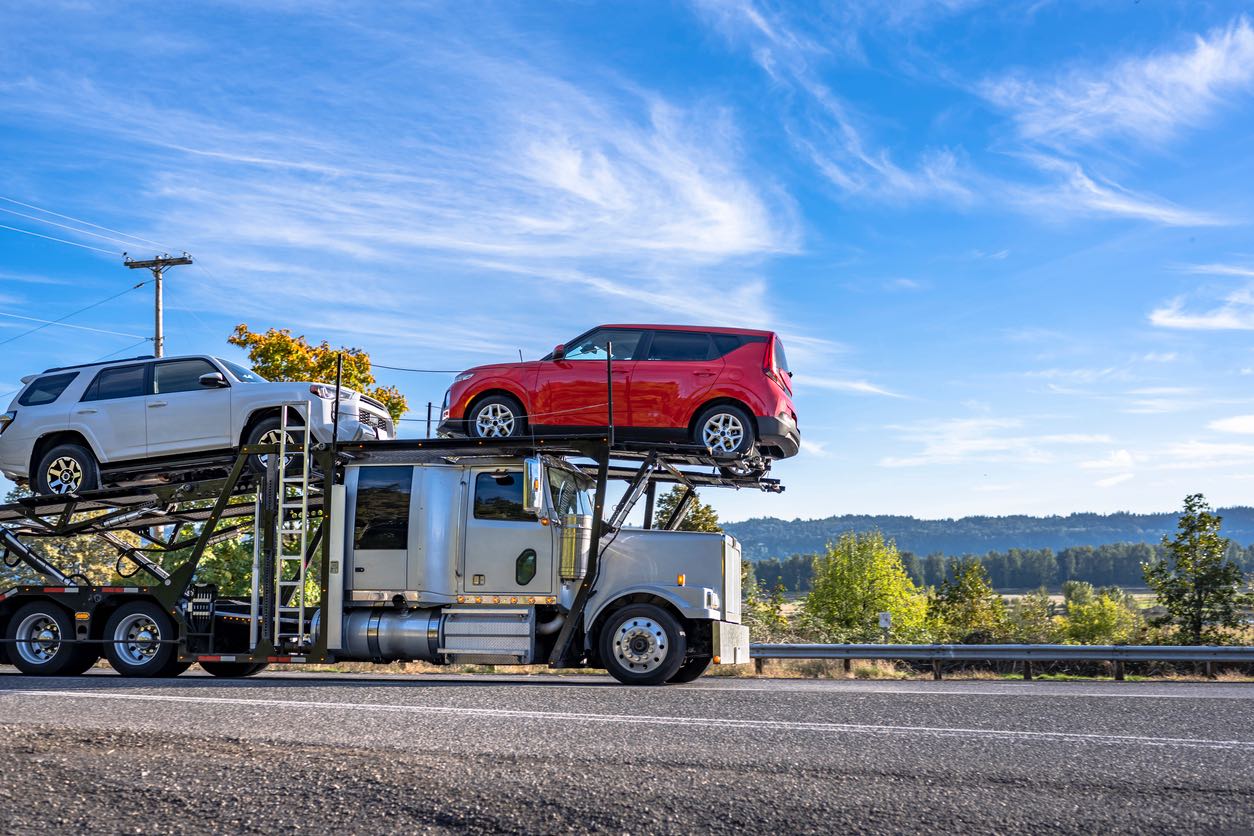
A standard open car hauler carries seven to ten vehicles and runs close to the 80,000 pound federal gross limit when loaded. It hits one of two ceilings first.
Space. The trailer has a fixed number of positions of fixed dimensions. A long vehicle occupies more than its share; a tall one restricts which deck it can go on.
Weight. The tractor, trailer and cargo together cannot exceed the gross limit. A trailer of heavy vehicles reaches that ceiling with positions still empty.
Which constraint binds depends on what else is on the trailer, which is why the same car can price slightly differently on different days. What is consistent is that a bigger, heavier vehicle uses more of both.
Roughly Where Vehicles Sit
Useful as a mental model rather than a price list.
Compact and mid size sedans are the baseline: light, short, and they fit anywhere. A Sentra, Civic, Camry or Accord is the cheapest thing on the trailer.
Compact crossovers such as a CR-V or Crosstrek cost slightly more, mostly on height rather than weight.
Mid size and three-row SUVs such as a Highlander step up again on both length and weight.

Full size SUVs and pickups are the largest ordinary vehicles: a crew cab pickup is around 20 feet and well over 5,000 pounds, and takes roughly the room of a car and a half.
Heavy-duty and dually pickups add weight and rear axle width, and a lifted one adds height that can rule out an upper deck position entirely.
The gap between the cheapest and the most expensive ordinary vehicle on the same lane is meaningful, and it is entirely about these two numbers.
Height Is the Underrated One
People think about length and weight and forget height, and height is what removes options.
A two-level trailer has limited clearance on the upper deck. A tall vehicle may only fit in specific positions, and if those are taken the carrier either declines the load or has to plan around it.
Roof boxes, bike carriers, roof racks with anything on them, light bars and lifted suspension all add height at exactly the wrong point. Removing a cargo box is frequently the single cheapest thing an owner can do to improve a quote, and it takes ten minutes.
Modifications Cost More Than Their Size Suggests
A modification does not just change a number; it narrows the pool of carriers who can take the vehicle.
A 4 inch lift with 35 inch tires, a bed rack, a winch bumper, a hitch carrier or a permanent roof structure all mean fewer trailers work. Fewer options means less competition for your load, and that shows up in the price independently of the space it uses.

Disclose every modification when you book. A driver who arrives to find a vehicle 8 inches taller than described may not be able to load it, and that is a wasted collection somebody pays for.
Where Enclosed Changes the Size Calculation
One thing worth knowing before assuming enclosed is simply the same service with a roof.
Enclosed trailers have their own interior dimensions, and they are tighter than an open deck in every direction. A lifted truck or a tall SUV that loads without difficulty on an open hauler may not fit inside an enclosed trailer at all, and a long vehicle may occupy an even larger share of a smaller trailer.
Enclosed trailers also carry fewer vehicles, typically two to six rather than seven to ten, which means the cost of your space is shared across fewer paying loads. That is part of why enclosed runs about a third more, and it is why the premium is larger in proportion on a big vehicle than on a compact one.
So the sequence matters: establish the vehicle’s real dimensions first, then ask whether enclosed is available for it, then compare prices. Asking for an enclosed quote on a vehicle that will not fit one wastes everybody’s time.
What Size Does Not Change
Worth stating so the expectation is right.
Size does not change the lane, and the lane is the largest single factor in most quotes. A compact car between two small towns off the interstate system will cost more than a full size SUV between two busy metropolitan areas.
It does not change seasonality either. Summer is the busiest period industry-wide regardless of what you are shipping.
And it does not change the value of flexibility. A range of pickup days is worth real money on any vehicle.
What You Can Actually Do
Four things, in order of usefulness.
Remove what adds height. Cargo boxes, bike carriers and anything on the roof. Factory rails can stay; give the measured height.
Give accurate figures once. Year, make, model, trim, and any modification. An accurate quote that is higher beats an attractive quote that changes at pickup.
Be flexible on dates, which is worth more than any size consideration.
Ship two together if you are shipping two. The per-vehicle price should improve, and it lets the carrier balance a load. Our explanation of how the freight market sets what you pay covers the other inputs.
Common Questions
Why does a pickup cost more than a sedan? It takes roughly the deck space of a car and a half and weighs considerably more, and a trailer is limited on both.
Does height really matter? Yes, more than people expect. It determines which deck positions work on a two-level trailer.
Should I remove my roof box? Yes. It is usually the cheapest single improvement to a quote and takes ten minutes.
Does a lift kit cost extra? It narrows which trailers can take the vehicle, and fewer options means a higher price independently of the space used.
What matters more than size? The lane. A busy corridor beats a quiet one regardless of what you are shipping.
Get a Quote
Call Ship A Car, Inc. at (866) 821-4555 with both zip codes, the year, make and model, and any modifications, or request an estimate for the move through the quote calculator.