Shipping a Car in Winter: What You Need to Know
Winter is the cheapest season to ship a car on most lanes and the least predictable, and those two facts are the same fact. Demand is low because fewer people move, so rates soften. Reliability is low because weather stops trucks. If you can accept a delivery date as a range rather than an appointment, winter is genuinely good value.
What Actually Stops a Truck
Three things, and only one of them is snow on the road.
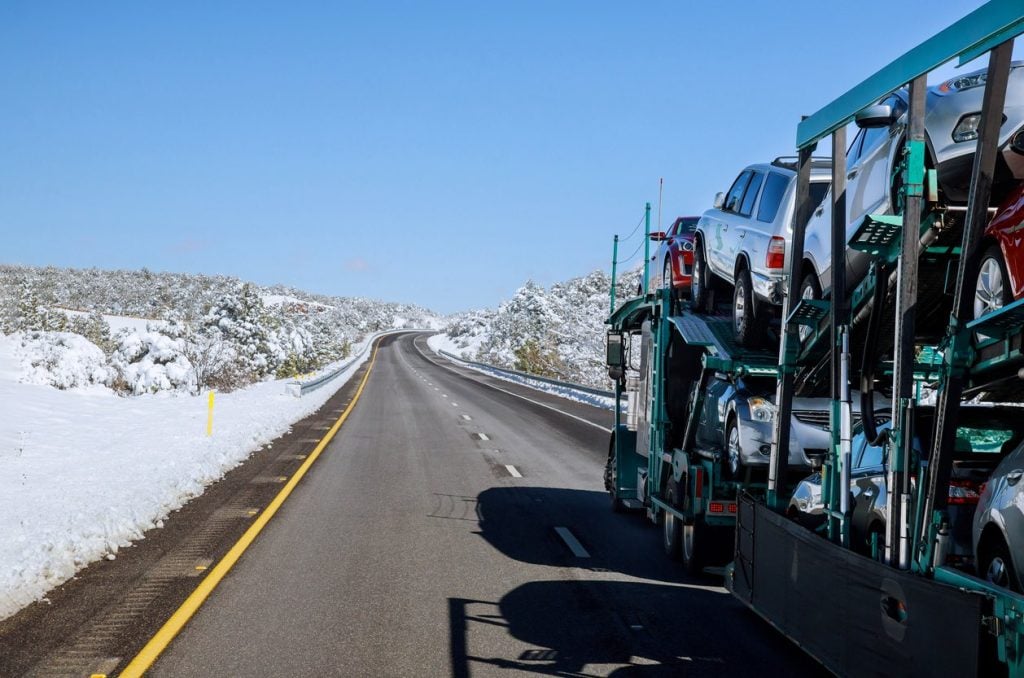
High wind. A loaded car hauler is tall, flat sided and light for its size, which makes it one of the first vehicles restricted when wind advisories go up. Wyoming, the plains and mountain passes close to high-profile vehicles regularly, and a driver will park rather than run into it.
Road closures. Interstates close with little notice in serious weather. Lake effect snow off Erie and Ontario and sudden ice storms across the South are the two that catch schedules most often.
Ice on grades. A loaded rig on a mountain grade with ice on it is a different proposition from ordinary traffic, and carriers stop earlier than cars do.
All three are delays rather than risks to the vehicle, and a driver who parks is making the correct decision with your car on the trailer.
Road Salt Is the Real Vehicle Concern
Snow does not damage a car on a trailer. Salt does.
A winter route across the northern tier means salt spray from the road and from traffic ahead coating the underside for the whole trip. On an ordinary car that is a wash away on arrival. On a collector vehicle, a restored car or anything with original underbody finish, it is the strongest seasonal argument for enclosed transport there is.
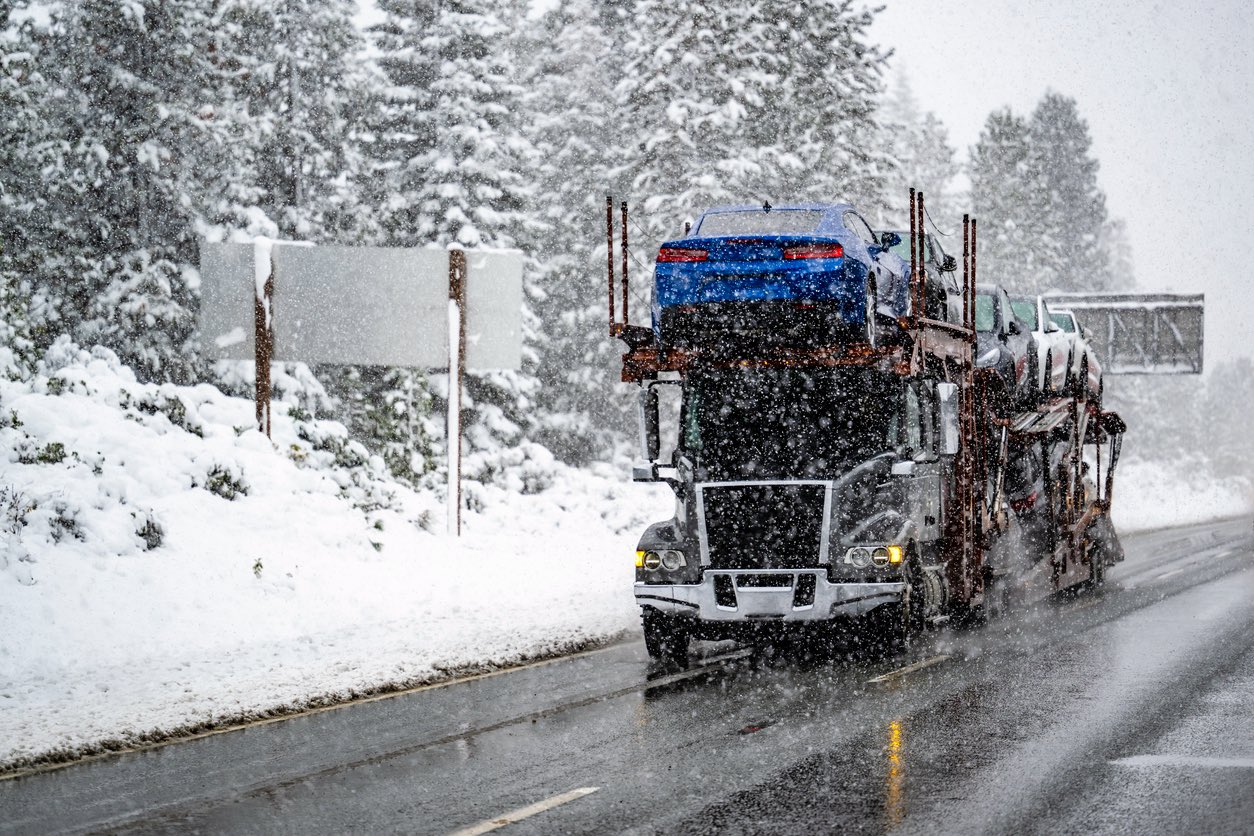
If the car does travel open in winter, wash the underside properly soon after delivery rather than waiting for spring.
Preparing a Car for Cold It Has Not Seen
The most common winter problem is not the transport; it is a vehicle arriving somewhere colder than it has ever been.
Battery. Cold reduces available cranking power substantially, and a battery that is fine in Phoenix fails on the first genuinely cold morning in Minneapolis. Have it tested before it ships, not after.
Coolant. Check the concentration, not just the level. Coolant mixed for a mild climate can freeze and split things in a hard winter.
Tires. All-season tires that are adequate in Georgia are not the same as winter tires on an icy hill. Assess tread and consider what the destination actually requires.
Fluids and wipers. Winter-rated washer fluid rather than summer, and wiper blades that are not already perished.
Doing this before the car ships is far easier than arranging it in an unfamiliar city in January.
Pickup and Delivery in Winter
Two practical points that cause more trouble than the weather itself.
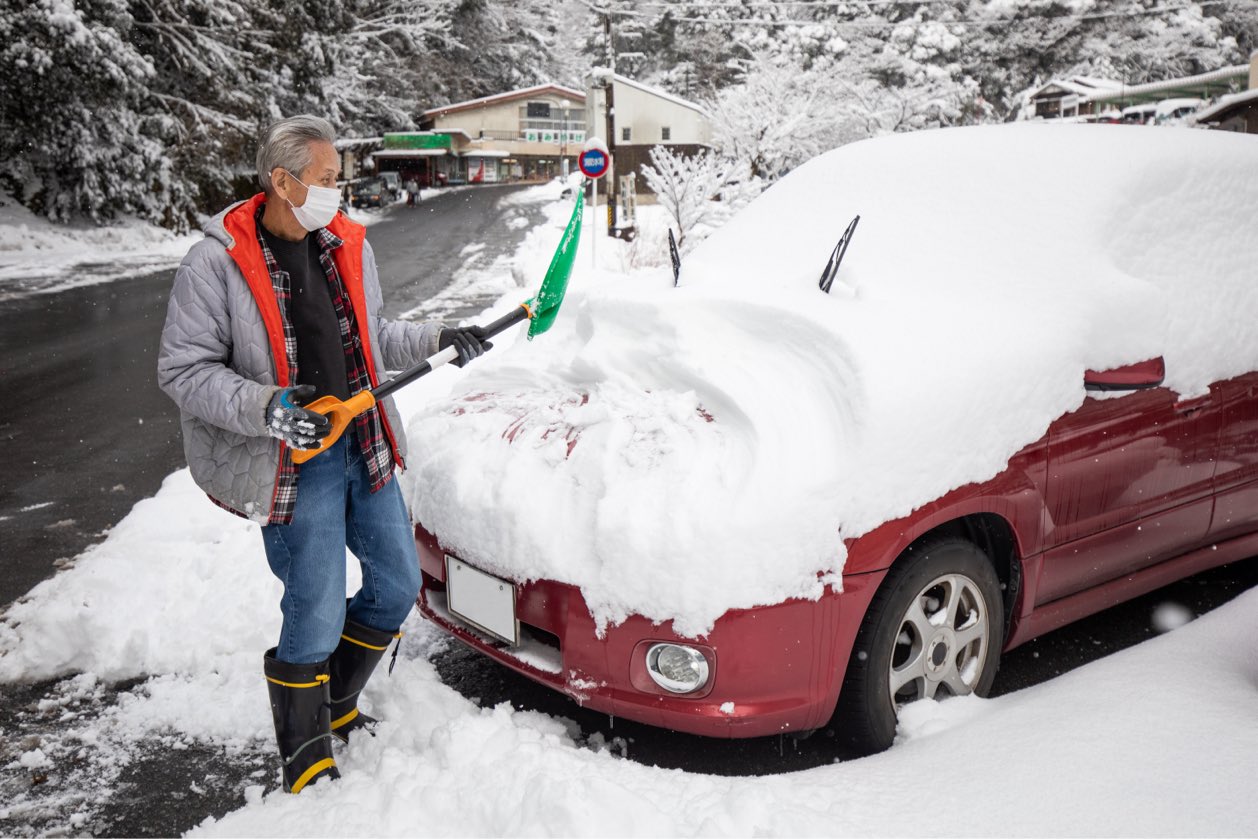
Access. A 75 foot hauler needs firm ground and room to work. An unplowed street, a steep icy driveway or a snowbanked curb line means the truck cannot get in or cannot safely load. Agree a meeting point at a large cleared lot near a highway if there is any doubt.

Inspection in poor light. Winter days are short and delivery may happen in the dark or in falling snow. If you cannot properly inspect the vehicle, write on the bill of lading that a full inspection was not possible before you sign it. That single sentence preserves your position.
Photograph every panel at pickup in daylight while you still can, including the wheels and lower bodywork, so you have something to compare against.
Why Winter Is Still Worth It
Rates on most lanes are at their lowest between roughly late January and February, once the holiday period has passed and before the spring snowbird return begins.
Carrier availability is also better in the sense that assignment is quicker: fewer customers are competing for the same trailers.
The trade is schedule certainty. If your dates are flexible and you can treat delivery as a window rather than a date, that trade is a good one. If you have a hard deadline, pay for a different season or build in far more slack than you think you need. Our guide to shipping in extreme weather covers the wider seasonal picture.
The Snowbird Exception
Everything above applies to general lanes. Sun Belt routes behave differently in winter and it is worth knowing which side of the pattern you are on.
Southbound demand toward Florida, Arizona and Texas builds through October and November and stays firm through the winter as seasonal residents settle in. On those lanes winter is not the cheap season; it is the busy one, and capacity tightens rather than loosens.
The reverse direction in the same months is frequently the best value available all year. A carrier that has just run a full trailer south needs freight for the return leg, and northbound in December or January is exactly the load they want. If you are moving a vehicle out of Florida in midwinter, say so and ask what the return-leg rate looks like.
The pattern flips in March and April, when northbound spikes and southbound softens. Either way, the general rule holds: moving against the flow is where the value is.
What Winter Does Not Change
Worth stating so expectations are right. The lane, the distance, the vehicle’s size and weight, and whether it runs are fixed in any season.
Winter also does not change the loading risk, which is where most transport damage actually happens rather than in transit. The condition report at pickup and the comparison at delivery matter exactly as much in January as in July, and they are harder to do properly in poor light, which is the real reason to be deliberate about them.
Common Questions
Is winter cheaper? On most lanes yes, with the lowest rates around late January into February.
What stops a truck in winter? High wind first, then road closures, then ice on grades. All are delays rather than risks to the car.
Does snow damage the vehicle? No. Road salt is the concern, which is the main argument for enclosed on anything valuable.
What should I do before shipping north? Have the battery tested and the coolant concentration checked, and assess the tires for the destination.
What if it arrives in the dark or in snow? Write on the bill of lading that a full inspection was not possible before signing.
Get a Quote
Call Ship A Car, Inc. at (866) 821-4555 with both zip codes and your date range, or price the move with the instant calculator.