How to Ship an Industrial Boiler
A boiler is heavy, tall and fragile in ways that are not obvious, and those three facts drive every decision about moving one. It is dense enough to need weight-rated equipment, tall enough that height governs the trailer choice, and full of tubes, refractory and connections that do not tolerate flex or shock.
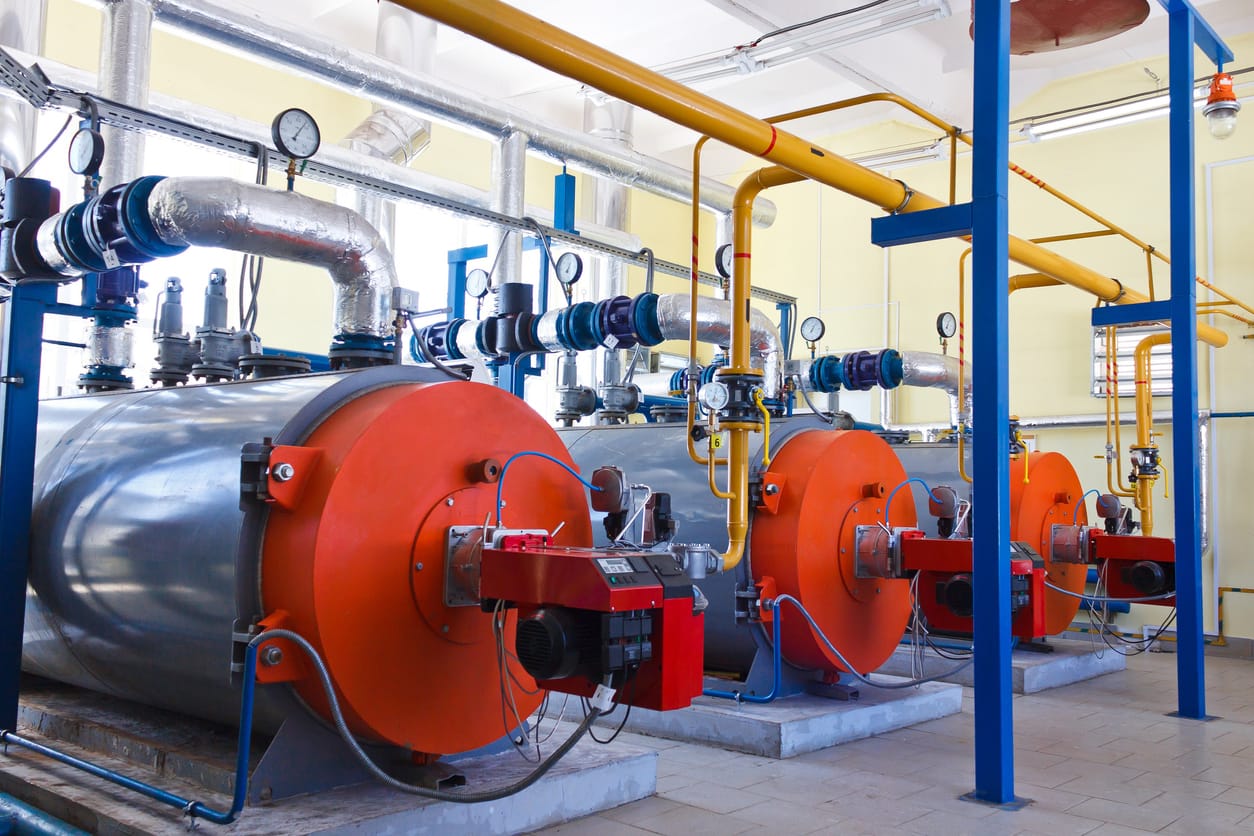
Establish the Three Numbers First
Weight, height and width, measured rather than taken from a brochure.
Weight is the one people get wrong. A boiler’s dry weight and its shipping weight differ, and residual water, refractory lining, attached economizers, burners and control panels all add mass. Get the figure from the manufacturer’s drawing or a certified scale, and be clear whether it includes what is actually still attached.
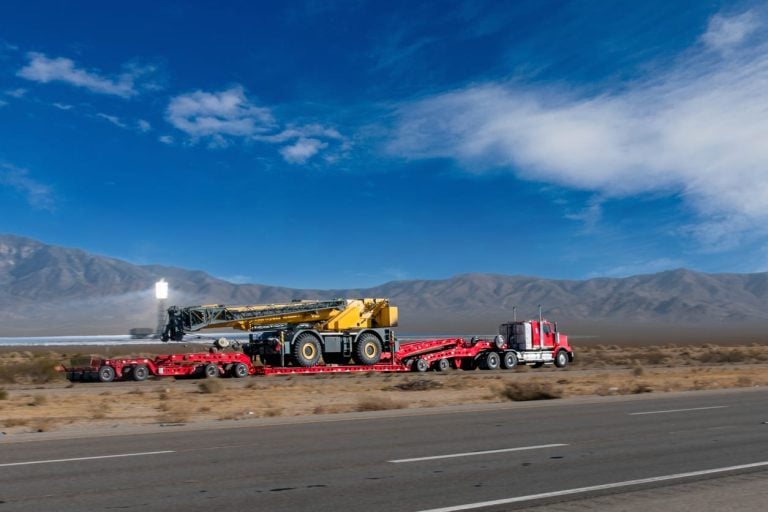
Height matters because it decides the trailer. Federal limits are 13 feet 6 inches on the Interstate system, and a flatbed deck sits around 5 feet off the road, so a 9 foot boiler is already at the ceiling. A step deck buys about a foot; a lowboy drops the deck to roughly 18 to 24 inches and is what tall units travel on.
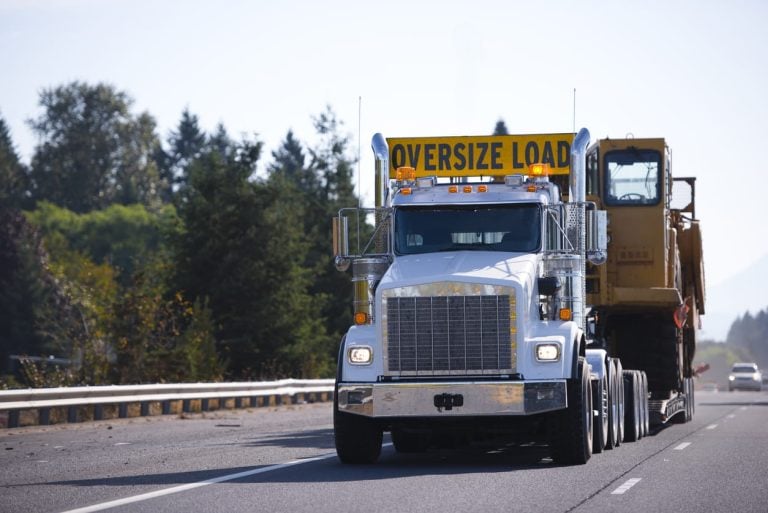
Width past 8 feet 6 inches makes it an oversize load with permits, and past certain thresholds escorts as well.
Why Boilers Need Careful Handling
The fragility is internal and it is easy to underestimate.
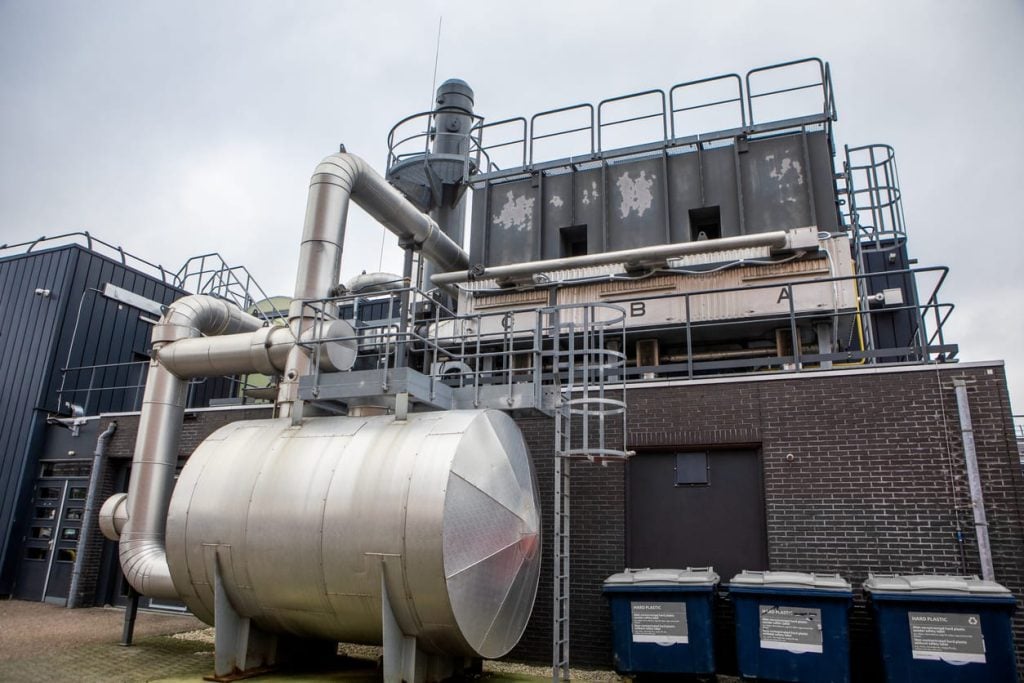
Fire tube and water tube boilers contain tube bundles that are rigid in service and vulnerable to shock and torsion in transit. Refractory lining cracks if the shell flexes. Rolling a unit or lifting it at the wrong points can distort a shell enough to cause problems that only appear at commissioning.
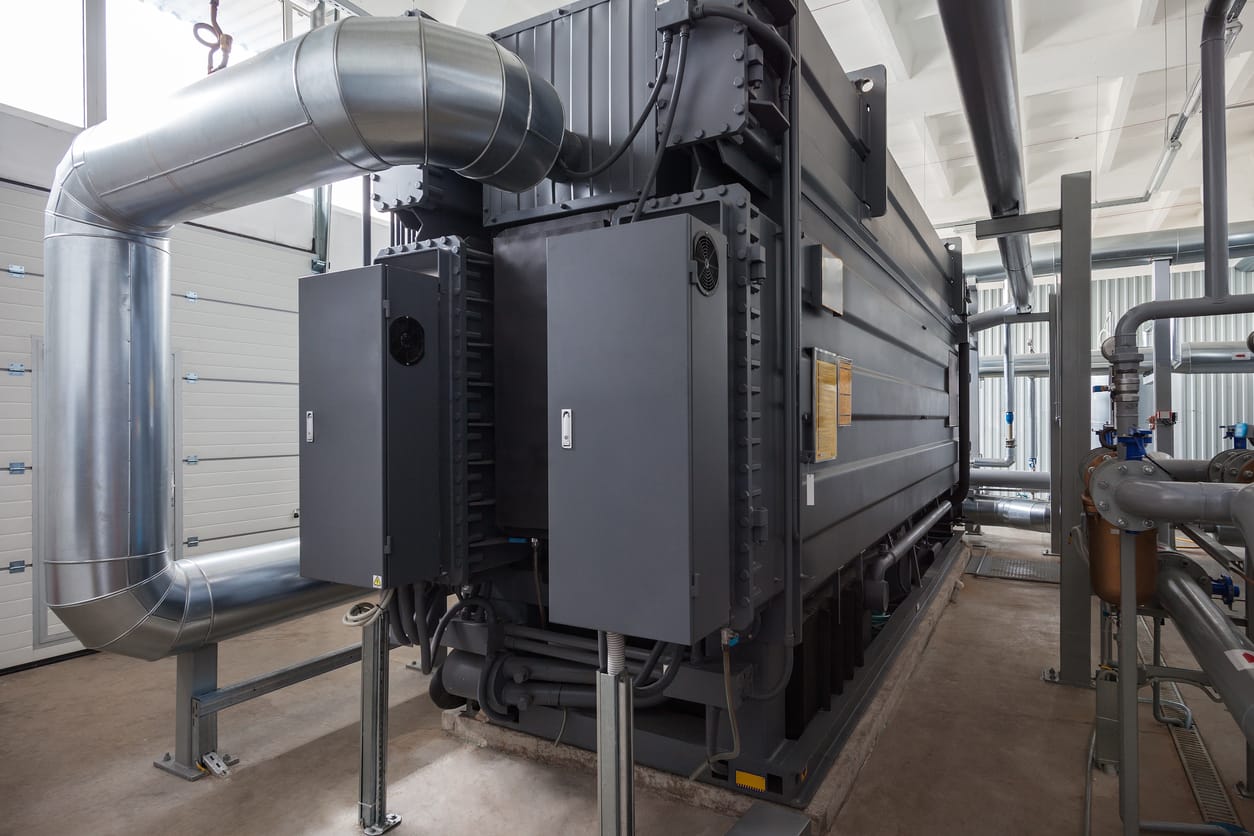
Manufacturers designate lifting points for exactly this reason. Use them, and tell the carrier where they are. A rigger who slings a boiler from a convenient point rather than a designated one can damage it invisibly.
Anything protruding, gauges, valves, control panels, sight glasses and burner assemblies, should be removed where practical or crated and protected where not. Those are what get broken.
Preparation Before It Moves
Drain it completely. Residual water is weight, it shifts, and in cold weather it freezes and cracks things.
Cap and seal every opening so nothing enters the vessel in transit. Disconnect and label all services rather than leaving anything attached and unsupported.
Photograph the unit from every side in daylight before it is loaded, including the nameplate, the connection points and any existing damage. On used equipment particularly, get existing condition described specifically on the bill of lading rather than as general wear.
Loading and Securement
Most boilers load by crane rather than by rolling, and that means both sites need crane access as well as truck access.
The load is secured against forward, rearward and lateral movement, usually with chains and binders to a rated capacity matched to the weight. A dense unit on a long deck also needs blocking so it cannot shift, because a boiler that moves six inches in transit has changed the axle loading of the whole rig.
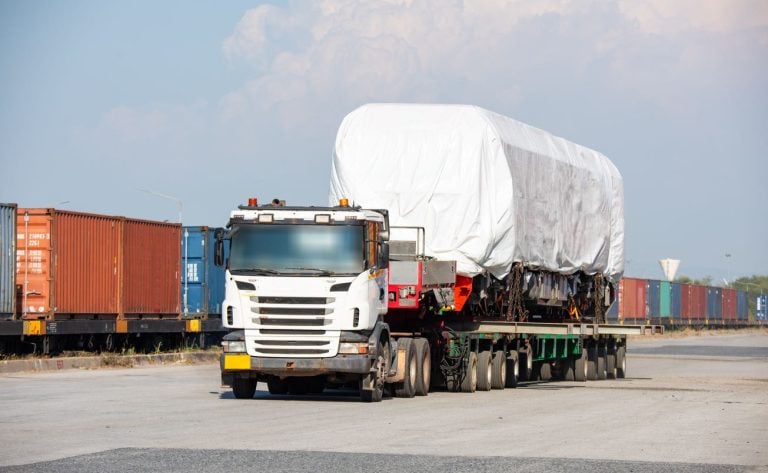
Tarping is worth discussing. It protects against weather and road grime, and on a used unit it also keeps the load out of sight, but it adds height and wind loading, so it is a decision rather than a default.
Permits, Escorts and Route
Past any legal limit the load needs an oversize or overweight permit from every state it crosses, issued against a specific configuration and route.
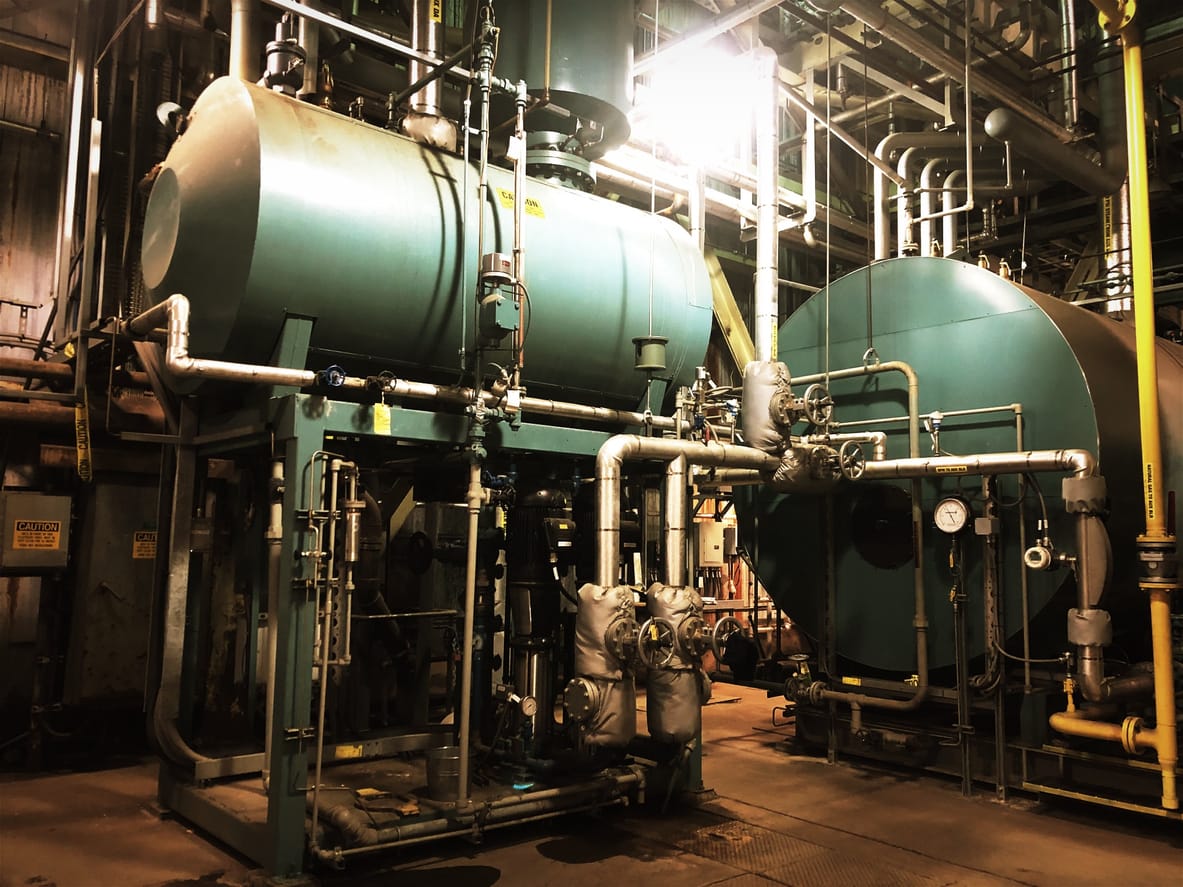
Wider loads bring escorts, and the largest require engineering review of bridges on the route. Permitted movement is generally daylight only on weekdays with holiday restrictions, so a permitted boiler move covers far less ground per day than an ordinary truck.
A route survey matters here more than on many loads, because a tall unit is sensitive to overhead clearance, and a low bridge or a rail crossing on the only sensible road can redirect a move substantially. Our guide to wide and oversize loads covers the thresholds.
Insurance and Paperwork
Check the carrier’s cargo limit against the replacement value of the unit rather than assuming it is covered. Standard cargo limits are frequently well below the value of a large industrial boiler, and higher limits are arranged in advance rather than after a problem.
On a used unit bought at auction or from a decommissioned plant, the condition record matters more than usual, because there is no manufacturer to argue with about what was already wrong. Photographs plus a specific bill of lading description are what settle a claim.
If the boiler is a pressure vessel with a current certification, keep the nameplate data and any inspection records with the paperwork rather than in the plant you are leaving.
Site Access at Both Ends
The site is as important as the machine, and it is the thing most often left out of a quote request.
A tractor with a lowboy needs firm ground, room to turn and space to work, and a crane needs a footprint and overhead clearance of its own. Soft ground, overhead lines, narrow gates and tight yards are the usual obstacles.
Say what the access is honestly when you book. A carrier who arrives to find the crane cannot set up has a wasted day that somebody pays for.
Common Questions
What decides the trailer? Height first, then weight. A tall unit needs a step deck or lowboy to stay inside the 13 feet 6 inch limit including the deck.
Does the boiler need draining? Completely. Residual water is weight, it shifts in transit and it freezes in cold weather.
How is it lifted? By crane, at the manufacturer’s designated lifting points. Slinging from convenient points instead can distort the shell.
Do I need permits? Past 8 feet 6 inches wide, the applicable height limit, or 80,000 pounds gross, yes, from every state on the route.
What is the most overlooked cost? Site access at both ends, including crane setup space, and the daylight-only restriction that turns a two day run into four.
Get a Quote
Call Ship A Car, Inc. at (866) 452-3657 for heavy haul and specialized freight with the unit’s measured weight, height and width, and the crane and truck access at both sites, or price it with the specialized transport calculator.