How to Ship a Street Sweeper
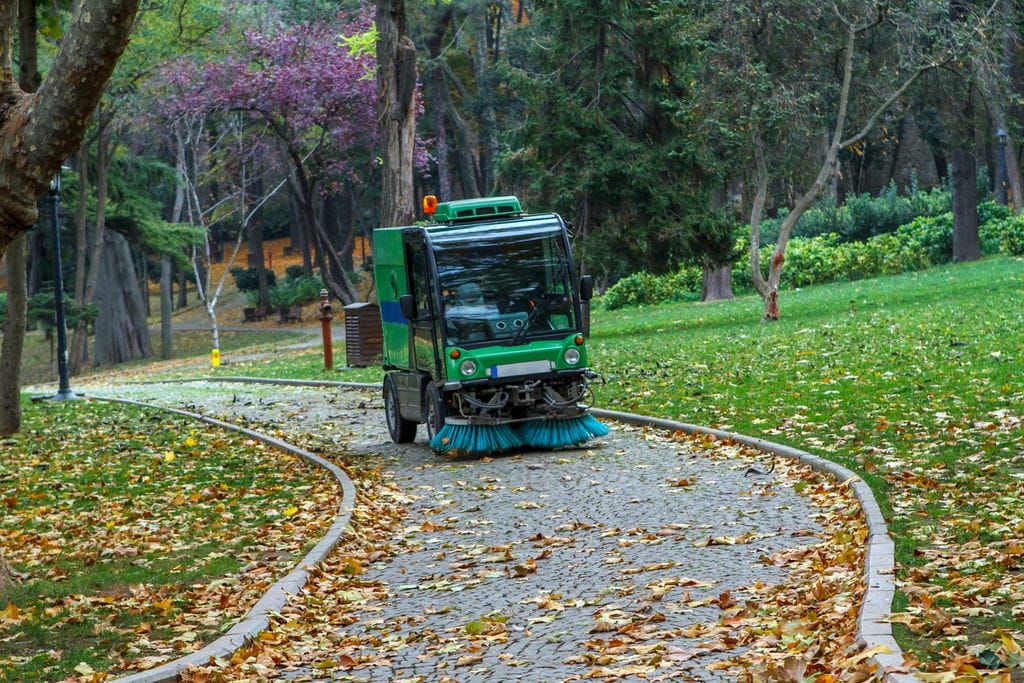
A street sweeper is a truck with a large amount of specialized equipment bolted to it, and almost every shipping question about one comes down to which of those two facts dominates. A truck-mounted sweeper can frequently drive itself. A mechanical broom unit or a large regenerative-air machine is heavy, tall and awkward enough to need a lowboy. Establish which you have first.
Know Which Type You Have
The categories differ enough to change the answer.
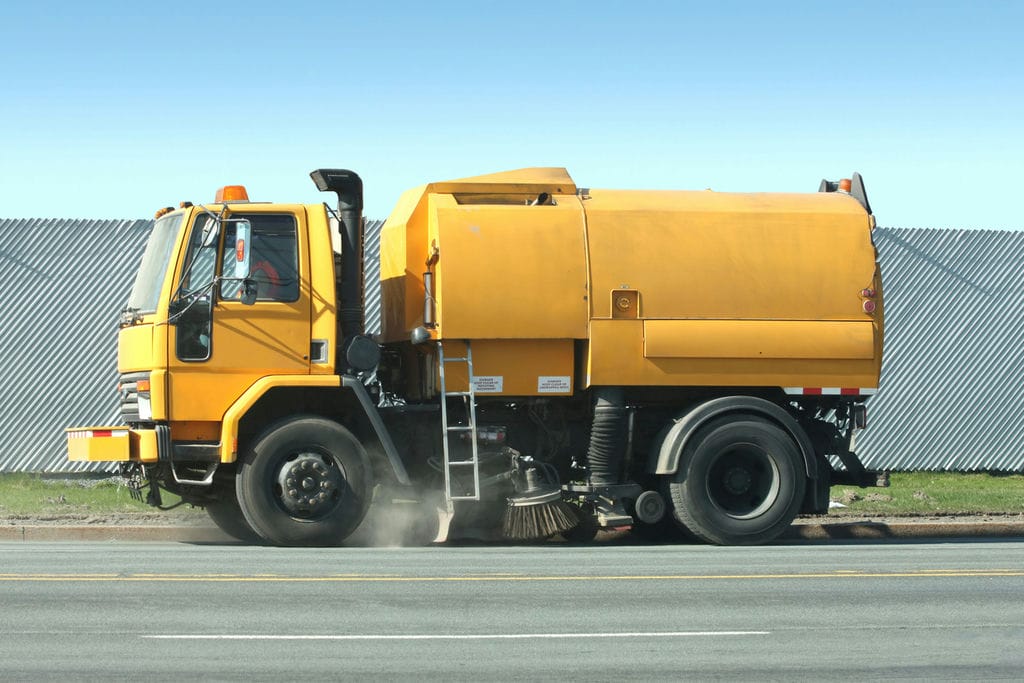
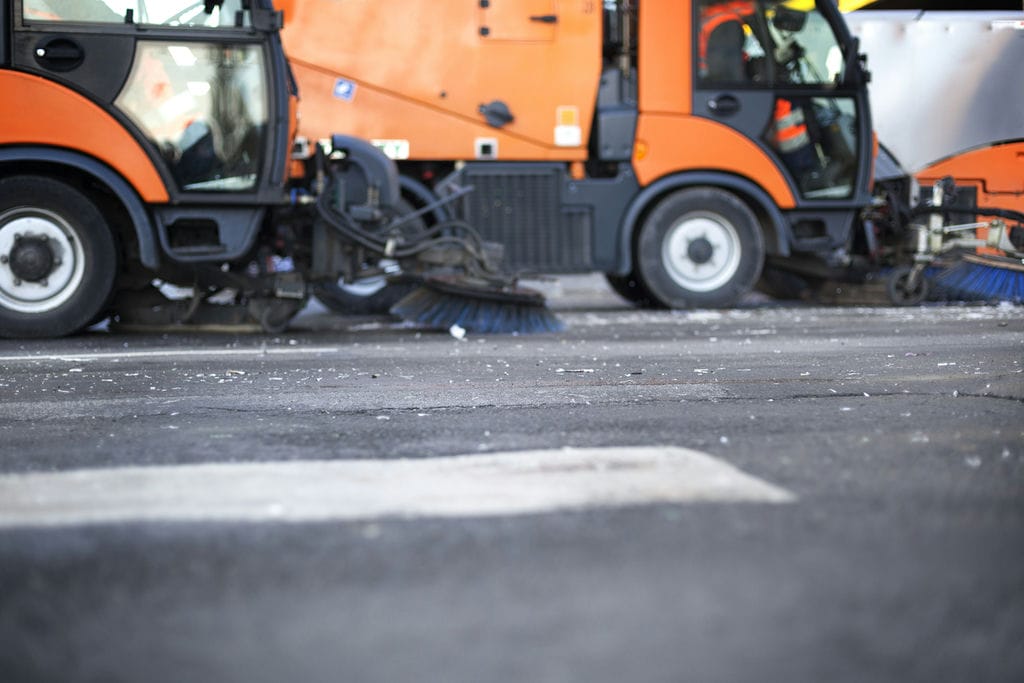
Mechanical broom sweepers use rotating brooms to move debris onto a conveyor. Heavy, with substantial equipment mounted low and to the sides.
Regenerative air and vacuum sweepers use airflow rather than brushes and carry large blower housings and hoppers. Frequently the tallest of the three.
Compact and sidewalk sweepers are small enough to travel on an ordinary flatbed and are the simplest case.
Give the manufacturer, model, measured weight, and measured height to the highest point, which is usually the hopper or the blower housing rather than the cab.
Drive It or Haul It
This is the first real decision and it has a clear answer in most cases.
A road-legal truck-mounted sweeper can be driven, and for short distances that is frequently the cheapest option. What that ignores is that sweepers are built for low-speed work: they are geared for it, their tires are not designed for sustained highway speed, and putting hundreds of highway miles on one is hard on equipment that is expensive to repair.
Hauling on a step deck or lowboy costs more and puts zero miles on the machine. On any move beyond a short regional hop, on a machine you have just bought, or on anything with questionable tires or hours, hauling is the better answer.
Non-running units have no choice: they need winching and a carrier equipped for it.
Height Is Usually the Constraint
Sweepers are tall for their footprint, and the hopper is what makes them so.
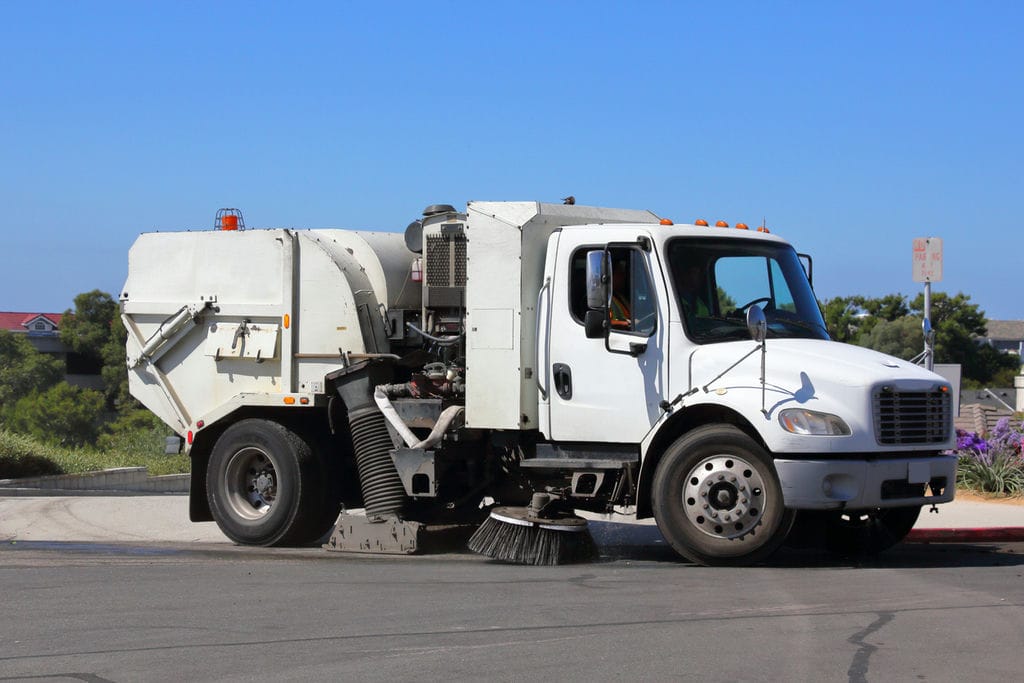
A flatbed deck sits around 5 feet off the road. A sweeper 9 or 10 feet tall is at or over the 13 feet 6 inch legal ceiling before anything else is considered, which is why these frequently travel on a step deck or a lowboy rather than a flatbed.
Measure to the true highest point with the hopper in its transport position. If the hopper can be lowered or a component removed for transit, do it and give the reduced figure, because that is what decides whether the move needs a permit.
Preparing It
Sweepers arrive dirty by definition, and cleaning matters more here than on most equipment.
Empty the hopper completely. Debris is weight the carrier has not planned for, it shifts, and it falls out on the highway. This is not optional.
Drain the water system. Sweepers carry water tanks for dust suppression, and water is heavy, it sloshes, and in cold weather it freezes and splits things. Drain the tanks and the lines, and winterize if the route crosses a freeze.
Secure the brooms and lower the equipment. Side brooms, the main broom and any suction head should be raised or lowered into their transport positions and mechanically secured rather than left on hydraulic pressure, which bleeds down over days.
Remove or secure loose items, including hoses, tools and anything in a storage compartment.
Then photograph the machine in daylight from every side, including the brooms, the hopper, the hydraulics and the hour meter, and get existing damage described specifically on the bill of lading rather than as general wear.
Securement and Permits
Securement follows the heavy equipment rules: a minimum of four tie-downs at the manufacturer’s designated points, rated to the weight, with attachments and any articulation secured separately. Straps rather than chains where chain would damage bodywork, with edge protection.
Past 8 feet 6 inches wide, 13 feet 6 inches high or 80,000 pounds gross, the load needs a permit from every state on the route, with restricted movement hours and possibly escorts. Height is the threshold a sweeper most often crosses. Our guide to wide and oversize loads covers those rules.
Buying at Municipal Auction
A large share of used sweepers change hands through government surplus auctions, and the logistics have a recognizable pattern worth planning for.
Auction lots usually allow only a short free storage period after the sale, with daily charges starting quickly. Arrange transport before you bid, or at least know what it will cost, because a good price plus a week of storage plus an urgent shipment is not a good price.
Establish whether the machine runs and drives. Municipal sweepers are sold as-is with high hours and hard service behind them, and a unit that will not start needs winching and a carrier equipped for it. Declaring that when you book costs far less than discovering it at collection.
Ask about the hopper and water tanks specifically. Auction units are frequently sold without being cleaned out, and a hopper full of street debris is weight nobody quoted for. If you cannot get it emptied before collection, tell the carrier so the weight is planned rather than discovered at a scale.
Finally, get the title and paperwork position clear. Government equipment sometimes comes with documentation that behaves differently from an ordinary sale, and a machine you cannot register or insure is an expensive ornament.
Delivery and Site Access
Municipal yards and contractor depots are usually straightforward, with room to unload and equipment to handle it.
Where a sweeper is going to an auction site, a dealer or a smaller operator, confirm in advance how it will come off: whether it can be driven off, whether there is a ramp, and whether the ground will carry a loaded lowboy. Establish that before it ships rather than on the day.
Have someone present who can inspect it and sign, and who knows the machine well enough to notice if something is wrong. Whoever signs accepts its condition.
Common Questions
Can I just drive it? A road-legal unit, yes, for short distances. Over a long move the tires and gearing are the problem, and hauling is the better answer.
What decides the trailer? Height. Sweepers are tall for their footprint, so a step deck or lowboy is common where a flatbed would exceed the legal ceiling.
Does the hopper need emptying? Completely. Debris is unplanned weight, it shifts, and it falls out on the highway.
What about the water tanks? Drain them and the lines, and winterize if the route crosses a freeze.
Will it need a permit? Frequently, on height. Measure to the true highest point in transport position and lower anything that can be lowered.
Get a Quote
Call Ship A Car, Inc. at (866) 452-3657 for heavy haul and specialized freight with the make, model, measured weight and height and whether it runs, or request a quote through the specialized transport calculator.