How to Ship a Woodchipper
A woodchipper is one of the easier machines to move and one of the easiest to get wrong, because almost every problem comes from the same place: the drum or disc is a heavy flywheel and the feed chute is a large hinged assembly hanging off the front. Get those two secured properly and the rest is ordinary equipment transport.
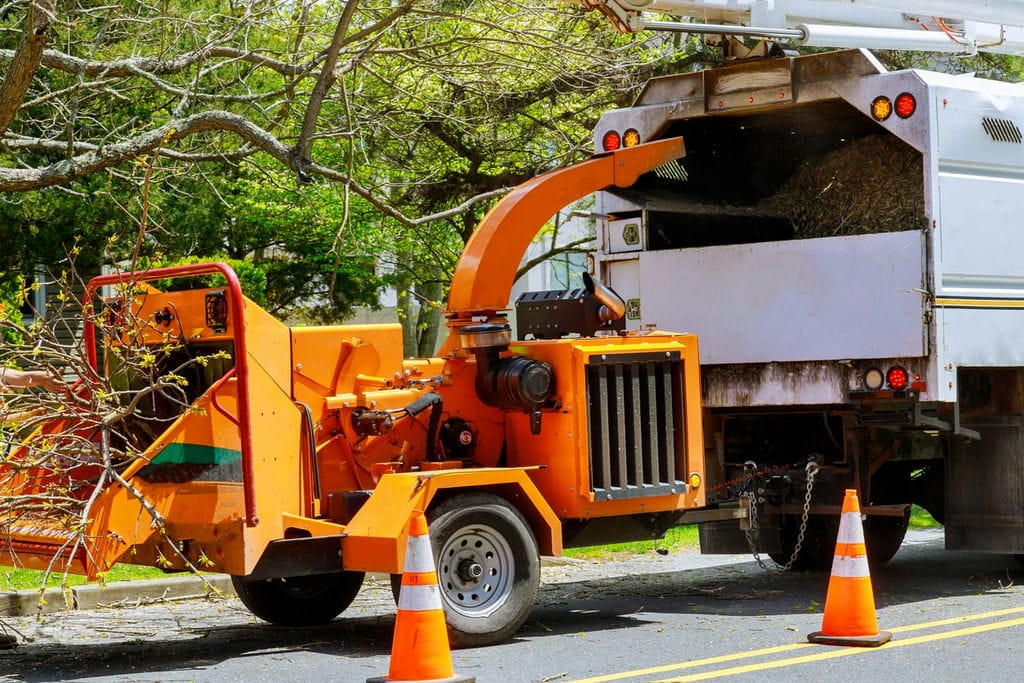
Know Which Kind You Have
The category decides the trailer, and the range is wide.
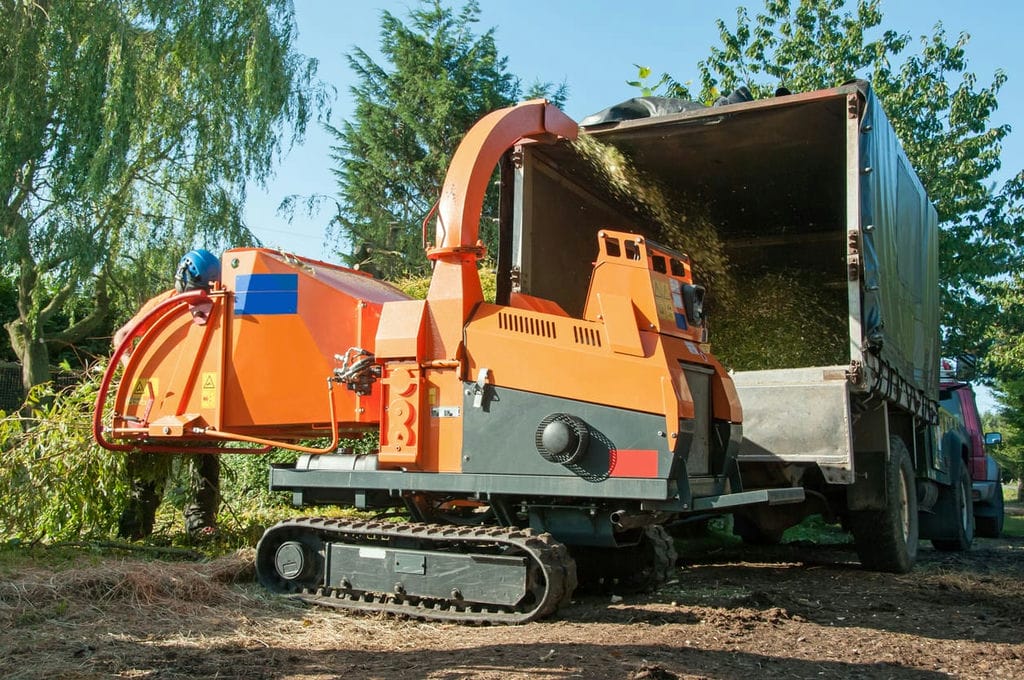
A small towable chipper behind a pickup is a few thousand pounds and travels on a flatbed or, quite often, simply gets towed. A mid size road tow unit runs heavier and taller once the chute is up. A large whole tree chipper or a self propelled tracked machine is a serious piece of equipment that needs a step deck or lowboy and possibly a permit.
Weight is the number people underestimate, because the cutting drum is dense and the engine on a diesel unit is substantial. Take the figure from the manufacturer’s plate rather than from memory.
The Feed Chute Is the Height Problem
This is the single most common cause of an oversize measurement on a chipper.
The infeed chute folds, and folded it usually brings the machine well inside a legal envelope. Left in the working position it can add several feet of height and a good deal of length, which turns an ordinary load into a permitted one with all the cost and routing restriction that follows.
Fold and pin it before the truck arrives. If the machine has a hydraulic feed system, make sure the chute is mechanically secured rather than relying on hydraulic pressure, because hydraulics bleed down over a long trip.
Secure the Rotor
The cutting drum or disc is a heavy rotating mass, and a free rotor on a moving trailer is a genuine hazard.
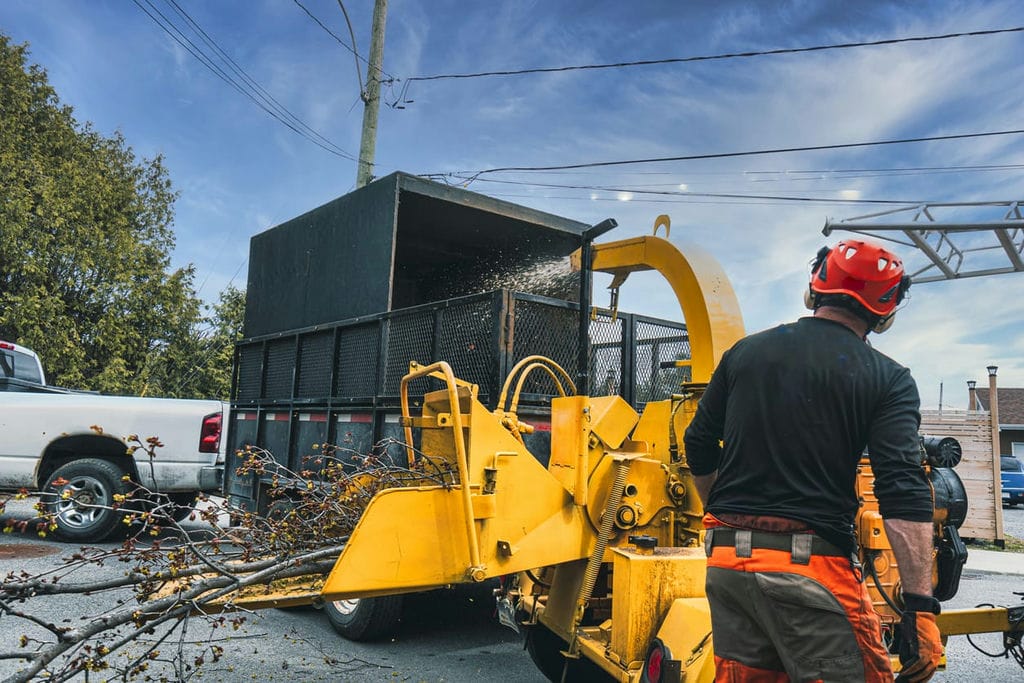
Engage whatever brake or lock the machine provides. Where there is no positive lock, the carrier will need to prevent rotation another way. It matters both because a spinning drum can damage bearings over hundreds of miles and because the machine’s balance changes as it turns.
Disconnect the battery, close and latch the discharge chute, and make sure the discharge spout is turned to its transport position rather than left swung out where it becomes a width problem.
Preparing It for the Road
Clean it out properly. Chips and sap left in the housing are weight, they fall out on the highway, and they make a mess of whatever is on the deck below.
Check the tires if it is a towable unit, including the spare, because a road tow chipper that has spent two years in a yard frequently has tires that are fine for a job site and not fine for a 900 mile interstate run. Grease points, hydraulic leaks and a dead battery are all better found now.
Photograph the machine in daylight from every side before it loads, including the drum housing, the chute hinges, the control panel and the hour meter. On a used machine bought at auction, get existing damage described specifically on the bill of lading rather than as general wear.
Towing Versus Hauling
For a small towable chipper there is a real choice here and it is worth thinking about.
Towing is cheaper and often faster for short distances, but it puts highway miles on tires and bearings that were designed for job site duty, and it exposes the machine to road debris and weather for the whole trip.
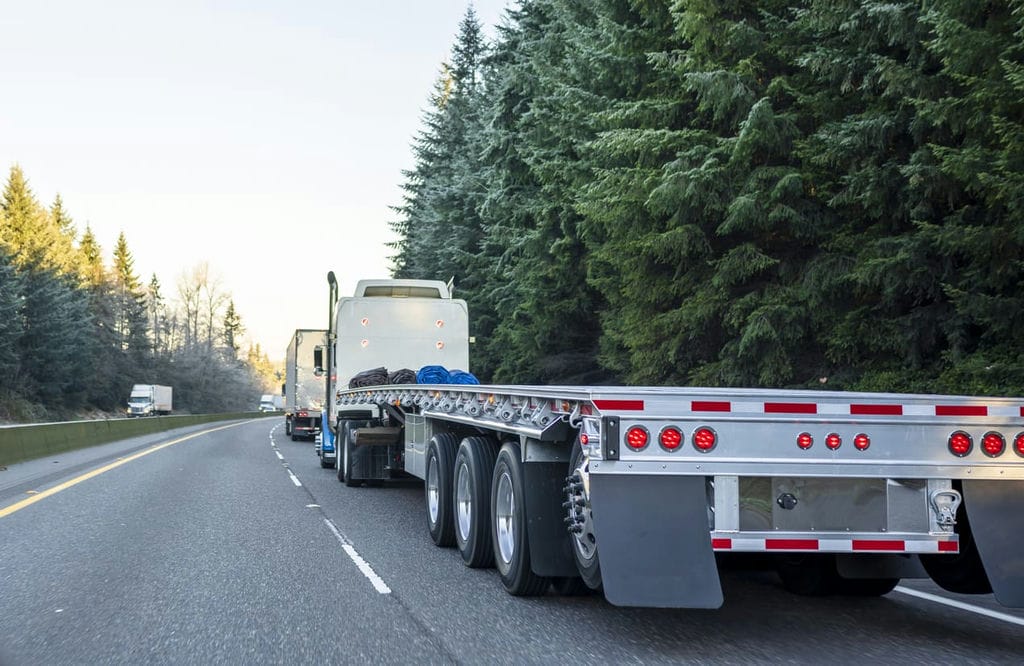
Hauling on a deck costs more and adds loading and unloading, but the machine arrives having traveled zero miles of its own. On a long move, on a machine you have just bought, or on anything with questionable tires, hauling is the better answer.
Above the small towable size the choice disappears. Large chippers travel on a deck.
Loading and Securement
Most chippers drive or winch onto the trailer under their own power or with the truck’s winch, and the ones that do not are loaded by machine.
Securement is against forward, rearward and lateral movement, with chains and binders rated to the weight, attached at the manufacturer’s designated points rather than wherever is convenient. A towable unit also needs its jack and tongue supported so the frame is not carrying load through the coupler.
Wheel chocks and blocking matter on a machine with a high center of gravity and a short wheelbase, which describes most chippers.
What It Costs and What Moves It
Price follows distance, weight and how ordinary the load is. A small towable chipper on a flatbed shares a trailer with other freight and prices accordingly. A large tracked machine on a lowboy is a dedicated move.
Anything past 8 feet 6 inches wide, 13 feet 6 inches high or 80,000 pounds gross needs a permit from every state on the route, which adds cost and restricts movement to daylight hours on weekdays. Folding the chute is frequently the difference. Our guide to wide and oversize loads covers those thresholds.
Site access matters at both ends. A tree service yard is usually easy; a residential job site with a narrow drive and overhead limbs is not, and it is worth saying so when you book.
Common Questions
Can I just tow it? A small towable chipper, often yes for short distances. Over a long run the tires and bearings are the risk, and hauling is the safer answer.
What makes a chipper oversize? Almost always the infeed chute left in the working position. Fold and pin it and most machines come back inside legal height.
Does the drum need locking? Yes. Engage the brake or lock. A free rotor damages bearings over distance and changes the load’s balance.
Should I clean it first? Completely. Chips and sap are weight, they fall out on the highway and they foul anything below on the deck.
What trailer will it travel on? Flatbed for small units, step deck for mid size, lowboy for large whole tree and tracked machines.
Get a Quote
Call Ship A Car, Inc. at (866) 452-3657 for heavy haul and specialized freight with the make, model, measured weight and folded dimensions, and the access at both ends, or price it with the specialized transport calculator.