American Agricultural Equipment Manufacturers: Who Builds What, and Where
American farms run on iron from a surprisingly short list of builders. A handful of manufacturers produce most of the tractors, combines, planters and implements working U.S. ground, and knowing who builds what, and where they actually build it, matters whether you are buying new at a dealer, bidding a retirement auction two states away, or deciding whose parts network you want to depend on for the next twenty years.
Here is the American agricultural equipment landscape as it actually stands: the majors, the specialists, and the practical side of ownership that the brochures skip.
The Majors
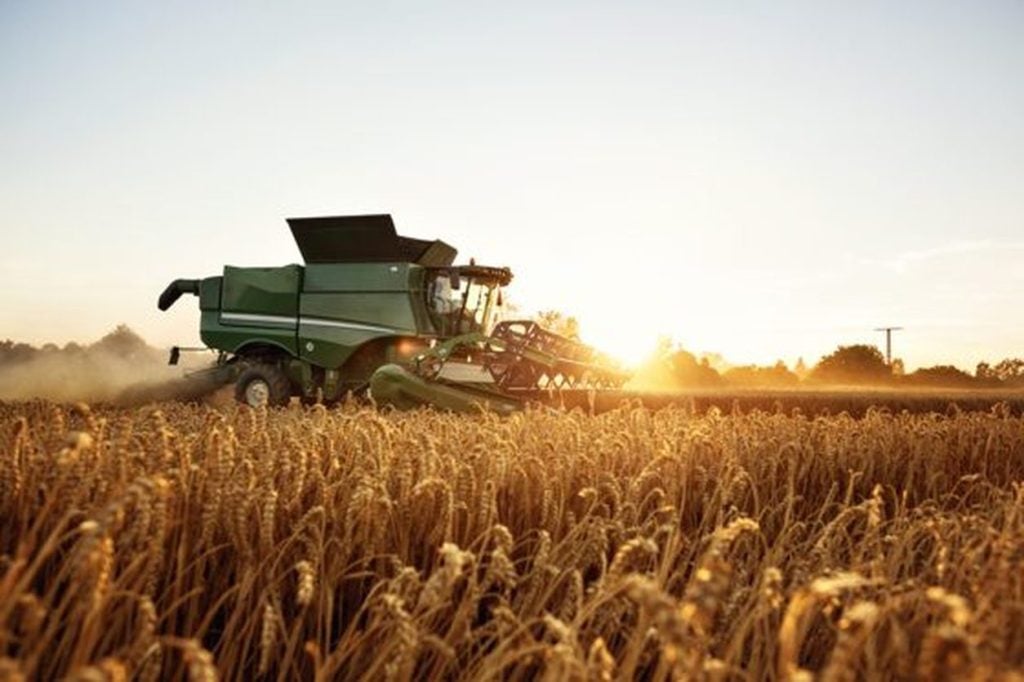
John Deere remains the reference point: Moline, Illinois headquarters, big tractors from Waterloo, Iowa, combines from East Moline, and the largest dealer and parts network in North American agriculture. Green paint carries a price premium at every auction in the country, and the resale strength is real, not mythology.
CNH unites two historic American lines: Case IH, heir to the International Harvester legacy with its Racine, Wisconsin roots and Magnum tractors from Illinois, and New Holland, whose name still points to New Holland, Pennsylvania. Red and blue between them power a huge share of working farms.
AGCO runs the multi-brand strategy from Duluth, Georgia: Massey Ferguson globally, Fendt at the premium end, and Gleaner combines built in Hesston, Kansas, a nameplate with a fiercely loyal Plains following.
The Builders People Forget Are Building Here
Kubota is a Japanese name with deep American operations centered in Gainesville, Georgia, and it owns the compact and utility tractor market that hobby farms and small operations actually buy. Claas, the German harvest specialist, builds combines in Omaha, Nebraska for the American market. The lesson inside both: brand nationality and build location are different questions, and the answer to “built in America” includes some foreign flags.
The American Specialists
Beyond the majors, a tier of focused builders dominates niches: Vermeer of Pella, Iowa in balers and forage equipment; Kinze of Williamsburg, Iowa in planters and grain carts; Great Plains of Salina, Kansas in drills and tillage. These are the companies whose equipment gets bought sight-unseen at auction by farmers three states away, because the reputations are that settled.
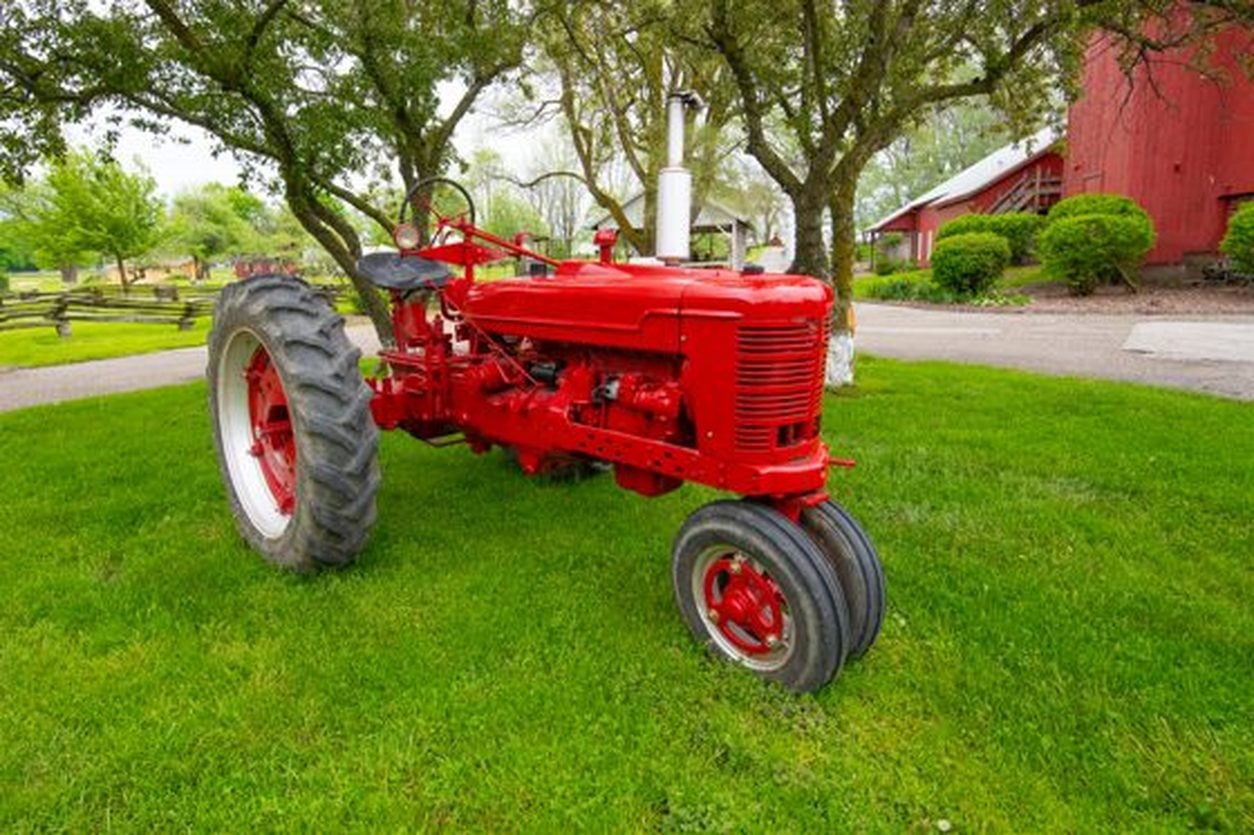
And the heritage iron still works: Farmall, International Harvester’s people’s tractor, survives both as a Case IH nameplate and as tens of thousands of working antiques. The collector market for American farm iron is genuine, national, and busy.
What the Brand Choice Really Decides
Dealer and parts proximity beats spec sheets. In planting and harvest windows, the nearest dealer with the part in stock is worth more than any horsepower difference. Deere’s network density is a real argument; so is a strong local Case IH or Kubota store. Buy the brand your county actually supports.
Resale follows color. Auction results reward the majors and the settled specialists. Orphaned brands and gray-market imports sell cheap for a reason: parts uncertainty follows them forever.
The used market is national. Retirement auctions, dealer trades and online equipment platforms move iron across state lines every week. The best-priced clean combine is rarely local, and serious buyers shop accordingly, which is where the logistics question enters.
How Farm Iron Actually Moves
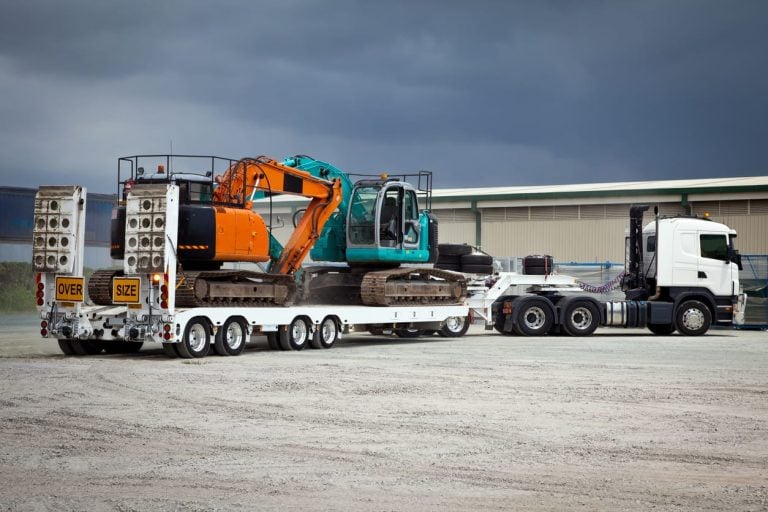
Every distant purchase ends the same way: the equipment has to come home. Tractors and combines travel on step deck and lowboy trailers as specialized freight, with width and height, not weight, usually deciding the trailer and the permits. Headers come off combines and travel alongside; duals may need removing for width; and the seller’s loader or the auction yard’s ramp handles loading at origin.
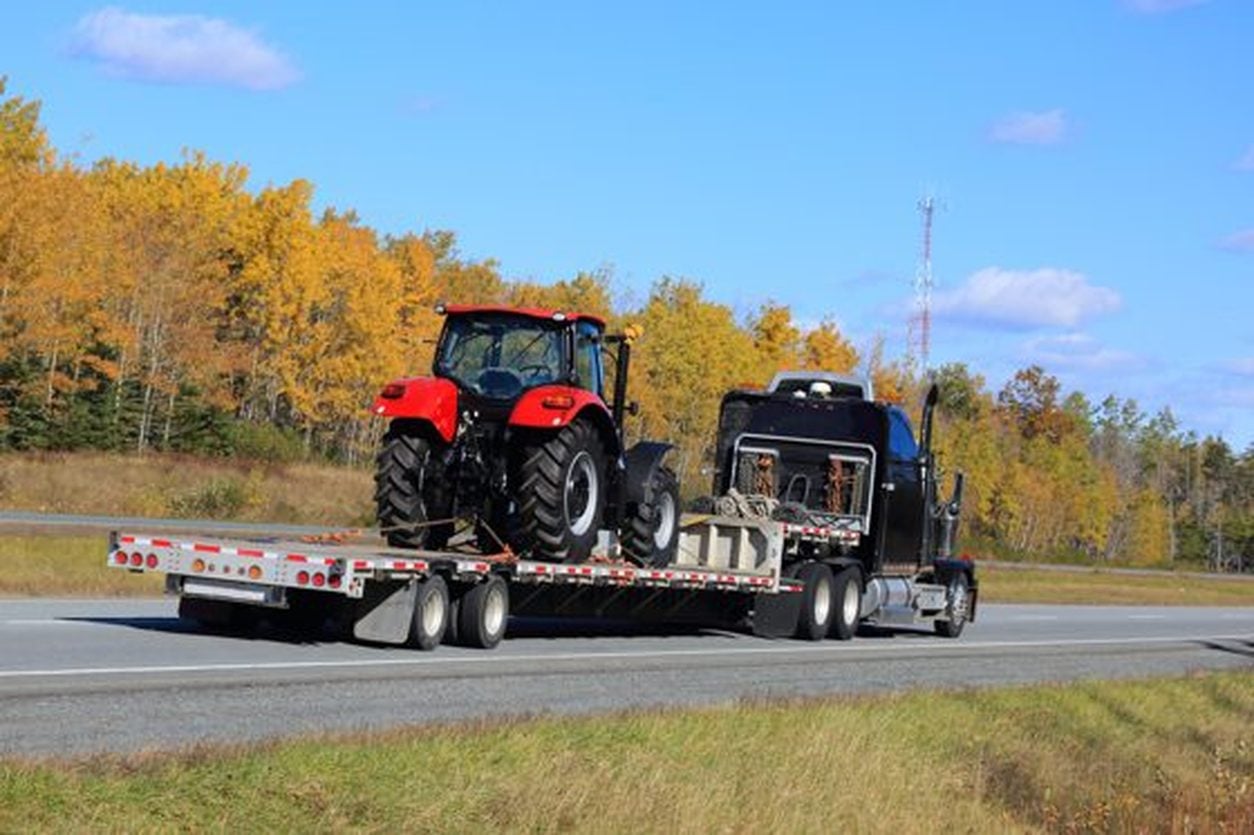
The practical rules mirror everything else in heavy haul: measure honestly, including to the top of the cab or bin extension, disclose attachments, and book the move when you bid rather than after you win, because auction yards charge storage and harvest-season trucks book out. Our tractor shipping service and equipment shipping service handle exactly these moves, from a compact Kubota on a hotshot trailer to a Class 9 combine on a lowboy with permits in five states.
Buying at a Distance: What Substitutes for Kicking the Tires
Most out-of-state equipment deals close without the buyer ever standing next to the machine, and the good ones follow the same routine. Hours matter less than history: a five-thousand-hour tractor with a folder of dealer service records beats a three-thousand-hour mystery. Ask for cold-start video, hydraulic function video, and the readouts on any monitor the machine carries. On late-model diesels, ask specifically about emissions-system health and any deleted equipment, because a machine that cannot pass a dealer inspection is worth less everywhere. And on combines, the header is half the deal: confirm what is included, its size, and whether it travels with the machine or needs its own spot on the trailer.
Auction buyers get less access but more protection from the venue: major equipment auctions publish inspection reports and condition photos precisely because their bidders are national. Read them the way the locals do, price the unknowns, and remember that the bid is not the delivered cost until the freight is in the number.
Common Questions
Who are the biggest American agricultural equipment manufacturers? John Deere leads, with CNH (Case IH and New Holland) and AGCO (Massey Ferguson, Fendt, Gleaner) completing the majors, plus specialists like Vermeer, Kinze and Great Plains.
Are Kubota and Claas American manufacturers? They are foreign-owned brands with real American factories, Kubota in Georgia and Claas in Nebraska. Build location and brand nationality are separate questions.
Which brand holds value best? Auction results consistently favor John Deere, with strong showings for Case IH and the established specialists. Local dealer strength moves resale as much as the badge does.
How does farm equipment get transported after an auction? On step deck and lowboy trailers as specialized freight. Width and height drive the permits; booking early beats yard storage fees.
Should I buy farm equipment from another state? The used market is national and the specialists’ reputations travel. If the machine and price are right, transport is a solved problem and usually a small share of the deal.
Get a Quote
Call Ship A Car, Inc. at (866) 452-3657 with the machine, its dimensions and both zip codes, or price the move with the specialized transport calculator.