Transportation of Heavy Equipment in, out and within the State of Illinois
If you’re planning on shipping heavy equipment within Illinois, there are a few crucial considerations that you’ll need to keep in mind. These include the shipping services you’ll need, the appropriate trailer type for your heavy equipment, and the shipping pricing & timeline.
Below, we’ll go through each of these steps in more detail. Let’s get started!
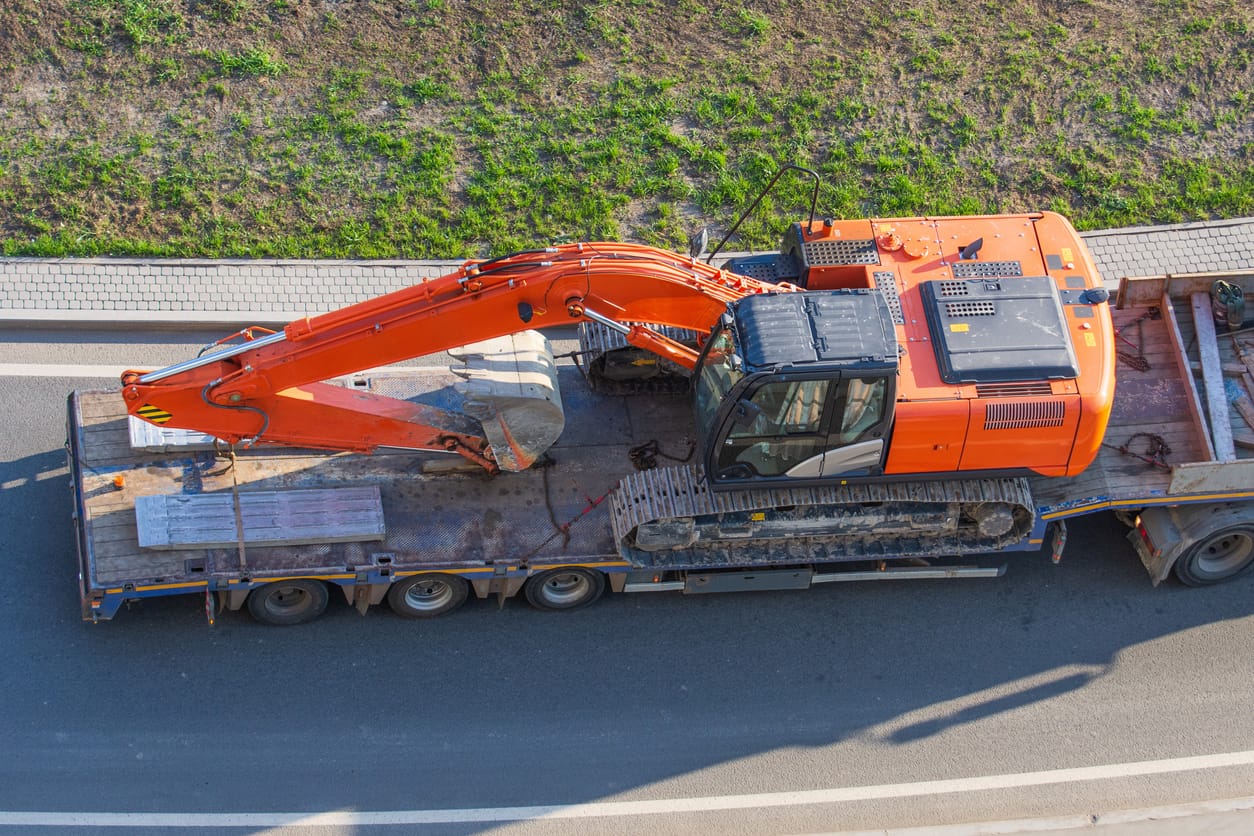
Heavy Equipment Shipping Services
Several heavy equipment shipping services are offered in Illinois, so you must see which service you’ll need for your transport and ensure that the shipping company you’ll be using offers that service.
Here’s a non-exhaustive list of types of equipment you might need to be shipped:
- Aircraft
- Mining tools
- Backhoes
- Tractors & farm equipment
- Building materials
- Construction tools
- Transformers
- Heavy vehicles
We recommend finding a shipping company that offers and specializes in whatever category of heavy equipment you need shipped. This will ensure that your chosen company has the experience and credentials to ship your items effectively.
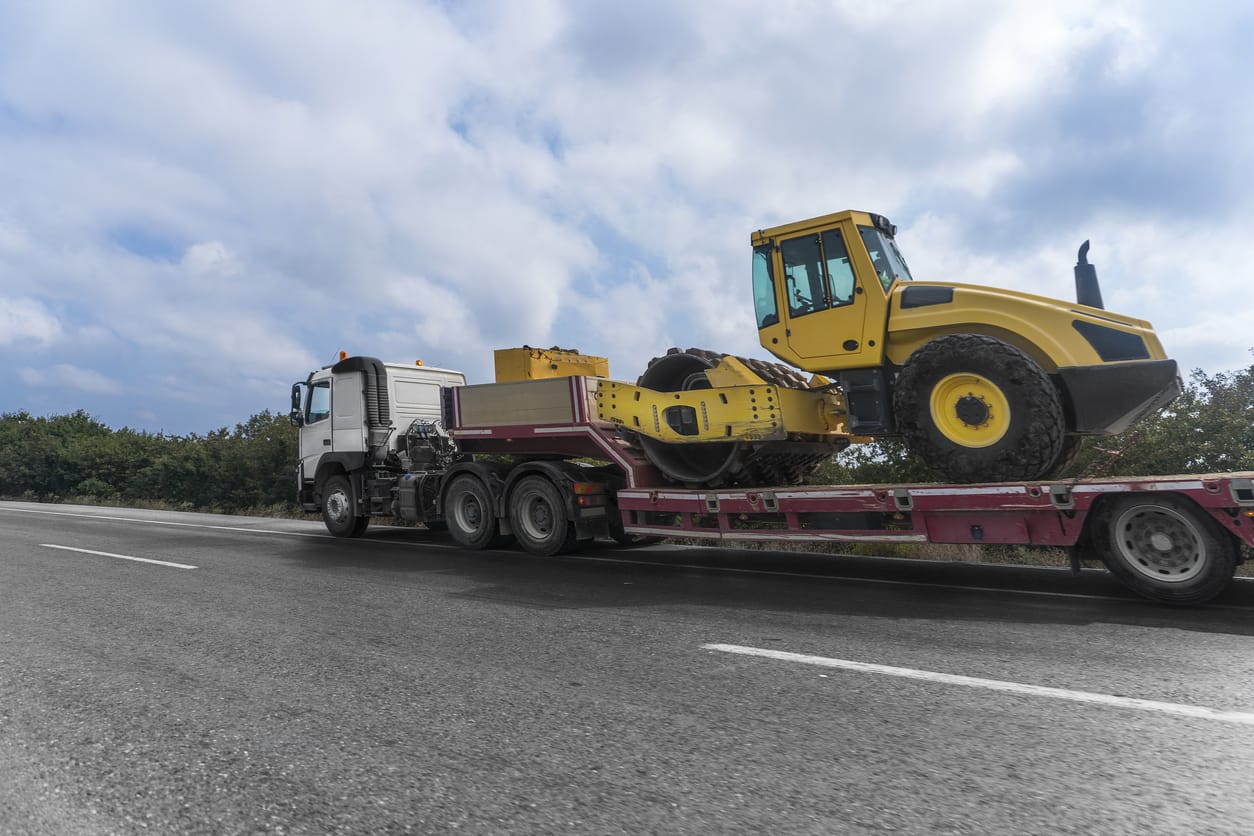
Types of Trailers for Heavy Equipment
Next, a key component of shipping heavy equipment is the type of trailer.
There are multiple categories of trailer types for shipping heavy equipment. Each class has pros and cons and will primarily help carry specific equipment categories.
Let’s walk through the three main trailer types you’ll see your shipping company use.
Flatbed
Flatbeds are a highly versatile trailer type helpful in shipping heavy equipment.
That said, they tend to work best when dealing with equipment that doesn’t require an enclosure, and they often perform well for tools and vehicles that are hard to fit into standard trailers.
Generally, they are the ideal trailers for construction, mining, and agricultural equipment. Cranes are particularly well-suited for flatbeds, as their shape and size make them more challenging to fit into other shipment containers.
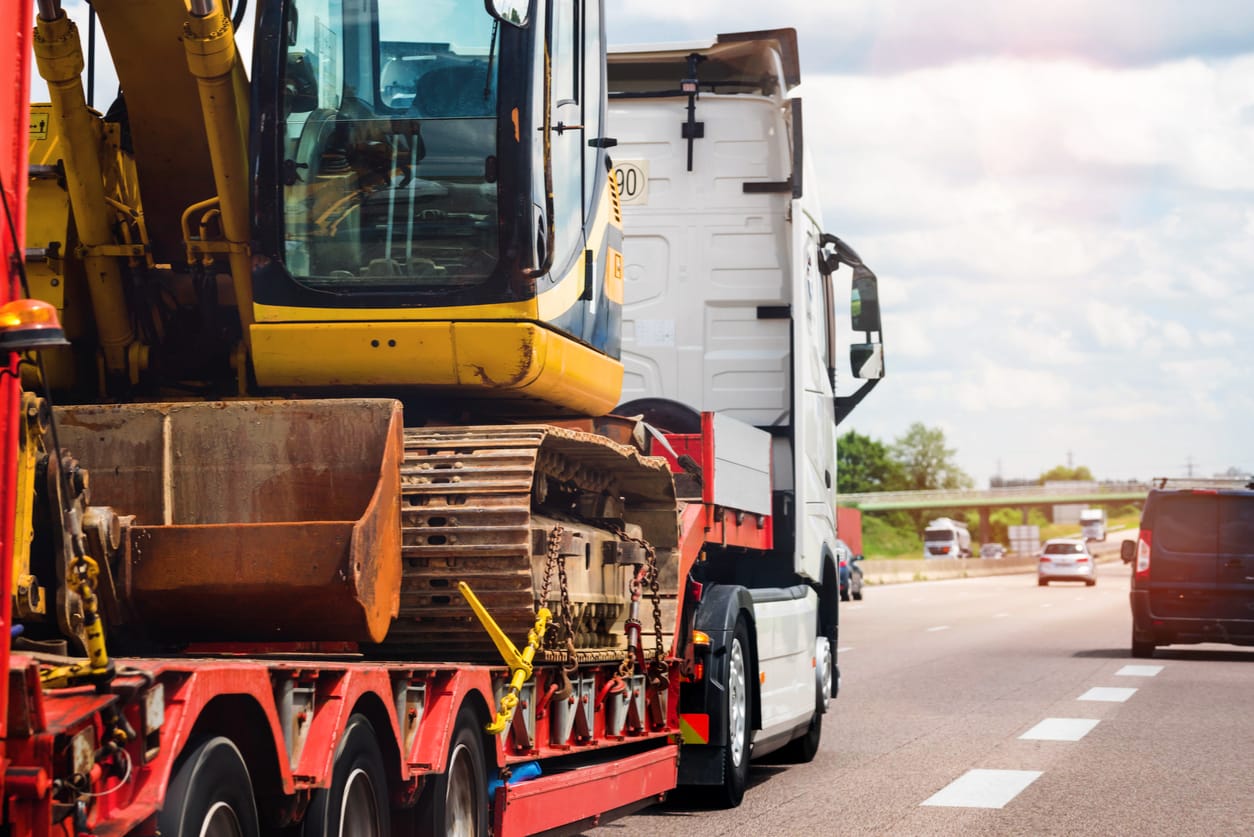
Stepdeck
Stepdeck trailers are the optimal choice for equipment that reaches too high to fit in traditional flatbed trailers.
Whether you are shipping to, from, or within Illinois, a stepdeck will work wonderfully for cargo that can’t fit properly in smaller flatbed trailer designs. The extra space the drop in a stepdeck trailer provides allows for a greater capacity to transport tall machinery and vehicles.
Additionally, stepdecks can carry up to 48,000 lbs, so they are still a strong choice for many types of heavy equipment.
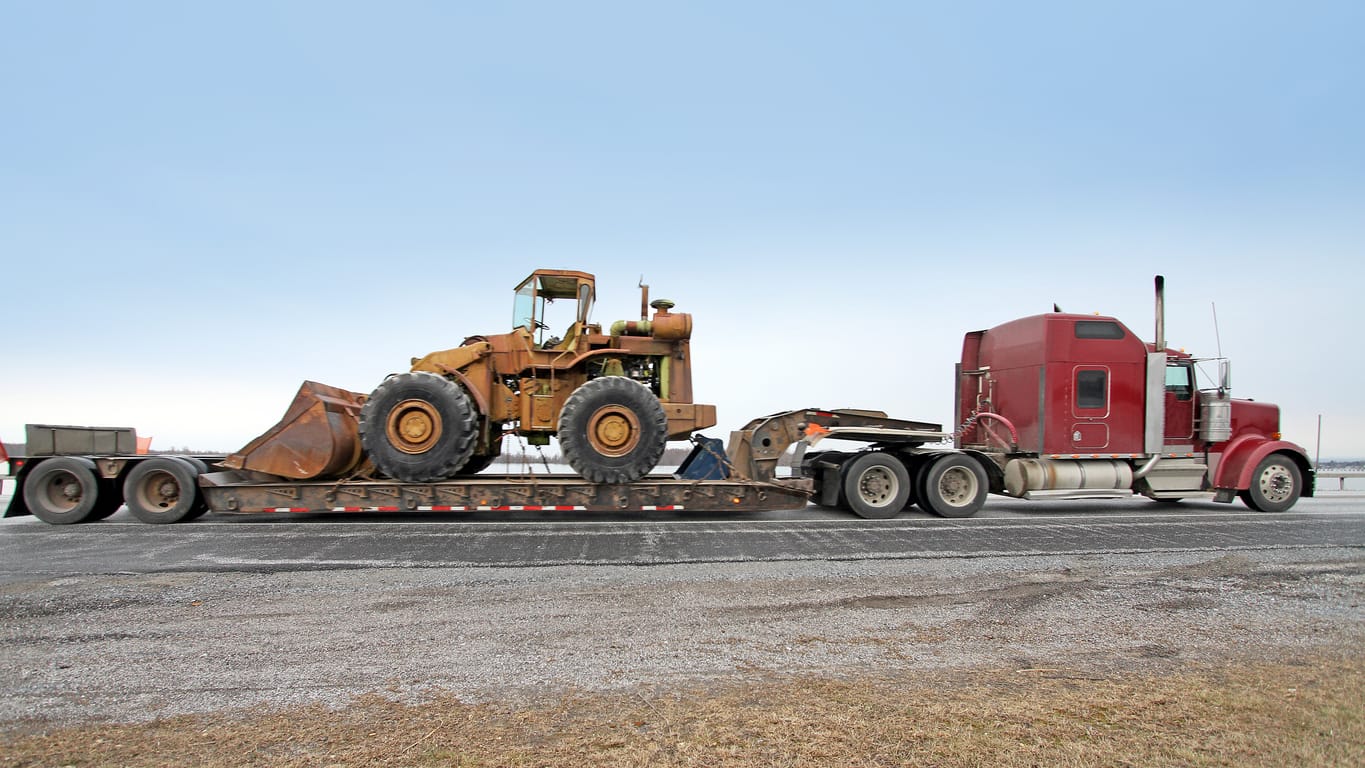
Removable Gooseneck (RGN)
Lastly, Removable Gooseneck (RGN) trailers are another equipment transport option.
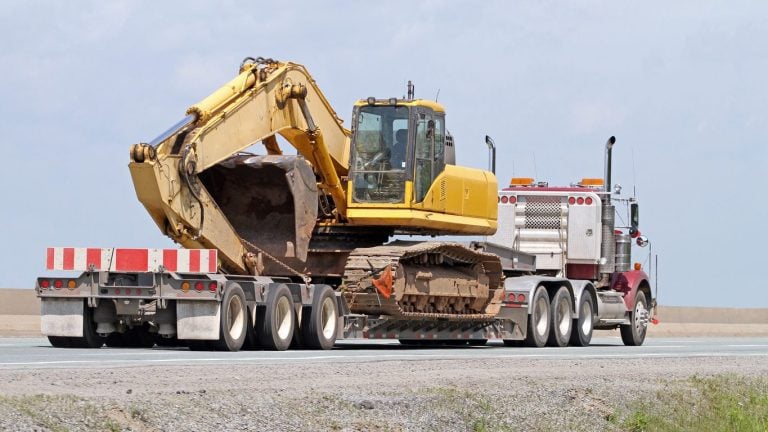
With RGNs, the primary advantage is the trailers’ ability to ship much heavier or oversize equipment. For example, RGNs often make a good choice for shipping machineries such as backhoes and other highly specialized pieces of equipment.
The high weight limit of this trailer makes it the ideal option for the heaviest types of cargo.
Pricing for Illinois Heavy Equipment Shipping
You have a couple of options to calculate the cost of transporting heavy equipment in Illinois.
The first (and easiest) choice is to contact your shipping company directly and get a quote for the transport cost. When you tell them exactly where to and from the equipment needs to travel, they will offer you a highly accurate pricing quote.
Another option is to use an online calculator. While this won’t get you as accurate of an estimate as contacting the shipping company, it’s a fast process and usually gives you a reasonably reliable ballpark figure.

Estimating Heavy Equipment Shipping Times
The shipping time for your heavy cargo depends on multiple variables like distance, time of year, road conditions, and weather.
Because these variables are so difficult to generalize, giving a universal shipping time is impossible.
However, it generally holds that the process won’t take much longer than two weeks. If you’re shipping entirely within Illinois, it’s likely to take much less time, and you’ll likely see the equipment shipped in a matter of days.

Conclusion
There are many factors to analyze if you plan to ship heavy equipment to or from an Illinois destination. But, so long as you have a firm grasp on the steps you’ll need to complete, and what shipping services you’ll need to use, you’ll find this process entirely doable.
For more information on auto and equipment transport, call or visit Ship a Car Inc.!