Where Vehicle Transport Fits in a Supply Chain
Moving finished vehicles is a distinct discipline within logistics, and it behaves differently from every other kind of freight. The cargo drives itself, it cannot be stacked, it is damaged by things that would not touch a pallet, and its value per unit is far higher than most of what moves on a truck.
Here is how it actually works, who the participants are, and why the constraints are what they are.
Why Vehicles Are Their Own Category
Four differences from general freight, and each one shapes the equipment and the economics.
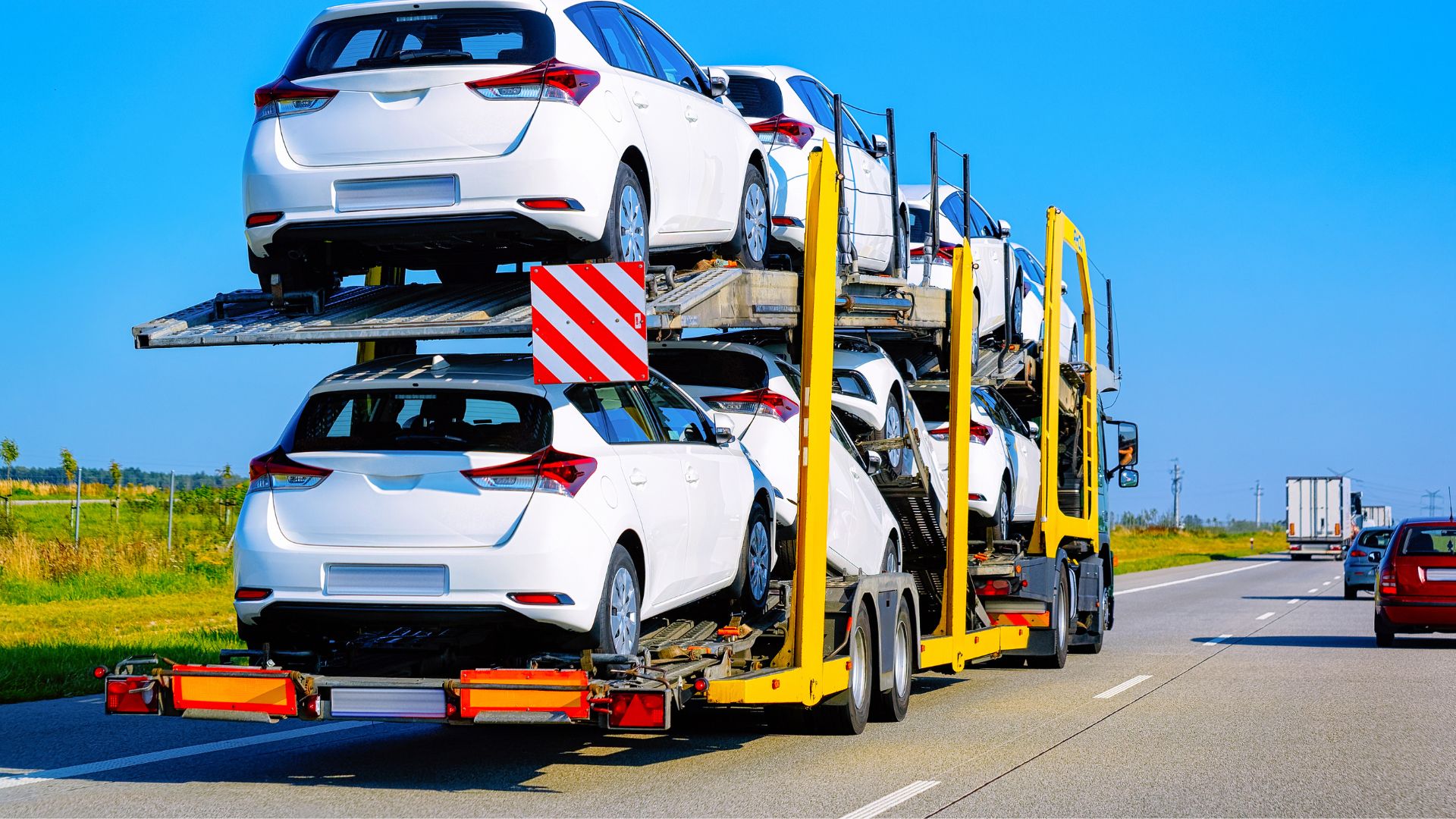
It cannot be stacked or containerized in ordinary use. A car occupies a fixed footprint on a deck, so a hauler carries seven to ten units rather than a cube of pallets. Capacity is measured in slots, not cubic feet.
It is self propelled. Loading means driving each unit up ramps onto an inclined deck within inches of tolerance. That is skilled manual work, it takes real time at both ends, and it cannot be mechanized the way pallet handling can.
It is damage sensitive in unusual ways. A stone chip, a strap mark or a scuffed wheel is a claim on a vehicle and would be nothing on a crate. That drives the entire condition report and bill of lading process.
Value per unit is high. Nine vehicles on a trailer can represent several hundred thousand dollars, which is why cargo insurance limits and their per load application matter so much more here.
The Flows: New, Used and Consumer
Three distinct movements share the same trucks and behave very differently.
New vehicle distribution runs from assembly plants and ports to dealerships, often via rail for the long leg with trucks handling the final delivery. This is the most planned and predictable flow, with volumes known in advance.
Wholesale and remarketing moves used vehicles between auctions, dealers, lease return centers and rental fleets. Higher volume than most people realize, and driven by auction calendars rather than production schedules.
Consumer transport is the individual move: a relocation, an out of state purchase, a seasonal migration. Less predictable per shipment and, in aggregate, remarkably seasonal.
The three compete for the same drivers and equipment, which is why a surge in one is felt in the others.
Rail Does the Long Middle
For new vehicle distribution particularly, a great deal of the distance is covered by rail in multilevel autoracks rather than by truck.
The logic is straightforward: rail is cheaper per mile over long distances and can move far more units per movement. What rail cannot do is reach a dealership or a residential address, so trucks handle origin and destination legs. Vehicle logistics is intermodal by design at the manufacturer level.
For an individual customer none of this applies. A single vehicle moving between two addresses goes by truck, because the cost and time of getting one car onto and off a railcar exceeds any saving.
Brokers, Carriers and Why Both Exist
The structure confuses people, and it has a real logic.
A carrier owns trucks and moves vehicles. Most are small: the sector has a long tail of owner operators and fleets of a handful of trucks, and even the largest operators cover a fraction of the country’s lanes.
A broker holds federal authority to arrange transport, maintains a vetted network of carriers, and matches loads to whoever is actually positioned to run them. That exists because no single carrier can serve every route, and because a customer with one car has no practical way to find the truck already heading that direction next Tuesday.
What a customer should expect from either is verifiable authority, an insurance certificate, and, from a broker, being told which carrier is assigned. That last point is the one to insist on, because it is what makes the verification possible.
The Constraints That Set Capacity
Five, and they explain almost every pricing question.
Legal weight limits. A loaded hauler is near its gross limit, so vehicle weight determines how many units fit. This is why electric vehicles, several hundred pounds heavier than equivalents, change the load plan.
Hours of service. Federal rules cap driving time per day, so transit is a function of legal hours rather than distance divided by speed.
Deck geometry. Height and ground clearance determine which positions a vehicle can occupy. A tall truck cannot go in an upper slot with limited clearance; a low sports car cannot manage a steep ramp angle.

Access at both ends. A 75 foot combination needs room to turn and clear overhead space, which a great many residential streets do not have. This is the single most common cause of a failed pickup.
Backhaul balance. Carriers price a lane on the assumption of finding a return load. Routes with unbalanced flows, most visibly seasonal migrations and anything to Alaska, cost more in the busy direction because the truck may return empty.
What This Means for a Shipper
Three practical consequences fall out of the structure above.
Flexibility on dates is worth more than negotiation, because it lets a carrier fit your vehicle into a route that already exists rather than justify a special trip. Accurate vehicle description directly determines cost, since weight, height and clearance decide which slot and which trailer. And access information given honestly at booking prevents the most common and most expensive failure mode.
The full set of factors that set a price is covered in our page on what determines the cost of shipping a car, and for businesses moving several units at once, transporting multiple vehicles covers how full loads change the arithmetic.
Common Questions
How is vehicle transport different from general freight? The cargo cannot be stacked, it is driven on and off, it is damage sensitive in unusual ways, and value per unit is high.
Do cars move by rail? New vehicle distribution uses rail for long legs with trucks at each end. Individual customer moves go by truck.
Why use a broker rather than a carrier directly? Most carriers are small and cover limited lanes. A broker matches your vehicle to whoever is actually positioned to run it.
What limits how many cars fit on a trailer? Legal weight limits and deck geometry, so vehicle weight, height and clearance all matter.
Why does the same distance cost different amounts? Route balance, access at both ends, timing, and how far each end sits from a main corridor.
Get a Quote
Call Ship A Car, Inc. at (866) 821-4555 with both zip codes, your date range and the vehicle details, or request an estimate for the move through the quote calculator.