Moving Multiple Vehicles: What Dealerships Need to Know
Shipping ten cars is not shipping one car ten times. The pricing works differently, the scheduling works differently, and the paperwork that protects a dealership on a single retail delivery is not the paperwork that protects it on a load of inventory.
Here is how multi vehicle transport actually works from the dealer side: how loads are priced, what to specify, and where the money is lost when it goes wrong. For households and collections rather than inventory, see our multi-car shipping page.
Full Loads Change the Economics
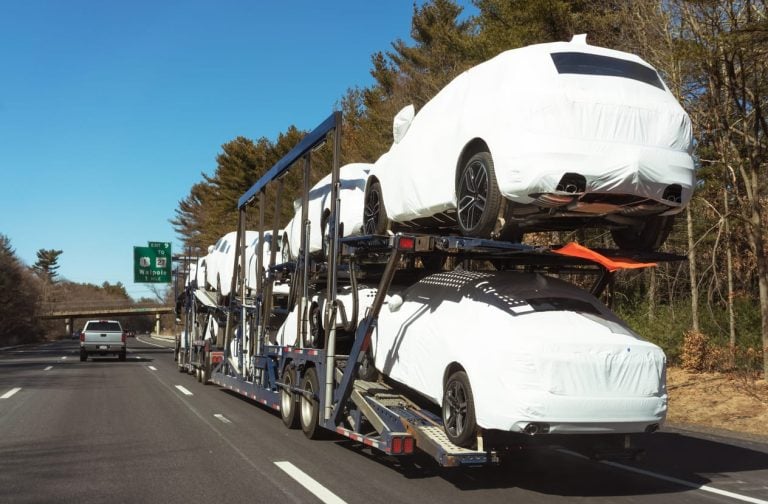
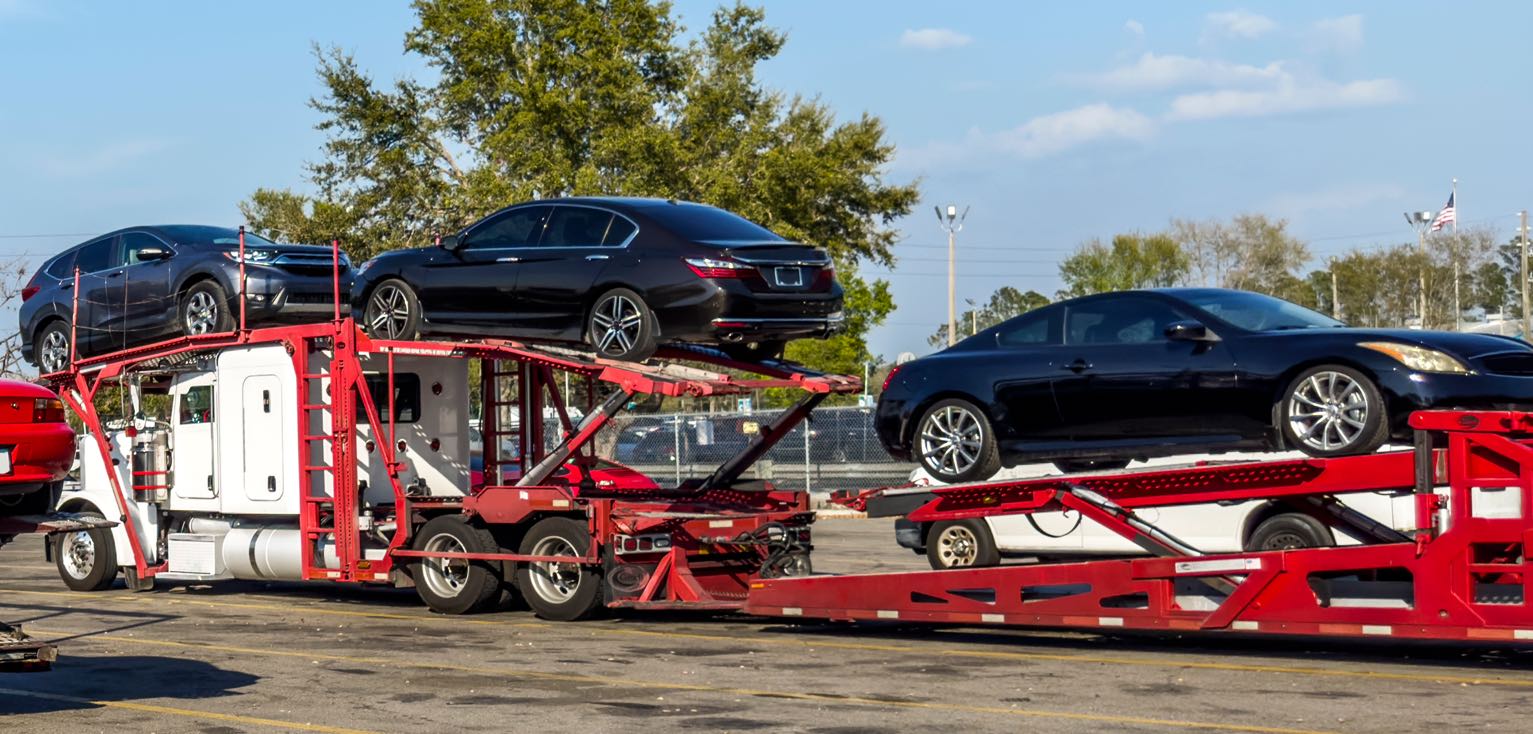
A standard open car hauler carries between seven and ten vehicles depending on their size. When a dealership can fill a trailer, the per unit cost drops substantially, because the carrier is not combining your cars with several other customers’ cars along a route.
That is the single largest lever available to a dealer. Consolidating shipments into full or near full loads, even if it means holding units for a few days, usually beats sending them piecemeal.
Vehicle mix matters more than the count. Large SUVs and trucks take more deck space than sedans, so a load of full size trucks fills a trailer faster than a load of compacts. When you request a quote, provide the actual mix rather than a number, because that is what determines how many will fit.
Partial Loads and Dedicated Runs
Between one car and a full load sit two useful options.
Partial loads put your three or four units on a trailer alongside other freight. Cheaper than individual bookings, slower than a dedicated run, and the standard choice for routine inventory moves.
Dedicated runs put a truck exclusively on your cars. It costs more per unit than a shared load but it is direct, the timing is controlled, and there are no intermediate stops. This is what you use when a unit has to be on the lot for a specific date or when the inventory is valuable enough that fewer handling events is worth paying for.
The mistake worth avoiding is defaulting to one mode for everything. Most dealerships run a mix, and the decision belongs to each shipment rather than to a policy.
Auction Pickups Run on a Clock
Cars bought at auction come with storage deadlines. Most auction houses allow a limited number of free days after the sale, and then charge daily storage that accumulates faster than most buyers expect.

So the transport arrangement should start when the bid is won rather than when the title arrives. Give the carrier the auction location, the buyer number, the stock or lot numbers and the gate release requirements up front. Every auction has its own release procedure, and a driver turned away at the gate is a wasted trip that still costs money.
Confirm too whether each unit runs and drives. Auction inventory frequently includes vehicles that do not, and a non runner needs a winch equipped truck rather than the one that just arrived.
Condition Reports Are the Whole Defense
On a single retail delivery, a customer inspects their own car. On a load of inventory arriving at a busy dealership, that inspection often gets compressed into a signature, and that is where claims are lost.
Set a standing process. Every unit is photographed at origin and at delivery. The bill of lading is checked against the actual condition before signing, and any damage is noted on the document at the time rather than reported afterward. A clean signed bill of lading is very difficult to dispute later.
Designate who is authorized to receive vehicles and make sure they know that signing without inspecting transfers the risk. This one procedural change prevents more losses than any other.
Open, Enclosed, and When It Is Worth It
Open transport is the industry standard and it is what the vast majority of new and used inventory moves on. It is the right choice for ordinary stock.
Enclosed earns its premium in specific situations: exotic and high line units, anything with fresh paint or bodywork, low ground clearance vehicles that need a lift gate, and collector inventory where the arrival condition is part of the sale. For a dealership handling premium brands, the cost difference is small against the cost of reconditioning a stone chip on a six figure car.
Verify the Carrier, Every Time
Dealerships move enough volume that a bad carrier relationship compounds quickly. Three checks are worth making standard.
Confirm the operating authority is active and the safety record is available through the federal motor carrier database. Ask for the certificate of cargo insurance and check the per load limit against the value of what you are shipping, since a load of ten premium units can exceed a standard limit. And confirm who is actually hauling: a broker arranging the load is normal and useful, but you should still know which carrier is assigned and be able to check them.
A broker with a vetted network is generally better for a dealer than a single carrier, because a single carrier can only be in one place. The value is in the network plus the vetting, not in one truck.
Access, Timing and the Lot
Deliveries fail on practical details more than on price. A full size hauler needs room to turn and level ground to unload. Many dealership lots are fine; many urban ones are not, and a nearby staging point is standard practice where they are not.
Agree the delivery window against your staffing rather than your ideal. A load arriving when nobody is available to inspect it is how unchecked bills of lading get signed. And build slack into the schedule: car hauling runs to a window rather than an appointment, and a plan that depends on an exact hour will fail regularly.
Common Questions
How many vehicles fit on a trailer? Typically seven to ten on an open hauler, depending on the mix. Trucks and large SUVs take more space than sedans.
Is a full load cheaper per car? Substantially, which is why consolidating shipments is the largest cost lever a dealership has.
How fast do auction storage fees start? After a limited number of free days, and they accrue daily. Arrange transport when the bid is won.
What protects us against transit damage? Photographs at both ends and a bill of lading annotated before signing. A clean signature is hard to dispute later.
Do non running units cost more? Yes, since they need winch equipped equipment. Flag them at booking rather than at pickup.
Get a Quote
Call Ship A Car, Inc. at (866) 821-4555 with the vehicle mix, both locations and your date range, or request an estimate for the move through the quote calculator.