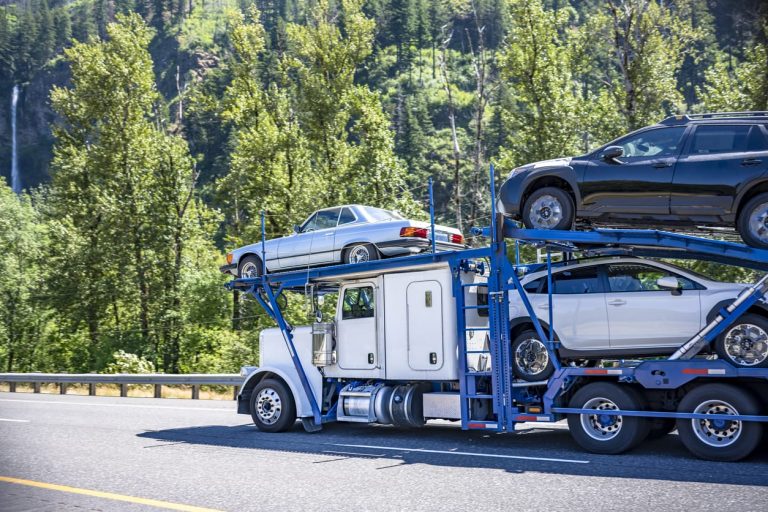
Shipping a Car from Texas to California
This lane is cheaper westbound than eastbound, and that is the single most useful thing to know about it. More people have been moving from California to Texas than the other way for several years now, so carriers heading east run full and carriers heading back west have space to fill. If you are moving to California, you are riding the lighter direction and the price reflects it. The rest comes down to where in Texas you start, and one California rule that is worth checking before you book anything.

Where in Texas You Start Changes Everything
Texas is nearly 800 miles wide, so “Texas to California” covers two very different trips.
El Paso is the outlier worth noticing. It sits on I-10 more than 500 miles west of the rest of the state, which makes it a genuinely short haul to Southern California rather than a cross country one.
What It Costs
Open transport ranges for a standard sedan into the Los Angeles area, outside peak season.
Northern California adds roughly $150 to $250 over the Los Angeles figure. A full size truck or SUV adds meaningfully, and a vehicle that will not start or roll adds roughly $100 to $250 for winching. Those are planning estimates, and our own book since 2023 shows the direction matters: the middle half of Texas to California open-carrier car orders ran $800 to $1,100, while the middle half of California to Texas open-carrier car orders ran $1,050 to $1,450; the lane pages for Texas to California car shipping and California to Texas car shipping carry the waiting times and what moves the price in each direction. For a detailed breakdown, see our Texas to California cost guide.
Check the Car Can Be Registered in California First
This is the step people skip, and it is the expensive one to get wrong. California sets its own emissions standards, and the rule that matters turns on who bought the car and where. A car you registered in Texas before moving can be registered here even if it was built to the federal 49-state standard, with proof of that registration and a smog check; a nearly new 49-state car bought out of state by someone who already lives in California, under 7,500 miles at purchase, is the one the DMV refuses.
Confirm your specific year and model with the California DMV or the Bureau of Automotive Repair before you book transport. New residents also have a short window, currently 20 days, to register once residency is established. Our California registration walkthrough covers the detail.

Why Direction Changes the Price
Auto transport is priced on a load board, where carriers pick the loads that keep their trucks full in the direction they are already going. When more vehicles need to move one way than the other, prices rise on the busy side and soften on the return.
Texas has been gaining residents from California for several years, which means the eastbound lane carries the heavier flow. Practically, a car going Texas to California often moves on a truck that would otherwise return with empty slots, so westbound quotes tend to come in lower and assignment tends to be quicker.
If you are moving the other way, plan for the opposite. Book California to Texas earlier and expect less negotiating room, particularly in summer.
Border Inspection Stations
Vehicles entering California pass through agricultural inspection stations on the main highways, including I-10 and I-40 coming from the east. Commercial carriers stop as a matter of routine.
It is not something you need to prepare for and it rarely adds more than a few minutes, but it is one more reason not to leave produce, plants or firewood in a car you are shipping. Personal items should be out of the vehicle anyway.

Preparing the Vehicle
Standard preparation applies and the pre-pickup checklist covers it. Wash the car so existing marks are visible, photograph every panel in daylight, empty it out, and leave about a quarter tank of fuel.
Two additions for this route. Remove your Texas toll tag, because a transponder left on the windshield can be billed for the truck’s crossings rather than yours. And if the car has been sitting in Texas summer heat, have the battery tested before pickup rather than discovering it in a parking lot in California.
At delivery, inspect before signing. Compare the car against the pickup condition report and your photographs, check the roof and lower panels, start the engine, and note any exception on the bill of lading while the driver is present.
Common Questions
How long does it take? Three to five days from most of Texas, one to three from El Paso, four to six from Houston. Transit counts from pickup, not from booking.
Is it cheaper than driving? Usually, once you count fuel, two nights of lodging, the days off work and the wear. Driving wins mainly from El Paso.
Can any car be registered in California? A car you owned and registered in Texas before moving can be, with a smog check, even if it was built to the 49-state standard. A nearly new 49-state car that a California resident buys out of state can be refused.
Why is coming back more expensive? More vehicles move California to Texas than the reverse, so the eastbound direction carries the heavier demand.
How far ahead should I book? One to two weeks on this lane outside summer, three to four in June through August.
Get a Quote
Call Ship A Car, Inc. at (866) 821-4555 with both zip codes and your dates, or request an estimate for the move through the quote calculator.