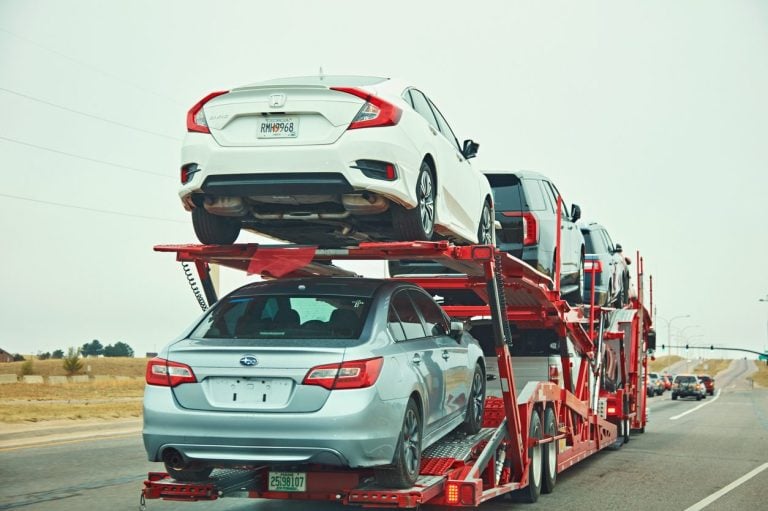
Shipping a Car from Miami to San Francisco
Miami to San Francisco is about 3,000 miles, which makes it one of the longest domestic lanes in the country and one where the estimate genuinely matters. It is a well served corridor in both directions, but a coast to coast run crosses several climate zones, two time changes and a lot of open desert, and the schedule reflects that.
The Route and Why It Is Not a Straight Line
Carriers run this as a southern crossing for most of the year, and it is worth knowing which way your car is going.
The usual path is Interstate 10 west from Florida through Mobile, New Orleans, Houston, San Antonio, El Paso and Tucson into Phoenix, then across to Los Angeles and north on Interstate 5. The alternative, Interstate 40 through Oklahoma and Arizona, joins the same California leg further north.
What a carrier will not do in winter is take a northern route across the Rockies for a load like this. The southern crossing stays open, and that is the point of it.
San Francisco is at the end of the I-5 leg rather than on the main corridor, which is why Bay Area deliveries usually price a little above Los Angeles even though the extra distance is only a few hundred miles.
How Long It Really Takes
Plan on eight to twelve days door to door.
Transit alone is typically seven to ten days once the vehicle is collected. A driver covers a few hundred miles a day within federal hours of service limits, and this lane involves multiple pickups and deliveries along the way rather than a single dash. Add a few days for a carrier to be assigned after you book.
Anybody promising a fixed arrival day on a 3,000 mile lane is either charging for a dedicated truck or is not being straight with you. Expect a window, and build a couple of days of slack into whatever depends on the car arriving.
Both Ends Are Difficult for Different Reasons
This is the part that catches people on this particular route, and it is worth settling at booking.
Miami has gated communities, condominium towers, narrow causeways and streets where a 75 foot truck simply cannot turn around. Many buildings will not admit a commercial vehicle at all, and some restrict delivery hours.
San Francisco is harder still. Steep hills, one way streets, permit parking, low clearances in garages and almost nowhere legal for a car hauler to stop for twenty minutes. Delivery to a city address is frequently impossible rather than merely awkward.
The normal arrangement at both ends is a meeting point: a large retail lot near a highway, or somewhere outside the dense core. In the Bay Area that often means south of the city or across a bridge. Agree it when you book and the whole thing becomes routine.
What It Costs
Distance sets the base and this is a long lane, so it is not a cheap move. After that the variables are familiar.
Vehicle size and weight matter: a full size SUV or truck takes more deck space and more of the trailer’s allowance than a sedan. A non running vehicle needs a winch and an equipped carrier, which costs more. Enclosed adds about a third.
Season matters in both directions. Summer is the industry peak, and the Florida snowbird windows in spring and autumn pull trucks onto other lanes and tighten capacity generally.
Treat a quote well below the others as a warning rather than a win. Loads are chosen by carriers from a live board, and a below-market rate sits unaccepted while your dates slip.
Open or Enclosed on a Long Run
Open transport carries almost every vehicle on this lane and it is right for an ordinary car.
Enclosed is worth the premium on a collector vehicle, fresh paintwork or a wrap, and it has a specific argument on this route: 3,000 miles is a lot of exposure to road debris, desert sun and whatever the weather does across three time zones. If the car is valuable, this is the lane where enclosed earns its money.

Registration and Residency in California
If this is a move rather than a delivery, the administrative side is worth knowing before the car arrives.
California expects new residents to register a vehicle within a set period of establishing residency, and it applies its own emissions standards rather than the federal ones. Most out of state vehicles need a smog check before they can be registered, and a small number of vehicles built to federal specification face additional requirements.
If your car is modified, imported or otherwise unusual, confirm it can be registered in California before it ships rather than after it arrives at the other end of a 3,000 mile trip. Insurance is worth a call too, since rates are location based and San Francisco is not Miami.
Preparing the Car
Wash it so existing marks are visible, then photograph every panel in daylight, including the wheels, the lower bumpers and the rocker panels, which are what loading marks. Photograph the odometer.
Leave about a quarter tank of fuel. Empty the cabin and the trunk completely, since personal items are not covered by cargo insurance and they add weight to a load already crossing the country. Fold the mirrors, disable a motion sensitive alarm, remove the toll transponder and hand over a physical key.
On a run this long, check the battery before pickup. A car that starts fine every morning may not start after ten days standing on a trailer, and a vehicle that will not move under its own power at delivery is handled as inoperable.
At delivery, inspect before signing. Compare against your photographs and note anything unexpected on the bill of lading while the driver is present. Our California car shipping page covers the destination state in more detail.
Common Questions
How long does Miami to San Francisco take? Eight to twelve days door to door, of which seven to ten is transit once the car is collected.
Which route does it take? Usually Interstate 10 across the south, then north on Interstate 5 from the Los Angeles area. Northern routes are avoided in winter.
Can the truck deliver to a San Francisco address? Frequently not. Hills, one way streets and nowhere legal to stop mean a meeting point outside the dense core is normal.
Is enclosed worth it on this lane? More than on a short one. Three thousand miles is a lot of road debris and sun for a vehicle you care about.
Should I check the battery? Yes. Ten days standing is longer than most cars ever sit, and a flat battery at delivery makes it an inoperable vehicle.
Get a Quote
Call Ship A Car, Inc. at (866) 821-4555 with both zip codes, your date range and how flexible you can be on the handover points, or request an estimate for the move through the quote calculator.