The Real Cost to Ship a Car from New York to Texas
New York to Texas is a long lane on a busy corridor, which is good news for what it costs. It runs roughly 1,500 to 1,900 miles depending on which end of each state you are talking about, carriers move it constantly in both directions, and the price is set by a live market rather than a rate card. What follows is what actually moves that number, so you can judge a quote instead of guessing at one.

Distance Sets the Floor, Not the Price
Longer trips cost more in total and less per mile. A 1,700 mile run spreads the fixed parts of the job, the loading, the paperwork and the driver’s time at each end, across far more miles than a 300 mile move does.
That is why quoting per mile is misleading. What matters is the whole lane: how many carriers already run it, how full they are this week, and how far off their route your two addresses sit.
The Corridor Works in Your Favor
This lane is well served, and that is most of why it prices reasonably.
Carriers running south from the Northeast use Interstate 81 and Interstate 40, or the Interstate 95 and Interstate 20 route through the Southeast. Both are heavily trafficked freight corridors, and both connect the New York metropolitan area to Dallas, Houston, Austin and San Antonio without detours.
Compare that with a lane between two small cities off the interstate system, where a carrier has to justify the mileage. Here your car joins a route that already exists, which is the single biggest reason ordinary New York to Texas moves get assigned within a few days.
What Actually Changes Your Quote
Six things, roughly in order of how much they move the number.
Open or enclosed. Enclosed transport runs about a third more. It is the right call for a collector car, fresh paintwork, a wrap or anything with real value, and unnecessary for an ordinary daily driver.
Vehicle size and weight. A carrier sells deck space and payload. A full size pickup or a three row SUV takes the space of a sedan and a half and weighs considerably more, so it prices higher. A compact car is the cheapest thing on the trailer.

Whether it runs. An inoperable vehicle needs a winch and a carrier equipped for it, which narrows the pool and adds cost. Say so up front. A car that is discovered not to start at pickup is the most expensive kind of surprise.
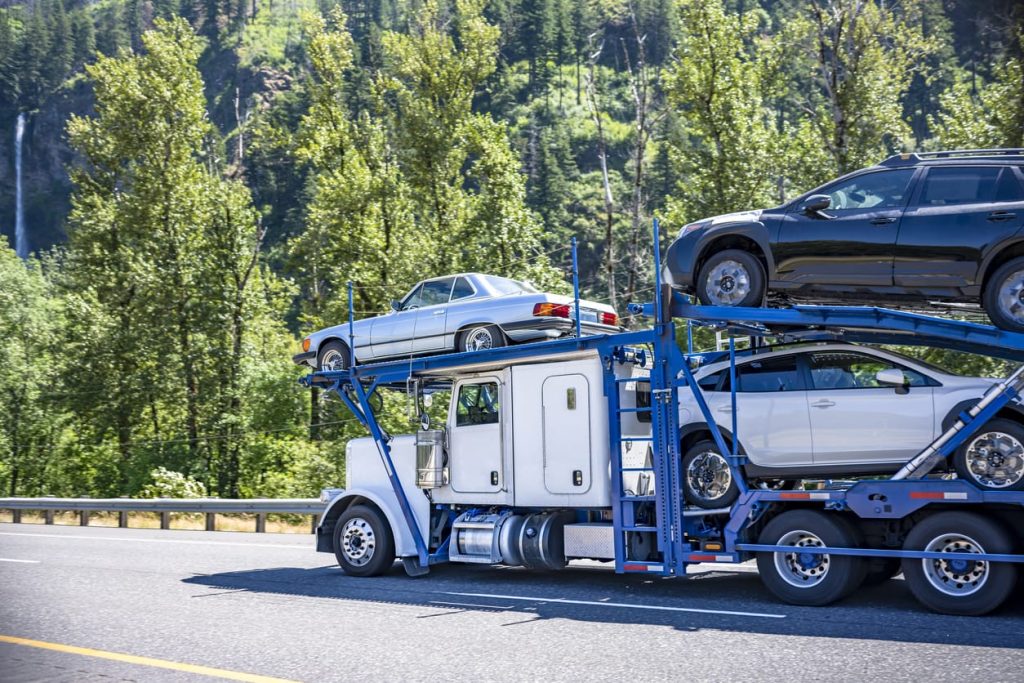
Access at both ends. A loaded hauler is around 75 feet long and 13 feet 6 inches tall. Manhattan and much of Brooklyn and Queens simply cannot take one, and neither can a narrow residential street with low branches. A meeting point at a large lot near a highway is normal here rather than a failure, and agreeing one when you book avoids a wasted trip.
Timing flexibility. A range of pickup days is worth real money. A single fixed date, or a request for expedited service, means the carrier is working around your schedule rather than filling a trailer efficiently.
The season. More on that next, because on this particular lane it is bigger than people expect.
The Seasonal Swing on This Lane
Northeast to Sun Belt lanes are among the most seasonal in the industry.
Southbound demand builds through the autumn as seasonal residents head for warmer states, and northbound spikes in spring as they return. Texas is not as extreme as Florida, but it moves with the same pattern, and in the peaks rates rise and carriers fill early.
Summer collides with the moving season, which is when the whole industry is busiest, so June through August is its own peak for different reasons. The quietest and cheapest windows are usually late winter and mid autumn.
Shifting your pickup by a week either side of a crush frequently saves more than any negotiating will. Our explanation of how the freight market sets what you pay covers why the number moves week to week.
Transit Time and What to Expect
Once the car is collected, plan on roughly four to seven days in transit on this lane, plus a few days for assignment before that.

Drivers are limited by federal hours of service rules, and a hauler making multiple pickups and deliveries along the way does not travel in a straight line. Treat a delivery date as a range rather than an appointment, and arrange for the car to arrive after you do rather than before.
Judging a Quote
A quote well below everything else is usually a listing price rather than a carrier price. The pattern is familiar: the vehicle sits unassigned, and then the number goes up because no carrier will take the load at what was quoted.
Ask whether the price is what a carrier has accepted or what the broker hopes one will. Ask what happens if it does not get assigned. And be suspicious of a deposit taken before a carrier is assigned at all.
Preparing the Car
Wash it so existing marks are visible, then photograph every panel in daylight, including the wheels, the lower bumpers and the rocker panels, which are what loading marks.
Leave about a quarter tank of fuel. Empty the cabin and the trunk, since personal items are not covered by cargo insurance and they add weight. Fold the mirrors, disable a motion sensitive alarm, remove a toll transponder so you are not billed for the truck’s route, and hand over a key.
At delivery, inspect before signing and note anything unexpected on the bill of lading while the driver is still present.
Common Questions
How long does it take? Four to seven days in transit once collected, plus a few days for a carrier to be assigned.
Why do quotes differ so much? Because some are carrier prices and some are listing prices. The low one frequently rises later when nobody accepts the load.
Can the truck come to my address in the city? In most of New York City, no. A meeting point at a large lot near a highway is the normal arrangement.
When is it cheapest? Late winter and mid autumn, away from the seasonal southbound and northbound peaks and away from the summer moving season.
Is enclosed worth it? On a collector car, fresh paintwork or a wrap, yes. On an ordinary daily driver, open transport is what almost everybody uses.
Get a Quote
Call Ship A Car, Inc. at (866) 821-4555 with both zip codes and your date range, or price the move with the instant calculator.