Shipping a Car Between Washington DC and Seattle
This is one of the longer domestic hauls there is, about 2,750 miles, and the season decides how it goes. Expect roughly $1,700 to $2,300 on an open carrier and five to eight days in transit once the truck has the car. That is a planning estimate. Our book holds too few Washington DC to Seattle orders since 2023 to quote, though across orders between the DC area and the West Coast the middle half ran $1,350 to $1,800. The complication is not distance, it is the mountains in the middle. From December through March the northern route becomes unreliable, carriers detour south, and the same trip that takes six days in September can take nine in January.

The Route, and Why It Changes in Winter
The direct path runs west on I-90 through Pennsylvania, Ohio, Indiana and Illinois, then across the northern plains through Minnesota, South Dakota, Montana and Idaho into Washington. It is the shortest and fastest option and carriers prefer it for most of the year.
In winter it stops being dependable. Mountain passes across Montana, Idaho and the Washington Cascades close or restrict, storms shut long sections of the plains, and chain requirements slow everything still moving. Carriers then route south, typically toward I-80 or further to I-40, which adds several hundred miles and a day or two.
That is why a January quote on this lane is both higher and vaguer than a September one. It is not padding; it is a route that genuinely may change after the truck is loaded.
A full-size truck or SUV adds meaningfully to any of those, and a vehicle that will not start or roll adds roughly $100 to $250 for winching. Transit counts from pickup rather than booking, and getting a carrier assigned on a long lane like this usually takes another one to five days.
Direction Matters on This Lane
Coast-to-coast lanes are rarely balanced, and this one shifts with relocation patterns rather than with weather. When more people are moving west than east, westbound capacity tightens and eastbound trucks quote cheaply, and the imbalance can reverse within a season.
It is worth simply asking what the lane is running at in each direction when you call. On a haul this long, a few hundred dollars of directional difference is common and is not something you can infer from a distance calculator.
Access at Both Ends
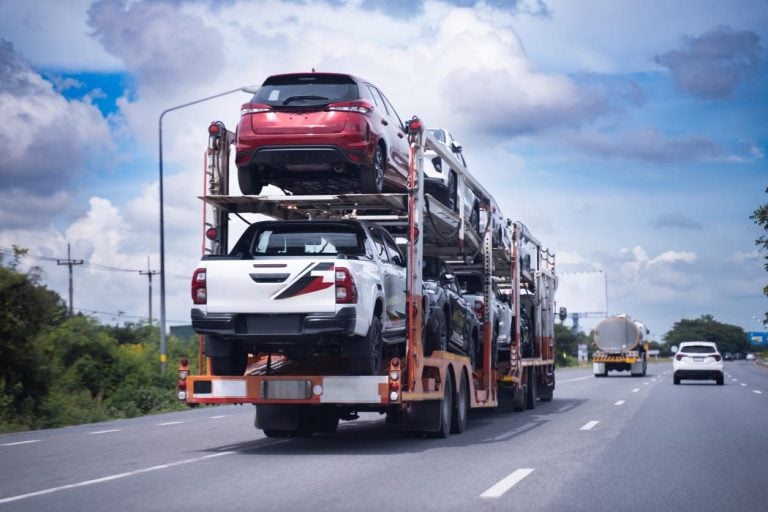
Both endpoints present the same problem for different reasons. A loaded carrier runs to about 75 feet and has to be able to pull in, work and pull out again without backing into moving traffic.
In Washington DC, commercial vehicle stopping is restricted across much of the central city, and many residential streets in the older neighborhoods cannot take a rig at all. Early-morning windows work considerably better than midday.
Seattle has hills, narrow streets in the older districts, and low-clearance structures around downtown. Drivers who run the lane usually propose a large retail lot within a short drive, and that is standard practice rather than a downgrade. Say what kind of address you have at each end when you book and the meeting points get planned in advance.
Preparing the Vehicle
Standard preparation applies and the pre-pickup checklist sets it out. On a haul this long two items carry more weight than usual: the daylight photographs, because the car is out of your sight for a week or more, and the battery, because a vehicle that has sat on a trailer through winter cold still has to start on arrival.
At delivery, inspect before signing. Compare the car against the pickup condition report and your photographs, check the roof and lower panels where road grime hides damage, start the engine, and note any exception on the bill of lading while the driver is present.
Should You Drive It Instead?
Worth considering honestly, because at this distance the comparison is closer than people assume, though the answer usually still favors shipping.
Driving is roughly 40 to 45 hours behind the wheel, so four to six days at a sensible pace, plus fuel, four or five nights of lodging, meals, and around 2,750 miles of wear on the vehicle. Add a winter crossing and you are also taking on the mountain-pass risk personally. Shipping costs money but returns the time, and if you have two vehicles or are flying to the new city anyway, it is not really a contest.
Where driving wins is if you want the trip itself, or if you are moving in summer with flexible time and no second vehicle to worry about.
Common Questions
How long does it take? Five to seven days in summer, seven to ten in winter, counted from pickup. Add one to five days to get a carrier assigned.
Why is a winter quote higher? Passes close and carriers reroute south, adding several hundred miles and a day or two. The price carries the detour risk.
Is enclosed transport worth it? For a classic, exotic or low-clearance car, yes. It is also a reasonable argument in winter, since the northern route means road salt and grit for a week.
Can the truck reach my address? In suburban areas usually. In central DC or hilly Seattle neighborhoods, expect a nearby meeting point.
How far ahead should I book? Two to three weeks on this lane, and three to four for a winter move or a fixed delivery date.
Get a Quote
Call Ship A Car, Inc. at (866) 821-4555 and ask what the lane is running in your direction, or request an estimate for it through the quote calculator.