Car shipping cost, from thousands of our own bookings since 2023: the median customer paid about $600 to move a car under 500 miles, about $1,000 for a 500-to-1,000-mile move, and about $1,645 for a run of more than 2,000 miles on an open carrier. Those are prices people actually booked and paid, not calculator estimates, and this guide lays out what moved them up or down so you can read your own quote with confidence.
The Price by Distance
Distance sets the base rate, but not in a straight line. The cost per mile falls steadily as the trip gets longer, because the carrier’s fixed costs, pickup, loading, paperwork, and delivery, get spread over more miles. The table shows the middle half of our bookings in each band (the range that a quarter of customers paid less than, and a quarter paid more than), and the median. Per mile, the median works out to about $2.19 under 500 miles, $1.33 at 500 to 1,000, $1.05 at 1,000 to 1,500, $0.84 at 1,500 to 2,000, and $0.72 beyond 2,000 miles.
The practical read: a short hop is expensive per mile and cheap in total, a cross country move is the reverse. If a quote for a 2,000-mile move lands far above $1,900 for an ordinary sedan on an open carrier, ask what is driving it; if it lands far below $1,400, ask how the carrier is being paid.
What You Drive Changes the Number
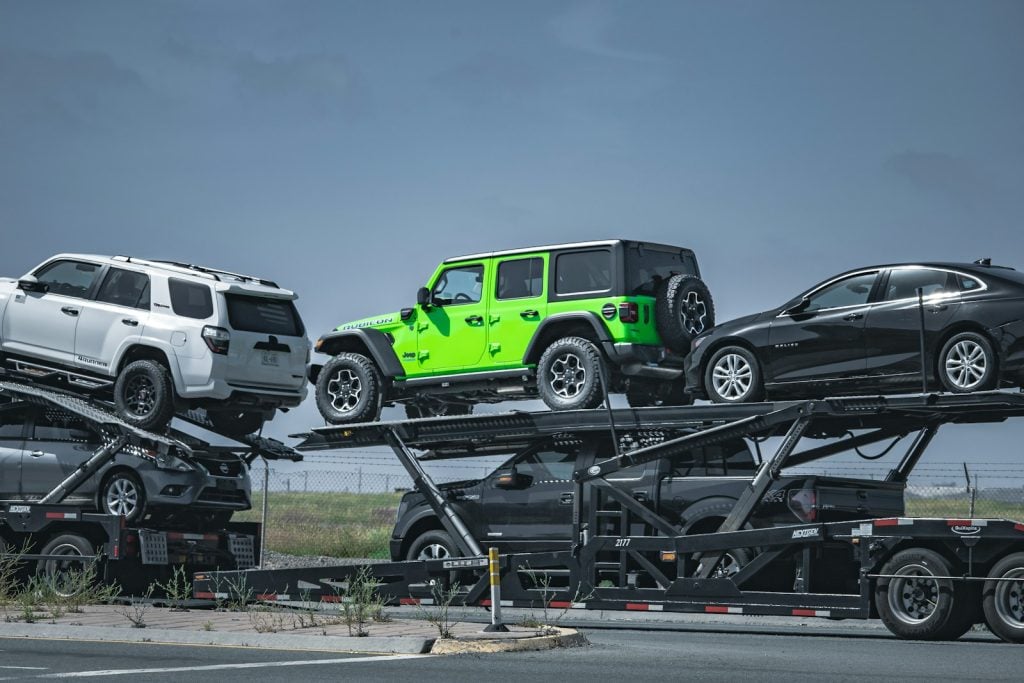
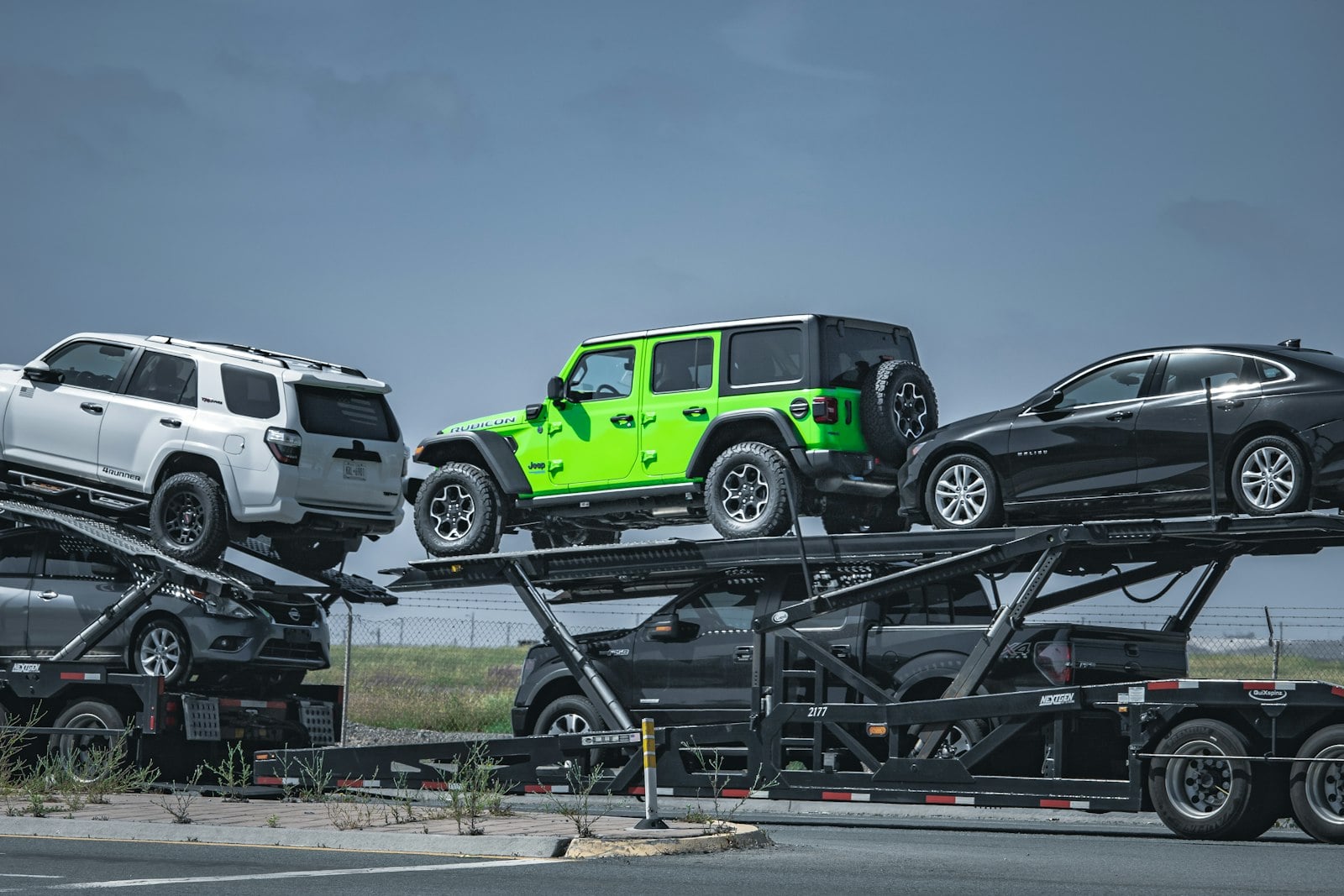
Carriers sell space and weight. On the same lane, the median full-size pickup in our book cost about a quarter more than the median sedan, and the median SUV or minivan about 8 percent more. Lifted trucks, dually pickups, and anything with a roof rack or oversized tires can push past those figures because they take a premium slot or need a different trailer.
A car that does not run is the most common surprise. It ships fine, but it has to be winched aboard, and that adds a surcharge, typically $100 to $250 on a standard route in our experience. Our inoperable vehicle shipping page covers what to tell the coordinator so the right truck is sent the first time.
Specialty vehicles price on their own pages, built from the same booking records: golf carts, ATVs and side by sides, snowmobiles, jet skis, food trucks, and driveaway service for trucks and RVs that are cheaper to drive than to haul.
Open or Enclosed
About one car in seven in our recent bookings rides enclosed. Lane for lane, the median enclosed premium in our book is about a third over open, with most lanes between 15 and 50 percent, not the doubling people expect. Pooled by distance the gap reads smaller, with the median open move in the 1,000-to-2,500-mile band booked at $1,400 and the median enclosed move at $1,675, because a pooled figure is set by the busiest lanes rather than matched pair by pair. The box earns its premium for classics, exotics, fresh paint and low-clearance cars; for a daily driver, open is the value. See enclosed car shipping for when it is worth it.
When You Ship
The same car on the same lane does not cost the same in February and June. Our car shipping price calendar maps the whole year from our dispatch records: February runs about 10 percent below a typical month and June about 12 percent above it, so the June mover pays roughly a quarter more than the February mover for identical service. Direction matters too, because trucks fill fastest against the seasonal flow, which is why the snowbird return north in April and May prices above the trip south.
Real Lanes, Real Prices
Averages hide the lanes people actually ask about, so here are the busiest ones in our book, open carrier, ordinary cars, 2023 through August 2026. Each row shows the middle half of what customers paid and the median. Notice that direction changes the price on the same pair of states: Florida to New York costs more than New York to Florida because more cars want to leave Florida in spring than trucks want to carry them. Our auto transport lane report ranks every major corridor in the book and prices it in both directions.
Your quote will differ from these figures by vehicle, exact zip codes, the pickup window you give the carrier, and the week you ship. Run your own lane through the quote calculator and compare it to the band above; a coordinator can tell you in one call which side of the median your move sits on and why.
What Else Moves the Price
Flexibility. A pickup window of several days lets the coordinator place your car on a truck already running the lane; a fixed single day means paying a carrier to reroute. This is the single cheapest lever a customer controls.
Where the car sits. Metro to metro is cheapest. A rural pickup or delivery far from an interstate adds deadhead miles the carrier has to be paid for, and a spot a 75-foot truck cannot reach means meeting at a nearby lot.
Fuel and capacity. Diesel prices and the number of trucks on a lane in a given week set the floor. When a lane is thin, the price rises until a carrier accepts the load; when it is deep, it settles quickly.
How the quote is built. A price locked at booking with no deposit until a carrier is assigned means the number you are quoted is the number you pay. A quote well below the bands above is often a placeholder that gets raised once the broker tries to find a truck at that rate. Our guide to car shipping costs versus vehicle value covers when the math says ship and when it says sell. Also confirm which payment methods are accepted and when each payment is due; our car shipping payment options guide explains what to ask.
How to Read a Car Shipping Quote Against These Prices
A car shipping quote is a prediction of what a carrier will accept for your car, on your lane, in your week, so compare it with the band for your distance above rather than with the lowest number on the internet. A quote inside the middle half is a truck that will show up. A quote well under the bottom of the band is usually a number no carrier accepts, and the car sits until the price is raised. A quote above the band should come with a reason you can name: an oversized vehicle, enclosed transport, a rural end, a fixed date or peak season. Our car shipping quote calculator emails an estimate for your own lane, and a coordinator at (866) 821-4555 will confirm the final price and explain any gap.
Methodology
All figures come from Ship A Car, Inc. bookings placed from January 2023 through August 2026 for passenger vehicles moving within the continental United States. Golf carts, motorcycles, trailers, heavy equipment, and Alaska and Hawaii moves are excluded so that they cannot distort the car figures. Prices are the tariff the customer booked, on open carriers unless stated. Distances are approximated from state to state, so the distance bands are indicative rather than exact. We publish medians and the middle half of bookings rather than averages because a handful of unusual moves can pull an average far from what a typical customer pays, and we publish no absolute volumes. Prices change with fuel, season, and capacity; treat every figure here as a reference band, and your quote as the number.
Common Questions
How much does it cost to ship a car 1,000 miles? The median booking in our 1,000-to-1,500-mile band was about $1,245 on an open carrier, with the middle half of customers paying between $1,000 and $1,600.
How much does it cost to ship a car across the country? For moves over 2,000 miles the median was about $1,645, with most customers between $1,400 and $1,875. New York to California booked at a median of $1,600 and California to New York at $1,800. Our guide to shipping a car across the country breaks the coast-to-coast cost down lane by lane.
Is it cheaper to ship a car or drive it? For a cross country move, add fuel, two to four nights of lodging and meals, and the days off work, and shipping usually wins on cost before you count the miles on the odometer. For a move under 500 miles, driving usually wins unless you cannot spare the day. If you were hoping to put the car on a train, only Amtrak’s Auto Train does that, on one route from the DC area to Orlando; our guide to shipping a car by train compares it with a truck on the same lane.
What is the cheapest way to ship a car? An open carrier, a flexible pickup window of several days, metro pickup and delivery, and shipping in a shoulder month such as February, October or November. Together those choices can put a move at the low end of every band on this page.
Why did I get quotes that differ by hundreds of dollars? Because not every quote is a price. Some are estimates that get revised once a broker looks for a truck. Compare quotes on terms: is the price locked, is a deposit due before a carrier is assigned, and is the carrier’s insurance verified before pickup.
Get a Quote
Call Ship A Car, Inc. at (866) 821-4555 with your two zip codes and what you drive, and a coordinator will price your lane against the bands on this page in one conversation, or get a number now from the quote calculator.