Cross Country Car Shipping: How It Works and What It Costs
Shipping a car across the country is routine: your vehicle rides on a carrier truck while you fly or drive ahead, and it arrives without 2,800 highway miles of wear. In our bookings between September 2025 and August 2026, one ordinary car on an open carrier ran about $1,250 to $1,600 for a 2,000 mile move such as Chicago to Los Angeles and $1,450 to $1,800 coast to coast (the middle half of customers), transit takes roughly 5 to 7 days plus a short pickup window, and you book the whole thing with one phone call or an online calculator quote. A move usually counts as cross country car shipping at about 2,000 miles or more east to west, or 1,300 to 1,500 miles north to south.
This guide covers the best way to do it, what it costs lane by lane, how long it takes, what the insurance covers, the paperwork, and the steps, with an honest look at driving it yourself.

The Best Way to Ship a Car Across the Country
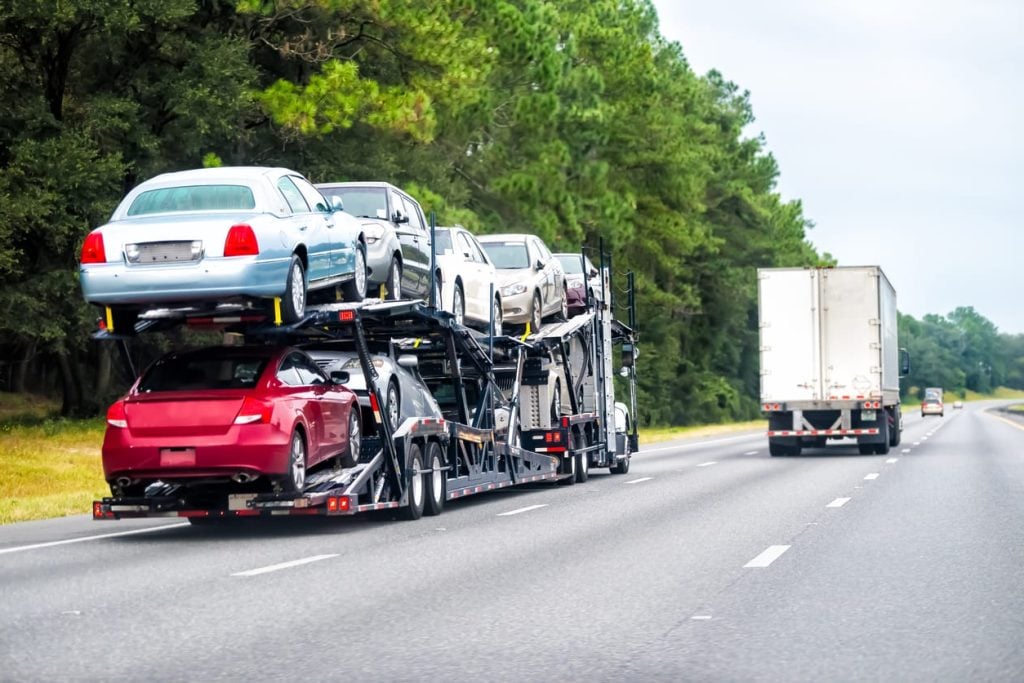
For most vehicles, the best way is open carrier transport arranged through a licensed broker. Open carriers are the double-deck trucks you see on every interstate: they run every major corridor daily, which keeps prices competitive and pickup windows short. Your car is strapped down professionally, covered by the carrier’s cargo insurance, and inspected at both ends against a bill of lading.
Three choices shape the price. Open or enclosed: open carrier transport is what nine out of ten cars use and what the bands in this guide describe; enclosed transport puts the car inside a covered trailer and in our bookings has run about a third more, lane for lane, which is worth it for a classic, an exotic, or fresh paint. Our guide to open versus enclosed shipping covers when each makes sense. Door to door or terminal: door to door means the driver meets you at your address or the nearest spot a 75 foot truck can safely stop; terminals sound cheaper, but on long routes the saving is small and the car sits in a lot at each end, so nearly everyone books door to door. Broker or carrier: a carrier owns the truck and works a few lanes; a broker like Ship A Car, Inc. matches your route and dates against a nationwide network of vetted carriers, verifies each one’s authority and insurance, and stays your single contact from quote to delivery.
What It Costs to Ship a Car Across the Country
Distance, lane, vehicle size, transport type, season, and how flexible your dates are set the price. The table is drawn from our own bookings since 2023: one ordinary car, open carrier, the middle half of what customers paid on each lane, with the median beside it. Busy corridors between big metros sit at the bottom of their band; a rural pickup or delivery pushes toward the top.
Direction matters: West Coast to Northeast runs about $150 higher at the median than the reverse, and in our own bookings it is also the busier of the two directions, which keeps eastbound space the scarcer one. Season moves the number less than people expect: our car shipping price calendar, built from the same booking records, puts February about a tenth below a typical month and June, when every major lane runs hot at once, about an eighth above. Direction on the seasonal lanes matters more than the month: southbound snowbird lanes firm up in fall while northbound trucks return with empty slots, and the pattern flips in spring, which our snowbird migration index maps month by month.
A full-size SUV or pickup typically books toward the top of these bands or above them, an inoperable vehicle adds a winch fee, and enclosed transport prices about a third higher, lane for lane. These are booked ranges, not quotes. The auto transport calculator emails an estimate for your route and vehicle, and if the lowest number is the priority, our guide to the cheapest way to ship a car to another state walks through the levers that genuinely move it.

How Long Does It Take?
Plan on about 5 to 7 days of transit for a true coast-to-coast move, and less for partial crossings, plus a pickup window of a few days at the start while the carrier fills its deck. Carriers drive under federal hours-of-service limits, 11 hours of driving inside a 14-hour window before a 10-hour break under 49 CFR 395.3, so a 2,800 mile route cannot responsibly arrive in two days. You will have your driver’s name and phone number before pickup, so you can check progress at any point.
Driving or Towing It Yourself: The Honest Comparison
Doing it yourself looks cheapest on paper, so total the real costs first: roughly 40 plus hours behind the wheel, fuel, several nights of hotels and meals, and close to 3,000 miles of depreciation, tire wear and rock-chip risk on your car, or a trailer rental and a tow vehicle’s fuel bill. Our ship-or-drive report puts a coast-to-coast drive of about 2,750 miles at roughly $2,350 for one driver against about $1,950 to ship the car and fly, before counting the week of vacation time spent on an interstate.

Insurance: What Is Covered and What Is Not
Your car is covered in transit by the carrier’s cargo insurance, the trucking company’s own policy rather than the broker’s. It covers damage the carrier causes from loading through delivery; a legitimate broker verifies the policy is active before dispatch and can send you the certificate. Ask the limit and whether any deductible falls on you, which on a standard open carrier it usually does not.
Three things are not covered anywhere in the industry: personal items left in the car, pre-existing damage, and on most policies acts of nature such as hail, so the comprehensive coverage on your own auto policy stays useful as a second layer. Any claim rests on the notes written on the bill of lading at delivery, so the inspection routine below is not a formality.
Documents You Need
Domestic ground transport needs less paperwork than people expect, and you do not hand over the title. Keep a copy of the registration and insurance card in the glove box, have photo ID ready at both ends, and give the driver one working key. The bill of lading the driver produces is both the contract and the inspection report, so it is the one document to read before signing and to keep. If someone else will release or receive the car, give your coordinator their name in advance. A lienholder letter is only needed for Hawaii or Alaska and a power of attorney only for international shipping, neither of which applies here.
Steps to Ship the Car
- Get a quote for your pickup and delivery addresses, your vehicle, and your preferred first available date, then book it. Your price is locked at booking and nothing is charged until we have found and assigned your carrier.
- Your coordinator dispatches a vetted carrier for your window and confirms the driver’s name and phone number with you.
- Prepare the car as described below and meet the driver for the pickup inspection.
- Follow the truck through your driver, who will call ahead of delivery.
- Inspect the car against your photographs, note anything on the bill of lading, sign, and take your keys.
Preparing the Car
Preparation takes half an hour and it is what protects you if anything is disputed later.
Wash the car so existing marks are visible, then photograph every panel in daylight, including the wheels, the lower bumpers and the rocker panels, which are what loading marks. Photograph the odometer too. That set of images is your reference point at delivery.
Leave about a quarter tank of fuel. More is weight the carrier pays to haul and it gains you nothing. Empty the cabin and the trunk completely, since personal items are not covered by cargo insurance, they add weight, and they move around in transit. If you are wondering whether a box or two is allowed, our post on putting stuff in your car when you ship it covers what carriers actually tolerate.
Fold the mirrors, retract the antenna, disable a motion sensitive alarm and remove the toll transponder, which will otherwise be billed along the truck route. If the car has a weak battery or anything else a driver needs to know to move it, say so before pickup. The full checklist is in our guide to how to prepare to ship a car.
At Pickup and Delivery
The bill of lading is the document that decides any dispute, and both ends of the trip run through it.
At pickup the driver inspects the car and records its condition; walk around it with them, agree what is already there, and keep your copy. At delivery, inspect before you sign, in daylight if you can, compare against your photographs, and write any discrepancy onto the paperwork while the driver is present, because a signature without notes accepts the condition as recorded. If the car arrives after dark or in heavy rain, write that a full inspection was not possible before you sign; nobody will object, and it preserves your position.
Expect a delivery window rather than a time. Federal hours of service limit how long a driver may drive, and a driver who runs out of hours stops for the night whatever the distance remaining.
Choose the Right Car Shipping Company
Compare companies on what actually protects you. Check the USDOT and MC numbers in the FMCSA Company Snapshot (Ship A Car, Inc. is USDOT 2303542, MC 784930), confirm the carrier’s cargo coverage is verified before dispatch, and read the quote’s fine print. Be wary of a number far below every other quote; on transport lanes a too-cheap price usually means a bait-and-raise later. Reviews on the BBB, Google and Transport Reviews show how a company behaves when something goes sideways, which matters more than when everything goes right.
Common Questions
How far ahead should I book? One to two weeks is comfortable on most lanes. In the peak windows, October through December going south, March through May coming north, and the June moving season, book two to three weeks out.
Can I put things in the car? Carriers generally tolerate a small amount below the window line, but it is not insured and it adds weight. Anything valuable travels with you.
Can I track the truck? You will have the driver’s direct number before pickup, and your coordinator is the second line if the driver is out of range.
Is a deposit required? Not to book. Nothing is charged until we have found and assigned your carrier; at that point a small deposit secures the booking and the balance is paid to the carrier at delivery.
Get a Quote for Your Cross-Country Move
For most people shipping beats driving: no added miles, no week on the road, and on a coast-to-coast move a lower total than the DIY route once it is priced honestly. Get an emailed estimate for your cross-country move from the auto transport calculator, read what the cross country car shipping service includes, or call (866) 821-4555 and a Ship A Car coordinator will price your route, book a vetted carrier, and manage the move door to door.