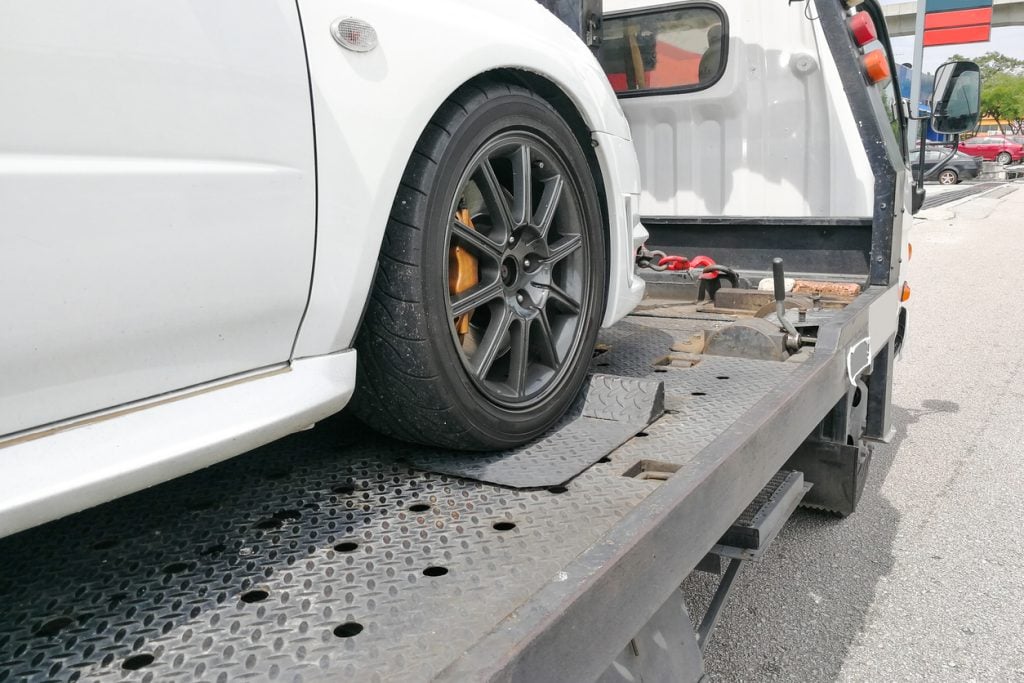
A car that does not run typically costs about $125 more to ship than a running car making the same kind of trip, roughly a sixth more per mile, going by our own bookings since 2023. The extra grows with distance, from about $50 on short hauls to more than $300 on long ones. The larger cost is time: about half of non-running cars had a truck by the day they were ready, against about three in four cars that run.
We pulled every single-car order in our book from January 2023 to mid-August 2026 whose vehicle was listed as inoperable and compared each one with running cars booked for the same kind of trip. Here is what the winch adds, which cars reach a carrier dead, and how to keep the wait short.
What a Car That Does Not Run Costs to Ship
The table puts the middle half of booked prices for non-running cars on open carriers beside the same range for cars that run.
The ranges overlap because trip lengths vary inside each tier, which is why the like-for-like comparison below tells you more than the table does. For your own car, our inoperable vehicle shipping team prices the loading together with the route.
The Winch Adds About $125, More on Long Trips
To pin down what not running alone adds, each non-running car was matched with running cars that rode an open carrier in the same year and season over a comparable distance. The typical non-running car was booked at about $125 more, roughly a sixth more per mile.
The extra climbs with distance: about $50 under 500 miles, about $150 from 500 to 1,500 miles, and more than $300 beyond that. It also varies a lot from car to car. On a quarter of trips the non-running car cost nothing extra at all, while on another quarter it cost $350 or more on top.
The figure held when we kept only orders a carrier actually took, and again when we kept only cars built since 2000, so it is not an echo of old project cars or of orders that never got a truck. Our coordinators build the winch into the quote at the start instead of adding it once a carrier is assigned.
Which Cars Do Not Run
About one car in 25 that we are asked to move is listed as inoperable, and age is the clearest predictor of which ones.
The typical non-running car we move is a 2005 model, against a 2017 for cars that run. About a third were built in 1985 or earlier, the group our classic car report follows, yet about three in ten are 2015 or newer, so a dead car is far from only an old-car problem.
Ford leads the makes, at about one non-running car in five, followed by Chevrolet, Toyota and Dodge.

Shorter Trips, Mostly on Open Trailers
Non-running cars travel less far. Their median trip is about 1,000 estimated road miles, against about 1,300 for cars that run, and nearly three in ten go under 500 miles, against about one in nine. They also ride open more often: about one in twelve goes enclosed, against about one in eight running cars. A car that does not run can still go enclosed, and the middle half of those orders ran $1,100 to $1,950.
The Bigger Cost Is the Wait
Non-running cars are booked late. The typical order arrives just a day before the car can go, where a running car gets five days of notice, and about a third come in on the day itself. The wait is longer too, partly because not every carrier has a winch. Only about half had a carrier lined up by their ready day and about two in three within two days, while for running cars about three in four were covered by the ready day and about nine in ten within two days. Within a week, more than nine in ten had a truck assigned.
Across all cars, our study of booking lead times found that on-time pickups level off at about two weeks of notice. For a car that does not run, give the coordinator a week of room on the pickup date so more winch-equipped carriers can fit it in. The extra notice will not lower the price, but it improves the odds of an on-time truck.
How to Ship a Car That Does Not Run
Say exactly what works. Tell us whether the car rolls, steers and brakes. One that does all three goes up the ramps on a winch with ordinary equipment, while a car that cannot roll or steer needs more planning, so describe it when you book.
Leave the keys and free the steering. Leave the keys with the car and make sure the steering wheel turns, because the driver steers while the winch pulls.
Air up the tires and check the brakes. Flat tires and seized brakes make a winch load slow or impossible, so fix what you can before pickup day.
Choose a spot a truck can reach. A long car carrier needs room to stop and lower its ramps. If the car sits in a narrow driveway or a backyard, say so, because it may need to be moved to the curb first.
Allow a week. Book as early as you can and leave a few days of slack on the pickup date. It will not lower the price, but it gives more winch trucks a chance to take your car. Our guide to shipping a non-running car covers the rest of the preparation.
How We Measured
A non-running car here is any car whose order lists it as inoperable, the same group our inoperable vehicle service page is priced from. The orders behind it are single-car bookings made between January 2023 and mid-August 2026 that start and end in the lower 48 states and carry a booked price of $100 or more; every other car order meeting those rules counts as running. Some cars that did not run were probably booked without the label, so the shares here are a floor.
Price ranges are the middle half of booked open-carrier prices in each distance tier, each resting on at least eight orders. For the comparison, every non-running car on an open carrier was measured against the median booked price, both per estimated road mile and in dollars, of running cars from the same year, season and distance band, on trips of 150 miles or more, with the peak months of March to June and September to November forming one season and the rest of the year the other. Notice runs from the order date to the first day the car could be collected, and the waits come from orders a carrier accepted. Every distance is an estimated road mileage from ZIP code to ZIP code, and shares are rounded to plain fractions.
Reporters, researchers and repair shops are welcome to cite these numbers with a link back to this page.
Common Questions
How much more does it cost to ship a car that does not run? In our bookings, about $125 more than a running car on the same kind of trip, roughly a sixth more per mile. The extra was about $50 under 500 miles and more than $300 beyond 1,500 miles.
Can you ship a car that does not run? Yes. About one car in 25 we move is listed as inoperable. Tell us whether it rolls, steers and brakes so the right truck is sent.
Does a non-running car take longer to pick up? Often. About half of the non-running cars we moved had a truck by their ready day, against about three in four running cars, though more than nine in ten had one assigned within a week.
Can a car that does not run ship enclosed? Yes, though most go open. About one non-running car in twelve rode enclosed, and the middle half of those orders ran $1,100 to $1,950.
How far ahead should I book? At least a week if you can. Non-running cars are often booked at the last minute, and the extra notice gives more winch-equipped carriers a chance to take the job.
Get a Quote
Call Ship A Car, Inc. at (866) 821-4555 and tell us what the car will and will not do, or use the quote calculator to ask for an estimate. The estimate reaches you by email, and a coordinator then phones to confirm the price with the winch included.