A classic built in 1985 or earlier typically costs $800 to $1,350 to ship 500 to 1,500 miles on an open carrier and $1,050 to $1,500 in an enclosed trailer, going by our own bookings since 2023. Trip for trip, a classic costs about 10 percent more per mile than a modern car on an open trailer and about the same in an enclosed one. It also rides enclosed far more often: about two in five classics we book travel in a closed trailer, against about one in ten cars built since 2000.
We took every single-car order for a 1985-or-older car in our order book from January 2023 to mid-August 2026 and set each one against modern cars booked for the same kind of trip. Below is what classics cost, what collectors ship, when and where the cars go, and the one habit that costs classic owners the most time.
What a Classic Costs to Ship
The ranges below are the middle half of booked prices for classic cars, by estimated road distance: a quarter of classic orders came in under each range and a quarter above it.
Each tier is wide, so the exact lane, the season and whether the car runs decide where a price lands inside it. For your own pickup and delivery points, our classic car shipping team prices the route itself, and our price calendar maps how the season moves prices month by month.
The Classic Premium Shows Up on Open Trailers
A classic could cost more because of its age, or simply because classics make different trips. To separate the two, we compared each classic with modern cars booked on the same kind of trailer, in the same year and season, over a similar distance, using the price per estimated road mile.
On an open carrier, the typical classic was booked at about 10 percent more per mile than a modern car making the same kind of trip, and the middle half of classics ran from about 5 percent under to nearly 30 percent over. And the extra is not just the winch for cars that do not run: classics that run carried nearly the same premium.
In an enclosed trailer the premium disappears, and classics were booked at about what modern cars were, likely because an enclosed carrier already loads and straps every car with the care a classic needs. Cars built from 1986 to 1999 priced like modern cars on open trailers as well, so the extra charge belongs to the genuinely old.
The practical reading: on an open trailer, budget about a tenth more for a classic than the typical figure for a modern car on your route; in an enclosed trailer, a classic costs no more to ship than any other car.
Two in Five Classics Ride Enclosed
About two in five classics we book go in an enclosed trailer, against about one in seven cars built between 1986 and 1999 and about one in ten built since 2000. Our open vs. enclosed report covers the trailer choice for every kind of car; for classics, the decade a car was built matters most.
The 1960s are the only decade where a closed trailer is the norm: more than half of the 1960s cars we move ride enclosed. That is the decade of the Sting Ray Corvette and the first Mustangs and Camaros, and four in five of the classic Corvettes we book ride enclosed.
Pickups go the other way. About one classic in seven is a pickup, such as a Chevrolet C10, a Ford F-100 or an El Camino, and about four in five of those ride open, which suits a truck that was built to work outdoors.
What Collectors Ship
Classics are about one car in fourteen that we book. Four in five of them were built in the 1960s or 1970s; cars from the 1950s and earlier and from the first half of the 1980s make up the rest.
Chevrolet alone accounts for about a third of the classics we move, and Chevrolet and Ford together for more than half. The Corvette is the most common classic by a wide margin, about one in eight, with the Ford Mustang, the Ford Bronco and the Chevrolet Corvair roughly level behind it. The Corvair, the rear-engined compact of the 1960s, is the surprise on that list.
One Classic in Six Does Not Run
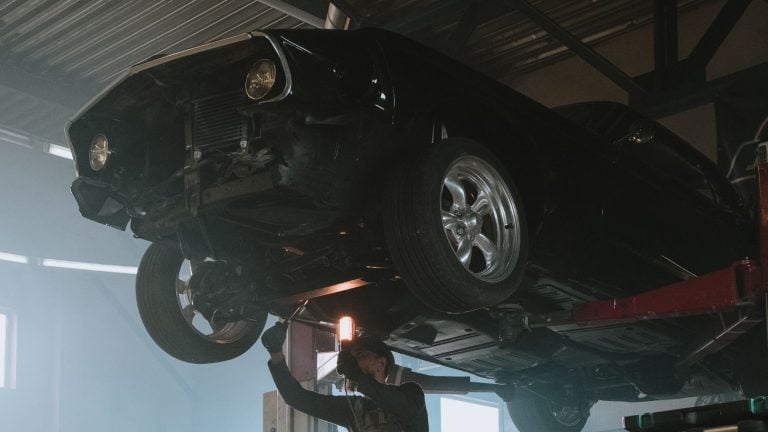
About one classic in six that we are asked to move is described as not running in its order, against about one modern car in forty. A classic that will not start has to be pulled onto the trailer with a winch, which takes the right truck and extra loading time, so mention it when you book; a car booked as a runner that will not start on the day can leave the truck unable to take it. Before a winch load the carrier needs a few answers from you, and our inoperable vehicle shipping page lists them.
When and Where Classics Move
Modern cars peak in April and May. Classics peak in July, in the middle of car show season, and November is by far their quietest month.
California, Florida and Washington send the most classics, and Florida and California receive the most, each well ahead of any other state. Washington is the outlier: third for classics, but outside the top six for modern cars.
A classic travels about as far as anyone else’s car. The median trip is about 1,200 estimated road miles, close to the figure for modern cars.
Classic Owners Book Late, and It Shows
Half of classic orders reach us two days or less before the car is ready, against five days for modern cars, and more than a quarter are booked on the day the car can go. The waits are longer too: nearly two in three classics had a truck assigned by their ready day and about four in five within two days, against about three in four and about nine in ten for modern cars. Enclosed classics had their truck on time more often than open ones.
Our study of how far ahead to book found that about two weeks of notice is the sweet spot for any car. For a classic it is the easiest improvement there is, and what it buys is a truck on your dates, not a lower price.
Shipping a Classic Well
Pick the trailer for the car, not its age. A fresh restoration, a rare original or a low-slung car is worth a closed trailer, and in one a classic costs no more to ship than any other car. A driver-quality cruiser or a working pickup can ride open; expect it to cost about a tenth more than a modern car would.
Say whether it runs. Tell us if the car does not start, does not roll or has weak brakes, so the carrier brings a winch and plans the time to load it.
Check the cover. Carrier cargo insurance is included in the price, but its limit can sit below what a collector car is worth. Ask for the certificate and the limit, and check whether your collector policy covers the car while it is on the road.
Give it two weeks. Classics are booked later than other cars and wait longer for a truck, and two weeks of notice is the simplest fix.
Document it. Walk the car with the driver at pickup and photograph every panel. The condition report is the record if anything happens on the way.
How We Measured
In this report a classic is a car with a model year of 1985 or earlier, the same line our classic and collector car service pages use. Definitions vary, and our guide to classic, antique and vintage terms covers the common ones. We used single-car orders booked from January 2023 through mid-August 2026, with both ends in the lower 48 states and a booked price of at least $100. Modern cars are model year 2000 or newer under the same rules.
Price ranges are the middle half of booked prices in each distance tier, and every range rests on at least eight orders. For the price comparison, the booked price of each classic was divided by its estimated road distance and set against the median for modern cars on the same type of trailer, booked in the same year and season and falling in the same distance band. Peak season here means March through June and September through November, and trips under 150 miles were left out. Notice is the gap between the order date and the first day the car could be collected, and waits come from orders a carrier accepted. A car counts as not running when its order says so. Distances are estimated road miles between ZIP codes, and shares are rounded.
Journalists, researchers and car clubs may cite these findings; please link back to this page when you do.
Common Questions
How much does it cost to ship a classic car? In our bookings since 2023, a classic built in 1985 or earlier was typically booked at $800 to $1,350 for 500 to 1,500 miles on an open carrier and $1,050 to $1,500 enclosed. Trips of 1,500 miles or more ran $1,400 to $1,900 open and $1,500 to $2,300 enclosed.
Does a classic car cost more to ship than a modern car? On an open carrier, about 10 percent more per mile for the same kind of trip. In an enclosed trailer, about the same.
Should a classic car ship enclosed? About two in five of the classics we book do. Fresh paint, rare originals and low clearance call for a closed trailer; working pickups and driver-quality cars usually ride open.
Can you ship a classic car that does not run? Yes. About one classic in six that we move is described as not running when it is booked. Tell us up front so the carrier brings a winch.
How far ahead should I book a classic car shipment? About two weeks. Half of classic orders reach us two days or less before the car is ready, and classics had a truck by their ready day less often than modern cars did.
Get a Quote
Call Ship A Car, Inc. at (866) 821-4555 with the car, whether it runs and the first day it can go, or ask for an estimate through the quote calculator. You will get the estimate by email, and then one of our specialists phones to go over the car and confirm its price.