Shipping a Honda Motorcycle: What the Model Tells the Carrier
Honda builds the widest motorcycle range of any manufacturer, and where your bike sits in that range decides almost everything about shipping it. A Gold Wing and a Grom are both Hondas, and they are not the same job. Weight, wheelbase, ground clearance and whether the bike has bodywork are what a carrier actually needs to know.
Where Your Bike Sits in the Range
Honda’s lineup splits into groups that behave differently on a trailer, and knowing which one applies saves a conversation.
Touring bikes, the Gold Wing above all, are the heavy end. A fully equipped Gold Wing is well over 800 pounds with a long wheelbase, a fairing, hard luggage and in some versions a reverse gear. These need proper chocks and enough deck length, and they are the most expensive Hondas to move.
Adventure bikes such as the Africa Twin are tall rather than heavy, with long-travel suspension that compresses under tie-down straps. That travel is exactly why they need soft straps and correct tie-down points, since over-compressing forks for days is hard on seals.
Cruisers, standards and the retro range sit in the middle: manageable weight, low center of gravity, straightforward to secure. Sport bikes and supersports are light but carry expensive bodywork, so the risk is cosmetic rather than structural.
Then there is the small end, from the Grom to the scooters. These are light enough that several travel together economically and are frequently crated rather than strapped to a deck.
Open or Enclosed
Motorcycles differ from cars here, and enclosed is the more common answer rather than the premium one.
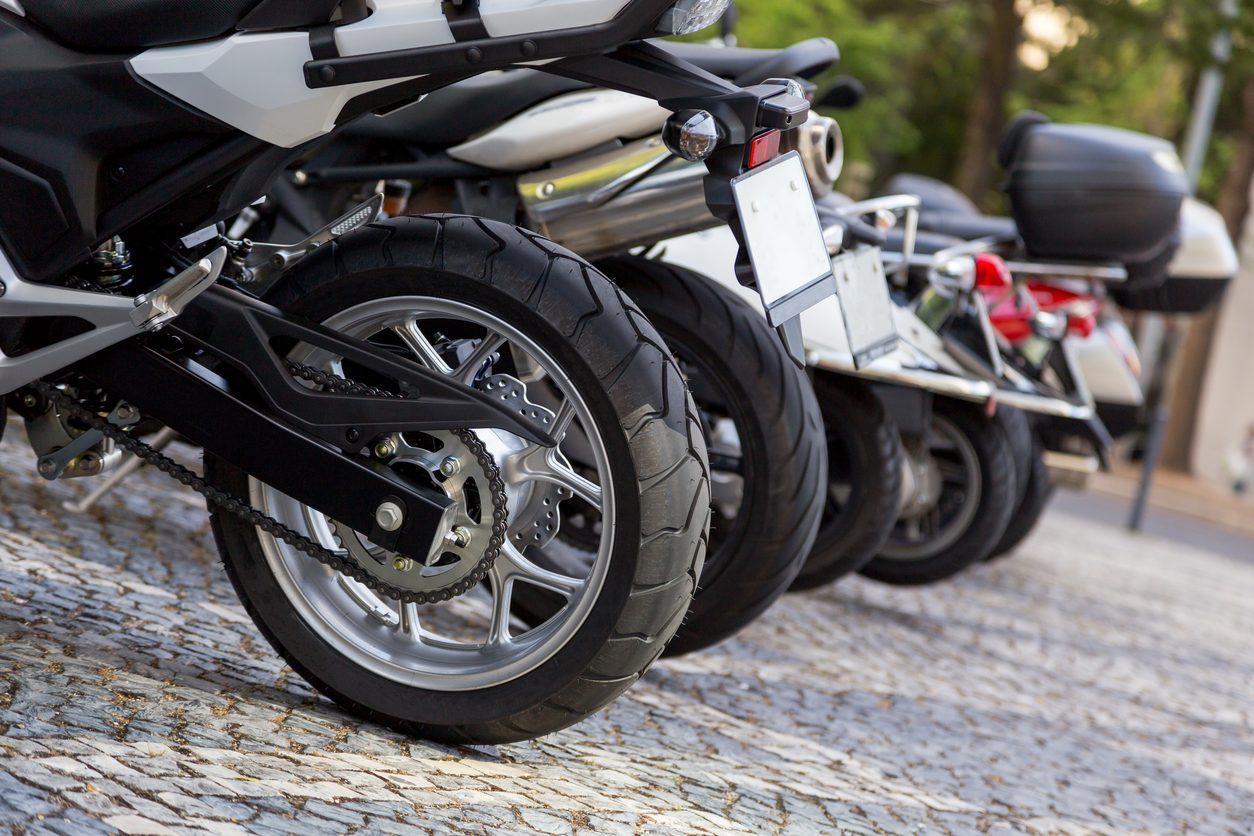
A bike has no bodywork protecting its mechanical parts. Road grit, rain and debris hit the engine, the chrome, the wheels and the paint directly, and a bike on an open trailer for several days arrives dirty at best and stone-chipped at worst.
Enclosed transport also comes with proper motorcycle handling: a wheel chock or cradle that holds the bike upright, soft straps rather than chains, and a crew who have secured bikes before. Ask specifically how the bike will be tied down, because a motorcycle secured badly is how most transit damage happens.
Open transport costs less and is reasonable for a workhorse bike on a short move, particularly if it travels crated or on a pallet.
How Bikes Actually Travel
There are three normal methods and they price differently.
On a dedicated motorcycle carrier, the bike stands upright in a chock inside an enclosed trailer alongside other bikes. This is the standard for a valuable machine and it is the most protective.
Crated means the bike is built into a wooden frame. It gives the best protection available and it is what dealers and manufacturers use, but somebody has to build the crate and the crate takes space, so it costs more.
Palletized means the bike is strapped to a pallet and moves through the freight network. It can be cheaper on some lanes and is worth pricing, though it involves more handling and the bike passes through terminals rather than staying on one truck.
Buying a Honda Out of State
A large share of motorcycle shipments are bikes bought from a seller several states away, and Hondas in particular travel this way because the desirable ones are specific.
A low-mileage Gold Wing, a first-generation Africa Twin, a CB in the right color, an unmolested VFR: these searches end far from home. Shipping the bike rather than flying out and riding it back is frequently cheaper once you count the airfare, lodging, fuel and the days involved, and it puts no miles on a machine you have just bought and have not yet had inspected.
Riding home a bike you have never ridden, on unfamiliar roads, in whatever weather turns up, is also the part people underestimate. A mechanical problem 800 miles from home on a bike you bought yesterday is an expensive way to save a shipping fee.
Arrange transport once the sale is agreed but before you pay in full, and ask the seller to be present at pickup rather than leaving the bike out with a key, since the bill of lading signed at collection records the condition it left in.
Preparing the Bike
Wash it so existing marks are visible, then photograph it from every angle in daylight, including the tank, the fairings, the exhaust, the wheels and any chrome. Note the odometer reading.
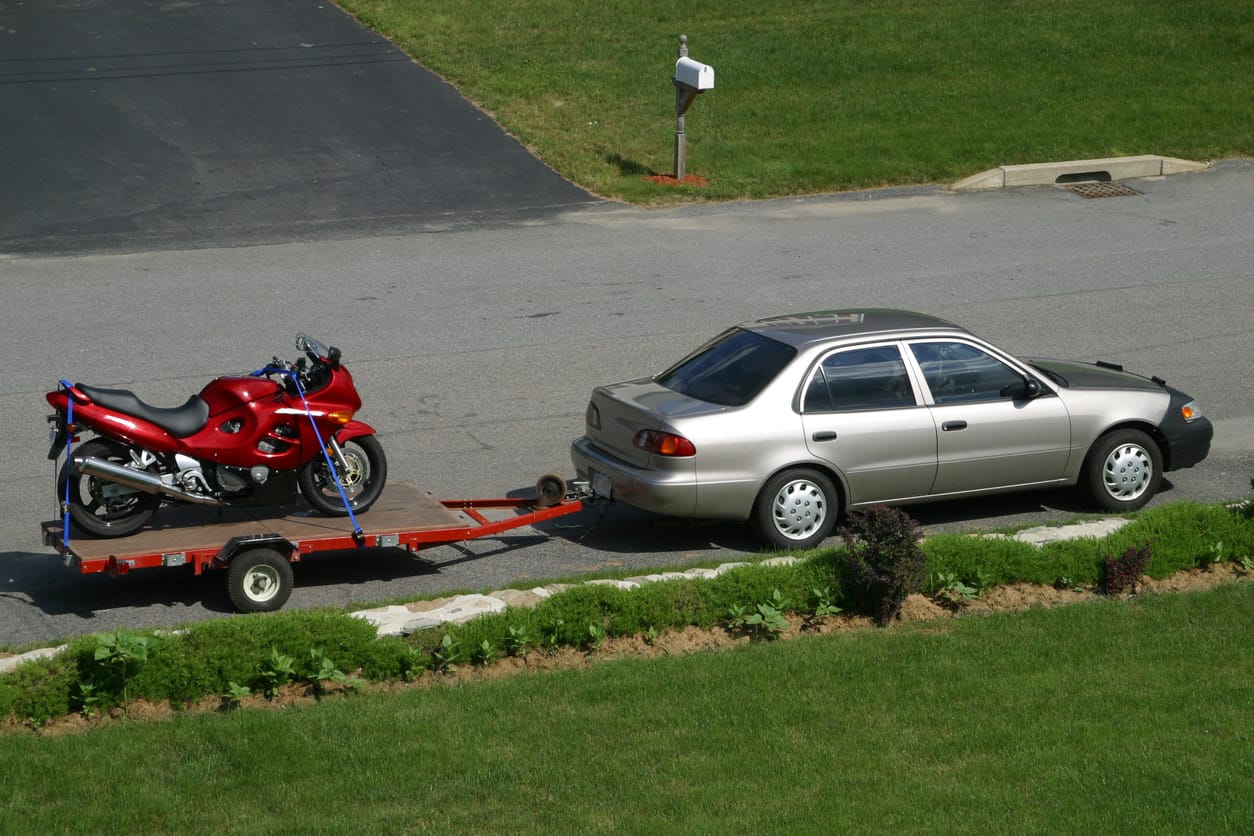
Leave the tank low, around a quarter or less, and make sure there are no leaks. Fold or remove mirrors and anything that protrudes, since those are what catch during loading. Remove the windshield if it detaches easily and flexes, and take off saddlebags, top boxes and loose accessories.
Disable the alarm, disconnect the battery if the carrier asks, and check tire pressures, because a soft tire makes a bike much harder to secure properly. Point out the correct tie-down points, since a strap on the wrong part of a fork leg or a frame does real damage.
If the bike has a quirk a driver needs to know, a kill switch, a fussy starter, a side stand that has to be handled a certain way, say so rather than assuming they will work it out.
What Drives the Price
Distance sets the base. After that it is the transport type, the size and weight of the bike, the season and how accessible both ends are.
Enclosed costs more than open. A Gold Wing costs more than a CB500. Rally season, from spring through early autumn, is when motorcycle capacity tightens and rates rise, so booking around it matters. Several bikes traveling together is the cheapest way per bike, which is why riding groups frequently share a trailer.
The comparison worth doing is against riding it there yourself: fuel, several nights of lodging, meals, the mileage and wear on the bike, and the days of your own time. Our guide to transporting a motorcycle across country covers the service in more detail.
Common Questions
Does a Gold Wing cost more to ship than a smaller Honda? Yes. Weight, wheelbase and deck space all count, and a full-dress tourer uses more of each.
Open or enclosed? Enclosed is the usual choice for motorcycles, because a bike has no bodywork shielding its mechanical parts from road grit and weather.
How is a bike secured? Upright in a chock or cradle with soft straps at proper tie-down points. Ask before booking, since bad tie-downs cause most motorcycle transit damage.
Should I drain the fuel? No, but run it low, around a quarter tank, and make sure nothing is leaking.
Can I leave the luggage on? Remove saddlebags, top boxes and loose accessories. They are not covered by cargo insurance and they move in transit.
Get a Quote
Call Ship A Car, Inc. at (866) 821-4555 with both zip codes, the model and year of the bike and whether you want open or enclosed, or request an estimate for the move through the quote calculator.