Shipping a Car From Chicago to Washington, D.C.
Chicago to Washington is roughly 700 miles of well traveled interstate, and it is one of the more straightforward and better priced lanes in the country. Both ends are major metropolitan areas with constant carrier traffic, the route is direct, and transit is typically two to three days once the vehicle is collected. The planning is mostly about access at each end rather than about the road between them.

Why This Lane Prices Well
Rates follow how much freight already moves in both directions, and this corridor is busy in both.
The route runs east on Interstate 80 or 90 to the Ohio Turnpike, then down through Pennsylvania on the turnpike or I-70, joining I-270 and I-495 into the Washington area. Every part of that is heavily trafficked freight infrastructure.
Because Chicago is the largest freight hub in the country and Washington sits in the dense Northeast corridor, carriers are always working both ends. Your vehicle joins a route that already exists rather than creating one, which is what a competitive rate looks like from the carrier’s side.
Expect assignment within a few days on ordinary dates, and treat a quote that is dramatically below the others with suspicion rather than enthusiasm.
What Sets Your Price
Four things move the number on this lane and only one is the distance.
Vehicle size and weight come first. A compact sedan is the cheapest case; a full size pickup or a large SUV costs 20 to 40 percent more because it uses more deck space and more of the truck’s 80,000 pound limit.
Whether it runs is second. An inoperable vehicle needs a winch equipped carrier and a smaller pool of trucks, and it costs more.
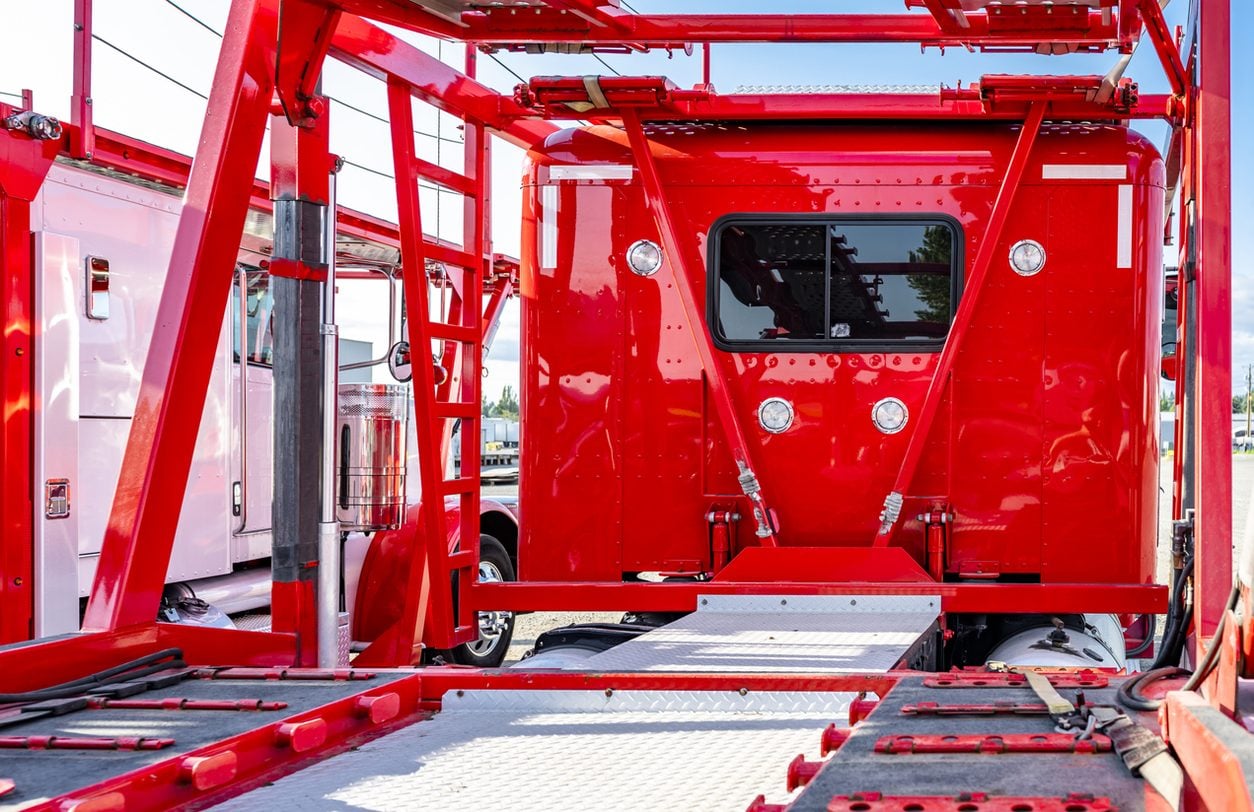
Open or enclosed is third, with enclosed running about a third above open. And timing is fourth: summer moving season and the winter holidays both tighten capacity, and a single fixed date costs more than a flexible window.
Access at the Chicago End
Most of the Chicago metropolitan area handles a full size hauler without difficulty, and the suburbs are straightforward.
The exceptions are predictable: downtown and the dense North Side neighborhoods have narrow streets and permit parking, many buildings have garages a truck cannot enter, and the older viaducts on the South and West Sides carry clearances below what a loaded upper deck needs.
Where the address is difficult, a large retail lot near an expressway exit solves it. Agree that when you book rather than on the day.
Access at the Washington End
The Washington area has its own version of the same problem, plus one that is specific to the capital.
The District itself is difficult for a 75 foot truck: narrow streets, heavy enforcement of parking rules, and restrictions on commercial vehicles in parts of the city. Georgetown and the older residential neighborhoods are effectively out of the question for a full size hauler.
The Virginia and Maryland suburbs are much easier. Arlington, Alexandria, Bethesda, Silver Spring, Fairfax and the areas around the Beltway generally take a hauler at the curb.
Traffic is the other factor. The Washington area has some of the worst congestion in the country, and a driver crossing it at the wrong hour loses a delivery slot. Expect a window, and expect early morning to be easiest for a difficult address.
Timing the Move
Transit is typically two to three days on this lane once the vehicle is collected, plus a few days for assignment.
Book one to two weeks ahead for ordinary dates. Book three to four weeks ahead if your move falls in the summer peak, around the winter holidays, or against a fixed start date such as a job or a lease.
Give a range of pickup days rather than one. On a lane this busy, flexibility of even two days measurably improves both the price and how quickly you are assigned.
Winter Is the Main Variable
Both ends of this route get real winter, and the mountains of Pennsylvania in between get more.
Snow and ice delay trucks, and a storm anywhere on the route delays your vehicle even when both cities are clear. Treat a February delivery date as a range rather than a promise.
Road salt is heavy on this corridor. A car on an open trailer arrives coated in brine, which is cosmetic on most vehicles and resolved by a wash. On a car with fresh paintwork, existing corrosion or real value, enclosed transport through the winter is worth the premium for that alone.
Check the battery before a winter pickup. A car that will not start cannot be loaded.
Buying or Selling Across This Lane
A good share of vehicles on this corridor are private sales, because both metros have deep markets and buyers will travel for the right car.
Get daylight photographs of every panel from the seller before you pay, including the wheels, the lower bumpers and the rocker panels. Those pictures are your only condition baseline when the car arrives, and without them a damage argument at delivery cannot be won.
Agree who hands over the keys and get a working phone number for both ends before the vehicle is assigned. A driver who cannot reach anyone at pickup moves on to the next load and you rejoin the queue.
Confirm the car actually runs and drives. That single fact changes the carrier, the equipment and the price, and finding it out when the truck arrives is the expensive way.
Preparing the Car
Wash it so existing marks are visible, then photograph every panel in daylight, including the wheels, the lower bumpers and the rocker panels, which are what loading marks.
Leave about a quarter tank of fuel. Empty the cabin and the trunk, since personal items are not covered by cargo insurance and they add weight. Fold the mirrors, disable a motion sensitive alarm, remove your toll transponder so you are not billed for the truck’s route, and hand over a key.
At delivery, inspect before signing, compare against your photographs and note anything unexpected on the bill of lading while the driver is present. Our comparison of open and enclosed shipping covers the service choice in more detail.
Common Questions
How long does Chicago to Washington take? Two to three days in transit once collected, plus a few days for assignment.
Why is this lane comparatively affordable? Both ends are major freight markets with constant carrier traffic in both directions, so your car joins an existing route.
Can the truck come to my address? In the suburbs at both ends, usually. Downtown Chicago and the District itself generally need a meeting point.
When should I book? One to two weeks normally, three to four in the summer peak or around the holidays.
Is enclosed worth it? For a valuable car or a winter move through road salt, yes. For an ordinary car, open transport with a wash on arrival is right.
Get a Quote
Call Ship A Car, Inc. at (866) 821-4555 with both zip codes, the vehicle and your date range, or request an estimate for the move through the quote calculator.