How to Actually Lower What You Pay to Ship a Car
Most advice about saving money on car shipping is really advice about getting a cheaper quote, and those are not the same thing. A quote nobody accepts costs you two weeks and then more money. What follows are the things that genuinely reduce the price a carrier will take, ordered by how much they are worth.
The first three are worth real money. The rest are worth having, but do not expect them to transform the number.
1. Give a Wider Pickup Window
This is the single most effective thing available to you, and it costs nothing.
A carrier plans a route with several vehicles on it. If your car can be collected on any of three days, the driver fits it into a run already happening. If it must be Tuesday, the carrier has to build the route around you, and that is priced accordingly.
A two or three day window rather than a fixed date typically moves the number meaningfully and gets the vehicle assigned faster as well. If a date genuinely cannot move because a closing depends on it, pay for guaranteed pickup deliberately rather than paying a premium by accident.
2. Move Your Dates Out of the Peaks
Vehicle transport has predictable seasons, and shifting by a fortnight can be worth more than any amount of haggling.
Southbound into Florida, Arizona and Texas is busiest from October through December. Northbound out of them runs March through May. August is the heaviest month on routes into college towns, and May reverses it. The end of any month is busier than the middle, because leases end and closings cluster there.
If your move is flexible, mid month and outside those windows is where the value is. January and February are the quietest weeks of the year on most lanes.
3. Meet the Truck Somewhere Sensible
A loaded hauler is roughly 75 feet long. Reaching a house down a narrow street with low branches can cost a driver forty minutes each way, and that time comes out of a legally capped driving day.
Agreeing to meet at a large retail lot near a highway exit removes that cost, and carriers price accordingly. It is standard practice rather than a downgrade, and on a rural or awkward address it is frequently the difference between a competitive quote and a surcharge.

4. Choose Open Transport Unless You Have a Reason Not To
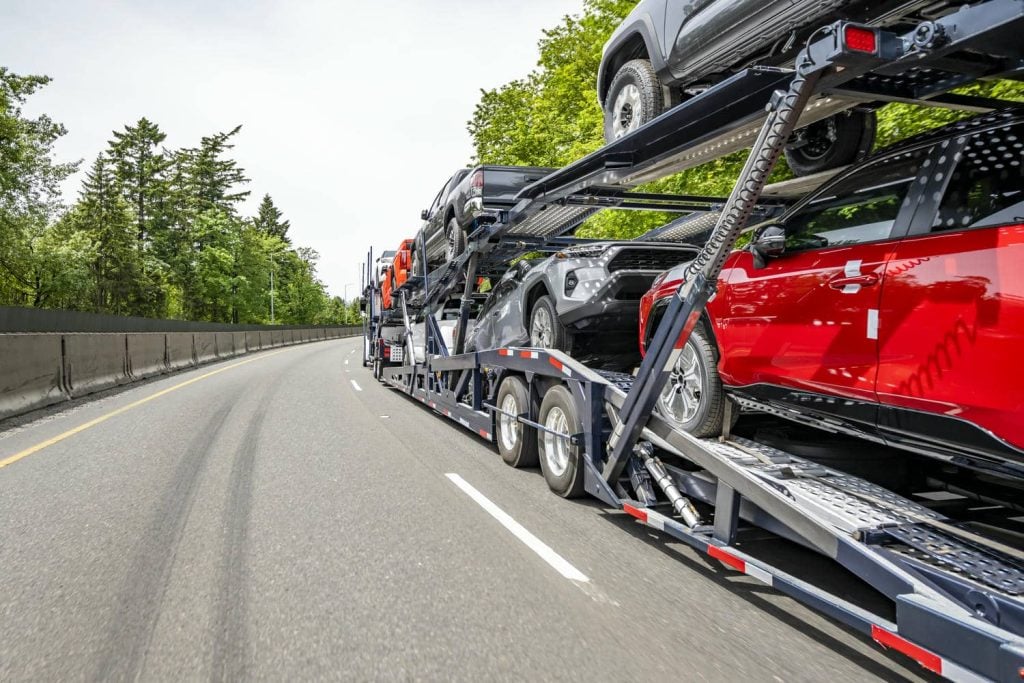
Open carries the overwhelming majority of vehicles and is what manufacturers use to deliver new cars to dealers. Enclosed costs about a third more.
Enclosed earns that on a collector car, fresh paintwork or a wrap, very low ground clearance, or a long winter run through road salt. On an ordinary daily driver it is money spent on reassurance rather than on risk.
5. Empty the Car Completely
Personal belongings add weight the carrier has not accounted for, they are not covered by cargo insurance, and some carriers charge for them or refuse the vehicle at the curb.
Leave about a quarter tank of fuel. More is dead weight across a trailer that is weight limited overall, and it buys you nothing.
6. Declare Everything Up Front
This does not lower the quote, it stops the quote rising later, which amounts to the same thing.
Say if the vehicle does not run, because that needs a winch and a suitably equipped carrier. Say if it has a lift kit, oversized tires, a roof rack or a light bar, because those change which deck it can travel on. Say if the front splitter is low enough to catch on ramps. Every one of these discovered at collection means a repriced job or a wasted trip.
What Does Not Work
Three things people try that do not help.
Collecting quotes endlessly. Three is enough. Beyond that you are mostly gathering numbers that have not been tested against a carrier.
Taking the lowest number. A price meaningfully below the others on the same route is usually not a better deal. It is a proposal that no carrier has accepted, and the pattern that follows is silence, then a call explaining that the price must rise. Ask directly whether a quote is one a carrier has accepted.

Waiting for a better rate. Prices do not soften as your date approaches. They firm, because your flexibility disappears. Booking one to two weeks out is the sensible window; three days out is where the expensive decisions get made.
One Thing Worth Paying For
Everything above reduces cost. This one adds it and is usually worth it anyway.
If the vehicle is genuinely valuable, check the carrier’s cargo insurance limit rather than assuming it covers the car. Limits are per load, not per vehicle, so a trailer carrying nine cars may have a limit that looks generous until it is divided. Ask the number, and ask whether supplementary cover is available.
Why There Is a Floor
A carrier has to cover fuel, driver pay, equipment, insurance and maintenance before the load is worth taking, and that sets a real floor under any route. Our page on what it costs to run a truck sets out the arithmetic, and what determines the price of shipping a car covers the six factors that move it.
Common Questions
What saves the most money? A wider pickup window. It costs nothing and it lets a carrier fit your vehicle into a route already running.
When is the cheapest time to ship? Mid month, outside the October to December and March to May snowbird peaks and outside August.
Is enclosed transport worth it? For a collector car, fresh paint or low clearance, yes. For a daily driver, no.
Should I take the lowest quote? Not without asking whether a carrier has accepted it. An unaccepted low price is a proposal, not a booking.
Does booking later get me a discount? No, and in our own bookings it does not usually cost more either; what you lose as the date approaches is the choice of carriers and days.
Get a Quote
Call Ship A Car, Inc. at (866) 821-4555 with both zip codes, your date range and anything fitted to the vehicle, or request an estimate for the move through the quote calculator.