Why Car Deliveries Run Late, and How to Avoid It
Most delayed car deliveries are not caused by anything that happened on the road. They are caused by something that was agreed, or not agreed, before the truck ever moved: a price no carrier would take, an address a truck could not reach, or a fixed date that left no room. Weather and breakdowns exist, but they are a smaller share of delays than customers assume.
Here are the real causes in order, and what you can do about each.
Cause One: The Price Was Never Real
This is the largest single cause and it is invisible at the time.
Vehicle transport is brokered. A broker posts your car to carriers at a price, and a carrier decides whether to take it. A quote that has not been accepted by a carrier is a proposal. If it sits below what it costs to run a truck on that route, nobody accepts it, and nothing happens while you assume you are booked.
The pattern is recognizable: a notably low price, then silence, then a call two weeks later explaining that the price needs to rise. No date was missed by a truck. The vehicle was never assigned in the first place.
The fix is one question at booking: is this price one a carrier has accepted, or one you are hoping a carrier will accept? Ask it of everyone you get a quote from, including us.
Cause Two: The Truck Cannot Reach You
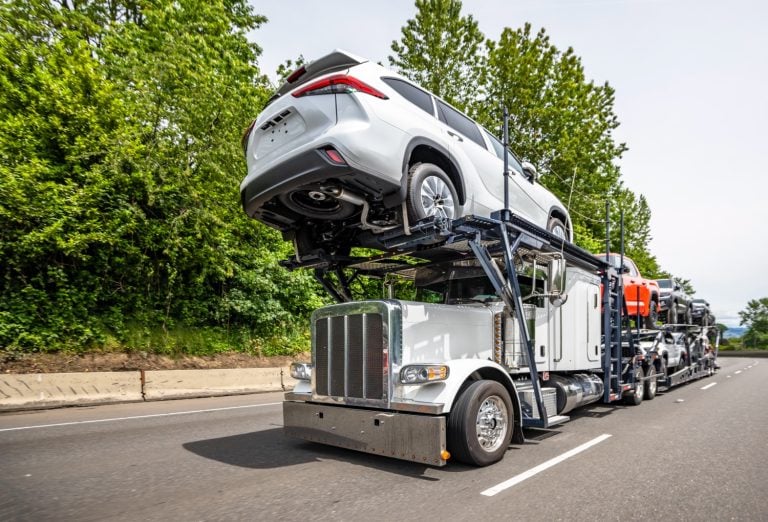
A loaded hauler is roughly 75 feet long and 13 feet 6 inches tall and cannot reverse around corners.
Narrow residential streets, low branches, steep or gravel drives, cul de sacs with no turning room, gated communities with height bars and streets parked on both sides all stop trucks that had no difficulty with the other nine cars aboard. A driver will decline rather than risk damage, and the wasted trip usually gets billed.
Describe the access honestly when you book and agree a meeting point if there is any doubt. A large retail lot near a highway exit is standard practice and costs nothing.
Cause Three: A Fixed Date With No Room
Vehicle transport works on windows, not appointments, because a driver is running a route with several vehicles on it and a delay at one stop moves everything behind it.

A two or three day pickup window lets a carrier fit your vehicle into a route it is already running, which gets it assigned faster and cheaper. A single fixed date requires the carrier to build around you, costs more, and has no slack when the stop before yours takes an hour longer than planned.
If a date genuinely cannot move, say so and pay for guaranteed pickup. That is a real product and it is the right call when a closing depends on it. What does not work is expecting fixed date performance at flexible window pricing.
Cause Four: Something Was Not Declared
Three things reliably cause trouble at the curb.
A vehicle that does not run, when the booking says it does. Loading a non runner needs a winch and a carrier equipped for it, so the truck leaves without it.
Modifications that change the dimensions. A lift kit, oversized tires, a roof rack or a light bar can push a vehicle past the height for the deck it was allocated. A low front splitter can make it unable to clear the ramps.
Personal belongings loaded in the car. They add weight the carrier has not accounted for, they are not covered by cargo insurance, and a driver may refuse the vehicle until they come out.
Cause Five: Nobody Could Reach You
This one surprises people because it feels trivial, and it is a genuinely common cause of a missed slot.
A driver working against a 14 hour clock calls ahead, usually with a few hours of notice and sometimes less. If that call goes unanswered, the driver moves to the next vehicle on the route rather than waiting, and yours slips to the following day or later.
Give a number that will actually be answered, tell the company if that changes, and if someone else is handling the collection, put their name and number on the booking rather than passing messages.
The Causes Nobody Controls
Weather is real and it is the honest part of this. Winter storms close interstates, hurricanes make destinations unreachable, and a truck held overnight arrives late everywhere downstream.
Mechanical failure happens, and hours of service rules mean a driver who has run out of available hours must stop, which is a safety rule working as intended rather than a delay to complain about.
What distinguishes a good company here is not preventing these, it is telling you. A carrier that has broken down and a company that will not answer the phone are two different problems, and only one of them is anyone’s fault.

What to Ask Before You Book
Four questions, and the answers tell you most of what you need.
Is this price one a carrier has accepted? Will you tell me which carrier is assigned before collection? What is the pickup window rather than the date? Who do I call if the driver is late, and will someone answer at the weekend?
How the market reprices between quotes is explained in our page on the spot market and the contract market.
Common Questions
What is the most common cause of delay? A quote no carrier accepted, so the vehicle was never assigned.
Why can’t I have a guaranteed delivery date? A driver runs a multi vehicle route and one slow stop moves everything behind it. Guaranteed pickup is available as a paid option.
Will the truck come to my house? Often yes, but not on narrow streets, under low branches or into height restricted gates. Agree a meeting point if unsure.
Does declaring a non running car matter? Yes. It needs a winch and a suitable carrier. Undeclared, the truck leaves without it.
What if the weather delays my car? That is genuinely outside anyone’s control. What you should expect is being told promptly.
Get a Quote
Call Ship A Car, Inc. at (866) 821-4555 with both zip codes, your date range and an honest description of the access at each end, or request an estimate for the move through the quote calculator.