How to Ship an Ambulance
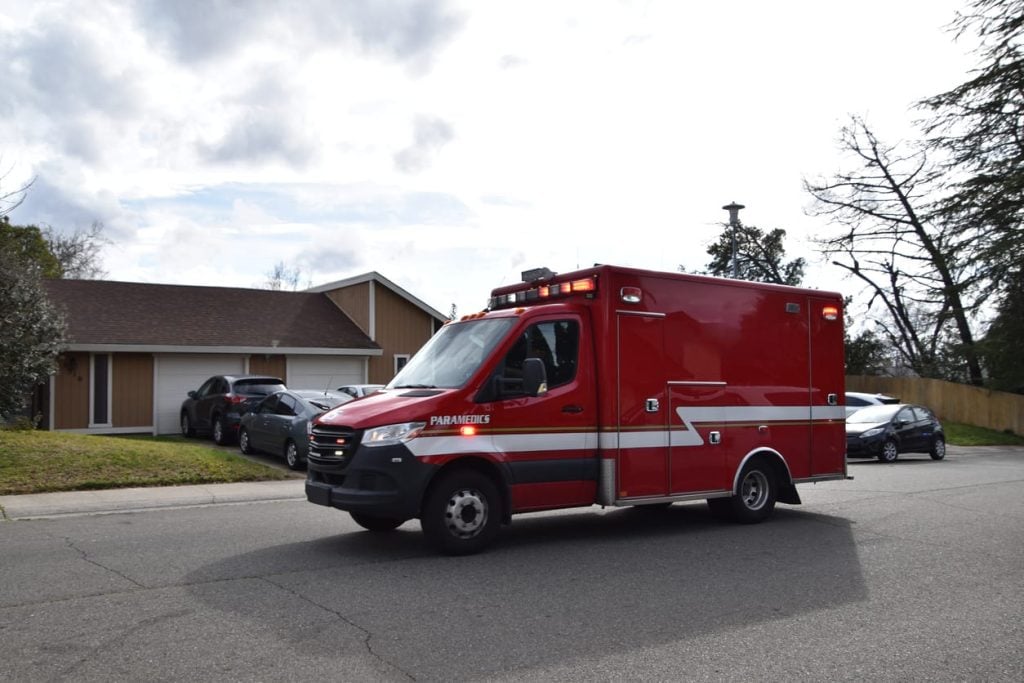
An ambulance is a commercial vehicle built on a truck chassis, and it ships as one. It is taller, heavier and often longer than the van or pickup it started as, it carries equipment that has to be dealt with before transport, and it may be moving between agencies, to a remounter, or to a buyer at auction.
Here is what determines how it travels, what to strip out first, and what a carrier needs to know.
The Type Determines the Equipment
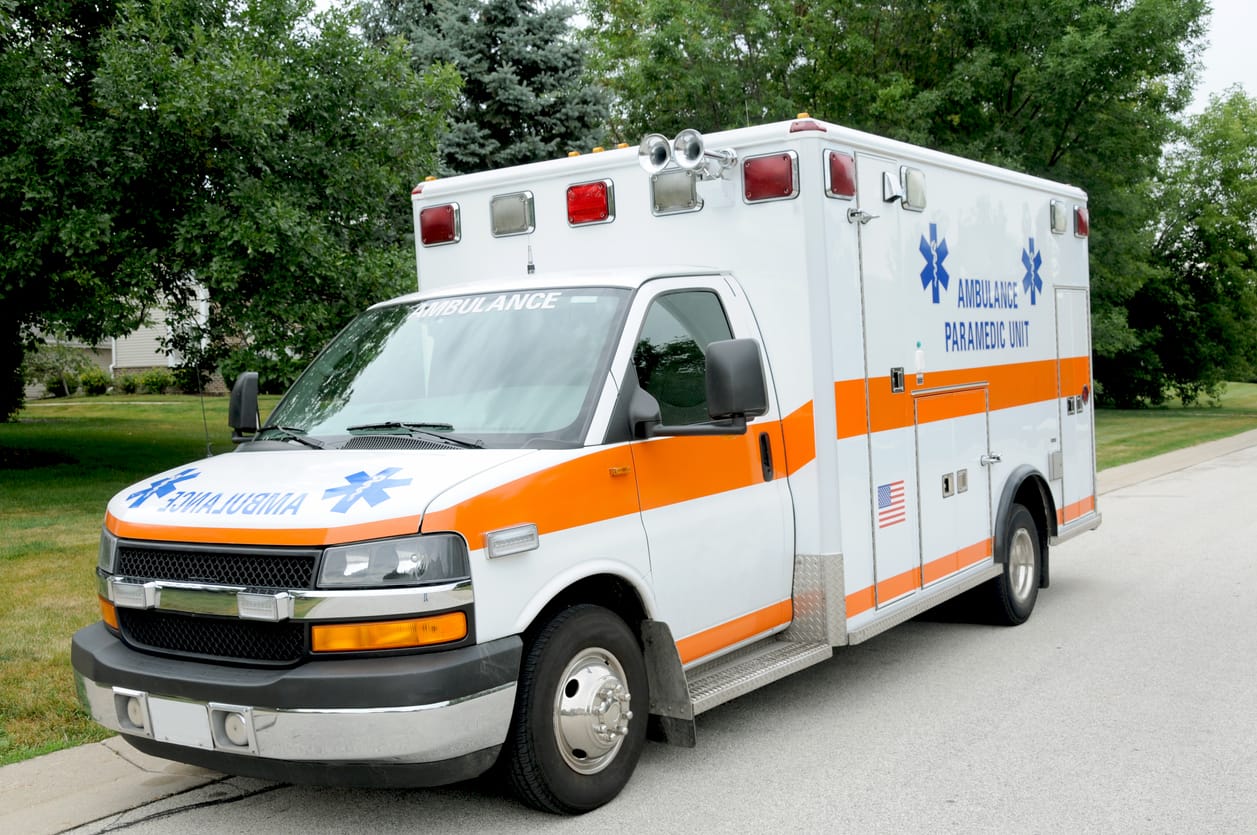
Ambulances come in three broad configurations and the difference matters for transport.
Type I is a modular box mounted on a pickup style chassis with a separate cab. Heavy, tall, and the box is wider than the cab.
Type II is a van conversion, built on a full size van chassis with a raised roof. The closest to an ordinary vehicle and the easiest to move.
Type III is a modular box on a cutaway van chassis. Common, and dimensionally between the other two.
Type I and Type III units are frequently over the height a standard car hauler can accommodate in an upper position, which pushes them to a lower deck slot or to different equipment altogether. Measure the actual height including any light bar, air conditioning unit or antenna mast, because the specification sheet height often excludes roof mounted equipment.
Measure and Weigh It Properly
Four numbers decide the quote: overall length, overall width including mirrors, overall height at the tallest point, and actual weight.
Weight is the one that surprises people. A fully built ambulance carries a heavy body, a substantial electrical system, oxygen provision, cabinetry and often a generator. Empty of consumables it can still be considerably heavier than the base chassis rating suggests, and a carrier planning a trailer with a legal gross limit needs a real figure rather than an estimate.
If a certified weight ticket is available, that is the best answer. If not, the manufacturer’s build sheet is better than a guess.
Strip It Before It Moves
This is the step specific to ambulances and it is not optional.
Oxygen cylinders must come out. Compressed gas cylinders are hazardous materials and a carrier moving a vehicle is not authorized to haul them. Remove every cylinder, including the ones in cabinets and the portable units.

Pharmaceuticals and controlled substances must come out. Obvious once said, and agencies transferring a unit sometimes miss a drug box in a locked cabinet.
Loose equipment must come out or be secured. Cots, monitors, suction units, boards, jump bags. Anything not bolted down becomes a projectile, and none of it is covered by a carrier’s cargo insurance.
Sharps and biohazard containers must come out. A carrier cannot transport medical waste, and this is a real compliance issue rather than a preference.
Then secure what remains: latch every cabinet, secure the rear and side doors, and confirm nothing swings open. Photograph the interior once it is empty, because that record protects you on a vehicle with a lot of cabinetry to inspect.
How It Travels
Three realistic options depending on the unit.
Driven on a trailer. Most ambulances that run and drive travel on an open trailer, usually in a lower deck position because of the height. This is the standard approach.
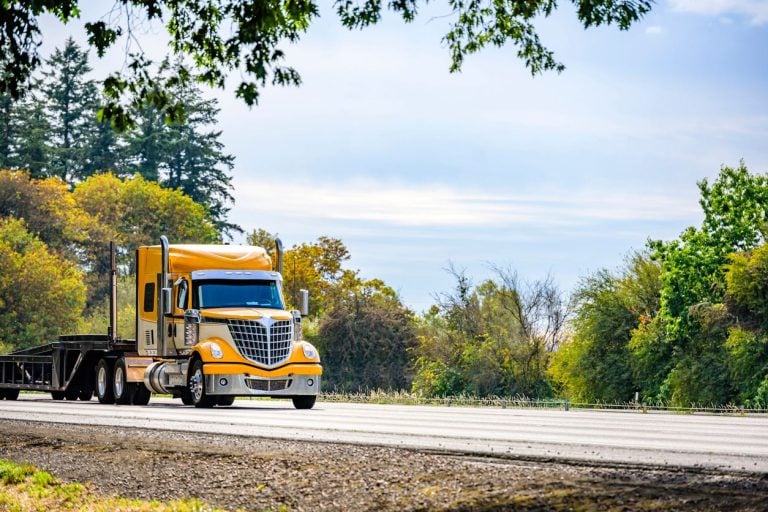
Flatbed or lowboy. For a taller Type I unit, or one that does not run, a single vehicle flatbed or a drop deck trailer gives the clearance and the shallower loading angle.
Driveaway. Some agencies have the unit driven rather than hauled. It is often cheaper on shorter moves, and it puts miles and wear on a working vehicle, which is why most buyers of used units prefer it hauled.
Whether it runs and drives is the question that determines everything. A unit that starts, moves, steers and brakes can be loaded conventionally. One that does not needs a winch and equipment for it, and decommissioned ambulances at auction frequently do not run.
Registration, Markings and the Paperwork
Worth handling before the truck arrives.
A unit being sold out of service often has its agency markings, lights and siren still fitted. Several states restrict who may operate a vehicle with emergency lighting and markings on public roads, so if the unit is going to be driven at all, check what has to be removed or covered first. For a hauled move this matters less, but a buyer should know the rule at the destination.

For the transport itself, the carrier needs the VIN, the four measurements, the weight, whether it runs, and clear authorization from whoever is releasing it. Where a unit is coming out of a municipal fleet or an auction, confirm the release procedure and who may sign in advance, because a driver turned away at a gate is a wasted trip that still costs money.
What It Costs
More than a passenger vehicle on the same route, and the reasons are dimensional. Height and weight limit which trailers and which positions can take it, which narrows the carrier pool. Length matters on a full load. And a non running unit needs a winch equipped truck.
Beyond that the usual variables apply: distance and route, access at both ends, how firm your dates are, and whether the destination is near a main corridor. Access is worth particular attention with municipal facilities and remount shops, which are often in industrial areas that are straightforward, and occasionally behind gates that are not.
For fleets moving several units, consolidating is meaningfully cheaper per vehicle than sending them individually. Our page on transporting multiple vehicles covers how full loads change the arithmetic.
Common Questions
Can an ambulance be shipped on a normal car hauler? Sometimes, in a lower deck position. Height including roof equipment usually decides, and taller Type I units often need a flatbed or drop deck.
Do the oxygen cylinders have to come out? Yes. Compressed gas is hazardous material and a vehicle carrier is not authorized to transport it.
What about medical equipment and drugs? All of it comes out. Loose equipment is uninsured and shifts in transit, and controlled substances and medical waste cannot be hauled.
What if the unit does not run? It still ships, but it needs a winch and a carrier equipped for it. Declare it at booking.
What measurements does the carrier need? Length, width including mirrors, height at the tallest point including light bar and roof units, and actual weight.
Get a Quote
Call Ship A Car, Inc. at (866) 452-3657 with the dimensions, weight, both addresses and whether the unit runs, or price the move with the specialized transport calculator.