How to Ship a Pool Table
A pool table cannot be moved in one piece, and the reason is the slate: three brittle stone slabs that make up most of the table’s weight and crack if the frame flexes underneath them. Every successful pool table shipment is really a disassembly job, a freight job and a reassembly job, and the freight is the cheapest and easiest of the three. Plan the other two first.
It Has to Come Apart
People do try to move tables assembled, usually on a short local move, and it is how tables get destroyed.
A slate bed pool table is not a rigid box. The frame carries the slate, the slate is held flat by the frame, and the whole assembly relies on being level and unstressed. Lift it, tilt it or set it down unevenly and the frame twists, which either cracks the slate or leaves a table that can never be leveled properly again. A hairline crack you cannot see will still show up as a ball that rolls off line.
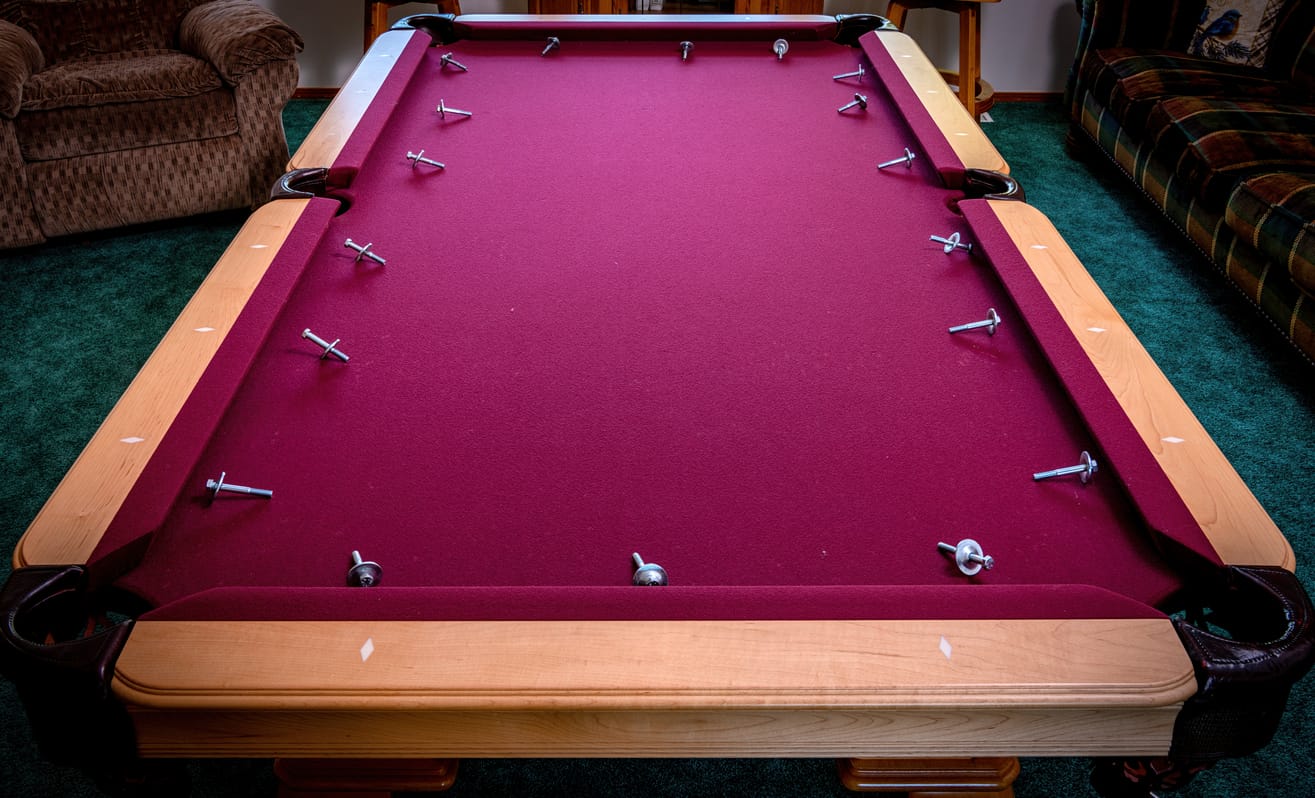
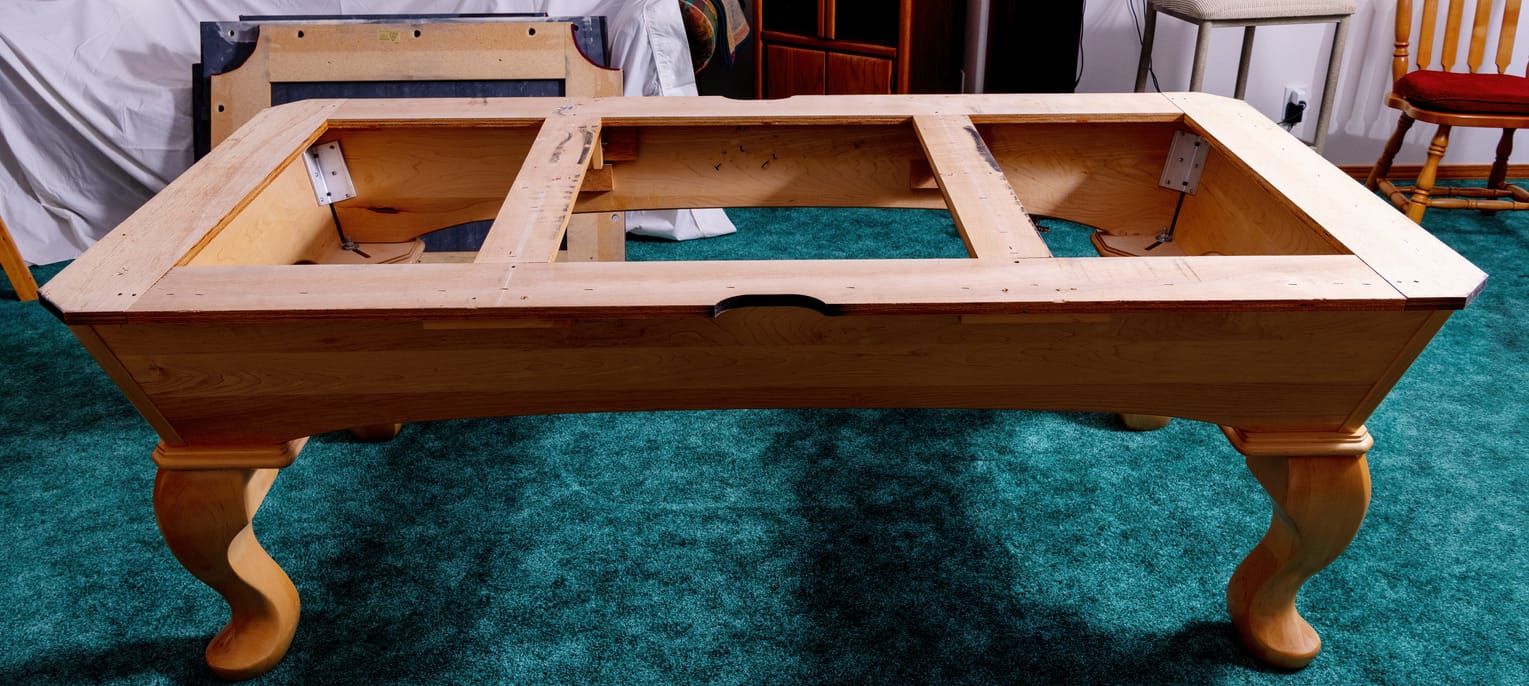
Disassembly runs in a fixed order: pockets off, rails unbolted, cloth removed from the rails and the slate, slate screws or bolts removed, slate lifted off in pieces, then the frame and legs. Every bolt, screw and shim is different and belongs with the piece it came from, so bag and label them as you go. Photograph each stage before you undo it, particularly the rail bolt positions and any shims under the slate, because those shims are what made the table level in the first place.
The Slate Is the Whole Job
Almost everything that goes wrong with a pool table shipment happens to the slate.
Most tables use three pieces, and a single piece on an 8 foot table typically weighs somewhere between 150 and 200 pounds. That is a two person lift and awkward at that, because the piece is large, flat and completely unforgiving of being flexed. Slate cracks along its grain, and the way it cracks is from being carried unevenly, set down on a corner or allowed to bend under its own weight.
Each piece travels flat, individually padded, with rigid support underneath across its whole area rather than at the ends. Foam or cardboard between pieces stops them abrading each other, and the machined edges where the pieces meet need protecting specifically, since a chipped edge means the joint will never sit flush again.
Slate is also the reason the shipment gets crated rather than blanket wrapped on anything longer than a short local move.
What It Actually Weighs
The total is higher than most people estimate, which matters for both the freight quote and the number of people you need on the day.
A 7 foot table typically runs around 700 pounds all in. An 8 foot table is commonly 800 to 1,000 pounds. A 9 foot table can reach 1,200 to 1,400 pounds. The slate is roughly two thirds of it and the frame, legs and rails make up the rest.
Broken into components on pallets it becomes ordinary freight. Assembled, it is a specialist lift that no sensible carrier will attempt.
How It Travels
Two arrangements cover almost every move.
Palletized freight is the common one. The slate is crated, the frame, legs and rails are wrapped and strapped to pallets, and the whole thing moves as standard freight. It is the most economical option and it is entirely safe when the crating is done properly.
Blanket wrap or white glove service is the alternative. The components are padded rather than crated and travel in a dedicated truck, often with the same crew handling the move at both ends. It costs more and it removes the coordination problem, which on an expensive table is frequently worth it.
Whichever you choose, declare the value. Standard freight cargo cover is calculated by weight rather than worth, and on a table with real value that figure will be well short.
Antique and One Piece Slate Tables
Older tables are a different job and need saying separately.
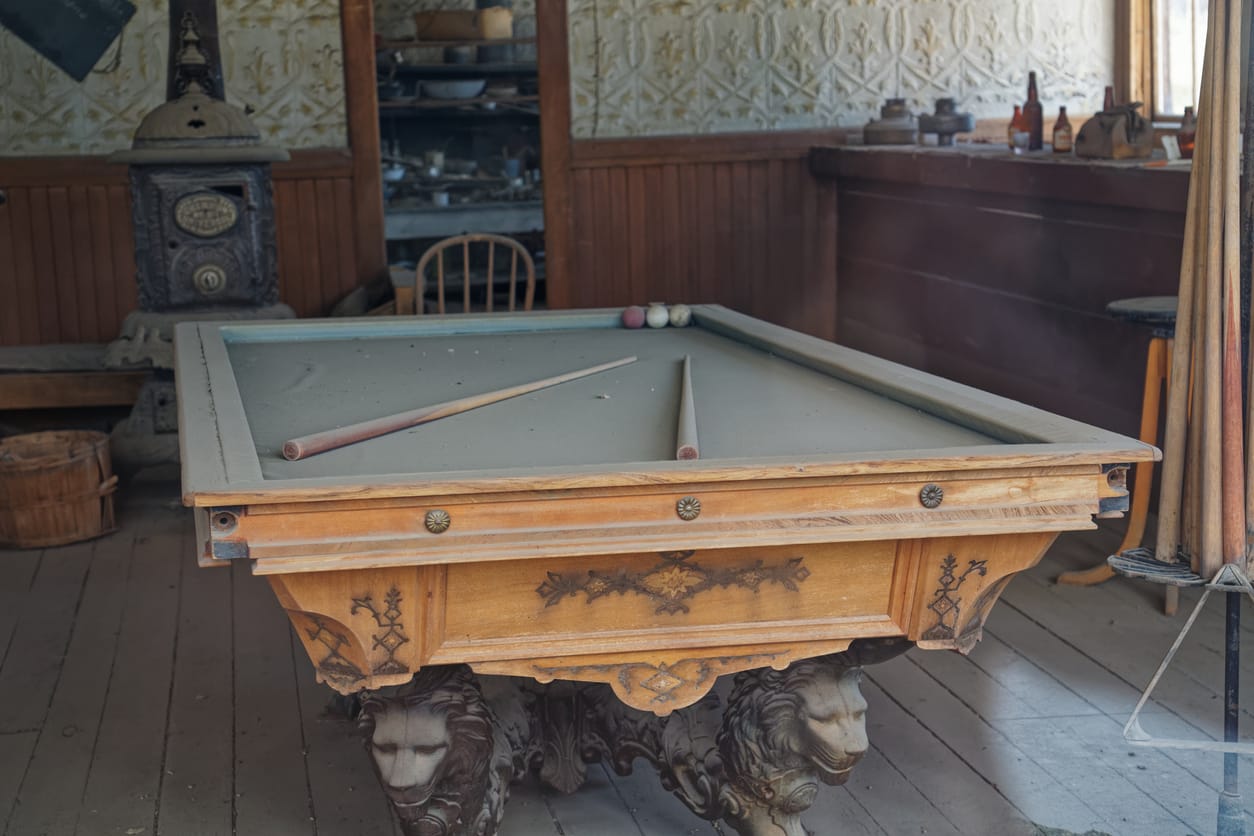
Many nineteenth century and early twentieth century tables have one piece slate rather than three, which is a single slab that can weigh 400 to 500 pounds and needs equipment and a crew rather than willing hands. Ornate carved legs, inlay and veneer are all fragile in ways a modern table is not, and original cloth or leather pockets may be part of the table’s value rather than consumables.
If the table is genuinely antique, use a specialist for the disassembly and the reassembly, and photograph everything in detail beforehand. Reproduction parts for these tables are frequently not available at all.
Access at Both Ends
Pool tables live in basements, bonus rooms and finished garages, which is where the practical problems are.
Check the route out before the crew arrives: door widths, stair turns, landings, ceiling height and whether a slate piece can be carried around the corner at the bottom of the stairs. The frame of a 9 foot table is a large rigid object and it does not negotiate a tight turn.
Do the same at the destination, and confirm where the table is going to stand. It needs a floor that can carry the weight over a small footprint and, ideally, one that is close to level before the installer starts shimming.
Reassembly and Leveling
This is the part to budget for, and it is not a job to finish yourself.
Setting a table up means assembling the frame, seating the slate, shimming it until it is level in every direction, waxing or filling the seams between the pieces so they are invisible under the cloth, stretching and fastening new cloth, and refitting the rails to the correct bolt tension. Getting the level wrong by a fraction produces a table that plays badly in a way you will notice every time.
Plan on new cloth. The old cloth is stapled or glued and rarely survives removal in reusable condition, and a move is the natural time to replace it. For a comparable specialty item, see our guide to shipping a piano.
Common Questions
Can a pool table be moved assembled? No. The frame flexes, which cracks the slate or leaves a table that cannot be leveled again.
How heavy is a pool table? Roughly 700 pounds for a 7 foot table, 800 to 1,000 for an 8 foot and up to 1,400 for a 9 foot. The slate is about two thirds of it.
How is the slate protected? Each piece travels flat and individually padded with rigid support across its full area, with the machined edges protected specifically.
Do I need new cloth? Almost always. It is stapled or glued and rarely survives removal, so budget for recovering as part of the reassembly.
What about an antique table? One piece slate can weigh 400 to 500 pounds and the legs and inlay are fragile. Use a specialist and photograph everything first.
Get a Quote
Call Ship A Car, Inc. at (866) 452-3657 for specialized freight with the table size, the slate type and the access at both ends, or request a quote through the specialized transport calculator.