How Do You Transport a Freight Container Over the Road?
The short answer: on a truck built for it. Short local moves are usually handled by a tilt-bed truck that can set the container on the ground with no crane. Highway moves ride on a flatbed or step-deck trailer, with the step deck taking taller high-cube containers to keep them under legal height. Very heavy or oversized loads move on a removable gooseneck (RGN). For cross-country distances, containers often ride the rails between terminals with trucks handling the first and last miles.
Over-the-road container moves fall under our shipping container transport service, and the right trailer depends on three things: the container’s size, its weight, and whether the delivery site has equipment to unload it.

The Four Trucks That Move Containers
Tilt-Bed Trucks
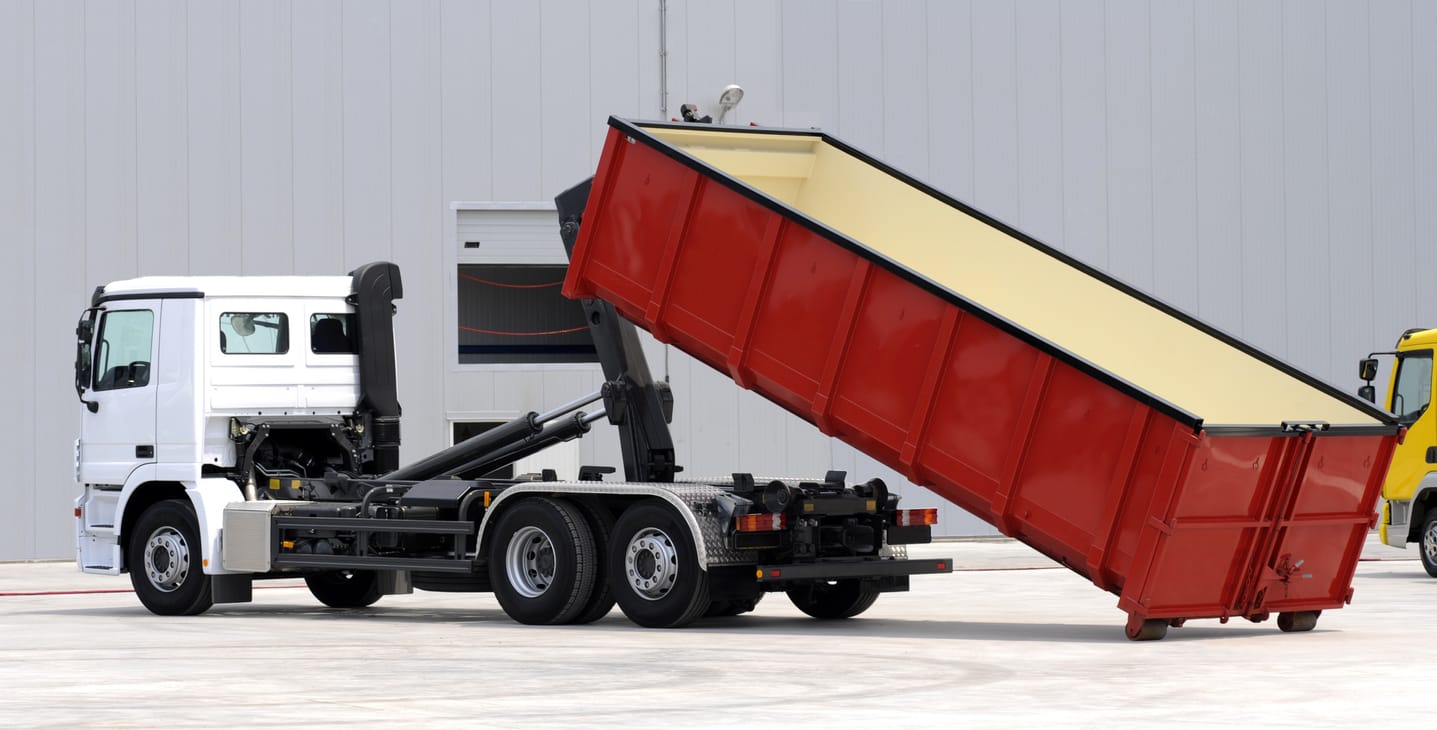
Tilt-bed trucks carry containers over short distances, often terminal to terminal or terminal to a nearby site. The bed tilts hydraulically toward the ground so the container slides off gently and settles level at the delivery spot. That makes tilt beds the go-to when the destination has no crane or forklift: the truck is its own unloading equipment. The tradeoff is capacity and range; tilt beds handle less weight than the highway trailers below.
Flatbed Trailers
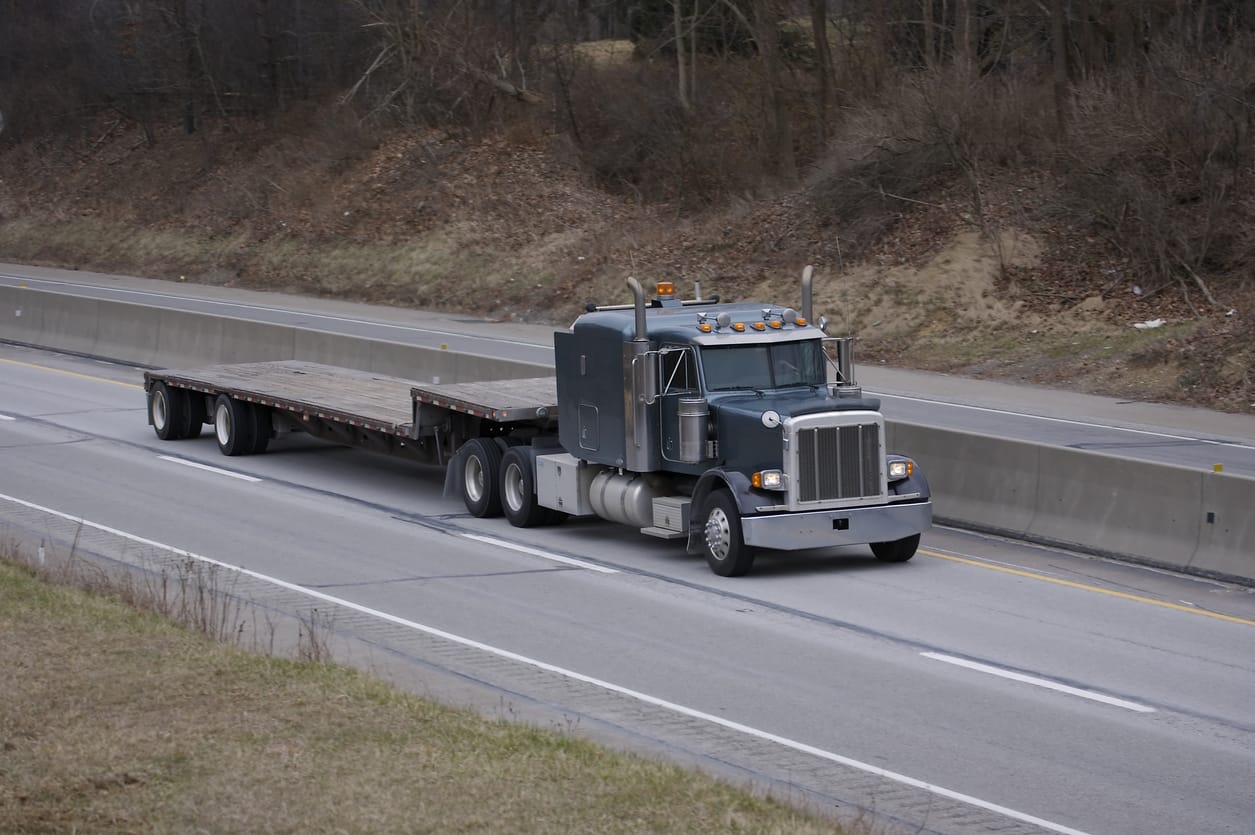
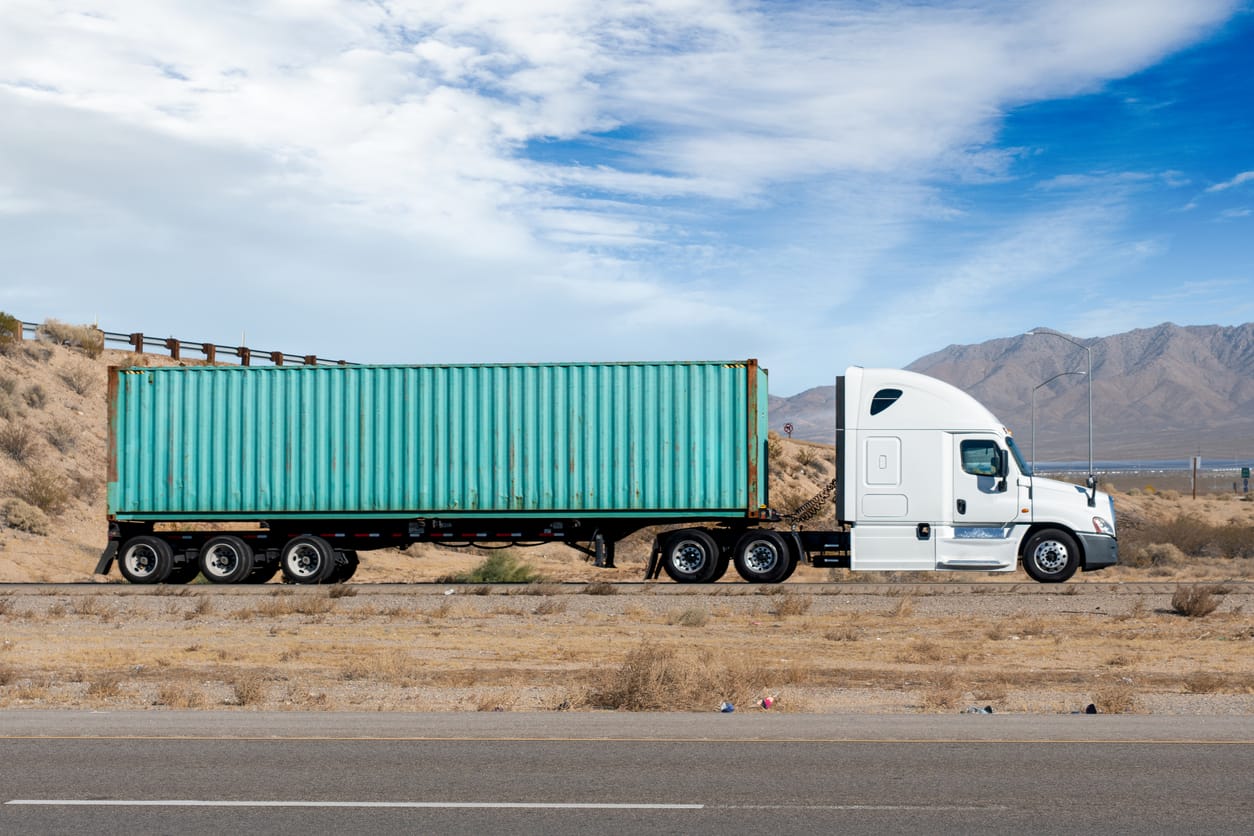
The flatbed is the workhorse for standard-height containers on highway routes. A 20-foot or 40-foot standard container rides legally on a flatbed on most routes, and flatbeds are plentiful, which helps your schedule and your rate. Loading and unloading require equipment at both ends, typically a crane, reach stacker, or heavy forklift.
Step-Deck Trailers
A step-deck has a lowered main deck behind the gooseneck, and that extra clearance is exactly what tall containers need. A 9-foot-6 high-cube container that would push past legal height on a standard flatbed typically stays under the limit on a step deck, avoiding over-height permits and routing restrictions. Step decks shuttle containers between ports, rail yards, and inland delivery points, and the lower deck height also makes ground-level loading simpler at warehouses and job sites.
Removable Gooseneck (RGN) Trailers
For the heaviest moves, an RGN trailer detaches at the front so the deck becomes a ramp, and its multi-axle configurations are rated for loads a standard flatbed cannot legally carry. RGNs are the answer when a loaded container, or a container plus the machinery inside it, pushes the move into heavy-haul territory.
Loading and Unloading: Plan Both Ends
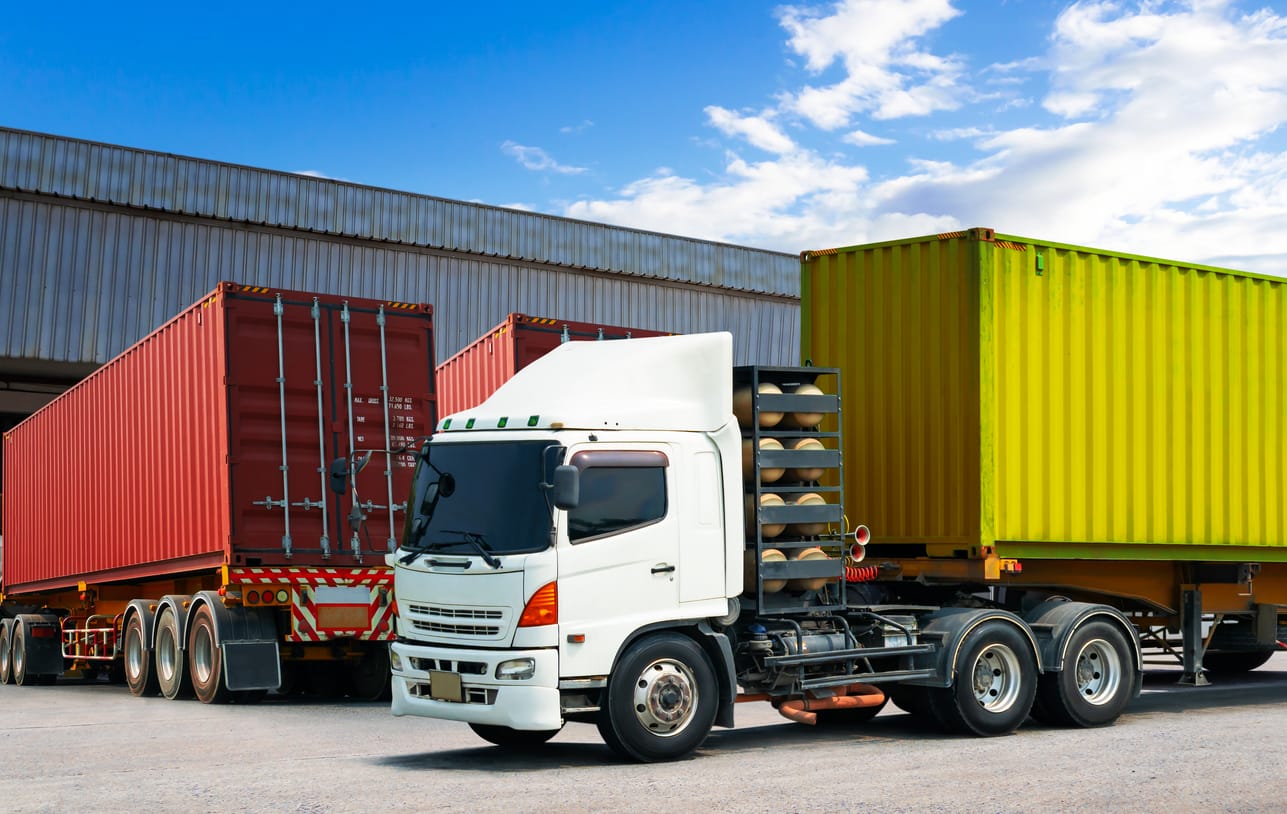
Containers get on and off highway trailers with a crane, reach stacker, or heavy-capacity forklift, which port and rail terminals have on hand. The place that usually does not is the delivery site. Before booking, answer one question honestly: what will take the container off the truck at destination? If the answer is nothing, book a tilt-bed for the final leg or arrange a crane in advance. Getting a trailer stuck at a site with no way to unload is the most common, and most avoidable, failure in container moves.
What It Costs
Two variables drive the price of an over-the-road container move:
- Weight: an empty 20-footer and a loaded 40-footer are entirely different moves; weight determines the trailer class, axle requirements, and any permits.
- Distance: the miles between pickup and delivery set the base linehaul rate.
Trailer type matters too: a standard flatbed load costs less than a step-deck or multi-axle RGN move. A good broker prices all of this in one quote and matches the container to the cheapest trailer that can legally and safely carry it.

Frequently Asked Questions
Can you transport a loaded shipping container?
Yes, but weight is the governing factor. A loaded container may require a heavier trailer class, more axles, or permits, and the contents must be secured inside. Always disclose the loaded weight when you get a quote.
Do I need a crane at my delivery site?
Only if the container arrives on a flatbed or step deck. A tilt-bed truck sets the container on the ground itself, which is why it is the standard choice for residential and job-site deliveries.
Does a 40-foot high-cube container need a permit?
On a standard flatbed it can exceed common legal height limits; on a step deck it typically stays legal without an over-height permit. Route and state rules vary, which is something your transport coordinator confirms before dispatch.
What about rail or intermodal?
For long cross-country distances, intermodal container shipping pairs rail for the long haul with trucks for the first and last miles, and often prices well against an all-road move if your dates are flexible.
The Bottom Line
Match the trailer to the container and plan the unload before the truck rolls: tilt bed for crane-free deliveries, flatbed for standard boxes, step deck for high cubes, RGN for heavy loads. SAC handles every step, from trailer selection and permits to the equipment at both ends, and moves other specialty freight the same way, from granite slabs to full machinery loads. Call (866) 452-3657 for a container transport quote today.