How to Ship a CNC Machine
A CNC machine is a precision instrument that happens to weigh several tons, and the thing that ruins one in transit is not impact but vibration reaching parts that were never meant to move. The spindle, the ball screws and the linear rails are held to tolerances measured in thousandths of an inch. Get the machine locked down correctly before it leaves and the move is routine. Skip that and it arrives out of alignment, which is a recalibration bill rather than a repair.
Lock the Axes and the Spindle
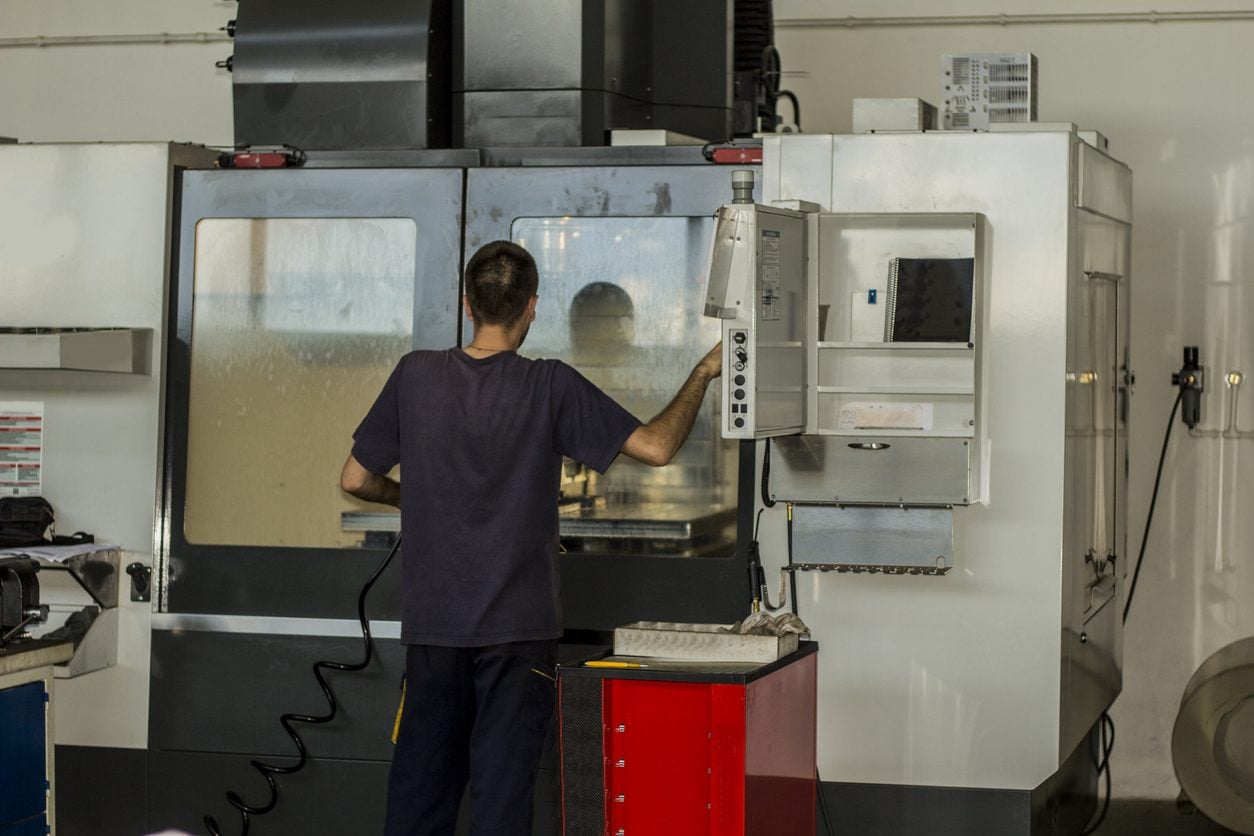
This is the step that matters most and the one a rigger cannot do for you.
Move every axis to its shipping position, usually near the center of travel, and clamp or brace it there. Machines with a designated transport position have it in the manual, and if yours does, use that rather than improvising. Unrestrained axes drift on the road, and the ball screws take the load.
Secure the spindle. Remove tooling from the spindle and the tool changer, and empty the carousel completely: a tool that works loose inside a magazine will damage everything around it.
Retract and lock the tailstock, the chuck and any moving guarding. Anything that can slide will slide.
Drain the Fluids
Coolant, hydraulic fluid, way lube and the chip conveyor sump all hold liquid.
Drain them and cap the fittings. Beyond the weight, a machine that weeps coolant onto a trailer contaminates other freight, and a carrier will treat that as their problem to bill you for. Clear the chip conveyor and the coolant tank of swarf while you are there.
Where the route crosses freezing conditions, residual water in a coolant system is a split fitting waiting to happen.
Weight and Rigging Points
These machines are dense, and the weight is concentrated in the base.
A small vertical machining center runs roughly 5,000 to 10,000 pounds. A mid size VMC sits somewhere around 10,000 to 20,000. A large horizontal machine or a multi axis mill turn can exceed 40,000. Give the manufacturer’s figure rather than estimating, because the axle configuration depends on it.
Machines have designated lifting points, and they are not interchangeable with whatever looks strong. Slinging from the wrong place bends sheet metal at best and distorts the casting at worst, and a distorted casting is the machine’s accuracy gone. Find the points in the manual and mark them.
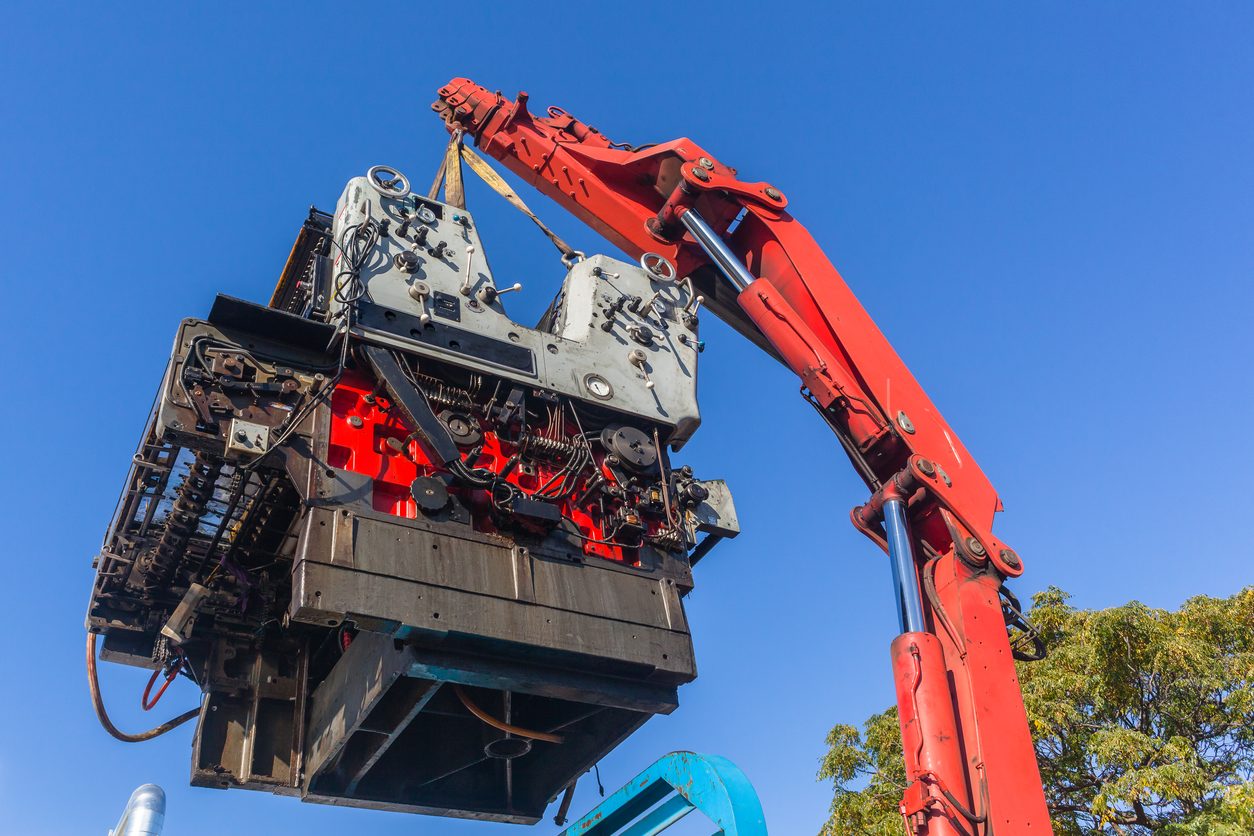
Most CNC machines need a crane or a heavy forklift at both ends, plus riggers who have moved one before. A crane at the origin only stops the move halfway.
Trailer and Permits
Height decides the trailer, as always.
A flatbed deck sits around 5 feet off the road, so a machine over about 8 feet 6 inches tall exceeds the 13 feet 6 inch limit once loaded. A step deck buys roughly a foot and covers most machines; a lowboy handles the tall ones. Enclosed or a covered trailer is worth considering, since a CNC machine does not want weather.
Over 8 feet 6 inches wide, 13 feet 6 inches high measured from the road, or 80,000 pounds gross needs a permit for every state on the route.
Site Access at Both Ends
The building is usually the constraint rather than the road.
Check the door width and height the machine has to pass through, the floor loading along the route inside, and whether there is a step, a ramp or a dock. Confirm the destination has a level floor rated for the machine and, ideally, a prepared pad or leveling mounts ready.
Tell us what equipment exists at each site. A machine that arrives at a shop with no forklift and no crane is a machine sitting on a trailer being billed for detention.
Document and Recommission
Photograph the machine before it is wrapped, including the control panel, the way covers and the sheet metal, and photograph the axis locks in place.
Wrap it against moisture and dust. At the destination, expect to level it, recommission it and check alignment before running anything to tolerance. That is normal after a move rather than a sign something went wrong.
Common Questions
What damages a CNC machine in transit? Vibration through unrestrained axes, not impact. Lock the axes and the spindle before it moves.
Do the fluids have to come out? Yes. Coolant, hydraulics and way lube, with the fittings capped. A leaking machine will be refused.
Where does it get lifted from? Its designated rigging points, from the manual. Slinging elsewhere can distort the casting.
Do I need a crane at both ends? Almost always, or a heavy forklift. Arranging one only at the origin stops the move halfway.
Will it need recalibrating? Expect to level and recommission it at the destination. That is normal after any machine move.
Get a Quote
Call Ship A Car, Inc. at (866) 452-3657 for freight and specialized transport, with the make and model, the weight and dimensions, and the lifting equipment at both ends.