How to Protect Your Car From Catalytic Converter Theft
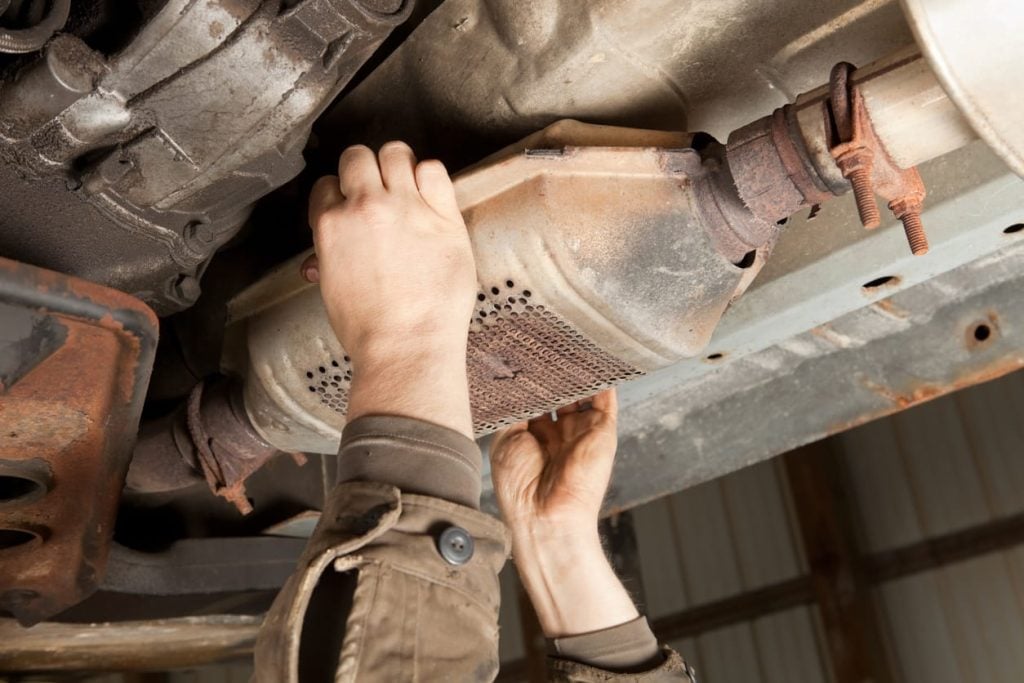
A catalytic converter can be cut off a vehicle in under two minutes with a battery powered saw, and the part itself is worth a fraction of what replacing it costs you. Thieves want the palladium, platinum and rhodium inside. You are left with a bill that frequently runs well into four figures once the exhaust work and the labor are counted. Prevention is cheap by comparison.
Why Some Vehicles Are Targeted More
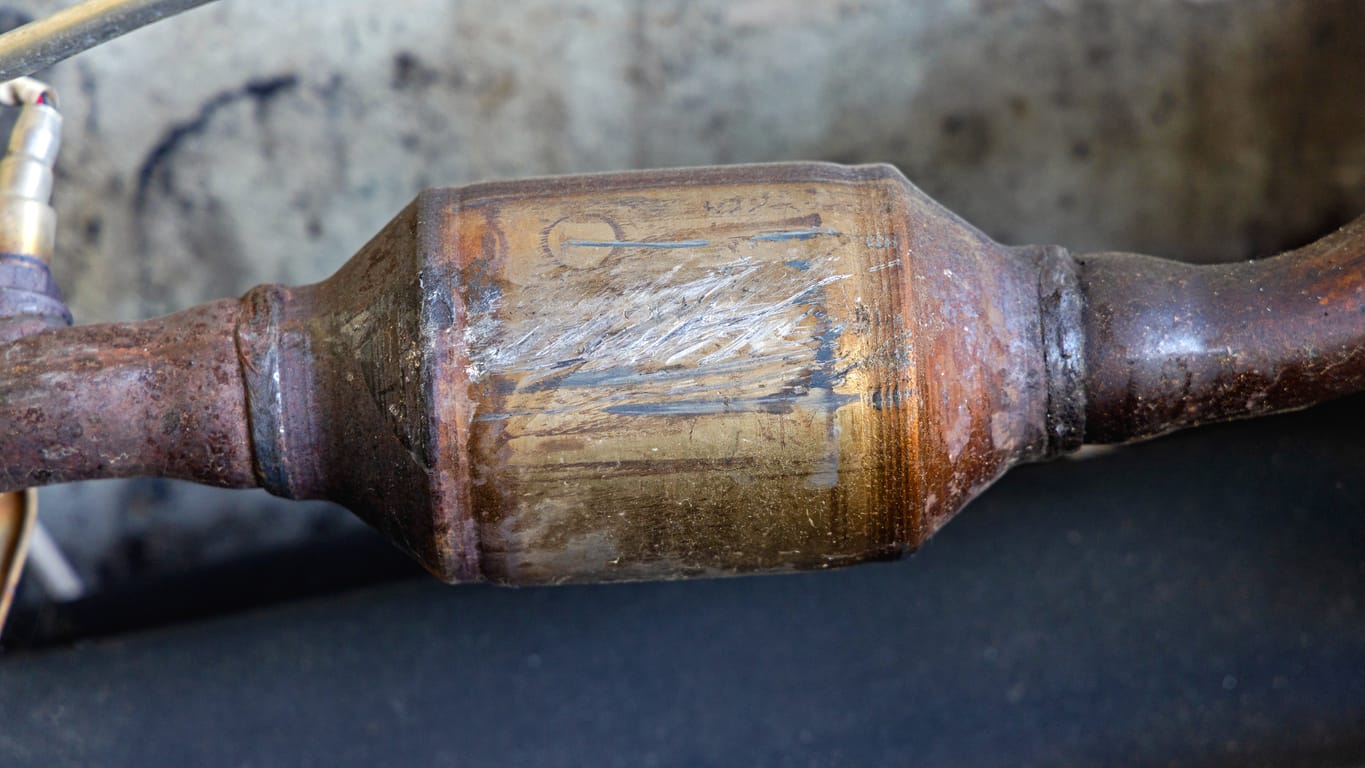
Theft is not random, and knowing where your vehicle sits helps you judge how much effort to put in.
Ground clearance is the first factor. Trucks, SUVs and vans can be slid under without a jack, which makes them faster and quieter to work on than a low sedan.
Hybrids are targeted heavily because their converters contain a higher concentration of precious metals. The gasoline engine in a hybrid runs intermittently, so the converter does less work and degrades more slowly, leaving more recoverable metal.
Certain models are known within the trade for easy access or valuable units, and older vehicles are often easier because there is more room underneath and fewer shields.
Electric vehicles have no catalytic converter at all, which is the one clear exemption.
Where and When It Happens
Theft clusters in predictable places, and most of them are avoidable.
Unattended parking is the common thread: long stay lots, apartment complexes, park and ride lots, hotel parking, and streets in areas with little foot traffic. Vehicles left for days are attractive precisely because nobody notices for days.
Most thefts happen overnight and in the early hours, and a thief working under a vehicle attracts far less attention than one breaking a window. To a passer by it looks like maintenance.
What Actually Works
Several measures help and they stack. None is absolute, and the goal is to make your vehicle a worse choice than the one parked next to it.
Parking is the single largest factor. A garage is best. Failing that, park in a well lit area with genuine foot traffic, close to a building entrance, and against a wall or curb that makes it awkward to get underneath. Where you park a work van or a truck overnight matters more than any device you can buy.
A physical shield or cage bolted over the converter is the most effective aftermarket measure. It does not make removal impossible; it makes it slow and loud, and both are what a thief is avoiding.
Etching the vehicle identification number onto the converter and marking it with high temperature paint makes the part traceable and harder to sell. Some police departments and shops run marking events for exactly this reason.
A tilt sensitive alarm is worth having, because a vehicle being jacked or worked under triggers it where a conventional door and glass alarm does nothing.
Welding the bolts or using tamper resistant fasteners adds time to the job, which is the whole objective.
What Does Not Work Well
A conventional car alarm alone is close to useless here, because nothing is opened or broken. Cameras help with prosecution rather than prevention, and only if the footage is good enough to identify somebody. And parking under a street light in an empty lot is better than darkness but is not the deterrent people assume.
How to Tell It Has Happened
You will know on startup. The vehicle becomes extremely loud, a deep roar rather than a rattle, and it sounds wrong immediately. The check engine light typically comes on, the vehicle may run poorly, and there is frequently a sulfur smell.
Do not keep driving it. Beyond the noise, running without a converter can damage other components, it is illegal on public roads, and it will fail emissions testing anywhere that requires it.
Report it to the police for the insurance claim, then call your insurer. Comprehensive coverage generally covers catalytic converter theft, subject to your deductible, though a claim may affect your premium and on an older vehicle the deductible can approach the repair cost.
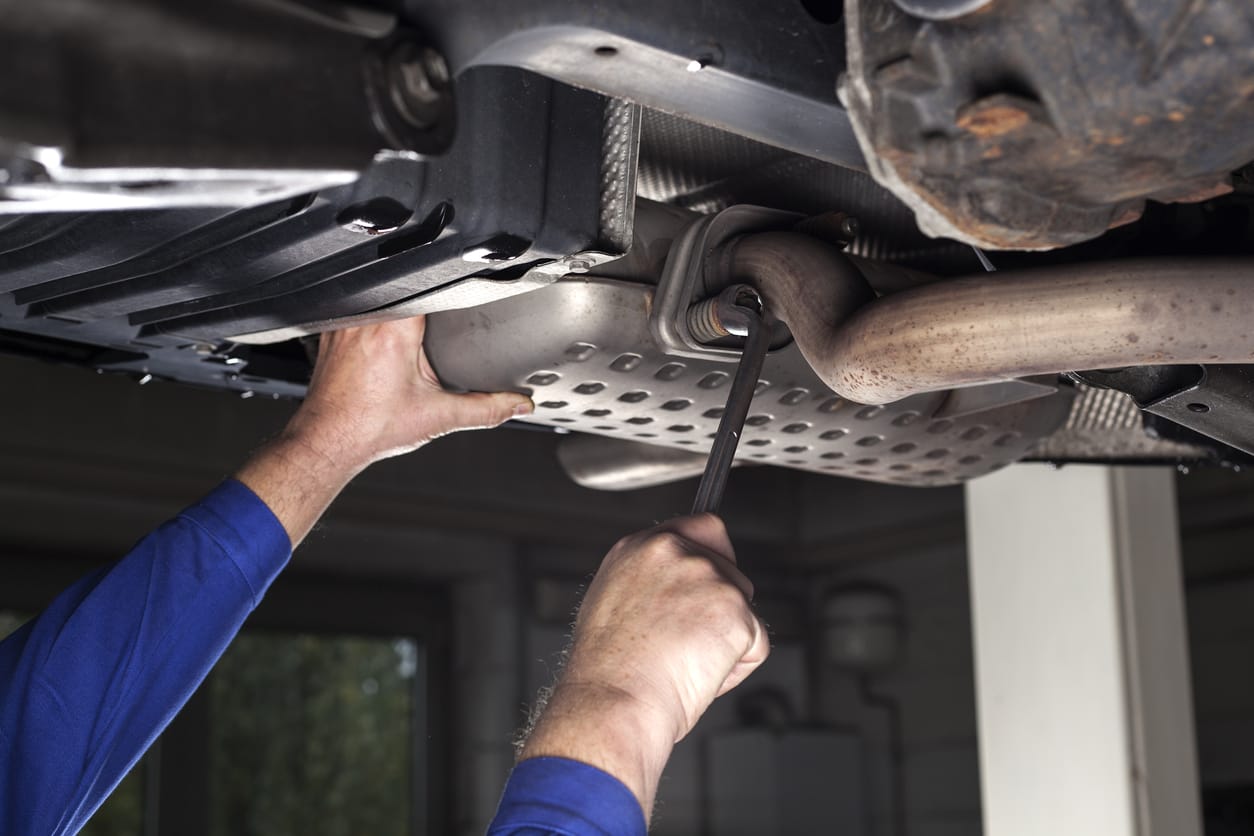
Replacement and Aftermarket Parts
Replacement is where the real cost lands, and the choice is worth understanding before you are quoted.
An original equipment converter is expensive and is what a dealer will fit. Aftermarket units cost considerably less, but they must be legal for your state, and California in particular requires converters certified by the state’s own program. Fitting a non compliant part means failing your next test.
Expect exhaust fabrication as part of the job, since the old unit was cut out rather than unbolted. Ask the shop to fit a shield at the same time, because a vehicle that has been hit once is a proven target and thieves do return.
If Your Vehicle Is Being Shipped or Stored
This matters if a vehicle is going to sit somewhere while it waits for transport or after delivery.
Vehicles awaiting collection or sitting at a destination before somebody claims them are exactly the unattended, low traffic situation thieves prefer. Where possible, keep the vehicle at a secured property rather than on the street for the days around a shipment, and time delivery for when somebody can receive it rather than leaving it parked for a week.
On a carrier’s trailer the vehicle is not a practical target, since it is stacked, strapped and with the driver. The risk is the standing time at either end. Our guide to timing a delivery covers arranging arrival for when you are there.
Fleets and Multiple Vehicles
Anyone parking several vehicles in one place has a different problem, because a lot full of similar vehicles is worth a thief’s time in a way a single car is not.
Work vans and box trucks are the worst case: high clearance, parked overnight in the same place every night, and frequently in an industrial area with no foot traffic after dark. A fleet that loses one converter commonly loses several on the same night.
The measures that work at scale are the boring ones. Park vehicles tightly together and nose to tail so there is no room to work underneath. Put the highest clearance vehicles in the middle rather than on the outside of a row. Use lighting and, where the budget allows, a fence and a gate, which do far more than a camera. Fit shields to the vehicles that are actually at risk rather than to the whole fleet, and mark every converter.
Common Questions
How fast can a converter be stolen? Under two minutes with a cordless saw, which is why speed and noise are what deterrents target.
Which vehicles are most at risk? High clearance trucks, SUVs and vans, and hybrids, whose converters hold more recoverable precious metal.
Is a shield worth fitting? Yes. It is the most effective aftermarket measure because it makes removal slow and loud.
Does insurance cover it? Comprehensive coverage generally does, subject to your deductible. On an older vehicle the deductible may approach the repair cost.
Can I drive without one? No. It is extremely loud, it can damage other components, it is illegal on public roads and it fails emissions testing.
Get a Quote
Call Ship A Car, Inc. at (866) 821-4555 with both zip codes and your date range, and we will time the delivery so the vehicle is not left standing, or price the move with the instant calculator.