Buying a New Model? What to Know About Getting It Home
The situation this covers: you have ordered or bought a new vehicle that is not at your local dealership, which is increasingly normal as inventory is allocated regionally and online buying has become routine. Getting it home is a transport question, and a new car has a few specific requirements that a used one does not.
Why New Vehicles Often Need Shipping
Allocation is the usual reason. Manufacturers distribute new models unevenly, so a trim or color you want may sit at a dealership several states away while your local one has a months-long wait. Buyers also cross state lines for price, since dealer markups on in-demand models vary enormously by market. In both cases the vehicle exists; it is just not near you.
The alternative is flying out and driving it back, which puts several hundred or several thousand miles on an odometer that was at delivery mileage, plus fuel, a flight, and time off work.
Open or Enclosed for a New Car
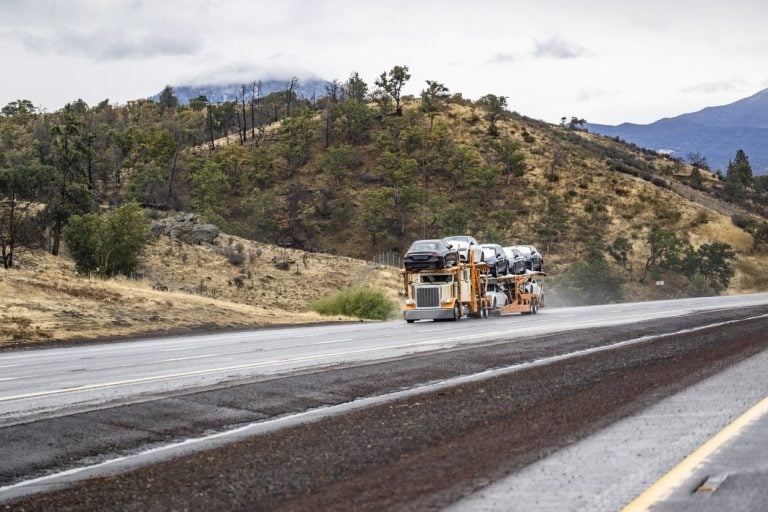
Open transport is how new vehicles reach dealerships in the first place, so it is entirely appropriate for most purchases and it is the economical choice. Enclosed is worth the roughly 20 to 30 percent premium in three cases: a high-value or limited-production model, a vehicle with delicate paint or a low front air dam, and any car where you would be genuinely unhappy with a stone chip on arrival.
The Paperwork Difference
This is where new-car shipments differ most. Coordinate these before booking:
- Who releases the vehicle. The dealership needs to know a carrier is collecting, who is authorized to release it, and when. A driver arriving unannounced at a dealership will wait.
- Temporary registration and plates. Confirm what the dealer is providing and whether it needs to be in the car.
- Payment cleared first. Most dealerships will not release a vehicle to a carrier until funds have settled.
- Delivery mileage recorded. Note the odometer at pickup. On a new car, mileage is part of the condition.
Inspect It Like a Delivery, Not a Formality
A new vehicle arrives with no existing damage to explain away, which makes the inspection simpler and more important. Walk the whole car in daylight, check the roof and lower panels, confirm the odometer matches what was recorded at pickup, and write any exception on the bill of lading before the driver leaves. Signing a clean bill of lading is your acknowledgment that it arrived undamaged.
Timing
Book one to four weeks ahead. Dealership pickups are easier to schedule than residential ones because the location is commercial, accessible, and staffed during business hours, but the carrier still has to be running your lane. Transit is one to three days regionally, three to five days at around 1,500 miles, and five to seven coast to coast.
Buying Out of State: The Parts People Miss
Shipping is the easy half. The friction is usually in the transaction:
- Sales tax is generally owed in the state where you register the vehicle, not where you buy it. Dealers handle this routinely, but confirm rather than assume.
- Temporary registration needs to cover the period until your home state plates arrive. Ask the dealer what they issue and how long it lasts.
- Emissions compliance varies. California-specification vehicles and states following its standards can create complications in both directions.
- Lender requirements. If financing, the lender may have conditions about where the vehicle is delivered and insured.
- Insurance before transport. Your policy should cover the vehicle from the moment ownership transfers, independent of the carrier’s cargo coverage.
Coordinating With the Dealership
Dealerships handle carrier pickups constantly, but they need notice. Give the coordinator a named contact in the dealership’s sales or logistics office, and make sure that person knows the collection window and has the vehicle prepared and released.
Two recurring snags: the vehicle is still in the detail bay when the driver arrives, and payment has not fully cleared so the dealership will not release it. Both are avoidable with a phone call the day before.
Should You Fly Out and Drive Instead?
Sometimes, and it is worth doing the arithmetic honestly. Under about 500 miles, driving it back is often the better option, particularly if you want to inspect the car in person before committing. Past that, add the flight, fuel, a night or two of lodging, meals, days off work, and the mileage and depreciation on a vehicle that had delivery mileage on it. Shipping usually wins comfortably, and the car arrives as it left the lot.
Common Questions
Can a car be shipped straight from the factory or a port? From ports and distribution centers, frequently yes. Vehicles arriving from overseas are commonly collected at the port of entry.
Is a brand-new car safe on an open carrier? Yes. It is how essentially every new car reaches its dealership. Enclosed is a preference, justified for high-value or limited-production models rather than a necessity for new vehicles generally.
What if the car is damaged before I have ever driven it? Note it on the bill of lading before the driver leaves and photograph it immediately. Because you have no history with the vehicle, the pickup condition report from the dealership end is especially important, so ask that it be done carefully.
How long does it take? One to three days regionally, three to five days at around 1,500 miles, five to seven coast to coast, plus a day or two of window on each end.
Get a Quote
Call Ship A Car, Inc. at (866) 821-4555 and tell the coordinator it is a dealership pickup, or price it with the instant calculator.