How Construction Equipment Is Actually Transported
There is no single method, and picking the wrong one is the most expensive mistake in this category. The machine’s measured height, width and weight decide the trailer, and the trailer decides whether the move is ordinary freight or a permitted operation with escorts and restricted hours. Almost everything else follows from getting those three numbers right.
Start With Three Measurements
Weight, width and height, measured rather than taken from a brochure.
Weight must include everything traveling with the machine: counterweights, attachments, full tanks and fluid filled tires all add mass that is invisible from outside. Take the figure from the manufacturer’s plate or a certified scale.
Width past 8 feet 6 inches makes it an oversize load. Many machines are wider than that only because of a bucket, a blade or wide track pads.
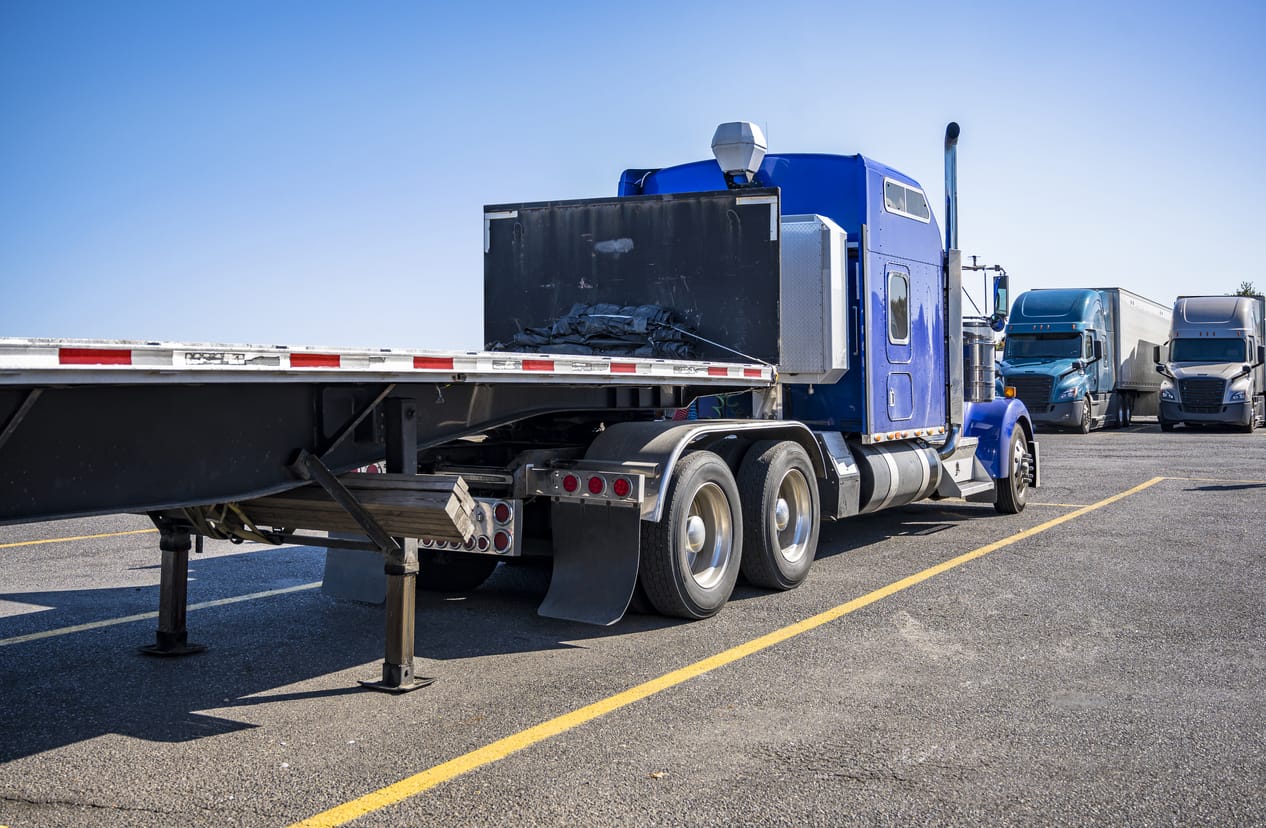
Height includes the trailer, which is what catches people. A flatbed deck sits around 5 feet off the road, so an 8 foot 6 inch machine is already at the 13 foot 6 inch ceiling before anybody measures the cab.
Those three numbers determine everything downstream, and getting them wrong is the main reason a quote changes after booking.
The Four Trailer Types
Flatbed. A flat deck around 5 feet high, suitable for smaller equipment: skid steers, mini excavators, compact tractors and attachments. Cheapest, most available, and legal without a permit for anything that fits.
Step deck. Drops the rear portion of the deck about a foot, which buys a foot of machine height. Handles mid size equipment and a great deal of agricultural machinery.
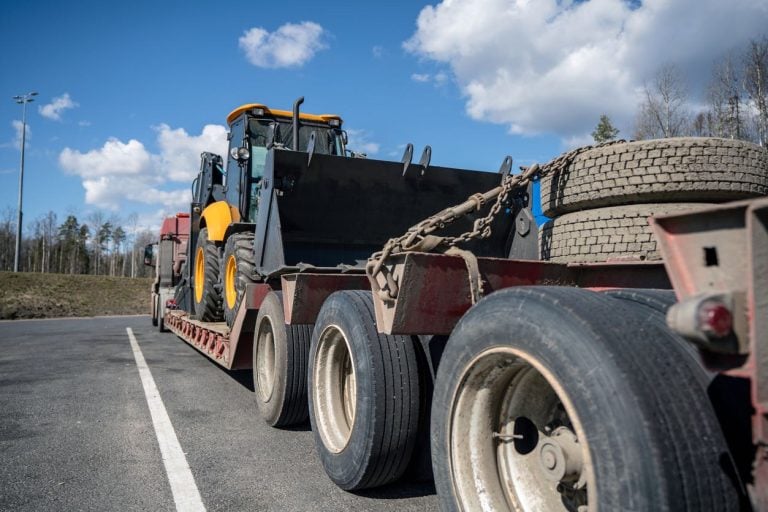
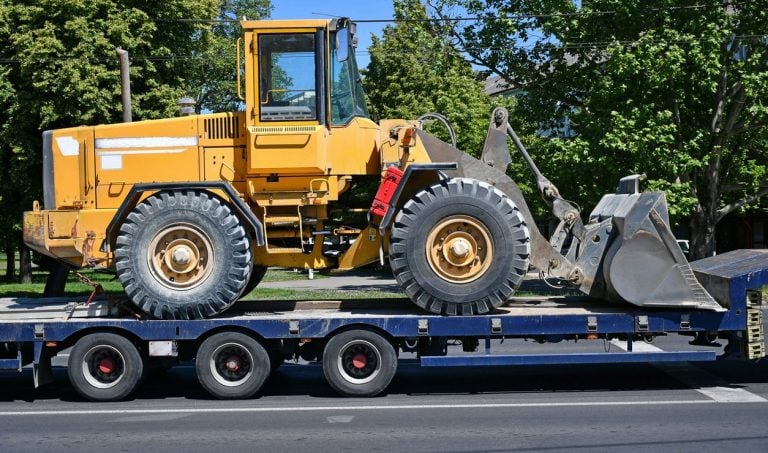
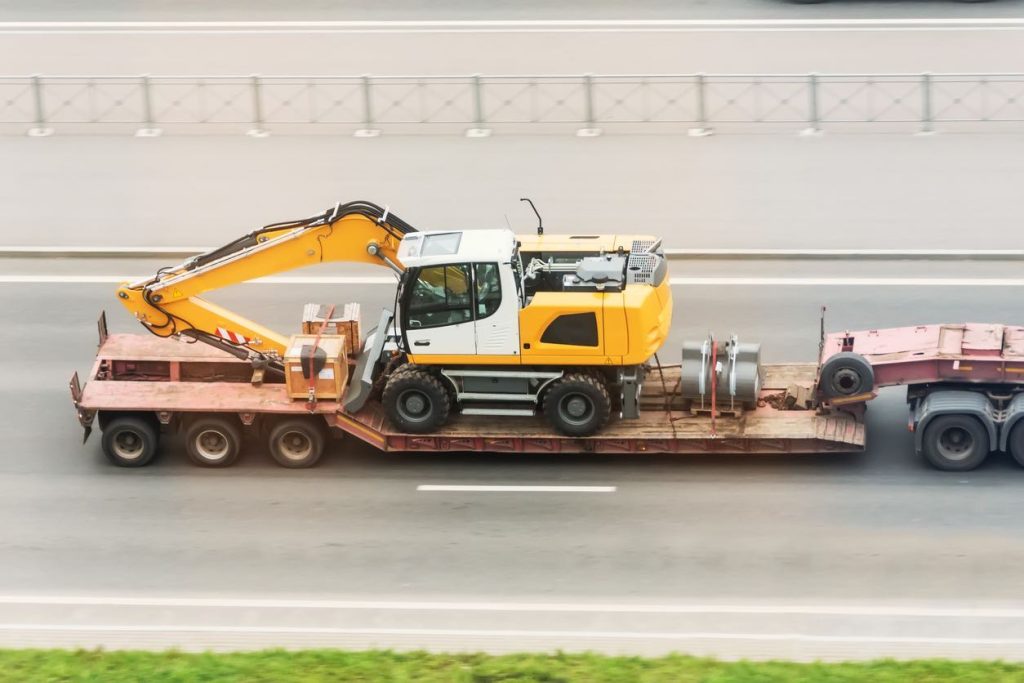
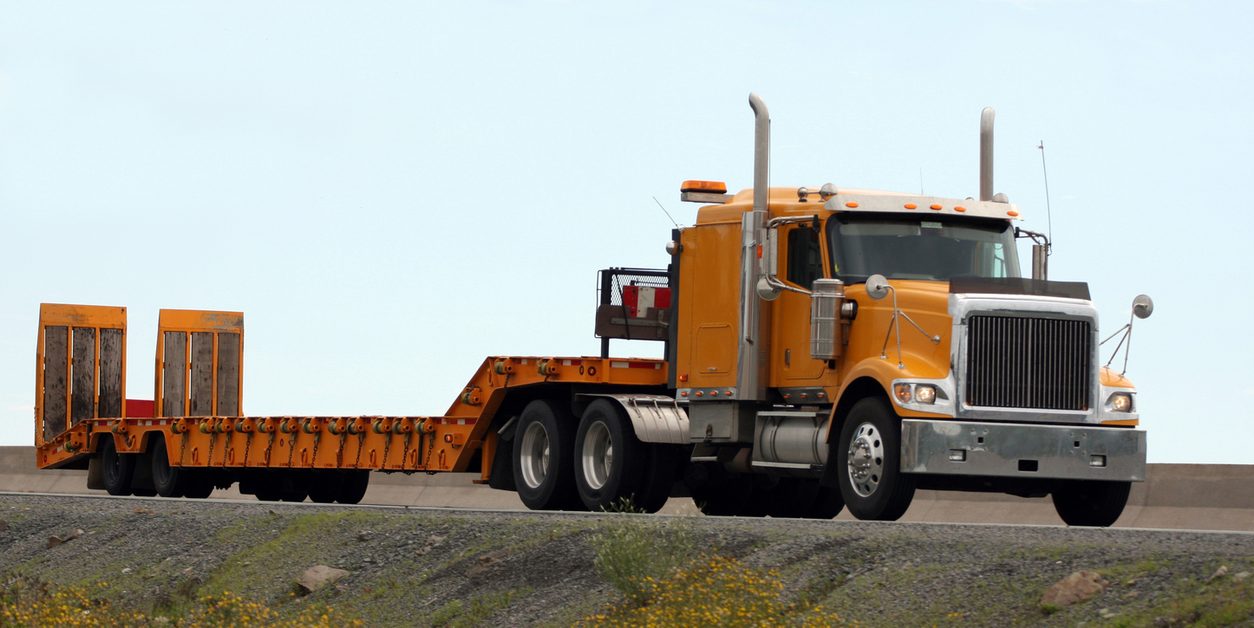
Lowboy or removable gooseneck. Drops the deck to roughly 18 to 24 inches. This is what large excavators, dozers, graders and cranes travel on, and a removable gooseneck lets the machine drive on from the front rather than being craned.
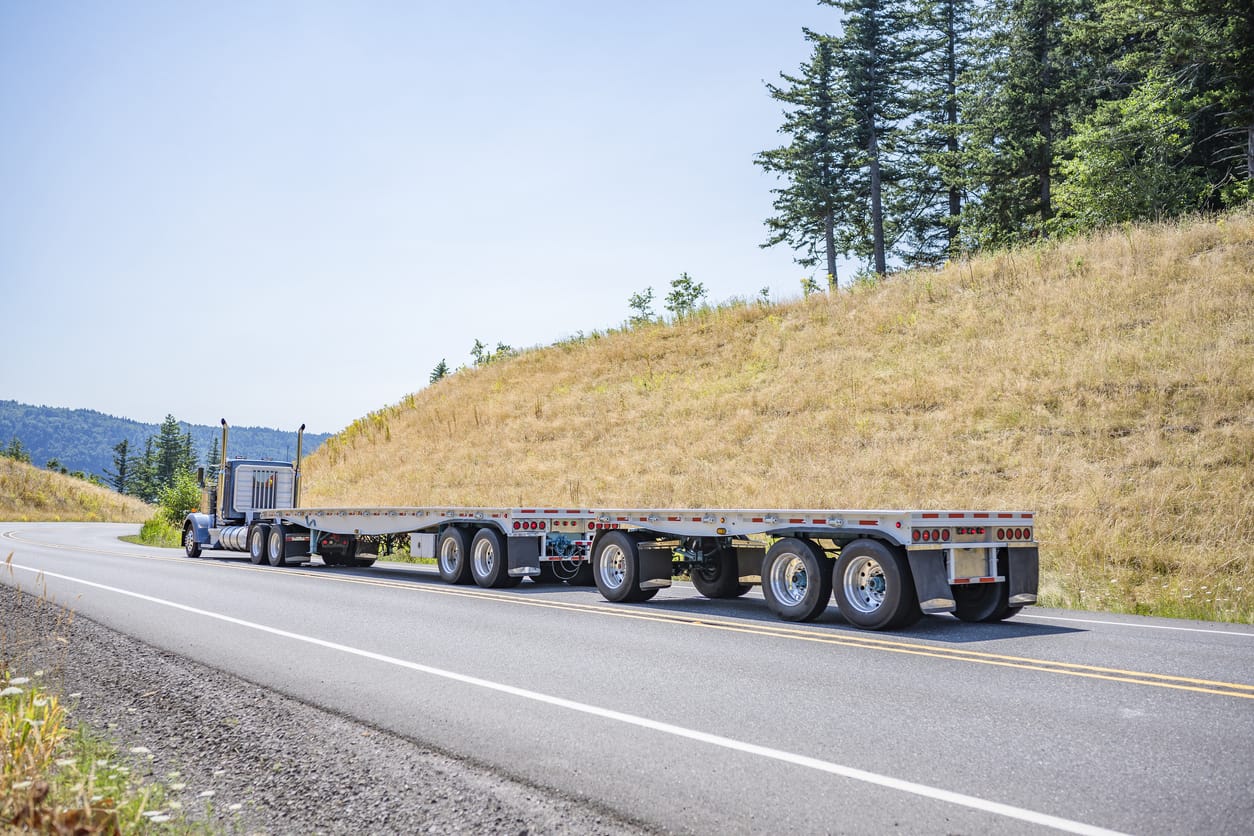
Multi axle and stretch configurations. Additional axles spread weight to satisfy the federal bridge formula, which limits how much can sit within a given axle spacing regardless of the gross figure. This is where very heavy machines live, and it is a different service with different lead times.
Loading: Driven, Winched or Craned
Most tracked and wheeled machines drive onto the trailer under their own power, up ramps or over a detached gooseneck.
A machine that does not run is winched, which needs a carrier equipped for it and a known safe attachment point. Declare a non-runner when you book rather than at collection.
Anything that cannot be driven or winched is craned, and that means both sites need crane access as well as truck access. Crane hire is a separate cost and a separate scheduling problem, and it is where a delivery plan most often falls apart.
Securement Is Regulated, Not Improvised
Federal cargo securement rules set out specific requirements for heavy equipment, and they are worth knowing so you can tell whether the job is being done properly.
Machines over a threshold weight require a minimum of four tie-downs, attached at the manufacturer’s designated points, and rated in aggregate to a proportion of the cargo weight. Articulated equipment must have its articulation locked or restrained separately. Accessory equipment such as a boom, a blade or a bucket needs its own securement rather than relying on hydraulics, which bleed down over a long trip.
Chains and binders are standard on heavy machines; straps are used on lighter equipment and where chain would damage the machine. Blocking prevents movement that tension alone will not.
When It Becomes a Permitted Move
Past 8 feet 6 inches wide, 13 feet 6 inches high or 80,000 pounds gross, the load needs an oversize or overweight permit from every state on the route, issued against a specific machine, configuration and path.
That brings restricted movement hours, generally daylight only on weekdays with holiday restrictions, and past certain widths it brings escort vehicles. The largest loads require engineering review of structures along the route.
The single most valuable thing you can do is reduce the envelope. Removing a bucket, folding an attachment, lowering a boom or swapping wide track pads routinely brings a machine under a threshold and saves the permit, the escorts and the routing restrictions together. Twenty minutes in the yard frequently saves more than the labor costs.
Preparing the Machine Itself
A short list that prevents most of the avoidable problems.
Clean the tracks and tires. Carried soil is weight the carrier did not plan for, it falls onto the highway, and in some states moving soil between regions has its own restrictions.
Drain what needs draining and check for leaks. A machine dripping hydraulic fluid onto a deck is a problem for the trailer and for anything below it.
Secure or remove anything loose: toolboxes, buckets not being carried separately, mirrors, beacons and access ladders. Lower and secure booms and blades, and lock the articulation on articulated machines.
Disconnect the battery on a long move, and note whether the machine has a transport mode or a travel lock the driver should engage.
Then photograph it in daylight from every side before it loads, including the undercarriage, the hour meter and any existing damage. Get that damage described specifically on the bill of lading rather than as general wear, because on used equipment the condition record is what settles a dispute.
Site Access Decides the Plan
The interstate is rarely the problem. The last mile is.
Check both sites for gate width, approach gradient, overhead clearance, turning room and ground bearing. A lowboy is long and low at the front and will ground on a steep entrance. Soft ground after rain will not carry an axle load.
Posted weight limits on municipal and county bridges are the other constraint, and a state permit does not authorize a posted local crossing. Route surveys exist to catch exactly this. Our guide to wide and oversize loads covers the thresholds in detail.
Common Questions
What decides the trailer? Height first, then weight and width. Height includes the trailer deck, which is what people forget.
How is a machine loaded? Driven on where it runs, winched where it does not, craned where neither is possible. Craning means both sites need crane access.
How many tie-downs are required? Heavy equipment generally requires at least four, at designated points, with attachments and articulation secured separately.
When do I need a permit? Past 8 feet 6 inches wide, 13 feet 6 inches high, or 80,000 pounds gross, from every state on the route.
What is the cheapest thing I can do? Reduce the envelope. Removing a bucket or folding an attachment can take the load out of permit territory entirely.
Get a Quote
Call Ship A Car, Inc. at (866) 452-3657 for heavy haul and specialized freight with the machine’s measured weight, width and height and both site addresses, or price it with the specialized transport calculator.