Why Use a Professional Heavy Haul Company
The question is not really whether to hire a professional; it is what you are buying when you do, because on heavy haul the value sits almost entirely in things that happen before the truck arrives. Permits, route surveys, insurance limits and equipment selection are the job. The driving is the easy part.
Permits Are Not a Formality
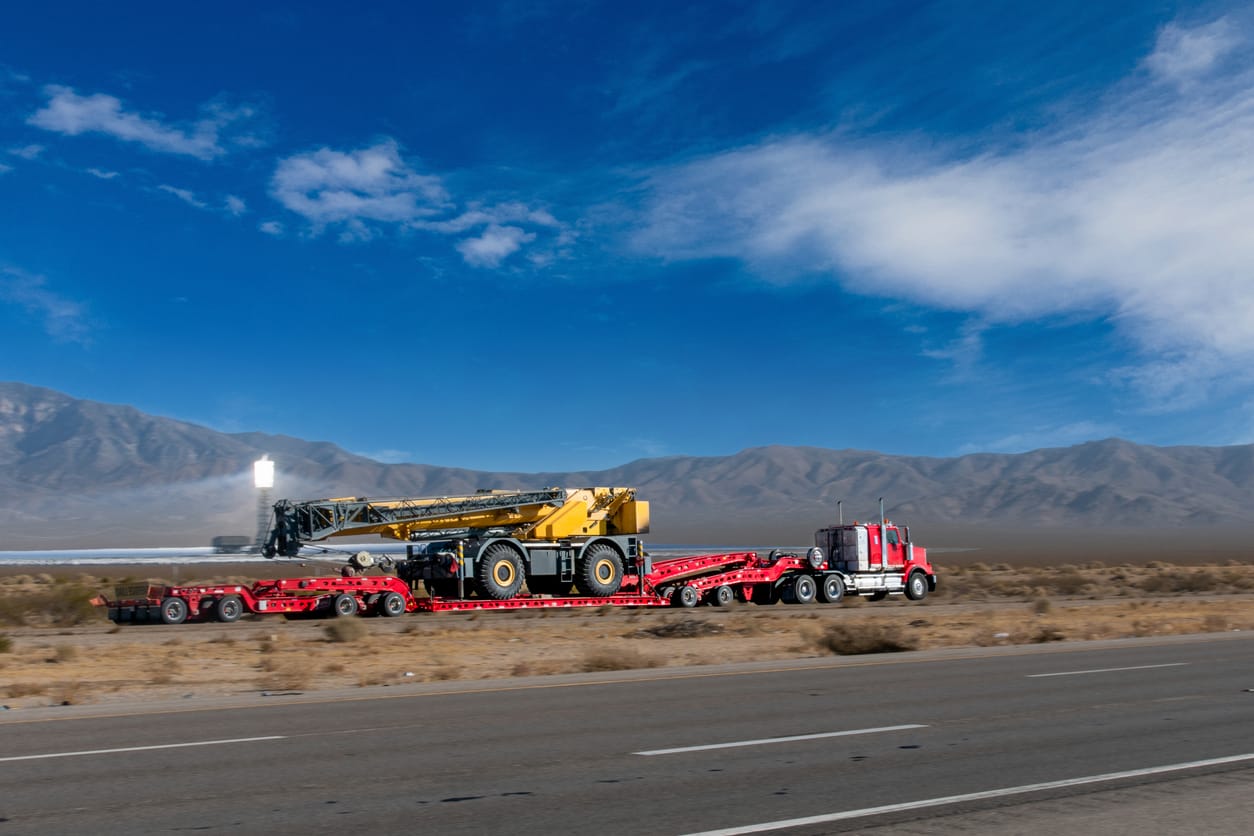
Anything past 8 feet 6 inches wide, 13 feet 6 inches high or 80,000 pounds gross needs an oversize or overweight permit from every state on the route, issued against a specific machine, a specific trailer configuration and a defined path.
That is not one form. It is a separate application per state, sometimes a separate one for a toll authority, each with its own thresholds, fees, escort rules and movement restrictions. Get one wrong and the load is stopped at a state line, which costs a day and a fine.
A carrier that runs permitted freight has done this route before, knows which states are slow to issue and which restrictions bite, and has the relationships to fix a problem on a Friday afternoon. That knowledge is most of what you are paying for.
Route Survey Is Where Failures Are Prevented
The interstate is rarely the problem. The last few miles are.
Low bridges, posted weight limits on municipal crossings, tight intersection radii, overhead utilities and grade changes at a site entrance all stop loads that were legal for the whole run. A state permit does not authorize a posted township bridge.
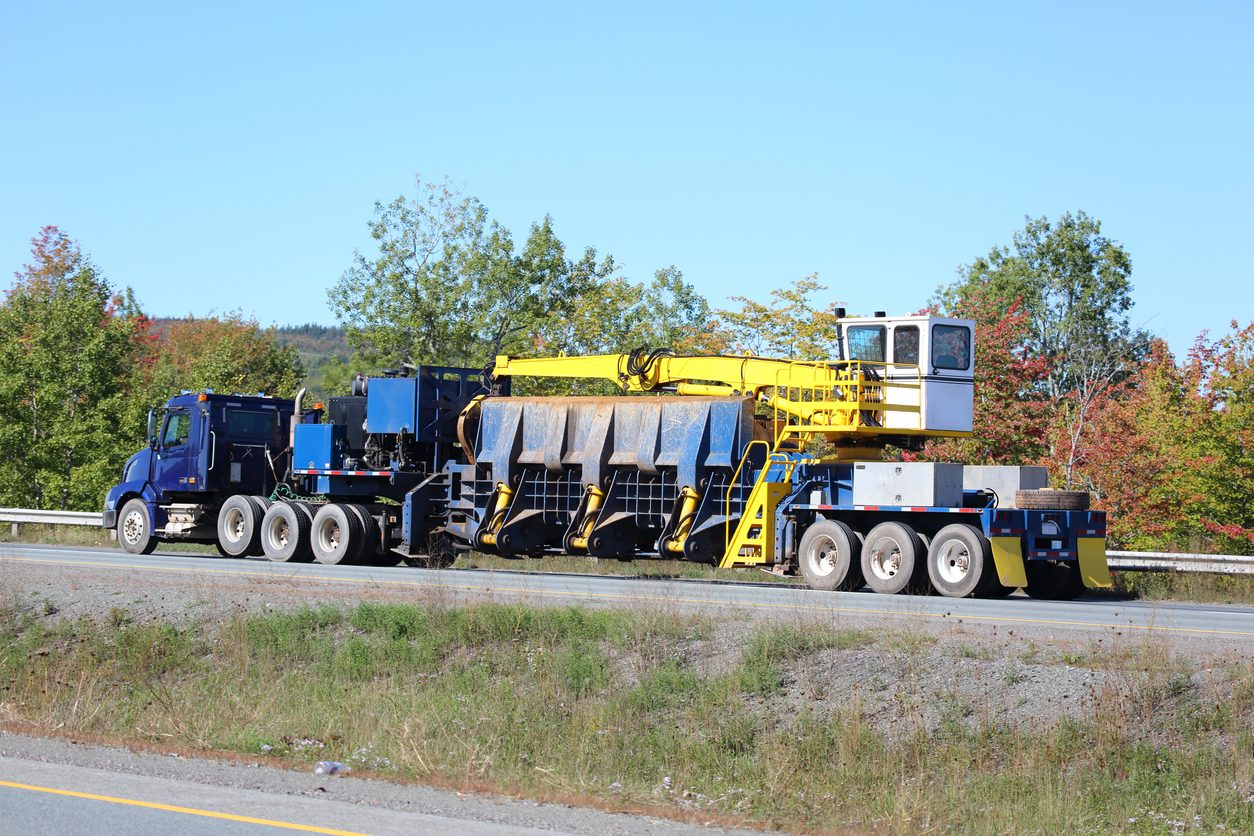
A professional operation surveys the route before committing, physically where it matters. That is the difference between a schedule and a hope.
The Right Equipment Is Not a Detail
The machine picks the trailer, and getting it wrong is expensive.
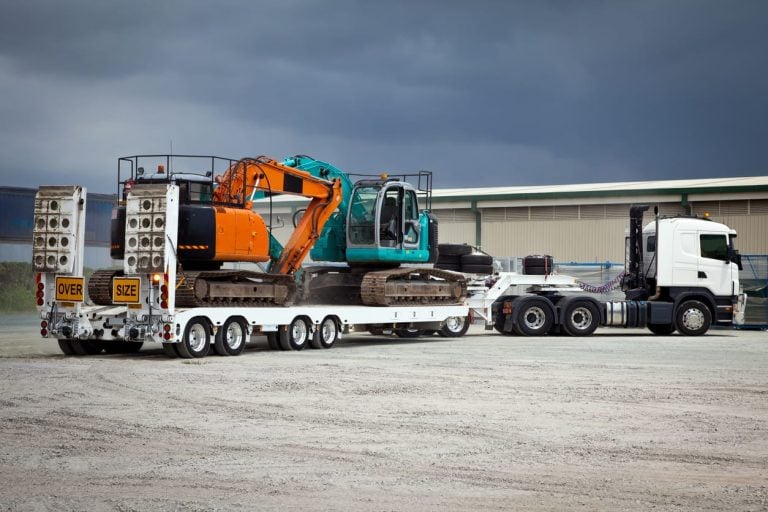
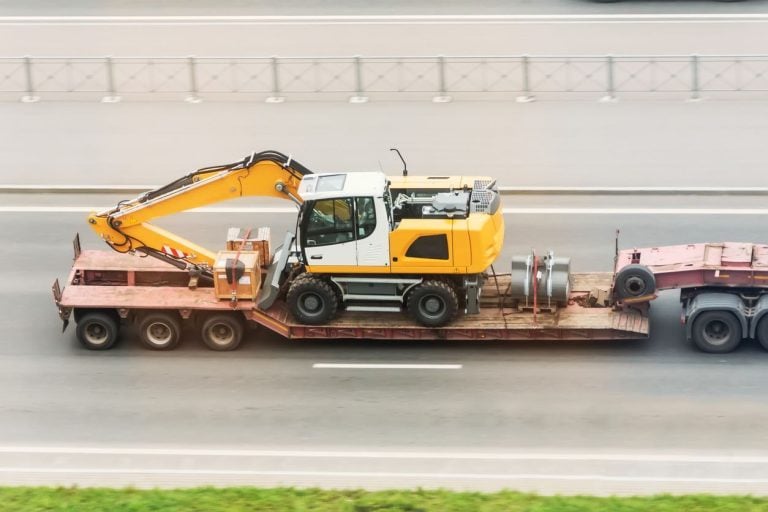
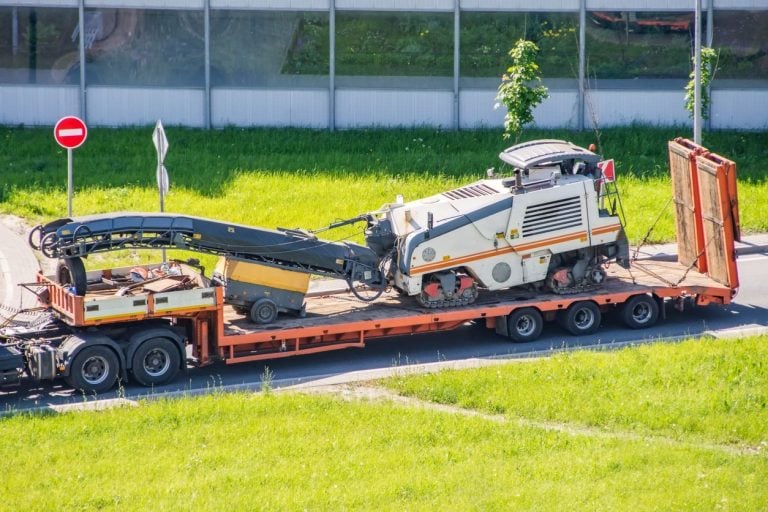
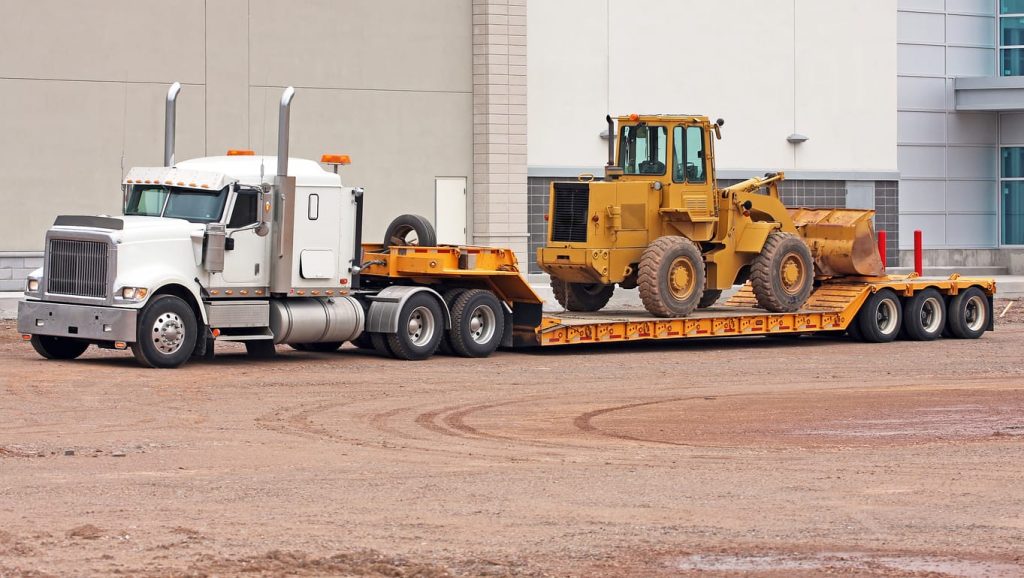
A flatbed suits smaller equipment. A step deck lowers the deck about a foot for mid size machines. A lowboy or removable gooseneck drops it to around 18 to 24 inches and is what large excavators, dozers and cranes travel on. Multi axle and stretch configurations spread weight to satisfy the federal bridge formula, which limits what can sit within a given axle spacing regardless of the gross figure.
An operator with one trailer type will try to make your load fit it. An operator with a fleet will tell you which one the machine actually needs, including when the answer is that it has to be partially disassembled.
Escorts, Superloads and Engineering Review
Past a certain size the job stops being a permitted truck movement and becomes a project, and it is worth knowing where that line sits.
Wider loads require pilot or escort vehicles, with the thresholds set by each state and varying with the road type, so a load that needs one escort in one state may need two in the next. Escorts are not decoration: they scout clearances ahead, manage traffic at pinch points and are frequently the reason a move completes without incident.
Beyond that sits the superload category, where the load exceeds what a state will permit routinely. Those require engineering review of the bridges and structures along the route, sometimes a bridge-by-bridge load rating, and occasionally physical modifications such as temporary shoring. Lead times run to months rather than weeks, and the permit is issued for a specific date and path.
The practical point for anyone commissioning a move: ask early which category your load falls into, because the answer determines the timeline more than anything else. A machine that needs engineering review cannot be scheduled around a construction deadline three weeks away.
Insurance Limits Are the Question People Forget
Ask what the cargo policy limit is and whether it is per vehicle or per incident.
Heavy equipment is frequently worth more than a standard cargo limit assumes, and a limit that comfortably covers a trailer of ordinary freight will not cover a single large excavator. Higher limits are arranged in advance, not after a problem.
Also confirm the carrier’s liability coverage and check its authority and safety record through the Federal Motor Carrier Safety Administration’s public system. An active authority and a clean inspection history tell you more about risk than any brochure.
What You Should Provide
The quality of the quote depends on the quality of what you give them.
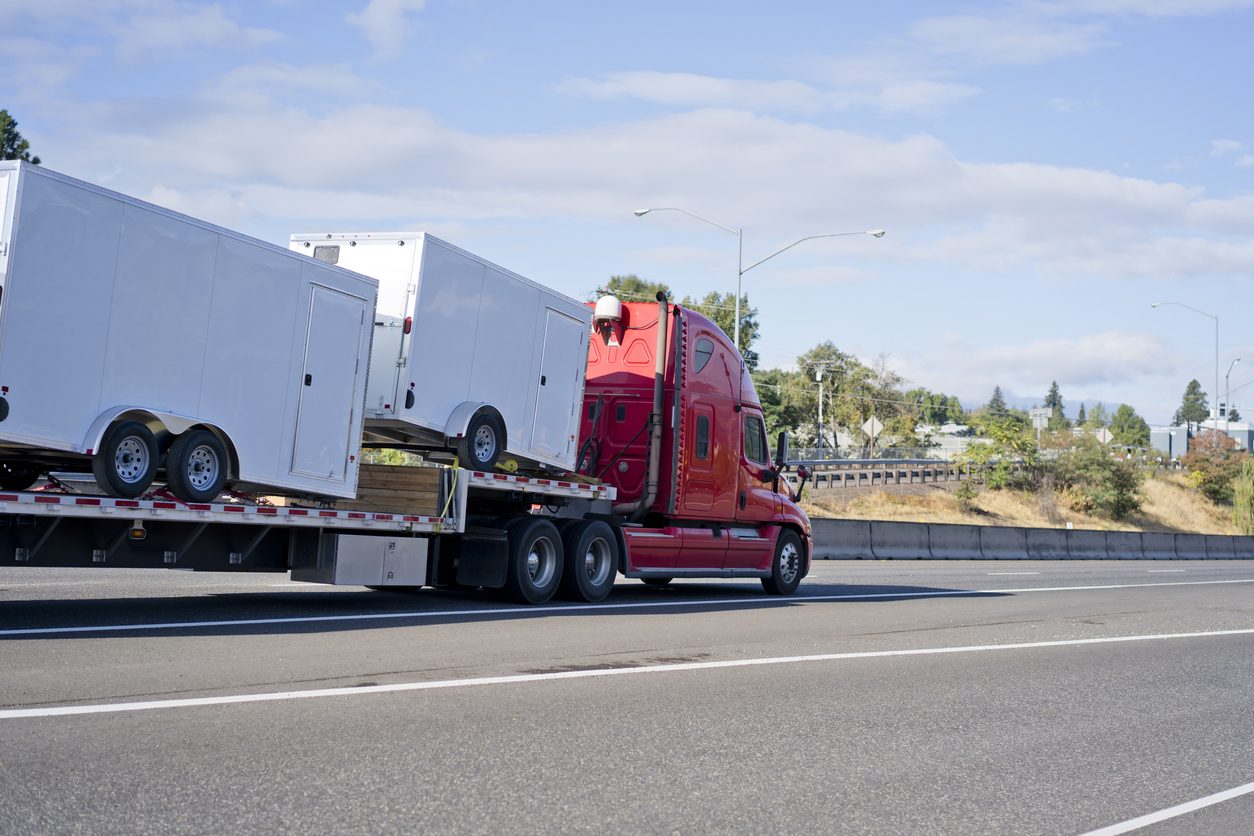
Give the make, model and an accurate weight from the manufacturer’s specification or a certified scale, including everything traveling with the machine: counterweights, attachments, full tanks and fluid filled tires all add weight that is invisible from outside. Give measured width and height, not brochure figures.
Describe the access honestly at both ends: gate width, approach gradient, overhead clearance, turning room and ground bearing. A carrier who arrives to find the site cannot take the truck has a wasted day that somebody pays for.
And reduce the envelope where you can. Removing a bucket, folding an attachment, lowering a boom or swapping wide pads can bring a load under a threshold and save a permit, an escort and the routing restrictions that come with both. Our guide to wide and oversize loads covers the thresholds.
When You Do Not Need One
Worth saying plainly, because not every machine is heavy haul.
A skid steer, a mini excavator, a compact tractor or an attachment on a standard flatbed is ordinary freight. It fits inside legal dimensions, needs no permit, and any competent flatbed carrier can move it. Paying for specialized heavy haul on a load that does not need it is not buying anything.
The line is the legal envelope. Measure first, then decide which service you are actually buying.
Common Questions
What am I actually paying for? Permits across every state on the route, route survey, correct trailer selection and adequate cargo coverage. The driving is the smallest part.
What most often stops a load? The last mile: posted municipal bridges, low rail crossings and turns a long combination cannot make.
Is the cargo limit enough? Frequently not for large equipment, and it is often per incident rather than per machine. Establish the number before booking.
What should I give the carrier? Measured weight, width and height including everything attached, plus an honest description of access at both ends.
Do I always need heavy haul? No. Anything inside 8 feet 6 inches wide, 13 feet 6 inches high and 80,000 pounds gross is ordinary flatbed freight.
Get a Quote
Call Ship A Car, Inc. at (866) 452-3657 for heavy haul and specialized freight with the machine’s measured weight and dimensions and both site addresses, or request a quote through the specialized transport calculator.