Heavy equipment loses most of its value in its first owner’s hands, and that is the whole case for buying used. A machine with a few thousand hours and a full service record does the same work as a new one at a fraction of the capital, and it holds its remaining value far better because the steep part of the curve is behind it. The case is sound. What undoes it, more often than a bad machine does, is a buyer who wins the auction and only then asks how a 60,000-pound excavator gets from a yard in Georgia to a job in Colorado.
Why Used Equipment Holds Its Value
New machines depreciate fastest in the first two or three years. After that, a well-maintained unit from a major manufacturer settles onto a gentle curve, which is why a five-year-old wheel loader and an eight-year-old one can be closer in price than a buyer expects. That flatter curve is the used buyer’s advantage. Capital goes further, financing is smaller, and the machine can be sold on later without the loss the first owner took. It also means the difference between a good used purchase and a bad one is almost entirely in the inspection and the history, not in the age.
Where to Buy
- Dealers. Inspected, often serviced, sometimes warrantied, and priced for it. The dealer’s yard has a loading dock and a forklift, which makes pickup simple.
- Auctions. The widest choice and the sharpest prices, with the least information and the tightest pickup deadlines. Auction yards charge storage after a set number of days, so the transport has to be arranged before the hammer falls, not after.
- Private sellers and contractors. Machines coming off a finished project, often with the operator available to answer questions. The pickup is a job site or a farm, and access has to be checked as carefully as the machine.
What to Inspect Beyond the Hour Meter
Hours are the headline. History is the substance. A machine with 6,000 hours and a complete service record is a better buy than one with 3,000 and none. Beyond the paperwork, check the undercarriage on tracked machines, because a worn undercarriage can cost a third of the machine’s price to replace. Check the hydraulics for leaks and drift, the pins and bushings for play, the frame for repaired cracks, and the fluids for contamination. Run every function through its full travel. Photograph everything, because those photographs are also the condition record the carrier will compare against at pickup.
The Transport Belongs in the Purchase Price
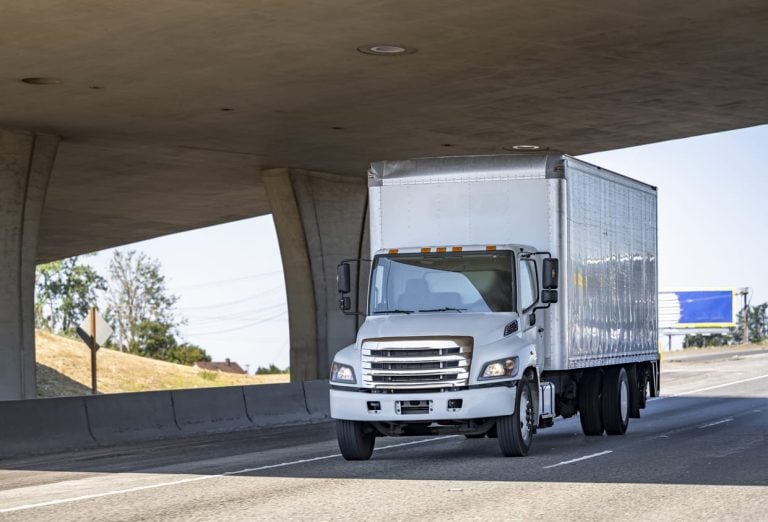
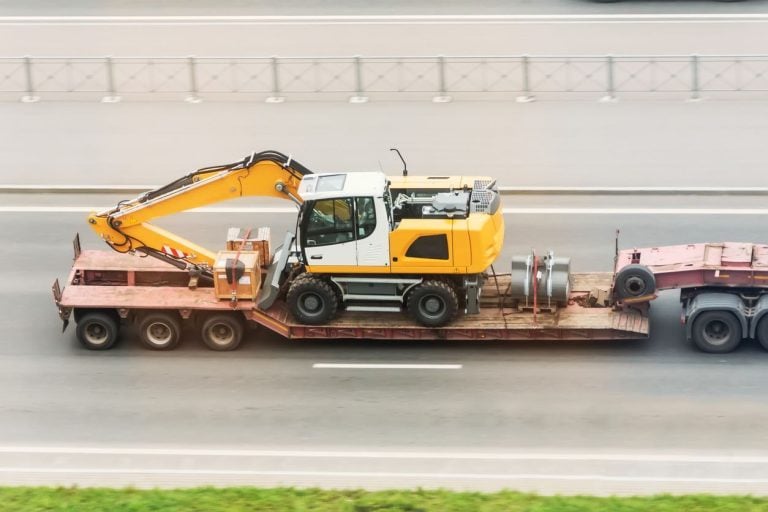
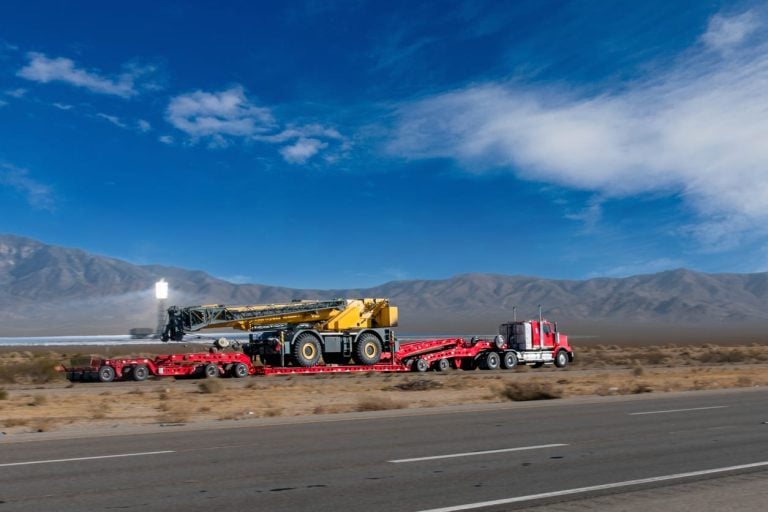
A machine bought 1,500 miles from where it will work has a delivered cost, and the delivered cost is the real price. Most of that is set by four things: operating weight, transport dimensions with attachments in travel position, whether the machine drives under its own power, and what loading equipment exists at each end. A compact excavator rides on a standard flatbed. A large excavator or a dozer needs a removable gooseneck or lowboy trailer and, above legal width or height, permits for every state on the route. Above about 14 feet wide, escort vehicles join the trip. All of this is knowable before you bid, and all of it is itemized in a quote before you confirm.
Our equipment shipping page covers the trailer types, and the oversized and heavy equipment page covers permits, escorts and superloads. Get the quote with the listing open in front of you, and bid on the delivered number.
Buying at Auction: The Pickup Clock
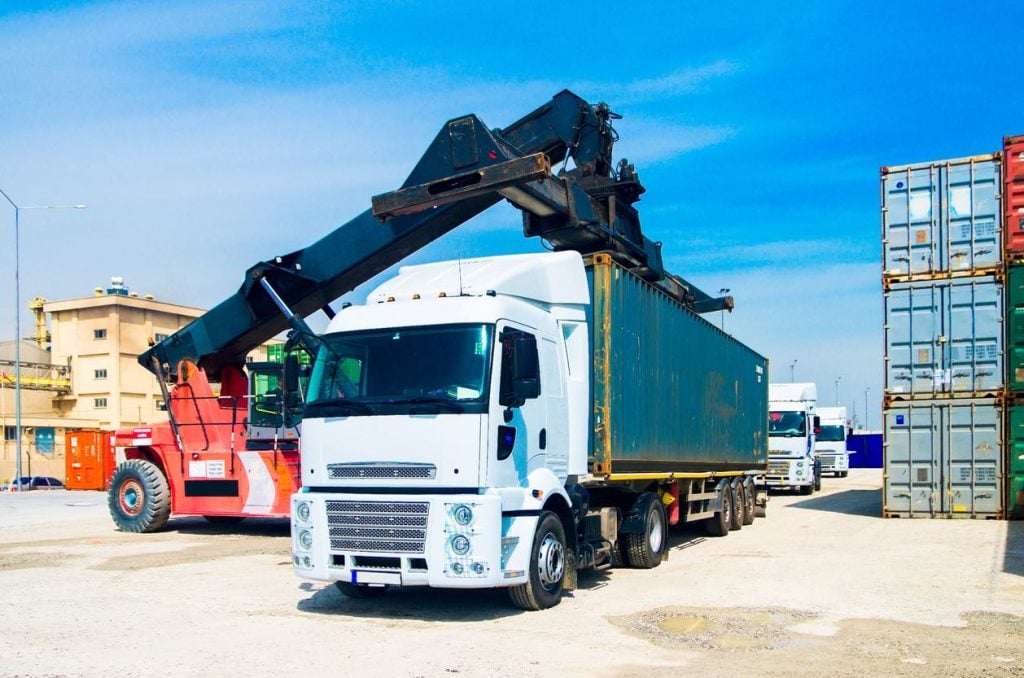
Auction yards typically allow a set number of days for removal before storage fees begin, and they have specific release procedures: a paid invoice, a signed release, sometimes a title or lien check before a carrier is allowed to load. Have the coordinator ready to dispatch the day the invoice is paid. Give the auction’s release paperwork requirements to the coordinator so the driver arrives with what the yard needs, and confirm the yard’s loading hours, because many load only in the morning and a driver arriving at 2 p.m. waits until the next day.
Preparing the Machine to Travel
- Clean it. Undercarriage, tracks and body. Caked soil adds weight and height and can trigger agricultural inspection at some state lines.
- Transport positions. Blades down and angled back, buckets curled, booms lowered, stabilizers retracted, articulation joints pinned where the machine has them.
- Attachments. Removable buckets, hammers and forks either ride secured on the same trailer, declared, or travel separately if they push the load past a legal limit.
- Operational status. If it does not run, say so. A winch or a crane is dispatched and the load is planned around it.
- Fluids and battery. Fix active leaks and confirm the battery holds a charge, so the machine drives off at delivery rather than being dragged.
Common Questions
How long does a heavy equipment move take? A legal-dimension machine typically moves within a week or two of booking. Oversize loads add permit time, and superloads add route surveys. Your coordinator gives a realistic window for your route.
Can I get a transport quote before I bid? Yes, and you should. The listing gives the model and hours. The coordinator needs the operating weight and the transport dimensions, which the manufacturer publishes.
Who handles the permits? We do, for every state on the route, itemized in the quote before you confirm.
What if the auction yard has no loading equipment for a dead machine? Tell the coordinator before dispatch. A carrier with a winch, or a crane where the weight requires one, is arranged as part of the move.
Does the carrier’s insurance cover the machine? Carrier cargo insurance covers the load in transit up to its limit. Ask the coordinator for the limit and compare it with the purchase price before the machine ships.
Get a Quote
Equipment goes through the freight desk. Put the machine, its weight and dimensions, the pickup yard and your site into the freight quote calculator, or call (866) 452-3657 with the listing open and a coordinator will give you the delivered number before you bid. No deposit is taken until a carrier is assigned to your order.