Heavy Equipment Shipping in Mississippi
Mississippi’s heavy haul work is dominated by three things: timber, agriculture and the Gulf ports. That mix shapes the job. Forestry equipment loads on unpaved tracts, Delta farm ground turns soft after rain, and a large share of movements begin or end at a port or river terminal rather than a paved yard. Permits follow the usual national thresholds, but ground conditions and Gulf weather are what actually decide whether a scheduled load happens on the day.
What Needs a Permit
The Mississippi Department of Transportation issues oversize and overweight permits. These are the thresholds at which an ordinary haul becomes a permitted one.
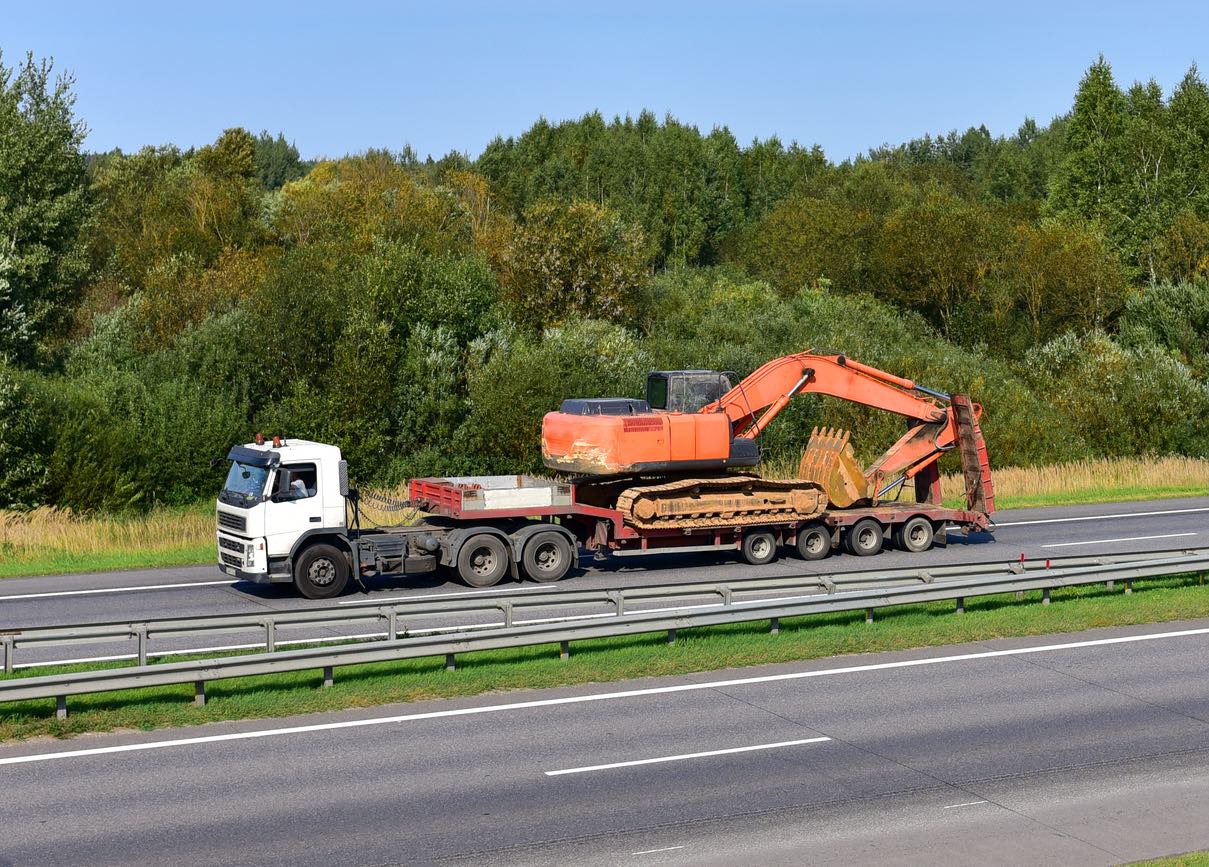
Measure the machine as it will sit on the trailer, not as it stands in the yard. Deck height adds two to three feet, and that is what pushes an otherwise legal machine into permit territory. Cabs, exhaust stacks, booms and ROPS bars are the usual culprits, and folding or removing them sometimes removes the permit entirely.
Routes, Ports and River Terminals
Mississippi’s freight spine runs north to south on I-55, from Memphis through Jackson toward New Orleans. I-20 crosses east to west through Vicksburg, Jackson and Meridian, I-59 angles southeast toward Hattiesburg and the Gulf, and I-10 carries the coast. US-49 and US-61 handle much of the traffic into the Delta.
What makes the state distinctive is water. Gulfport and Pascagoula are deepwater ports handling project cargo and machinery, and Pascagoula’s shipbuilding industry generates its own oversize movements. Inland, the Mississippi River terminals at Vicksburg, Greenville and Natchez put barge transport genuinely in play for very heavy or very large pieces, which can be cheaper than road for a long haul that starts and ends near water.
Port and terminal moves run on gate hours and vessel or barge schedules, so the booking sets the timeline rather than the driving.
What Moves Here
Forestry is the category that sets Mississippi apart. Skidders, feller bunchers, log loaders and knuckleboom trucks move constantly among timber tracts across the southern half of the state, and those machines are tall, awkwardly shaped and almost always loading on unimproved ground.
Agriculture drives the Delta: tractors, combines, cotton pickers and irrigation equipment, moving heavily around planting and harvest. Construction machinery, poultry and processing equipment, and project cargo through the ports fill in the rest. As always, the industry matters less than three numbers: loaded width, loaded height and working weight.
Ground Conditions Are the Local Problem
This is the Mississippi-specific issue an out-of-state carrier will underestimate. Delta soils hold water, timber tracts have no hardstand at all, and the state gets substantial rainfall. A loaded lowboy that sinks is a recovery operation, not a delay, and the recovery costs more than the haul.
Two practical measures. Give the carrier an honest description of the loading site, including whether there is any hardstand, gravel or firm turning area, and how far it is from a paved road. And build weather flexibility into the schedule rather than a fixed date, because a dry morning after two dry days is worth more than any amount of planning.
Hurricane Season and the Coast
From June through November a Gulf storm can close I-10, shut the ports, and drain regional carrier capacity for days. Rates also rise sharply just before a forecast landfall as contractors move equipment inland.
If your move touches the coast in that window, add slack, keep your phone reachable and take an earlier pickup if one is offered ahead of weather. A permit issued for a specific route and date does not survive a closure, so a storm can mean starting that part again.
Trailer Choice Follows the Loading Site
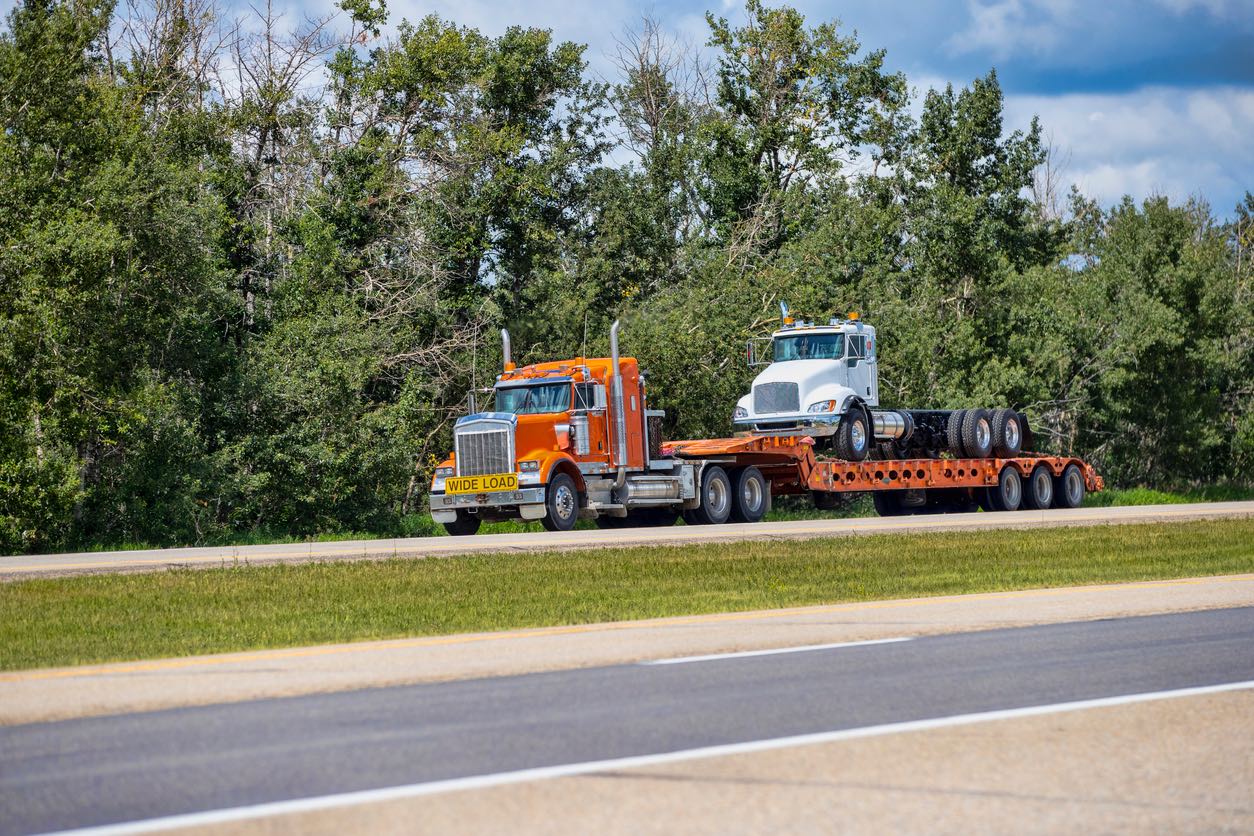
In much of Mississippi the trailer is chosen for how the machine gets on and off rather than for how tall it is, because so many loads originate on a timber tract, a field edge or a river terminal apron rather than a paved yard.
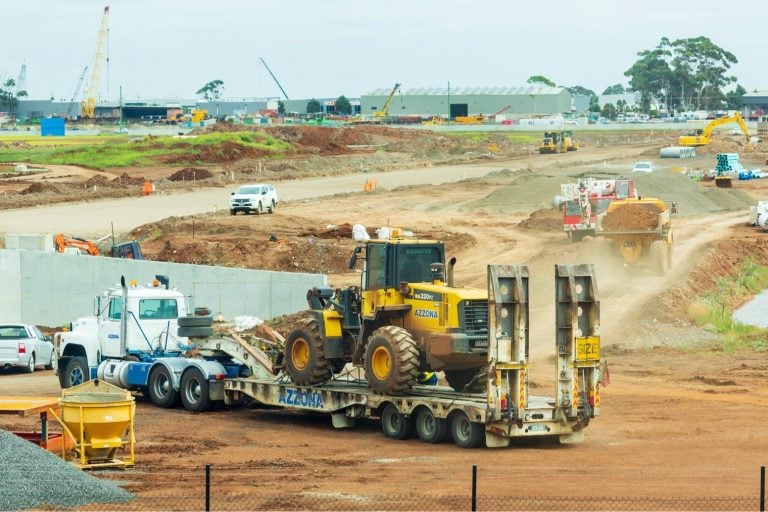
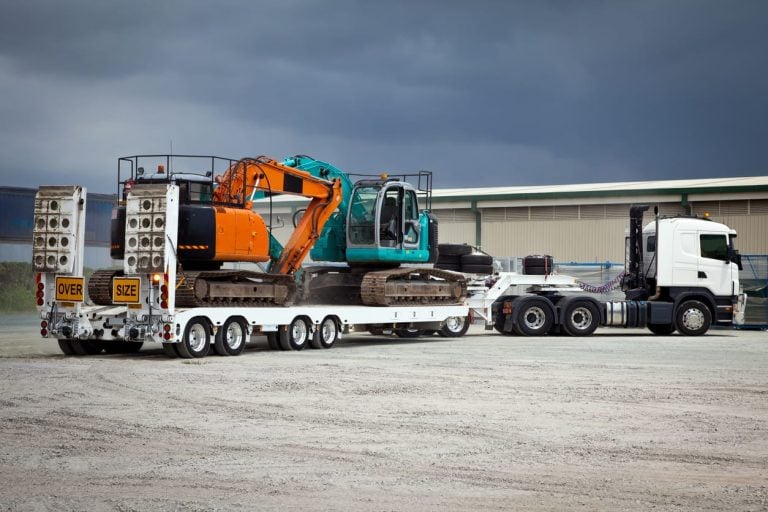
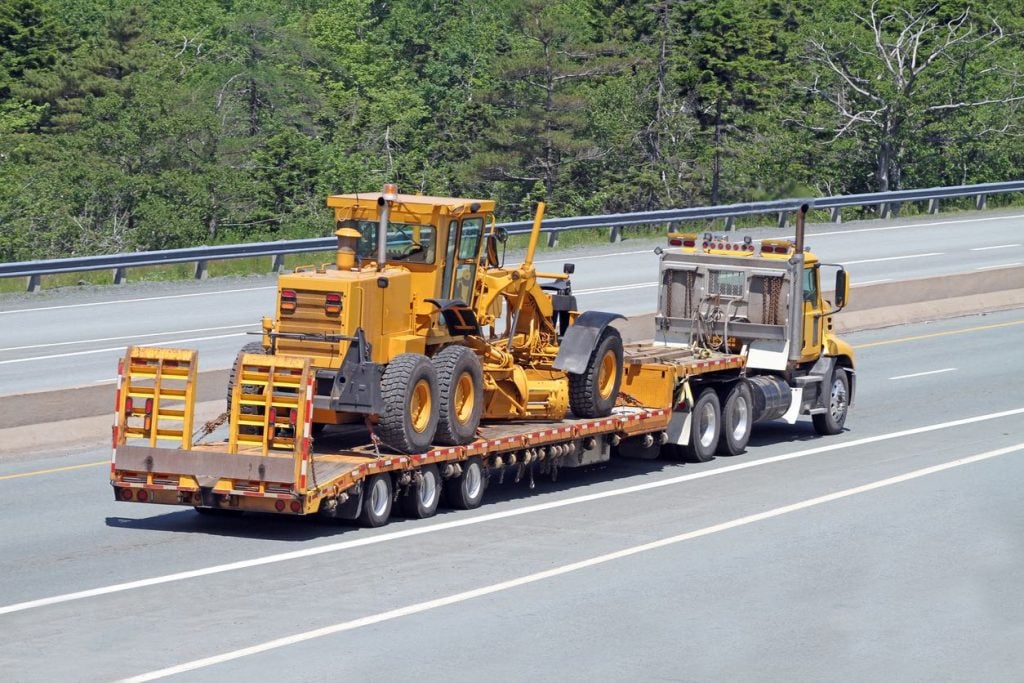
A removable gooseneck is the workhorse for that reason: it detaches at the front and drops to ground level, so tracked machines walk on under their own power with no crane involved. Where a crane or a loading ramp is available and the machine is within height, a flatbed is the cheapest option. A step deck buys roughly two feet of clearance for taller equipment, and a double drop takes the well lower again for the tallest pieces such as larger excavators and forestry machines.
Tell a carrier how the machine will be loaded and what the ground is like, and the trailer answers itself.
Preparing the Machine
- Get the mud off. Mississippi ground guarantees plenty of it, and caked mud both hides damage and sheds onto the highway once the load is moving.
- Take photographs in daylight covering all four sides, the undercarriage, the hour meter and any damage that already exists.
- Deal with fluids and the battery as the operator’s manual specifies for transport, which varies more between machines than people expect.
- Bring the profile down: booms stowed, buckets tucked, arms in, ROPS folded where the design allows.
- Strip off the loose items. Buckets, thumbs, chains and counterweights ride separately when they are heavy enough to matter.
- Leave keys with the driver and walk them through anything unusual about starting or moving the machine.
Cost and Timing
There is no per-mile rate for this work. A quote is assembled from loaded dimensions, working weight and what the route and the loading site require. Something within the legal envelope running I-55 or I-20 costs roughly what comparable freight costs. Bring in escorts and a survey and the price moves sharply, and from that point the permit window rather than the driver’s schedule sets the departure date.
Allow one to two weeks of lead time for a legal load and three to four weeks or more once permits are involved. Add buffer during hurricane season and around planting and harvest, when agricultural demand competes for the same trailers.
Common Questions
Who obtains the permits? The carrier arranges them, because each permit names a specific tractor, trailer and route. Check that your quote includes the cost rather than assuming it does.
Can barge be cheaper than road? For very heavy or very large pieces moving a long distance between points near the river, sometimes yes. It is slower and needs terminal handling at both ends, so it suits a flexible timeline.
Can you load from a timber tract or field? Usually, given firm enough ground and room to turn. Describe the site honestly when quoting so the right equipment arrives.
Is my equipment insured in transit? Yes, under cargo coverage, but ask what the limit is. A single combine or excavator can be worth more than a policy written for general freight will pay out.
Can you move a machine that will not run? Yes, but it has to be winched or craned on rather than driven, which changes the equipment dispatched. Mention it when you request the quote.
Get a Quote
Call Ship A Car, Inc. at (866) 452-3657 with the make, model, working weight, loaded height and a description of the loading site, and we will tell you what the load needs before you commit to a date.