Nebraska Heavy Equipment Shipping
Nebraska is a straightforward state for heavy haul with one complication that surprises out of state carriers: the Sandhills. A quarter of the state is grass covered dunes with a sparse road network, and a route that looks direct on a map can be impossible for a permitted load. Everywhere else, Interstate 80 runs the full width of the state and makes this some of the easiest heavy haul routing in the country.
The Legal Limits
Nebraska follows the standard figures and adds a useful height allowance.
Maximum width is 8 feet 6 inches, maximum height is 14 feet 6 inches on most state highways, which is more generous than most of the country, and gross weight is capped at 80,000 pounds with 20,000 on a single axle and 34,000 on a tandem. Interstate highways carry their own federal limits.
That extra height is genuinely useful, because height includes the trailer. A flatbed deck sits around 5 feet off the road, so a 9 foot machine is at 14 feet before the cab is measured. In many states that needs a permit; here it may not.
Permits and Escorts
Past any of those limits the load needs an oversize or overweight permit from the Nebraska Department of Transportation, issued against a specific machine, configuration and route.
Routine permits are normally issued quickly. Wider loads bring escort vehicles into the picture, with thresholds set by the state and varying with the road type, and the largest loads require engineering review of structures on the route.
Movement is generally restricted to daylight on weekdays with holiday restrictions. In a state around 430 miles across, that turns a cross state permitted move into a multi day job rather than a single run, and the overnight stops have to be somewhere a permitted load can legally and safely sit.
Agriculture Sets the Calendar
Nebraska is corn, soybeans and cattle, and the equipment reflects that.
Combines, planters and grain carts are the everyday loads and they are wide rather than heavy. A combine with the header fitted can exceed 20 feet across, which means permits and escorts in any state. Take the header off and move it on its own trailer and the machine frequently comes back inside a workable width, removing escorts and routing restrictions along with their cost. That single step is the most useful thing to know about moving one.
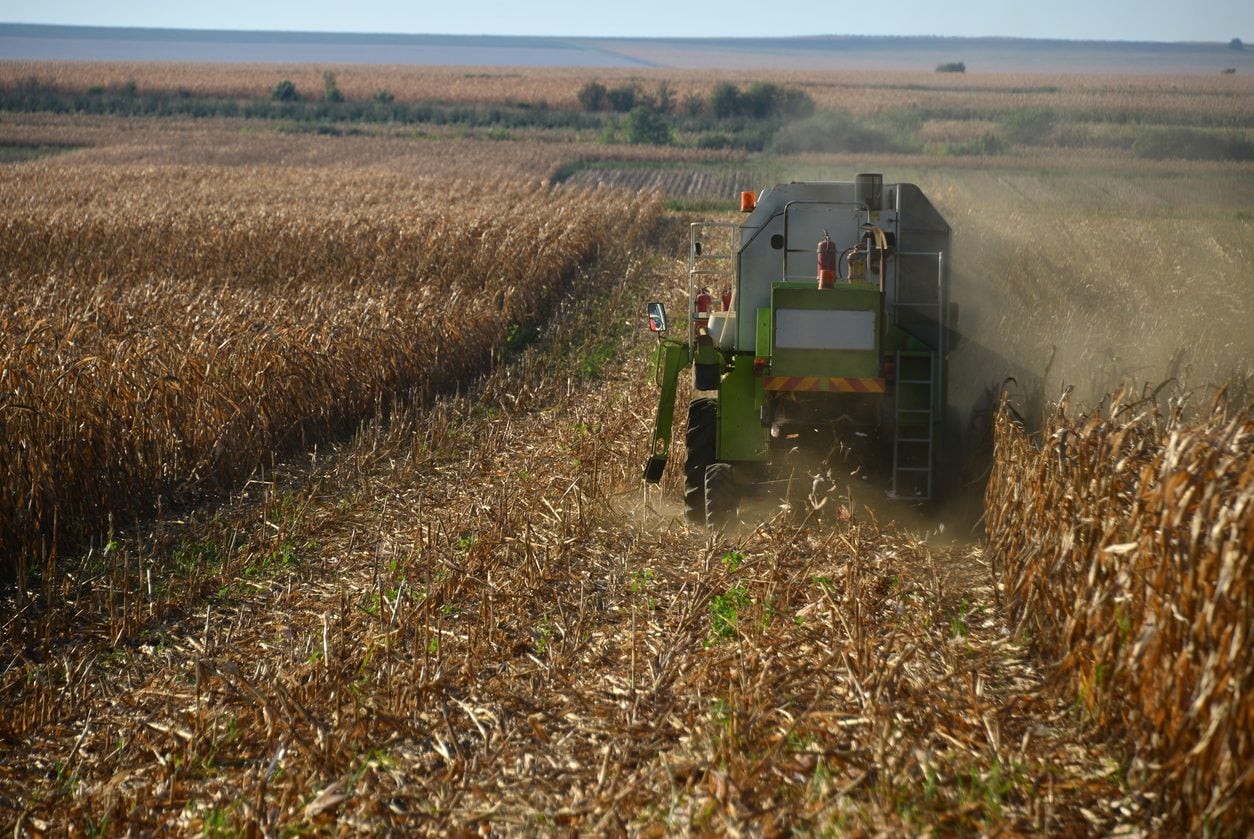
Center pivot irrigation systems are a Nebraska specialty worth mentioning separately. They move in sections, they are long and awkward rather than heavy, and the destination is usually a field rather than a yard, which brings ground conditions into the plan.
Timing is the constraint. Planting in April and May and harvest from September into November both spike demand for agricultural transport, and carriers with the right trailers commit early. Book those moves well ahead or plan for the shoulder seasons.
The Sandhills Change the Route
This is the part that catches carriers who have not run Nebraska before.
The Sandhills cover much of the north central part of the state: grass stabilized sand dunes, very few paved roads, long distances between towns and almost no services. A permitted load cannot simply cut across. It routes around, which can add a great deal of mileage to a job that looked short.
Where a route does cross the region, the roads are narrow, the shoulders are soft sand, and a heavy load that leaves the pavement is a recovery operation rather than an inconvenience. Ranch access roads are frequently unimproved.
Plan on a route survey for anything permitted heading into that part of the state, and expect the transit estimate to be in days rather than hours.
Interstate 80 Does the Heavy Lifting
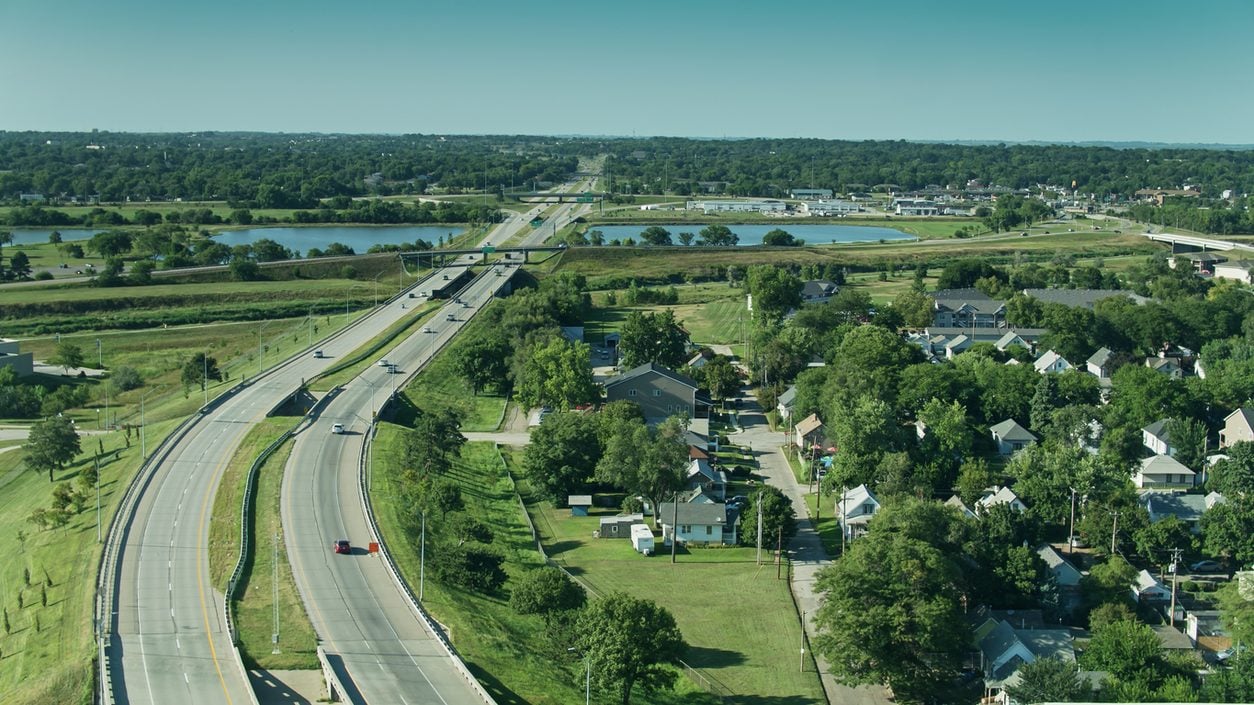
Everywhere else, routing is easy. I-80 runs the full width of Nebraska from Omaha through Lincoln and Grand Island to the Wyoming line, and it is one of the busiest freight corridors in the country.
That constant traffic is why Nebraska assignment times are usually short and rates are reasonable: a truck moving between Chicago and the West Coast is already passing through. Interstate 29 runs north to south along the eastern edge toward Kansas City and Sioux Falls.
Winter is the caveat. Nebraska gets serious snow and, more importantly, ground blizzards where wind moves fallen snow across open country and closes I-80 with very little notice. Permitted loads do not move in high wind at any time of year, and a wide load is especially exposed on open plains. Build slack into winter schedules.
Choosing the Trailer
The machine picks the trailer.
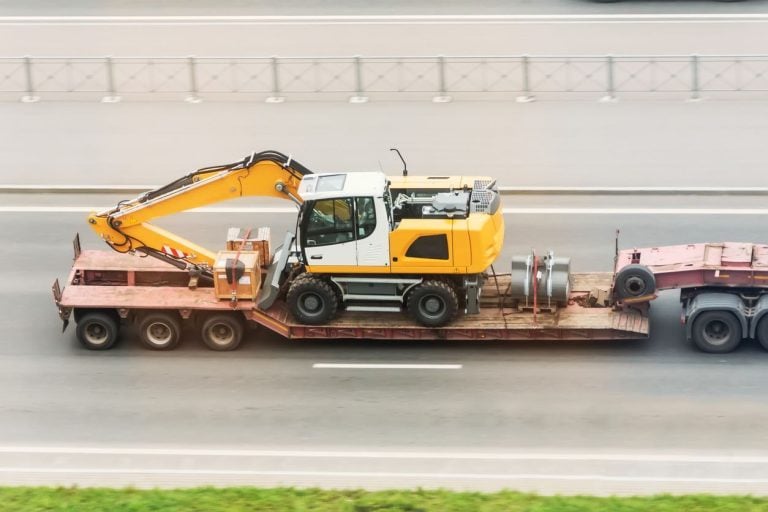
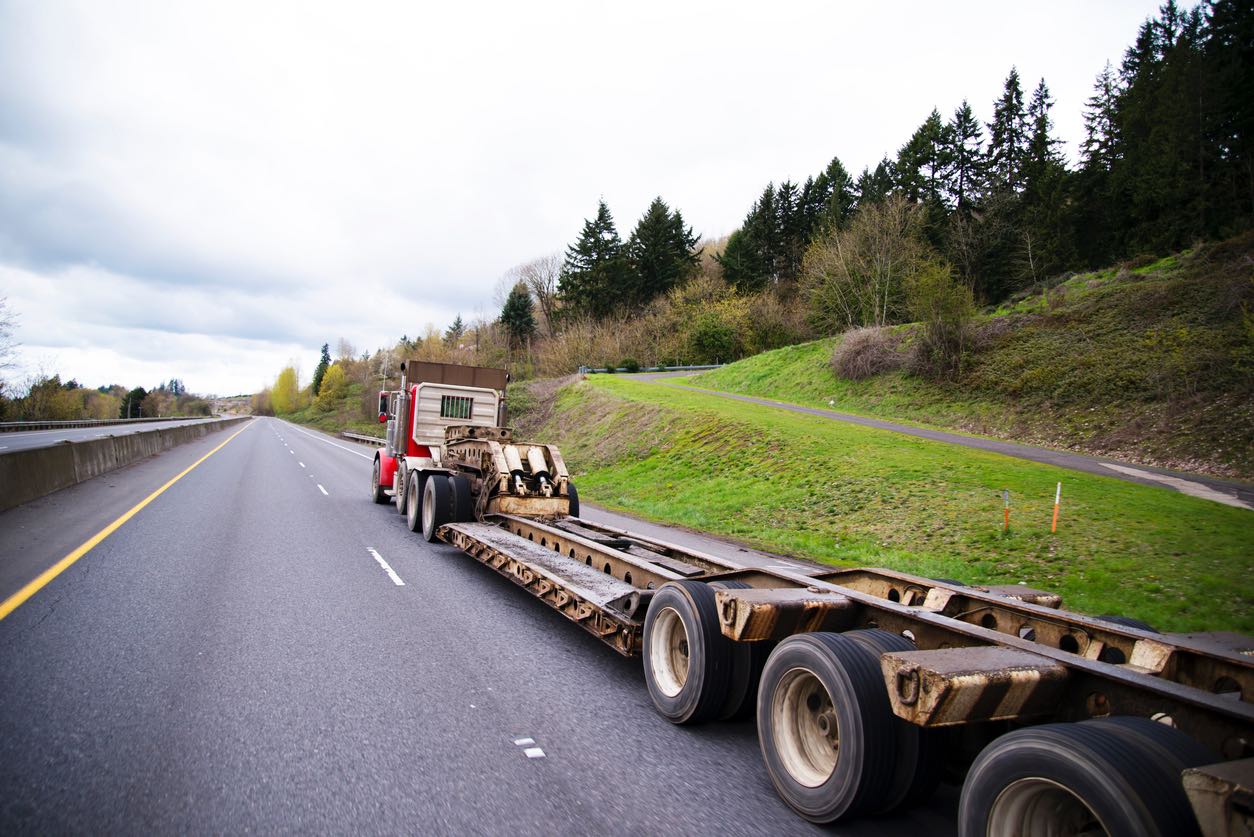
A flatbed suits smaller equipment such as skid steers, mini excavators and attachments. A step deck lowers the deck about a foot and handles mid size machines and much agricultural equipment. A lowboy or removable gooseneck drops it further and is what large dozers, excavators and cranes travel on. Multi axle and stretch configurations spread weight to satisfy the federal bridge formula, which limits what can sit within a given axle spacing regardless of the gross figure. Our guide to wide and oversize loads covers those rules in detail.
Preparing the Machine
Give an accurate weight from the manufacturer’s specification or a certified scale, and include everything traveling with it: counterweights, attachments, full tanks and fluid filled tires all add weight that is invisible from outside. Give the measured width and height rather than the brochure figures.
Then reduce the envelope where you can. Removing a header, folding a planter, taking off a bucket or swapping wide pads can bring a load under a threshold and save a permit, an escort and the routing restrictions that come with both.
Secure or remove anything loose, drain what needs draining, and clean the tracks and tires, since carried soil is both weight and a road hazard. Photograph the machine in daylight from every side before it loads, including the undercarriage and the hour meter, and get existing damage described specifically on the bill of lading rather than as general wear.
Common Questions
What is the legal height in Nebraska? 14 feet 6 inches on most state highways, which is more generous than most states. Interstates follow the federal limit.
What makes the Sandhills difficult? Very few paved roads, soft sand shoulders and long distances without services. Permitted loads route around rather than through.
How do I keep a combine legal? Remove the header and ship it separately. That usually brings the machine inside a workable width and removes the escorts.
When is capacity tightest? Planting in April and May, and harvest from September into November.
Does winter stop shipments? It delays them. Ground blizzards close I-80 with little notice, and permitted loads do not move in high wind.
Get a Quote
Call Ship A Car, Inc. at (866) 452-3657 for heavy haul and specialized freight with the machine’s make and model, its measured width, height and weight, and both site addresses, or price it with the specialized transport calculator.