Pilot Cars and Heavy Haul Transport
A pilot car is not an escort in the ceremonial sense; it is a legal requirement written into your permit, and the permit says how many and where they go. Broadly, loads past about 12 feet wide need one, and wider or longer loads need two, though every state writes its own thresholds and the route decides the rest. The number that matters is the one on the permit for the states you are crossing, not a general rule of thumb.
When a Pilot Car Is Required
The trigger is dimension, and it varies by state.
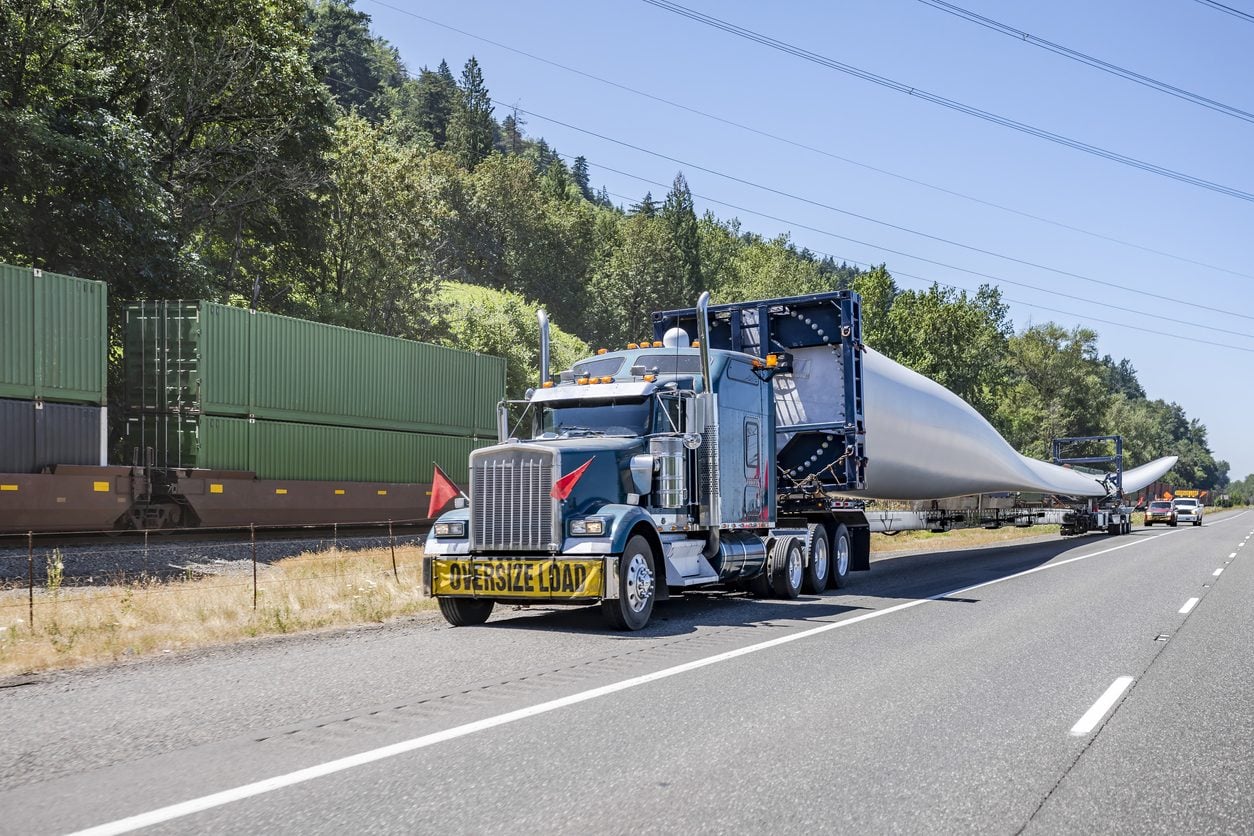
Width is the usual one, with requirements commonly starting somewhere around 12 feet and a second vehicle added as the load gets wider. Length triggers a rear escort on many routes. Height can require a vehicle with a height pole, which is a marked, breakaway rod set to the load height that strikes a low obstruction before the cargo does.
Because thresholds differ, a load that needs one pilot car in one state can need two in the next. The permit for each state on the route states its own requirement, and the convoy has to satisfy the strictest one it is currently inside.
Front, Rear, or Both
Position is not arbitrary. Each has a job.
A lead vehicle runs ahead of the load looking for what the truck cannot yet see: low bridges, narrow bends, roadworks, parked obstructions, oncoming traffic on a road that will not take both. On a two lane highway, the lead is what stops a wide load and an oncoming truck meeting in a place neither can pass.
A rear vehicle protects the back of the load. It warns following traffic, discourages unsafe passing, and manages the merge when the convoy has to change lanes. On long loads it also watches the tail through turns.
Wide loads on divided highways often need only a rear escort; the same load on a two lane road usually needs a lead as well.
Certification Is Not Universal
Some states certify pilot car operators and some do not, and the certifications are not automatically recognized across borders.
States including Washington, Oregon, Colorado, Florida and others operate their own certification, typically involving training, a test and a card that has to be carried. Other states set no certification requirement at all. Reciprocity exists in places but is not universal.
On a multi state run this can mean changing escort providers at a state line, or using an operator who holds certification in each state on the route. It is worth confirming at booking rather than discovering at a scale house.
Required Equipment
An escort vehicle carries specific equipment, and an inspection can stop a convoy for a missing item.
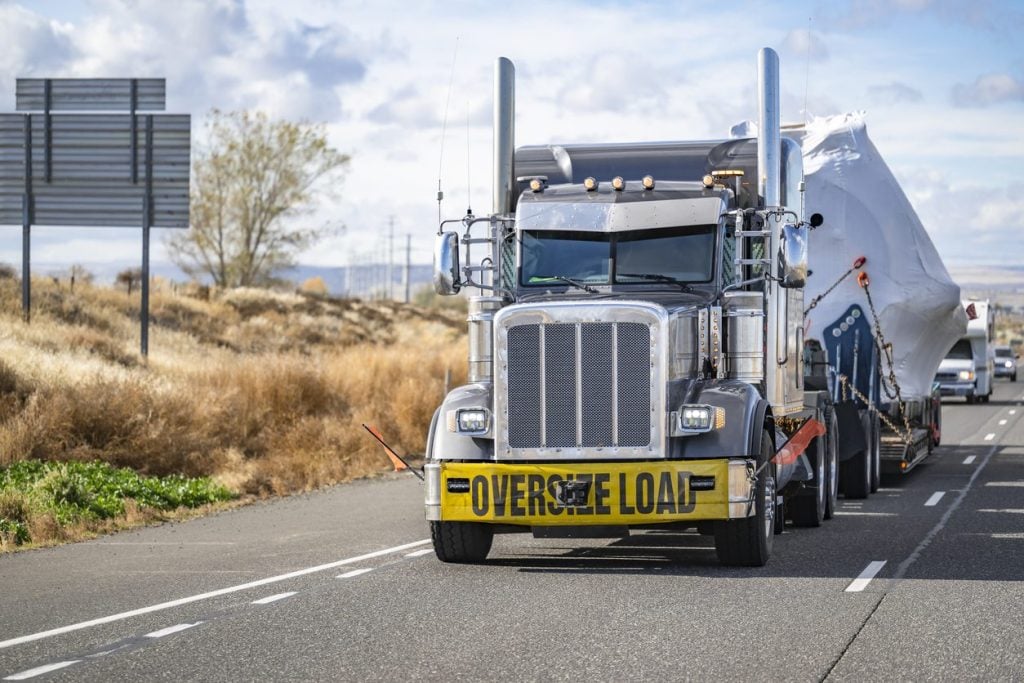
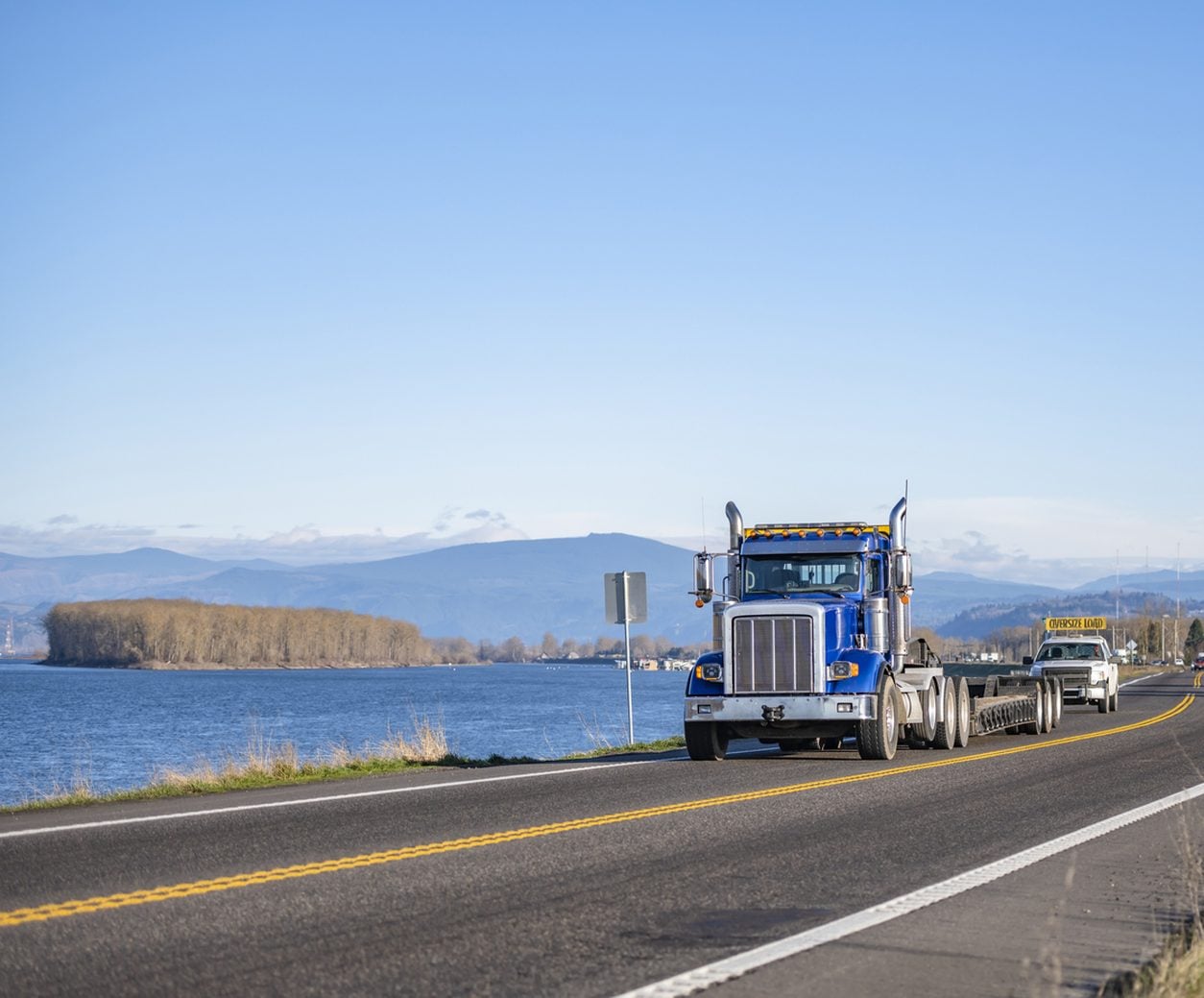
The standard kit is an OVERSIZE LOAD sign, usually roof mounted and sized to state requirements, amber warning lights, two way radio contact with the driver, flags, cones and signs for stopping traffic, a first aid kit and a fire extinguisher. A height pole is added when the load is over height.
Radio contact is the piece that matters most in practice. The lead vehicle’s value is entirely in what it can tell the driver, and that is worth nothing if the two cannot talk.
Travel Restrictions
Permitted loads generally move in daylight, Monday to Friday, outside peak hours.
Night movement is usually prohibited. Weekends and holidays are commonly restricted, with many states closing permitted movement over major holiday periods. Metro areas add their own peak hour rules, and some restrict oversize movement to overnight windows instead, which is the opposite of the general rule and catches people out.
These restrictions, not the mileage, usually set the schedule. A load that could physically run in two days can take four once the legal windows are applied.
What Escorts Add to the Cost
A pilot car is a vehicle and an operator for every mile of the permitted route, and that is billed accordingly.
Two escorts double it. A height pole vehicle costs more than a standard one. And there is often mileage to get the escort to the start of the route and back afterwards, which on a remote origin can be a significant part of the bill.
This is why reducing the load is worth real effort. Getting a load under a width threshold removes an escort for the entire route, and the saving is measured over hundreds of miles rather than at a single point.
Planning the Route
The permitted route is defined, not suggested. It is written into the permit, and leaving it is a violation.
Routes are built around bridge clearances, weight limits, turning radii, roadworks and local restrictions, and the resulting path is frequently not the shortest one. A survey ahead of the move is normal on unusual loads, and on genuinely large moves an engineering review of specific bridges may be required before a permit is issued at all.
Common Questions
When do I need a pilot car? When the permit says so. Requirements commonly begin around 12 feet wide, but thresholds are set by each state.
How many will I need? One for many wide loads, two for wider or longer ones, and the count can change at a state line.
What is a height pole? A marked breakaway rod set to the load height, carried by a lead vehicle so it strikes a low obstruction before the cargo does.
Do escort operators need certification? In some states yes, in others no, and certifications are not always recognized across borders.
Can a permitted load run at night? Usually not. Most movement is daylight, weekdays, outside peak hours, though some metros require the opposite.
Get a Quote
Call Ship A Car, Inc. at (866) 452-3657 for heavy haul and specialized freight, with the measured width, height, length and weight of the load and both addresses.