Heavy Equipment Shipping in Maryland
Two things shape a Maryland heavy haul: the permit thresholds and the Baltimore harbor crossing. Anything over 8 feet 6 inches wide, 13 feet 6 inches tall, or 80,000 pounds gross needs a state permit, and above roughly 12 feet wide you add escort vehicles and daylight-only travel. Then there is the harbor itself, where the loss of the Key Bridge removed the crossing that oversize and hazardous loads relied on. Both are workable, but neither should be discovered on the day of the move.
What Needs a Permit
Maryland follows the same legal envelope as most states, and the Maryland Department of Transportation issues the oversize and overweight permits. The figures below are the thresholds at which a normal haul becomes a permitted one.
Measure the machine as it will sit on the trailer, not as it sits in the yard. Deck height adds two to three feet, and that is what puts an otherwise legal machine into permit territory. Cabs, exhaust stacks, booms and ROPS bars are the usual culprits, and folding or removing them sometimes eliminates the permit entirely.
The Baltimore Harbor Crossing
This is the Maryland-specific detail that catches out-of-state carriers. Baltimore’s two harbor tunnels, on I-95 and I-895, both restrict height and prohibit hazardous materials, so overheight loads and anything carrying regulated fuels or gases were routed over the Francis Scott Key Bridge on I-695.
That bridge came down in March 2024 and has not been replaced. Until it is, oversize and hazmat traffic has to route the long way around the harbor on the western side of I-695, which adds mileage and time to any haul crossing between the city’s north and south sides.
The practical effect is that a Baltimore-area delivery can take noticeably longer than the map suggests, and a carrier unfamiliar with the region may quote a route it cannot legally run. Ask specifically how the load will cross the harbor.
Routes and the Port
Maryland’s freight spine is I-95 running northeast to southwest, with I-70 heading west toward Frederick and Hagerstown, I-68 continuing into the western mountains, and I-83 running north toward Pennsylvania. US-50 crosses the Chesapeake Bay Bridge to the Eastern Shore, and that bridge has its own restrictions for wide loads and its own severe summer congestion.
The Port of Baltimore is one of the country’s leading gateways for machinery and rolling stock, which is why so many Maryland hauls start or end at a terminal rather than a job site. Port moves run on gate hours and vessel schedules, so the timeline is set by the booking rather than the driving.
Choosing the Right Trailer
- Flatbed suits legal-height, self-loading machines and materials. Simplest and cheapest where it fits.
- Step deck drops the deck lower, buying roughly two feet of height for taller machines.
- Double drop lowers the middle well further again for the tallest loads.
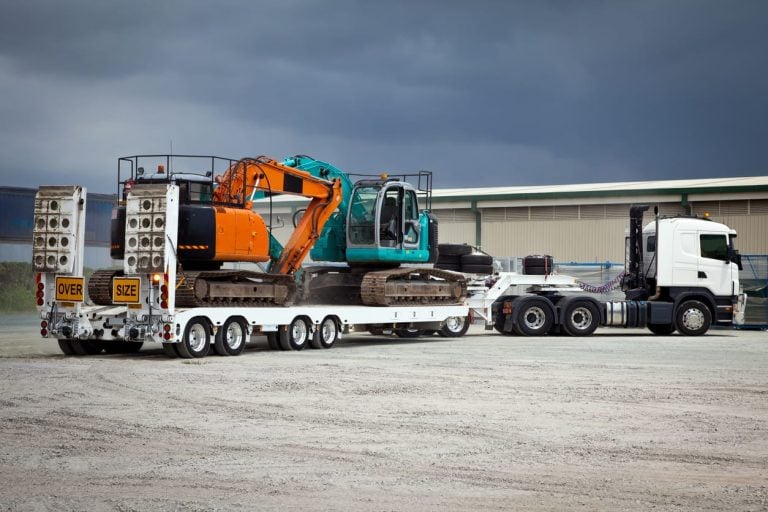
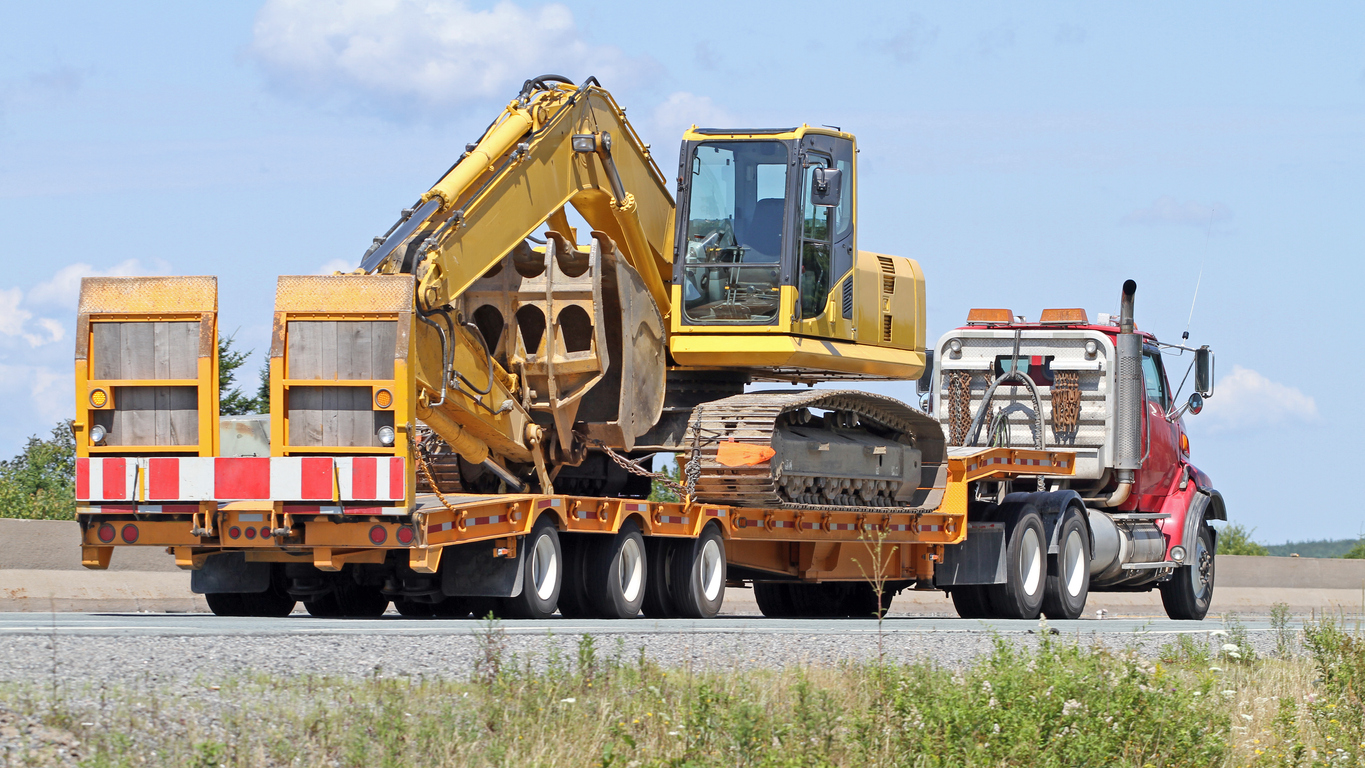
- Removable gooseneck detaches at the front so tracked machines drive on rather than being craned, which is standard for larger excavators and dozers.
The trailer choice follows the loaded height and how the machine gets on and off. Give a carrier the make, model, working weight and the real loaded dimensions and the right equipment is obvious to them.
What Moves on These Trailers
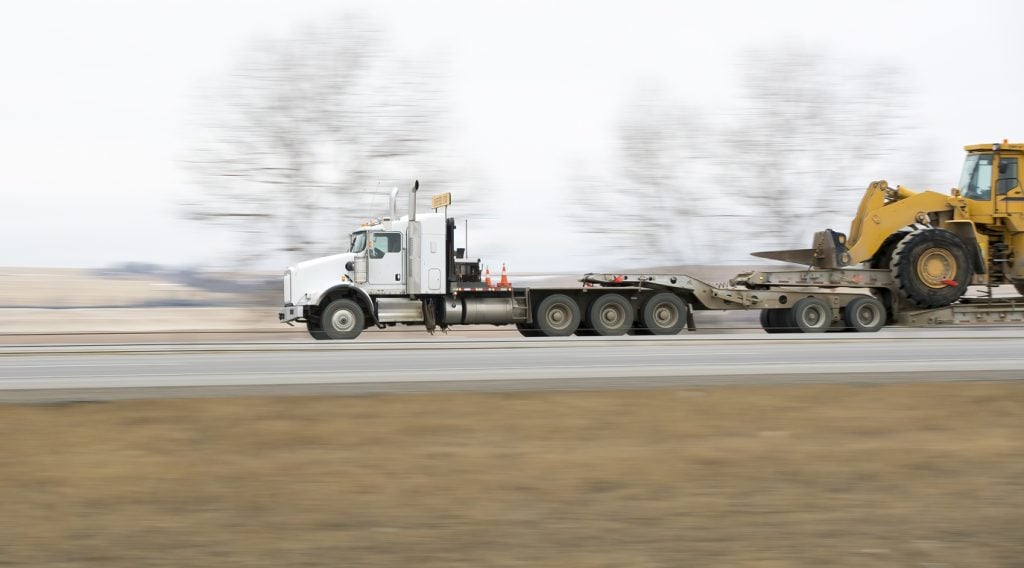
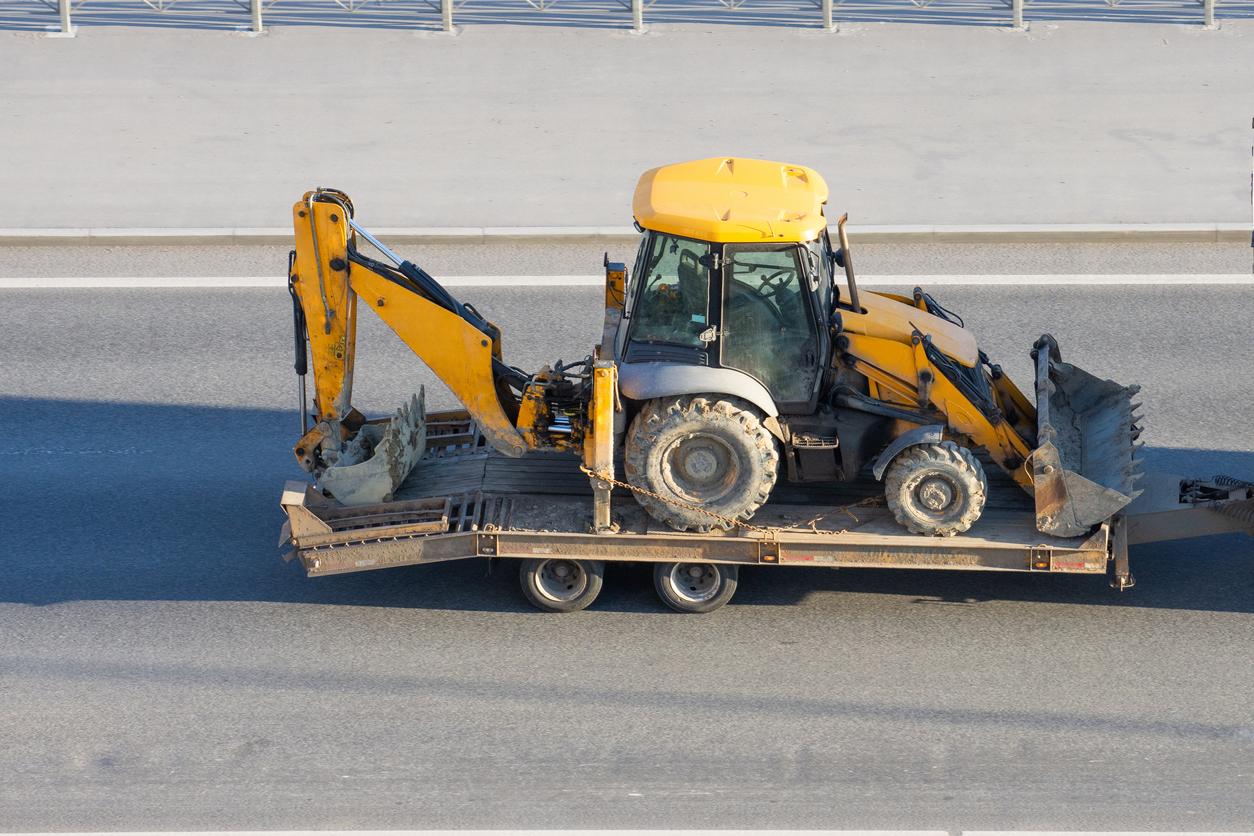
Most Maryland work falls into a few families. Earthmoving machines, meaning excavators, dozers, loaders and backhoes, are the bulk of it and travel on lowboys or removable goosenecks so they can drive on under their own power. Lifting equipment such as cranes, boom lifts and telehandlers is usually height-critical, and the boom position decides the trailer.
Agricultural machinery from the Eastern Shore, paving and compaction equipment, generators, and containerized or crated cargo bound for the port round out the rest. The category matters less than the three numbers: loaded width, loaded height and working weight.
Site Access at Both Ends
A lowboy needs firm ground, room to turn and clear overhead space. Soft ground after rain is the single most common reason a scheduled load does not happen, because a loaded trailer that sinks is a recovery job rather than a delay.
Walk the route the truck will take before the day: gate widths, overhead wires and branches, turning radius at the entrance, and whether the machine can be positioned to load without crossing a neighbor’s property. If a crane is needed rather than drive-on loading, that has to be arranged in advance and is priced separately.
Preparing the Machine
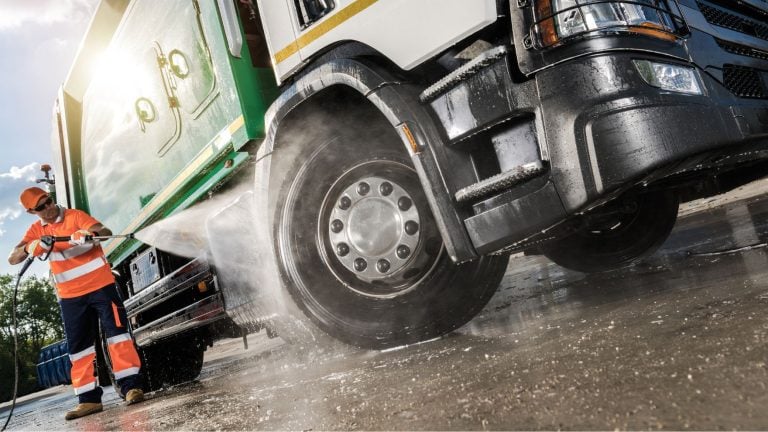
- Wash off mud and debris, which is both a safety requirement and how you find existing damage.
- Photograph the machine from every angle, including the undercarriage and hour meter.
- Drain or secure fluids as the manufacturer directs, and disconnect the battery where advised.
- Lower, fold or remove booms, buckets, arms and ROPS bars to cut the loaded height.
- Secure or remove loose attachments, chains, counterweights and tools; they ship separately if heavy.
- Provide keys, and note any starting quirk the driver will need to know.
Cost and Timing
Heavy haul is priced on dimensions, weight and route rather than a per-mile car rate. A legal-dimension machine on an in-state Maryland run is close to standard freight pricing. Once permits, escorts and a route survey are involved the figure rises sharply, and the schedule is set by permit windows rather than by driving hours.
Allow one to two weeks of lead time for a legal-dimension load and three to four weeks or more for a permitted one. Permits are issued for specific routes and dates, so a change of either usually means starting that part again.
Common Questions
Who obtains the permits? The carrier normally does, since permits are tied to the specific truck, trailer and route. Confirm it is included in your quote rather than assumed.
Is my equipment insured in transit? Under the carrier’s cargo policy. Ask for the certificate and compare the limit against the machine’s actual value, because heavy equipment frequently exceeds standard cargo coverage.
Can you move a machine that will not run? Yes. It changes the loading method, usually to winching or a crane, so say so when quoting.
How far ahead should I book? One to two weeks for a legal load, three to four or more once permits and escorts are needed.
Get a Quote
Call Ship A Car, Inc. at (866) 452-3657 with the make, model, working weight and loaded height, and we will tell you what the load needs before you commit to a date.