How to Transport a Boat: Every Size, Every Method
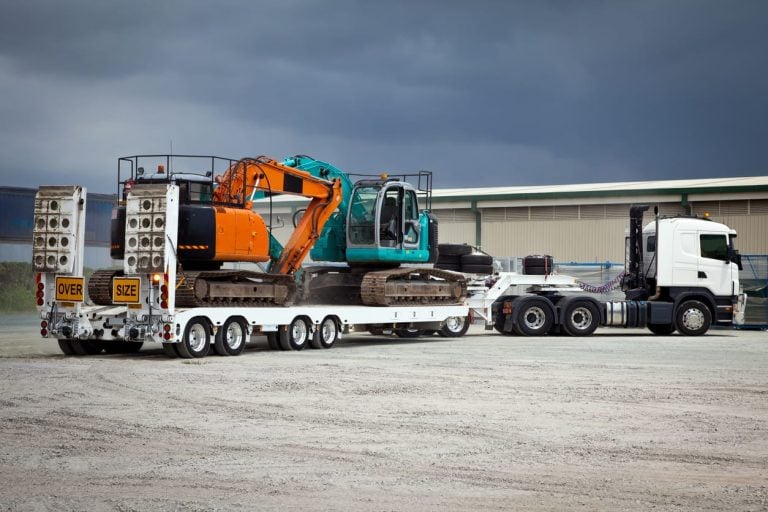
Boat transport splits at one number: 8 feet 6 inches of beam. Below it, a boat travels on a trailer as ordinary freight and the job is straightforward. Above it, the load is oversize, which means permits in every state, possible escort vehicles and daylight only travel.
That single measurement decides the method, the cost and the timeline more than length or weight do. Here is how each size band moves, what each method costs, and what to prepare.
Measure the Beam First
Length gets quoted in every listing and beam is what actually matters.
A boat under roughly 8 feet 6 inches wide fits within legal road width, so it moves without oversize permits. That covers most runabouts, bass boats, day sailers, jon boats and small cruisers.
Above that width the load becomes oversize in every state it crosses. Permits are issued per state with their own fees, routes and conditions. Beyond further thresholds you add pilot cars, and on tall loads a height pole vehicle. Most sportfishers, larger cruisers and anything on a substantial keel land here.
Height matters nearly as much. Boat height plus trailer deck height is the number that has to clear every bridge on the route, and a tower, arch, radar mast or antenna frequently pushes an otherwise legal load over. Anything removable should come off and travel inside the boat.
So the four numbers a carrier needs are beam at the widest point, height on the trailer including hardware, overall length including the pulpit and any swim platform, and weight including the engine, fuel and gear.
The Four Methods, and When Each Is Right
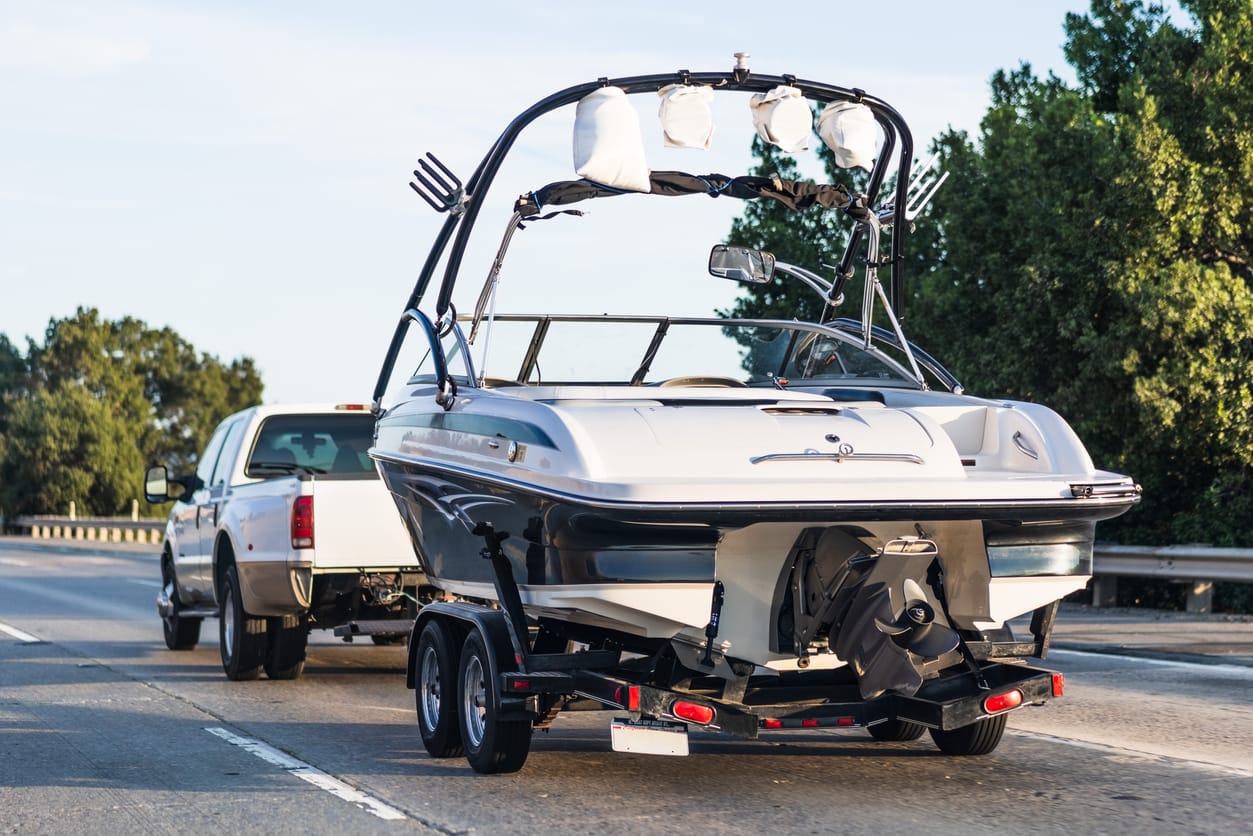
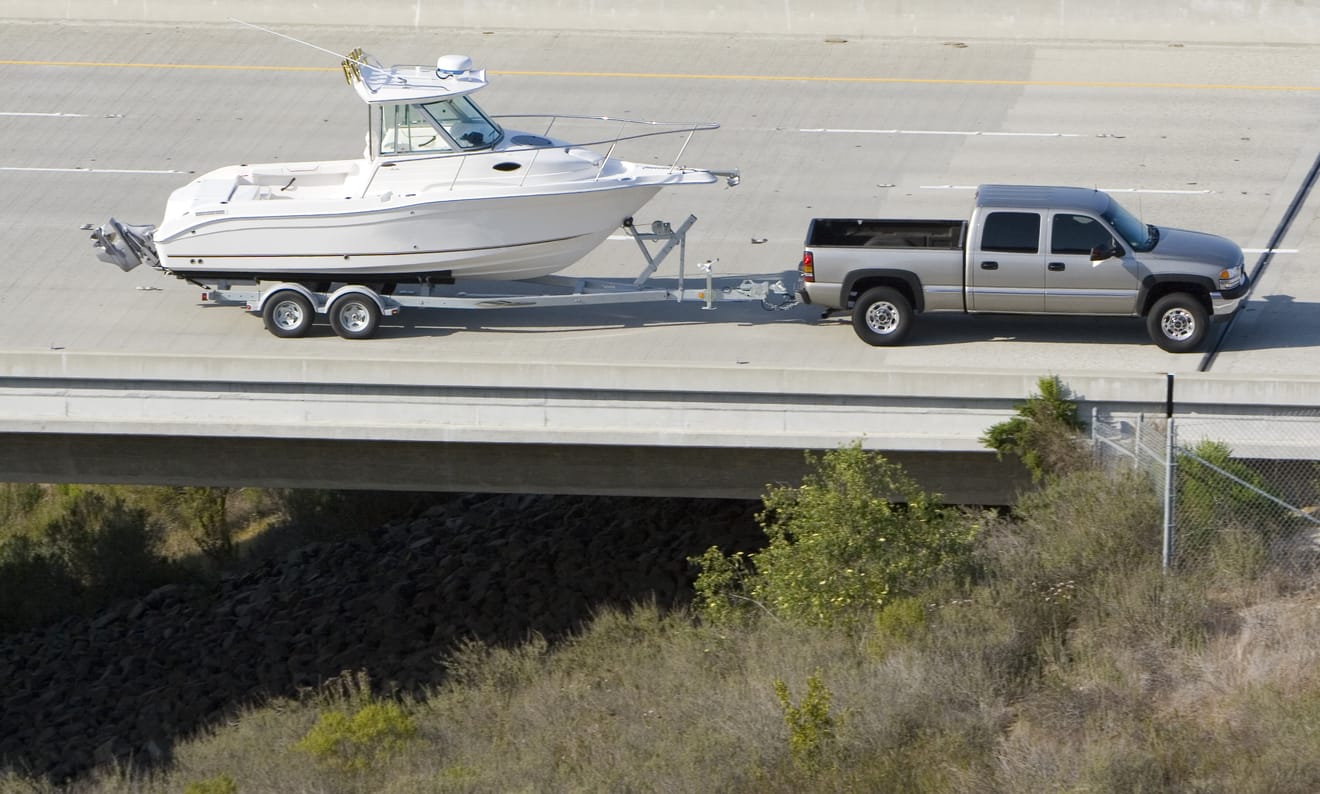
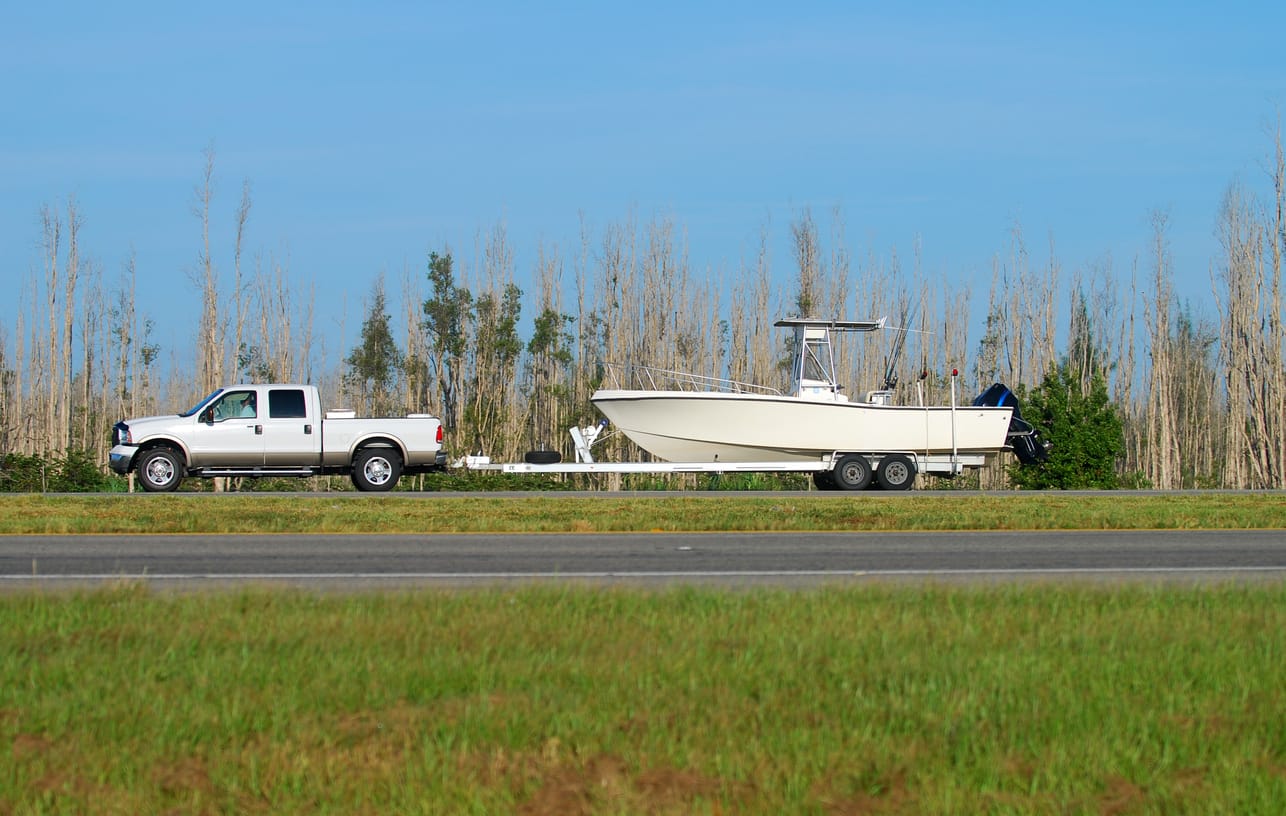
On its own trailer. The cheapest option by a wide margin if the boat sits on a roadworthy trailer. The carrier tows it and you are paying for a tow rather than for deck space. The trailer has to be genuinely roadworthy: current registration where required, tires with tread and correct pressure, working lights, and functional brakes and bearings. A carrier will refuse a trailer that is not safe to tow, and that refusal is correct.
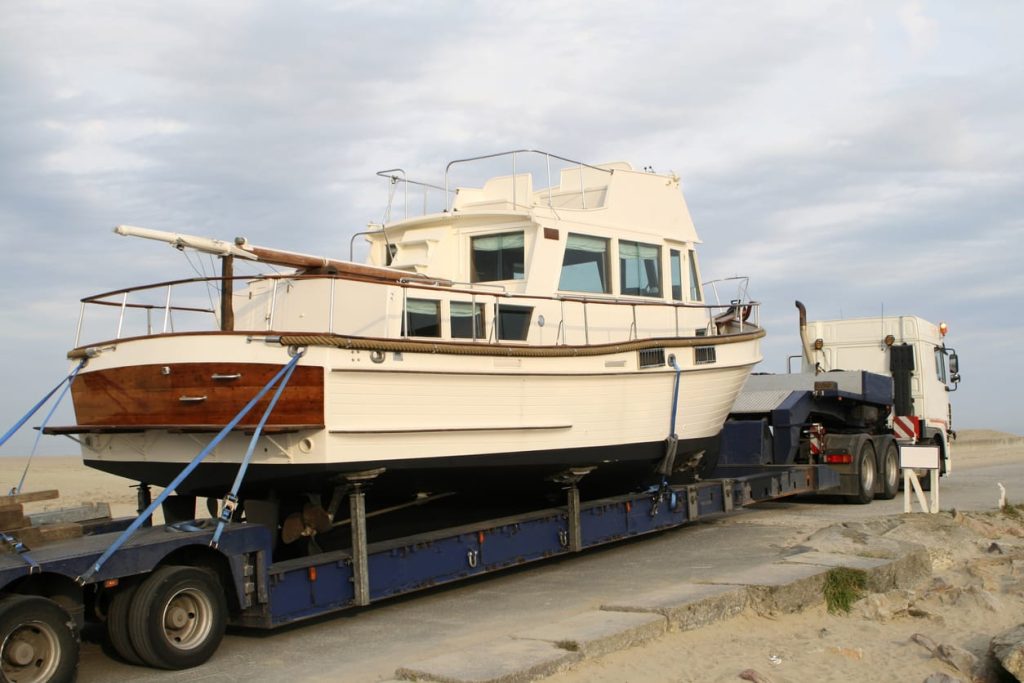
On a flatbed or step deck. For boats with no trailer, or where the trailer is unsuitable. The boat is cradled and secured to the deck. Step decks matter here for the same reason they matter in heavy haul: a lower deck buys the height headroom that keeps a tall boat under the limit.
In a container. Practical for small craft that fit inside a standard container, and the usual route for overseas moves. It protects the hull completely and it constrains you to what fits: roughly 7 feet 8 inches of interior width in a standard box, less with cradling. Small runabouts, dinghies, kayaks and personal watercraft suit this well.
By air. Real but rare, and reserved for racing craft and time critical moves where the cost is secondary. Almost nobody needs this.
For overseas moves not in a container, roll-on roll-off and lift-on lift-off vessel services carry boats on their own cradles, which is how larger craft cross oceans.
What Actually Drives the Cost
Six factors, roughly in order of impact.
Dimensions, because beam decides whether you are paying for permits and escorts at all. This dwarfs every other factor once you cross the oversize threshold.
Method, since a boat on its own good trailer is far cheaper than one needing a flatbed and cradling.
Distance and route, including how far each end sits from a main corridor. A marina two hours off the interstate carries that detour in the price.
Destination access, covered below and frequently the deciding factor.
Season and demand. Spring launch and fall haul-out are the peaks in most regions, and rates firm up accordingly. Moving in the off season is a genuine saving.
Weight, which matters for the trailer class and for axle limits rather than as a direct multiplier.
What does not appear as a separate line is fuel: it is inside the quoted rate on this kind of move, as it is on vehicle transport.
Access Decides More Than People Expect
This is where boat moves fail, and it is entirely predictable in advance.
A combination hauling a boat needs room to turn, firm level ground, and clearance overhead. Marinas, boatyards and residential driveways vary enormously. A yard with a travel lift and a wide apron is straightforward. A driveway with a low gate, a tight turn and soft ground is not.
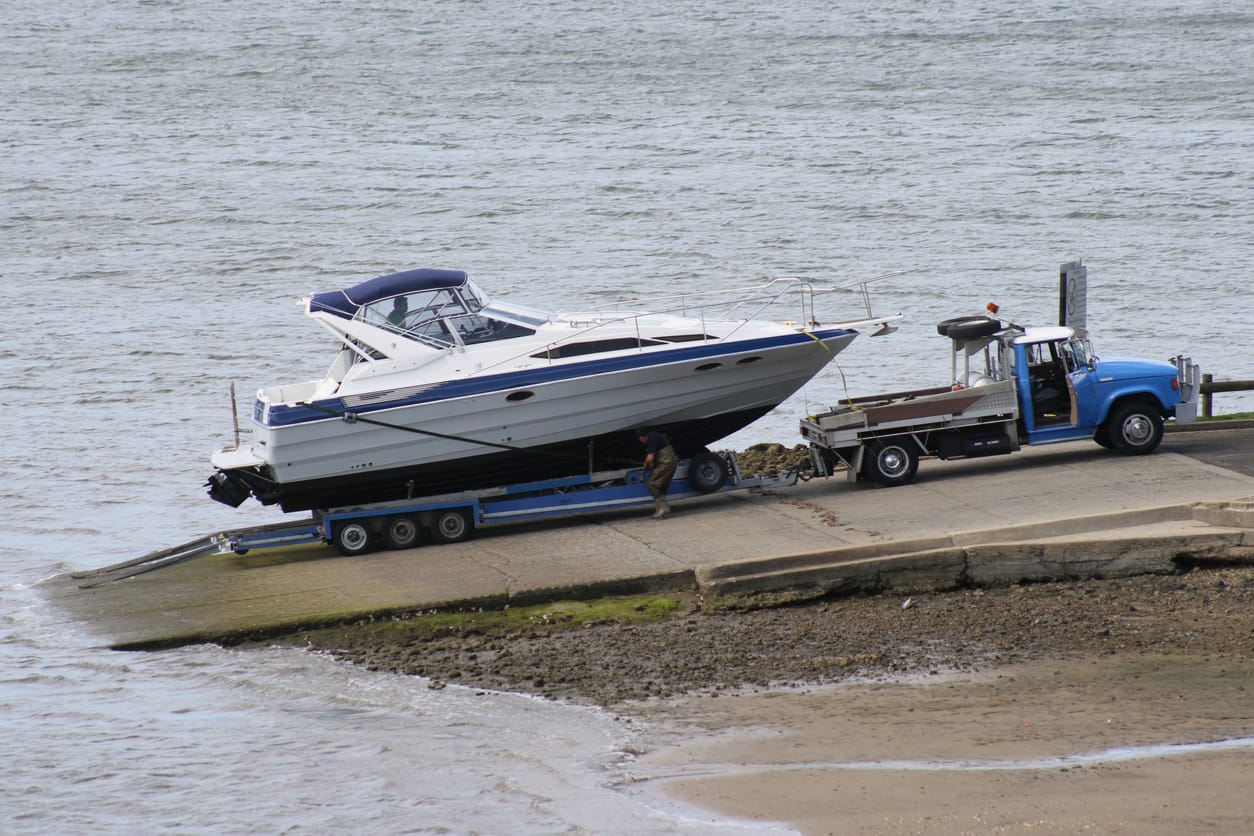
Establish at both ends: who lifts the boat and with what, whether the yard needs notice or charges a fee, whether there is a height restriction at the entrance, and whether the ground will bear the weight. A yard that requires an appointment for its travel lift and has not been booked is the most common single cause of a wasted trip.
Preparing the Boat
The list is longer than for a vehicle and none of it is difficult.
Strip and secure. Remove electronics, antennas, radar, outriggers, canvas, biminis and covers, or secure them properly. Highway wind at 65 miles per hour finds anything that is not fixed down, and canvas will destroy itself and mark gelcoat doing it.
Drain everything. Bilges, live wells, water tanks, and the engine where freezing is possible on the route. Water is weight and it moves.
Fuel low. Enough to run the engine at each end and no more. Fuel is heavy and full tanks add weight the carrier planned around.
Secure below decks. Anything loose in the cabin will move. Latch lockers, remove valuables, and empty the interior as you would a car, since personal items are not covered by cargo insurance.
Batteries. Disconnect and secure them.
Photograph everything in daylight, washed: hull sides, transom, keel, running gear, deck, and the gelcoat in detail. Photograph existing chips and scratches specifically. That record is what a claim rests on, and a hull has a lot of surface to dispute.
Shrink wrap is worth considering on a long or winter move, and it must be done properly, because wrap that tears at speed becomes a sail.
Choosing the Carrier
Four checks, and they take about ten minutes.
Verify the USDOT or MC number with the federal motor carrier regulator: that the authority is active, the name and address match, and the safety record is reasonable. Ask for the certificate of insurance and check the cargo limit against your boat’s actual value, remembering the limit applies to the whole load rather than to your boat alone. Confirm who arranges the permits and whether the quote includes them along with any escorts. And ask specifically whether they have moved boats of your size before, because cradling a hull correctly is a skill and gelcoat is unforgiving.
A quote well below the others on an oversize move almost always means permits, escorts or the right trailer have been left out of it. What the permit side involves is set out in our page on oversize load permits and requirements, and the vetting process in detail is in how to vet a heavy haul transport company.
What to Have Ready Before You Call
Beam, height on the trailer, length, weight, whether the boat has a roadworthy trailer, both addresses with an honest description of access and lifting at each end, and your date range. Photographs of the boat and of both sites are worth more than descriptions.
If the boat is on a trailer, say whether the trailer is registered and whether the brakes and bearings have been serviced. That one answer often decides the whole quote.
Common Questions
What size boat needs oversize permits? Wider than roughly 8 feet 6 inches of beam. Below that it moves within legal road width.
What is the cheapest way to ship a small boat? On its own roadworthy trailer, by a wide margin. A container suits very small craft and overseas moves.
Does my trailer need to be registered? Where your state requires it, yes, and it must be genuinely roadworthy: tires, lights, brakes and bearings. Carriers refuse unsafe trailers.
What has to come off the boat? Antennas, radar, outriggers, canvas and covers, plus anything removable that adds height. Drain the bilges and tanks and run the fuel low.
Who lifts the boat? You arrange it at both ends, usually a yard travel lift or a crane. Book it, because an unbooked lift is the most common cause of a failed pickup.
Get a Quote
Call Ship A Car, Inc. at (866) 452-3657 with the beam, height, length, weight, both addresses and how the boat will be lifted, or request a quote through the specialized transport calculator.