How to Ship a Fiberglass Pool
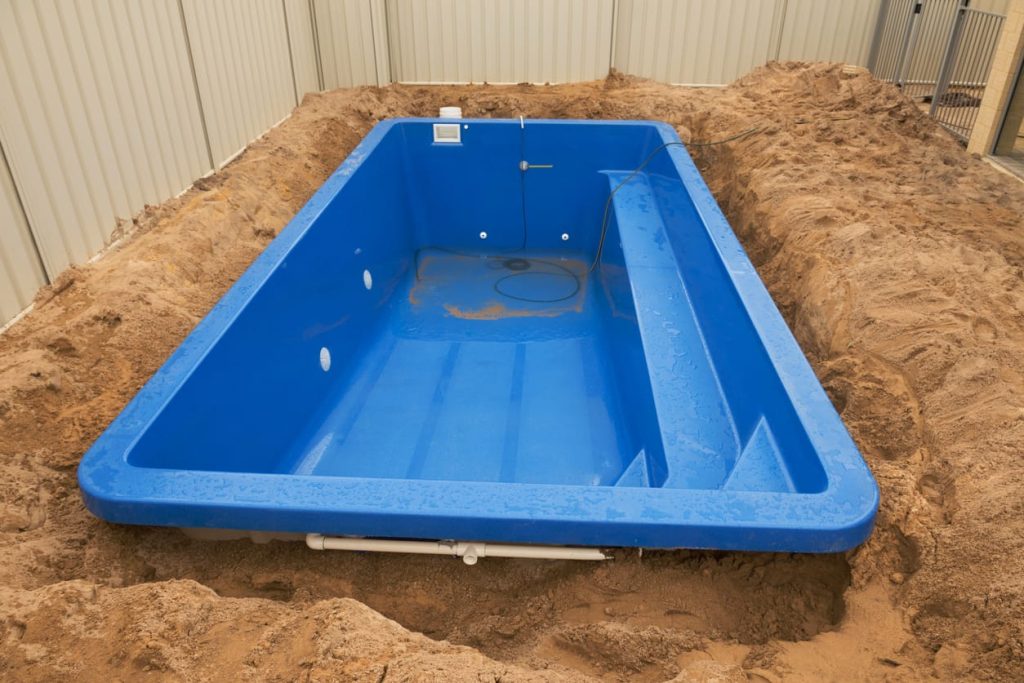
A fiberglass pool shell is very light for its size and enormously wide, and width is what makes it a permitted load on almost every move. A small shell runs around 10 feet wide; a typical family pool 12 to 14; a large one 16 feet or more, against a legal limit of 8 feet 6 inches. Weight is rarely the issue at 2,000 to 6,000 pounds. It is a big, hollow, fragile object that catches wind, and it is priced accordingly.
Width Decides Everything
Past 8 feet 6 inches you need a permit for every state on the route, and pool shells clear that easily.
Somewhere around 12 feet, depending on the state, you need a pilot car. Wider again, commonly 14 to 16 feet, and you need two plus route restrictions on which roads you may use at all. Those thresholds are set by each state, so the escort count can change at a border.
Permitted loads also travel in daylight, on weekdays, outside peak hours, and they do not move in high wind. A pool shell is effectively a sail, so wind stops these moves more often than it stops most freight. The legal travel windows, not the mileage, set the schedule.
It Travels Upside Down
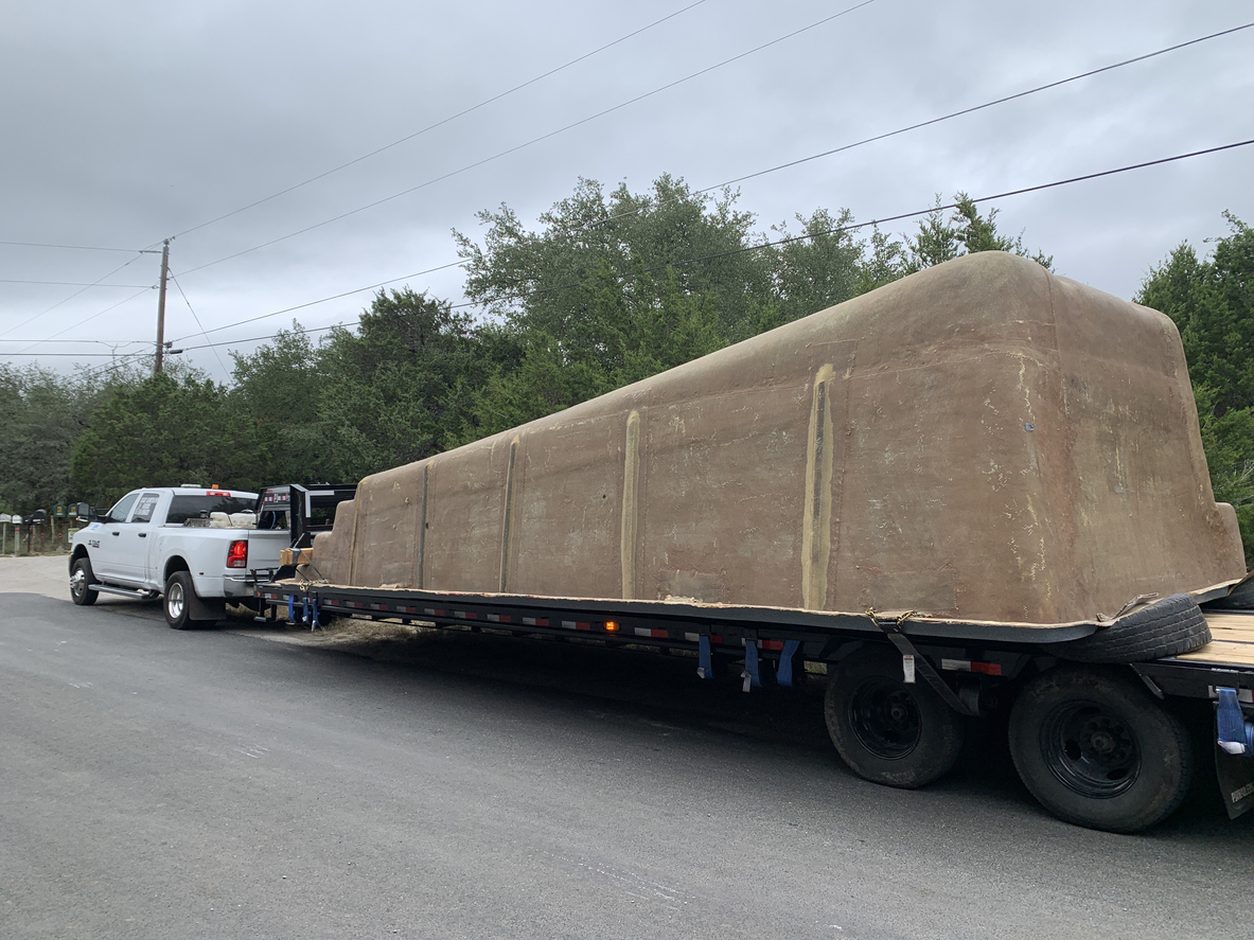
Shells ship inverted on a flatbed or a step deck, and there are two reasons.
Inverted, the rim sits on the deck and the shell’s own curved shape carries the load, which is far stronger than resting it on its floor. It also stops the shell acting as a bathtub for rain, which would add serious weight and shift as the truck moves.
The shell needs cradling rather than simply strapping. Padded supports along the rim spread the load, and straps go over broad protected areas rather than pulling down on an unsupported span. A strap tightened onto an unsupported section of gelcoat will crack it.
The Gelcoat Is the Fragile Part
The structure is tough; the finish is not, and the finish is what you are buying.
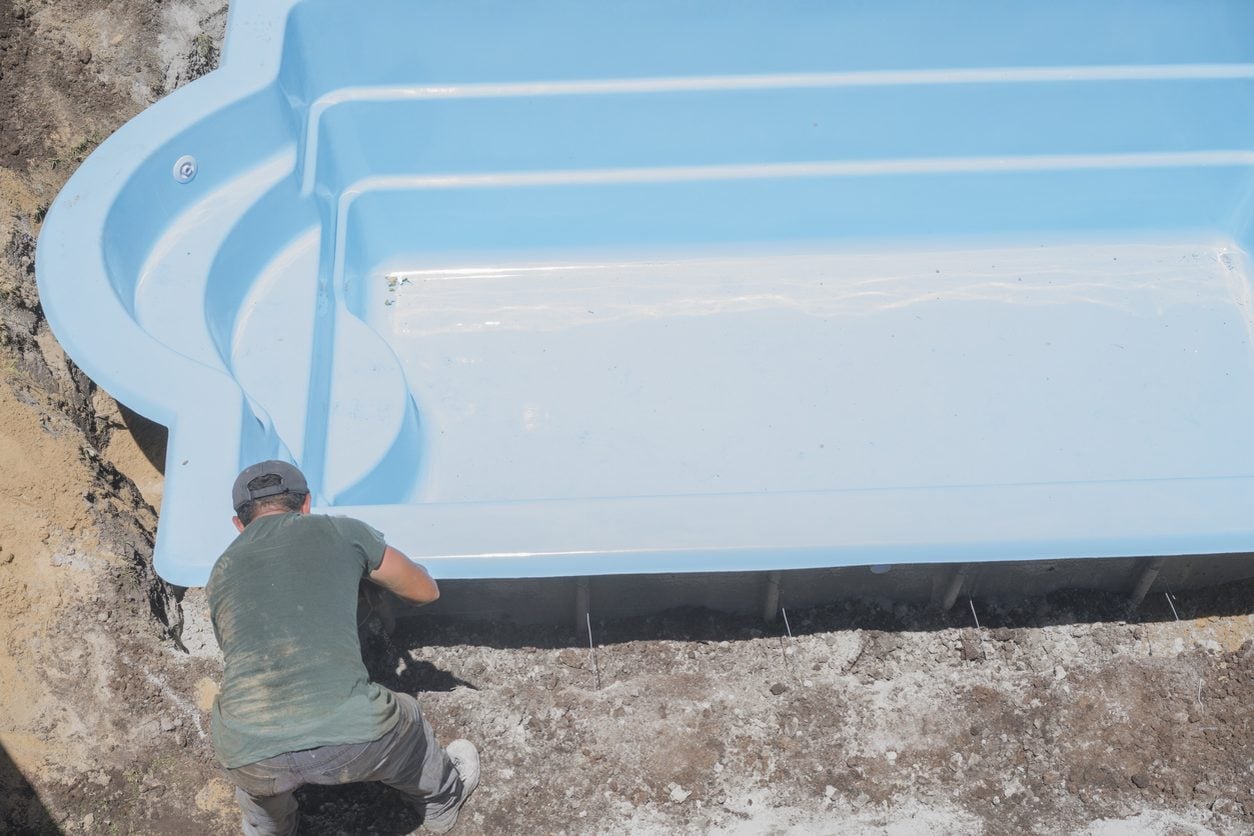
Gelcoat chips and crazes under point loads and impacts, and a crack in it is both a cosmetic and a waterproofing problem. Anything resting against the shell in transit, anything strapped without padding, and any contact with the deck at a single point is a risk.
Photograph the whole shell, inside and out, before it is loaded. On a smooth colored surface the difference between damage that happened in transit and damage that came from the factory is impossible to argue afterwards without pictures.
Lifting at Both Ends
A pool does not roll and cannot be dragged, so something lifts it twice.
That means a crane or a suitable telehandler at the origin and at the destination. Arranging one only at the yard end stops the move halfway, and this is the most common cause of a failed pool delivery.
Confirm the lifting arrangement before the truck is dispatched, and confirm the crane can reach where the pool has to go. On a residential job that is usually the real constraint.
Site Access Is the Whole Job
The destination is a back yard, and getting a 14 foot wide shell into one is harder than getting it across three states.
Check the gate or side access width, the overhead clearance including trees and power lines, whether the ground will carry a crane, and whether a 70 foot truck can stop and turn on the street. Overhead power lines are a genuine hard stop on a crane lift and need checking before the day, not on it.
Tell us the street width, the surface, the overhead clearance and where the shell has to end up. Those answers decide the equipment, and getting them wrong costs a wasted day with a crane crew standing.
Sequence the Delivery With the Dig
The shell and the excavation have to be ready for each other, and the order matters more than people expect.
A fiberglass pool is set into a prepared hole on a compacted base, and the hole is dug to the shell’s actual dimensions rather than to a catalog figure. That means the excavation usually waits on the shell arriving and being measured, or at minimum on confirmed dimensions from the manufacturer.
What you want to avoid is a shell arriving days before the site is ready. It cannot sit on the street, storing it on site needs flat ground and cribbing, and a shell left resting badly for a week can distort. Book the transport to land close to the dig, and keep the crane crew and the truck on the same day where you can. Our guide to transporting a container pool covers the other common pool format.
Common Questions
Does a pool shell need a permit? Almost always. They run 10 to 16 feet wide against an 8 foot 6 inch legal limit.
Do I need escorts? Usually one past about 12 feet and two past roughly 14 to 16, though each state sets its own trigger.
Why does it travel upside down? The rim carries the load that way, and it stops the shell filling with rain.
What does one weigh? Roughly 2,000 to 6,000 pounds. Width, not weight, is what makes it a difficult load.
Do I need a crane at both ends? Yes, or a suitable telehandler. Arranging one only at the origin stops the move halfway.
Get a Quote
Call Ship A Car, Inc. at (866) 452-3657 for heavy haul and specialized freight, with the shell’s width and length and the access and lifting arrangements at both ends.