How to Ship a Stand-Up Forklift
A stand-up forklift is not a heavy load by freight standards, and it still causes more failed pickups than machines three times its weight, for one reason: it has a couple of inches of ground clearance and cannot be driven up a normal ramp. Most of the planning is about how the machine gets onto the trailer and off it again. Get that arranged at both ends and the transport itself is ordinary.
Get the Real Numbers First
Stand-up covers several different machines and they do not ship the same way, so start by identifying what you actually have.
A stand-up counterbalance rider is the compact one that looks like a sit-down forklift with the operator standing sideways. A reach truck extends its forks forward into racking and is taller and narrower. An order picker raises the operator with the load. A walkie stacker is the smallest, walked behind rather than ridden.
Typical figures for the common electric stand-up machines run roughly 3,000 to 4,500 pounds of lifting capacity, a machine weight somewhere between 7,000 and 10,000 pounds, a width around 3 to 4 feet and a body length of 7 to 9 feet before the forks. Those are starting points, not your numbers. Read the data plate, which gives the model, the capacity and usually the service weight, and measure the machine rather than trusting a specification sheet for a configuration you may not have.
The Mast Is the Height Problem
Everything about height on a forklift is the mast, and it is the figure people get wrong.
A lowered mast typically sits somewhere around 7 to 8 feet, depending on whether it is two stage or three stage. That matters because legal height is 13 feet 6 inches measured from the road, and a flatbed deck already uses about 5 feet of it. A machine with a tall three stage mast on a standard flatbed can be at or over the limit before anything else is considered.
Lower the mast fully before measuring, and measure from the ground to the highest fixed point on the machine. If the number is awkward, a step deck buys roughly a foot and usually solves it. On some machines the mast can be removed and shipped separately, which is worth asking your service provider about on a long or awkward move.
The overhead guard is the other thing to check. It is easy to forget it sits above the mast when the mast is down.
The Battery Changes the Job
On an electric stand-up the battery is frequently a third or more of the total weight, and it has its own rules.
A traditional lead acid battery is a wet cell containing sulfuric acid. It must travel upright, secured against movement, with the terminals covered so nothing can short across them. Carriers ask about it because a battery that shifts in transit is both a damaged machine and a spill.
Decide whether the battery ships installed or separately. Installed is simpler and keeps the machine drivable at each end. Shipped separately reduces the machine’s weight considerably, which occasionally matters, but the battery then becomes its own freight item with its own handling requirements.
Lithium batteries are treated differently again and carriers will ask specifically, so say which type you have when you book rather than at the roadside.
Loading Is the Hard Part
This is where these shipments fail, and the cause is always the same.
Stand-up forklifts usually run on cushion tires, which are solid and give the machine only a couple of inches of ground clearance. Drive it up a standard dovetail ramp and it grounds out on the transition, which damages the underside or simply stops it halfway. Small wheels and no suspension make uneven surfaces and gaps a problem in their own right.
So plan on lifting rather than driving. A larger forklift, a telehandler or a crane at each end is the normal answer, and a machine of this size is well within the range of ordinary yard equipment. Where lifting is not available, a lowboy or a trailer with a shallow beavertail and a very gradual approach angle can work, but it needs confirming with the carrier before the truck is dispatched.
Arranging a lift at one end only is the most common cause of a stopped delivery. Confirm both.
Dock Height or Ground Level
The other access question is what the truck backs up to.
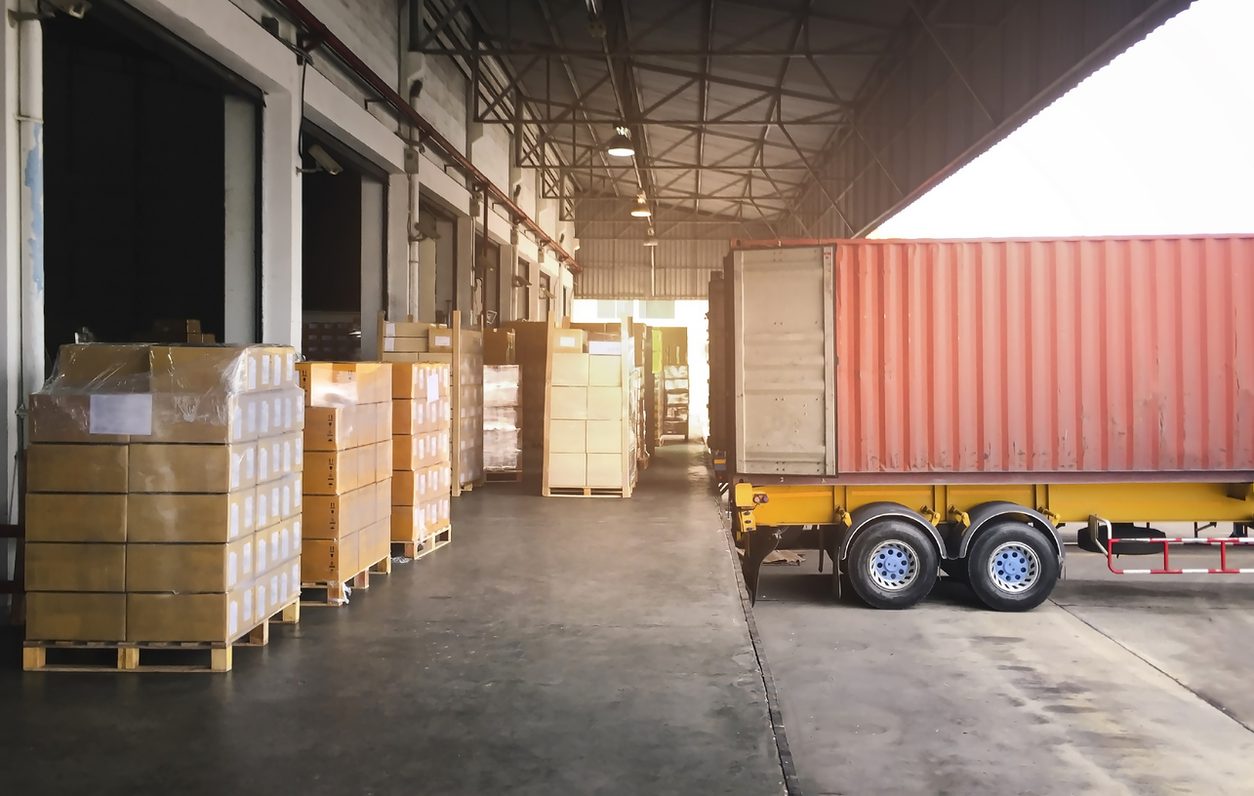
A loading dock at trailer height makes everything simple: the machine rolls straight on or off across a dock plate. A ground level yard does not, and that is when the lift equipment becomes essential rather than convenient.
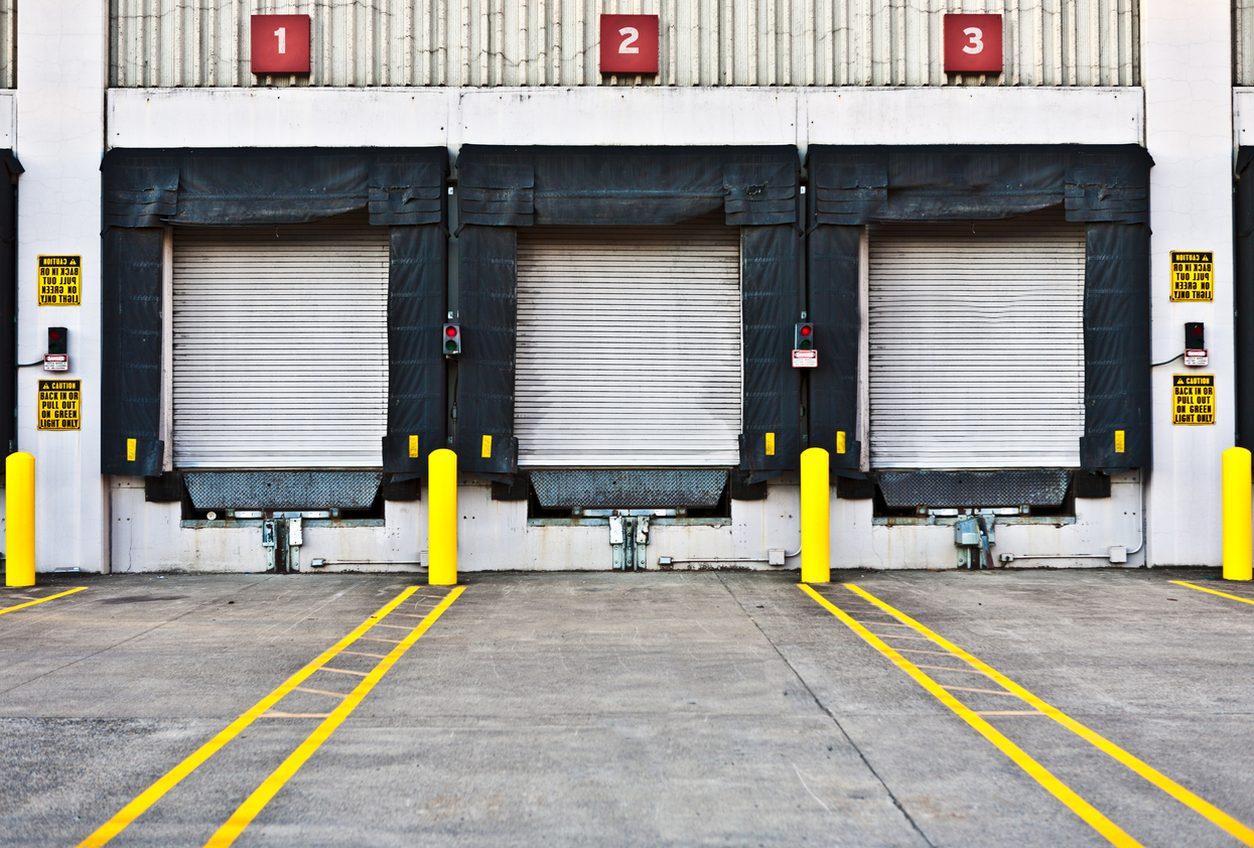
Tell the carrier which you have at both ends, along with the approach: whether a tractor trailer can turn in, whether the yard surface will carry a loaded truck, and whether there is overhead clearance. A machine sitting in a warehouse behind a door too narrow for it is a problem worth discovering before the truck arrives.
Trailer and Securement
A flatbed handles most stand-up forklifts comfortably. A step deck is the answer for a tall three stage mast. A dry van with a dock at each end works where the machine fits through the door and the height allows it, and it has the advantage of keeping the machine out of the weather.
Securement uses chains or heavy straps at four points, attached to the manufacturer’s designated tie down positions rather than to the mast, the overhead guard or any hydraulic component. The mast is secured separately so it cannot rise or shift. Wheels are chocked, and the parking brake is set.
Weight distribution deserves a word because a forklift is unusually unbalanced: the counterweight puts most of the mass at the back. The driver needs to position it so the axle loads work out, which is another reason to give an accurate weight when you book.
Preparing It
Lower the forks fully to the deck and lower the mast. Remove or secure anything loose, including attachments, side shifters that can slide, and anything left in the operator compartment. Check for hydraulic leaks and fix them, since a leaking machine on a shared trailer becomes everybody’s problem.
Top up or drain fluids according to the move, disconnect and secure the battery connector, and clean the machine so existing damage is visible.
Then photograph it in daylight from every side, including the mast, the forks, the overhead guard and the data plate, and get any existing damage described specifically on the bill of lading. Inspect it again before signing at delivery. Our guide to heavy equipment transportation covers the wider preparation process.
Common Questions
Can I drive it onto the trailer? Usually not. Cushion tires leave only a couple of inches of clearance and the machine grounds out on a standard ramp. Plan on a lift at both ends.
How much does a stand-up forklift weigh? Commonly 7,000 to 10,000 pounds for a 3,000 to 4,500 pound capacity electric machine. Read the data plate rather than estimating.
Does it need a permit? Rarely on width or weight. Height is the one to check: lower the mast, measure to the highest fixed point, and remember the trailer deck adds about 5 feet.
Should the battery ship installed? Usually yes, and it must travel upright and secured with the terminals covered. Tell the carrier whether it is lead acid or lithium.
What if I have no dock? A ground level site needs a forklift, telehandler or crane to load and unload. Arrange it at both ends, not just at the origin.
Get a Quote
Call Ship A Car, Inc. at (866) 452-3657 for heavy haul and specialized freight with the make, model, weight, lowered mast height and the loading arrangements at both ends, or price it with the specialized transport calculator.