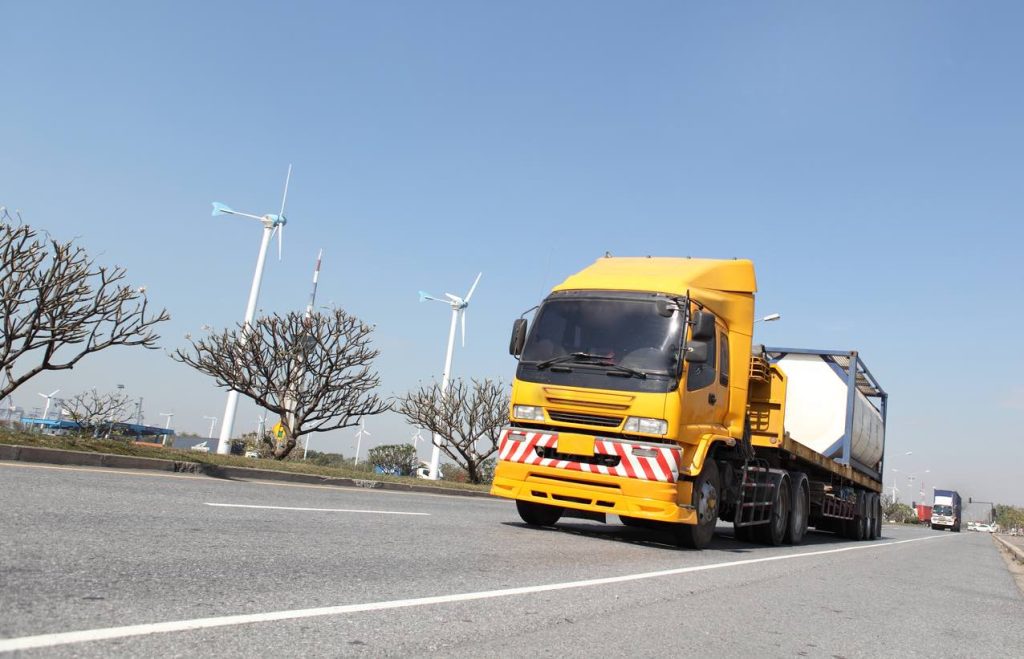
Shipping Caterpillar Construction Equipment
Most mid size Caterpillar machines are already over legal width sitting still, so the real question is not whether you need a permit but how much of the machine comes off before you do. A 20 ton class excavator on standard tracks is typically wider than 8 feet 6 inches, and once the bucket and counterweight are accounted for it is heavy enough to matter too. Strip what is removable, measure what is left, and the trailer and permit follow from that.
What Comes Off First
Nearly every dimension problem on a CAT machine has a removable cause.
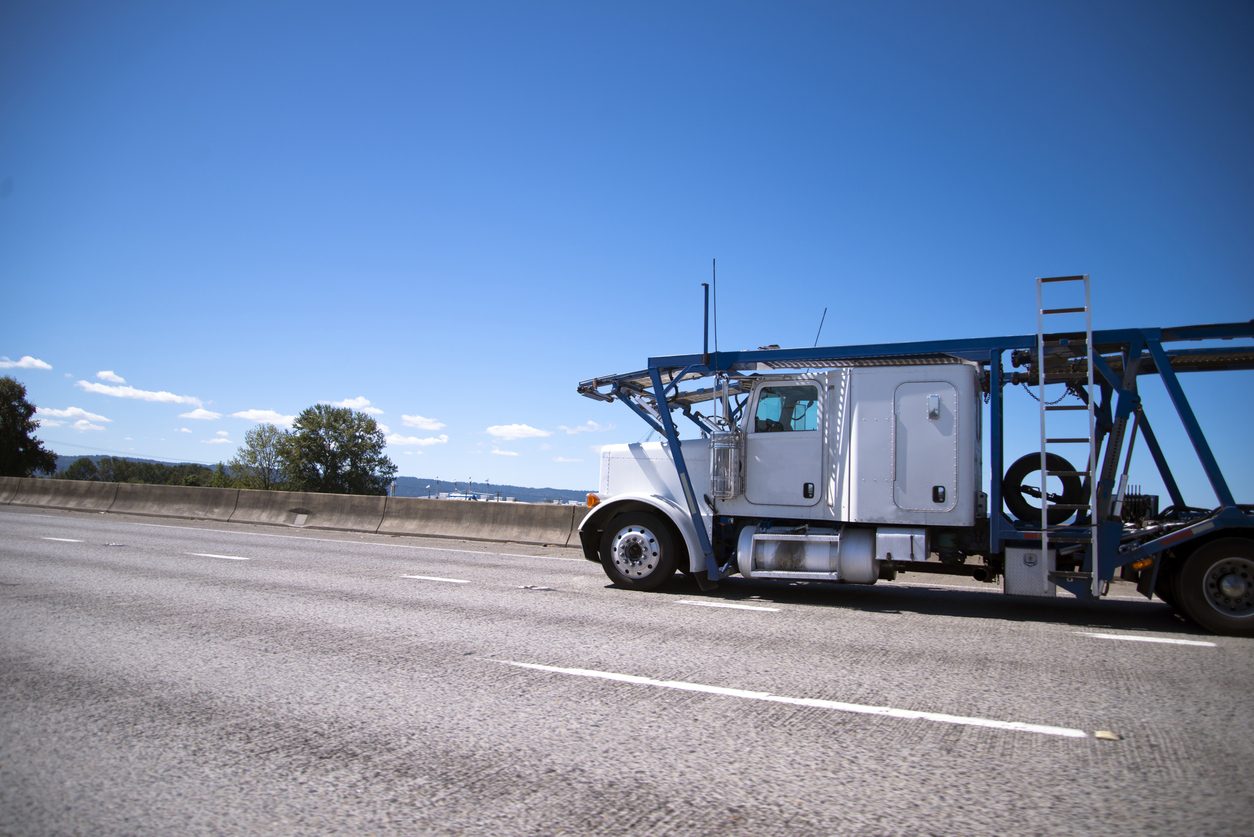
The bucket comes off and ships separately or flat on the same deck. That alone can drop the transport length enough to matter, and it removes an awkward overhang. The counterweight comes off on larger excavators and takes several thousand pounds with it, which can be the difference between a routine permit and a superload conversation. The boom folds down, and how it is folded sets your transport height. On dozers, the blade and ripper come off.
Cab guarding, beacons and exhaust stacks fold or unbolt. Twenty minutes with a wrench in the yard regularly saves more than the labor costs.
Track Width Is the Usual Culprit
This is the number that surprises people. A machine can be perfectly ordinary in every other respect and still be a permit load because of what it stands on.
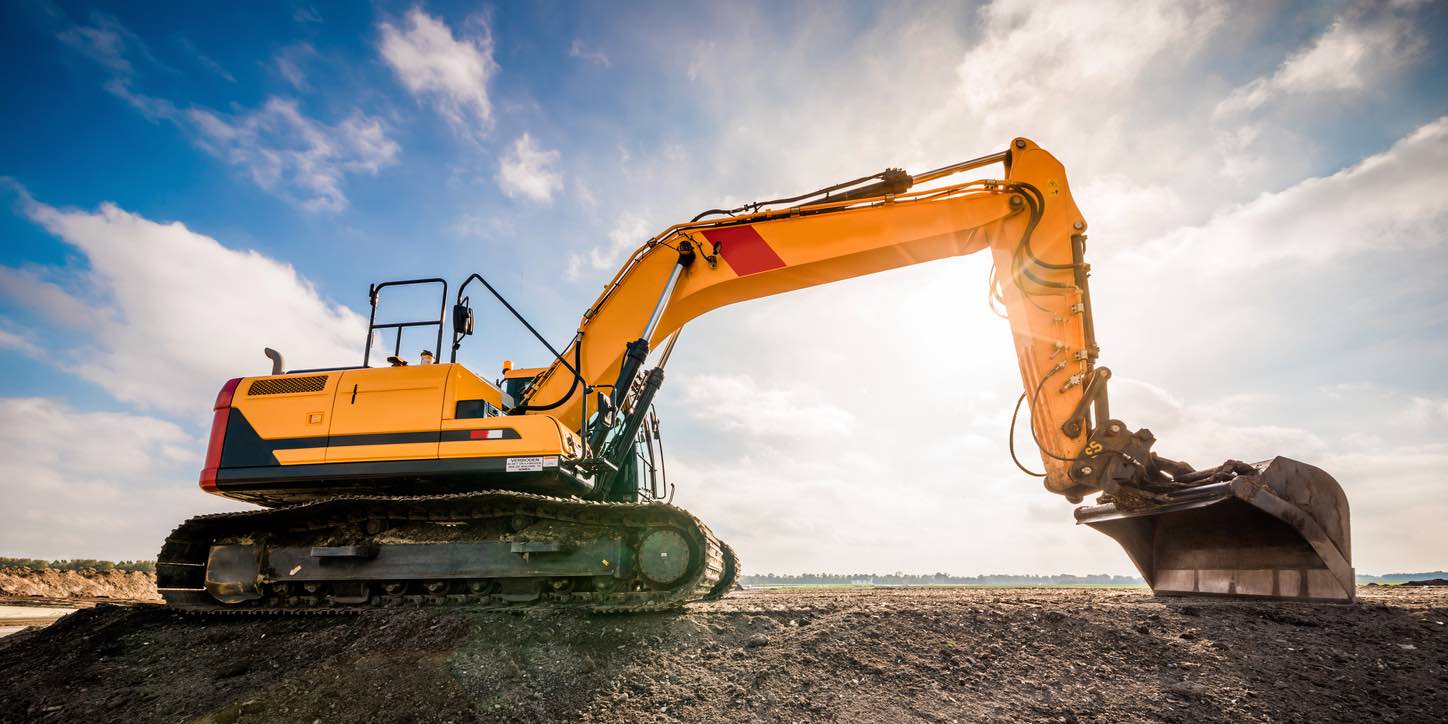
Wide pads fitted for soft ground push an excavator well past 8 feet 6 inches. Standard pads on the same machine might not. If the machine has swappable shoes and the job at the far end does not need the wide ones, changing them is worth pricing against the permit and escort cost.
Steel tracks also mark a wooden deck, so the carrier needs to know in advance whether to bring boards or use a metal deck.
Which Trailer
The machine decides this, not preference.
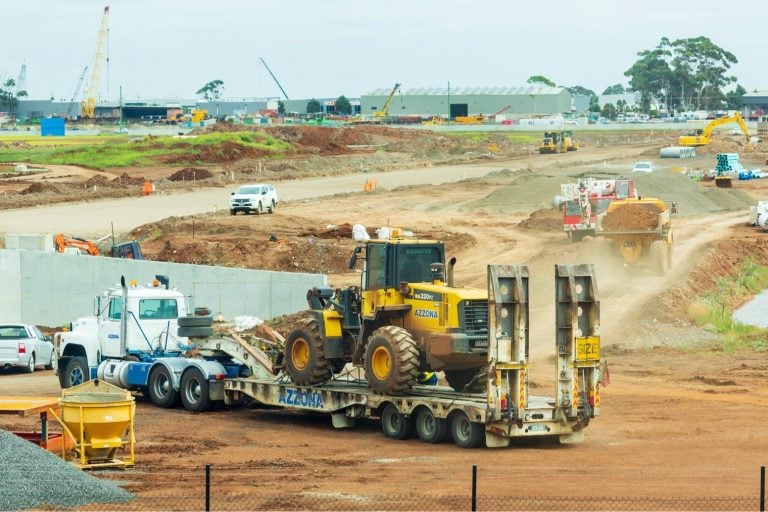
Skid steers, mini excavators and small compactors ship on a flatbed or step deck as ordinary freight. Mid size excavators, dozers and wheel loaders go on a lowboy or a removable gooseneck, which drops the deck low enough to keep the loaded height legal. The heaviest machines need a multi axle configuration to spread the weight across enough axles to stay within bridge limits.
A removable gooseneck matters for a second reason: the machine drives on at ground level rather than up a ramp, which is safer for tracked equipment and for the deck.
Permits and Escorts
Over 8 feet 6 inches wide, 13 feet 6 inches high, or 80,000 pounds gross needs a state permit for every state on the route, issued for a defined path and period.
Past roughly 12 feet wide you add escort vehicles, and the wider it gets the more of them. Permitted loads generally travel in daylight on weekdays, and metro areas restrict movement during peak commuter hours. That is a timing constraint more than a cost one, and it is the main reason a permitted haul takes longer than the mileage suggests.
Height is measured from the road, not from the deck. Give the measured figure with the boom folded and the stack down.
What to Tell Us When You Book
Five answers price the job accurately, and guessing at any of them changes the number later.
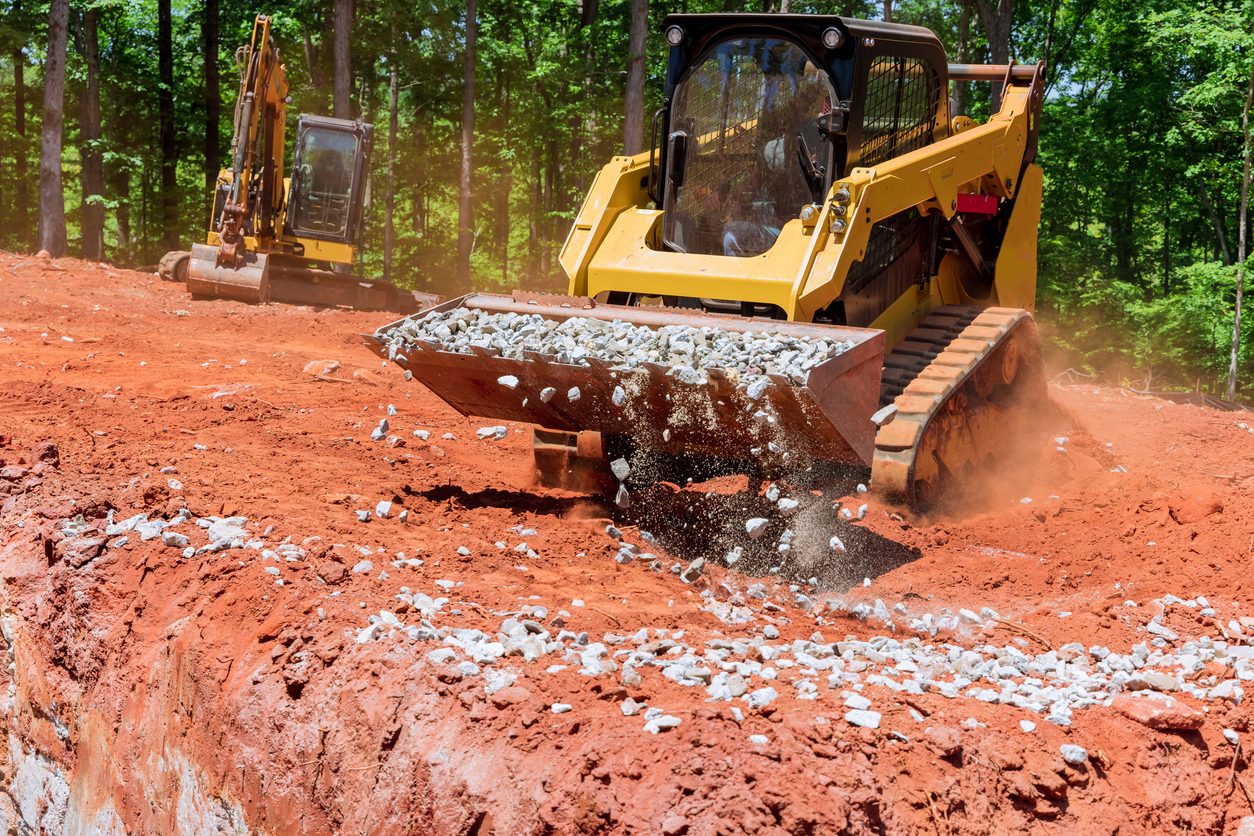
The model and its working weight with attachments fitted. The measured width, including whatever pads are on it. The measured height with the boom folded. Whether it runs, drives and steers under its own power. And the ground conditions at both ends, because a machine loading off soft ground or a rough tract is a different operation from one on hardstanding.
Preparing the Machine
Most damage happens during loading rather than in transit.
Lower and pin the attachments. Retract the boom and secure it. Reduce fuel to the level the carrier asks for and disconnect the battery if the machine will sit. Lock the controls, and note anything unusual about starting or moving it.
Clean off mud and stones, both because falling debris is a serious matter and because mud hides existing damage. Photograph every side including glass, lights and undercarriage, then walk it with the driver so the condition is on the paperwork before it moves.
Common Questions
Do I have to remove the bucket? Usually yes. It shortens the load, removes an overhang and often changes the permit picture.
Why is my excavator a permit load when it looks ordinary? Almost always track width. Wide pads push it past 8 feet 6 inches on their own.
Lowboy or step deck? Height decides it. A step deck buys about a foot over a flatbed; a lowboy buys considerably more.
Does the machine need to run? No, but declare it. A machine that will not move under its own power needs winching and a different loading plan.
Can you collect from an active site? Yes. Tell us the ground conditions and access, because those decide the equipment we send.
Get a Quote
Call Ship A Car, Inc. at (866) 452-3657 for heavy haul and specialized freight, with the model, working weight, measured width and height, and whether it runs.