Heavy Equipment Shipping in Colorado
One tunnel dictates more Colorado heavy haul routing than every permit rule combined. The Eisenhower-Johnson Memorial Tunnel carries I-70 under the Continental Divide, and it restricts height and bans hazardous materials. Anything too tall, or carrying regulated fuel, cannot use it and must climb Loveland Pass instead, a steep switchback route above 11,000 feet that closes in weather. Plan the route before you plan the machine, because in this state the mountains decide what is possible.
Permit Thresholds
The Colorado Department of Transportation issues oversize and overweight permits. These are the points at which a routine haul becomes a permitted one.
The Tunnel and the Pass
This is the detail an out-of-state carrier will miss. The Eisenhower tunnel is the highest point on the interstate system and it has a firm clearance limit and a hazardous materials prohibition. A load that exceeds either is turned around at the portal, not warned earlier.
The alternative is US-6 over Loveland Pass: a much slower climb with tight switchbacks, no shoulder in places, and closure whenever conditions turn. It is also closed to some oversize configurations outright. When a load cannot take the tunnel and the pass is shut, the detour is genuinely enormous, adding hundreds of miles around the mountains.
Ask any carrier quoting a Colorado job across the Divide how they intend to cross it. A confident, specific answer is the mark of someone who runs this state.
Altitude Changes the Truck, Not Just the View
Engines lose power with altitude, so a tractor that pulls a load comfortably in Denver at 5,280 feet works considerably harder approaching 11,000. Carriers account for this by derating what a given tractor will haul over the passes, which is why a machine that moves easily along the Front Range may need different equipment to cross the state.
Descending is the greater concern. Long steep grades put sustained load on brakes, and runaway truck ramps exist on these routes because the risk is real. That is why an experienced heavy haul operator plans a mountain job around braking capacity rather than pulling power.
Chain Law Season
Colorado enforces commercial chain requirements on mountain corridors, and when the chain law is active a truck without compliant equipment is not permitted to proceed. Enforcement is genuine and fines are significant.
From roughly September through May this is a live scheduling factor. A permit is issued for a specific route on a specific date, and a closure or a chain restriction that stops the load usually means the permit has to be reissued for a new date. Build slack into any winter mountain move rather than treating the permit date as fixed.
Where the Work Is
Colorado’s heavy haul demand clusters in a few distinct places. The Front Range from Fort Collins through Denver to Colorado Springs carries most of the construction activity and most of the population. The Western Slope and mountain towns generate resort and infrastructure work, all of it reached by crossing the Divide. And the northeastern plains around Weld County support substantial energy activity, moving drilling and service equipment on flat, fast roads that behave nothing like the mountain routes an hour west.
Those two environments demand different planning from the same carrier, which is worth remembering when comparing quotes.
Trailer and Loading Notes
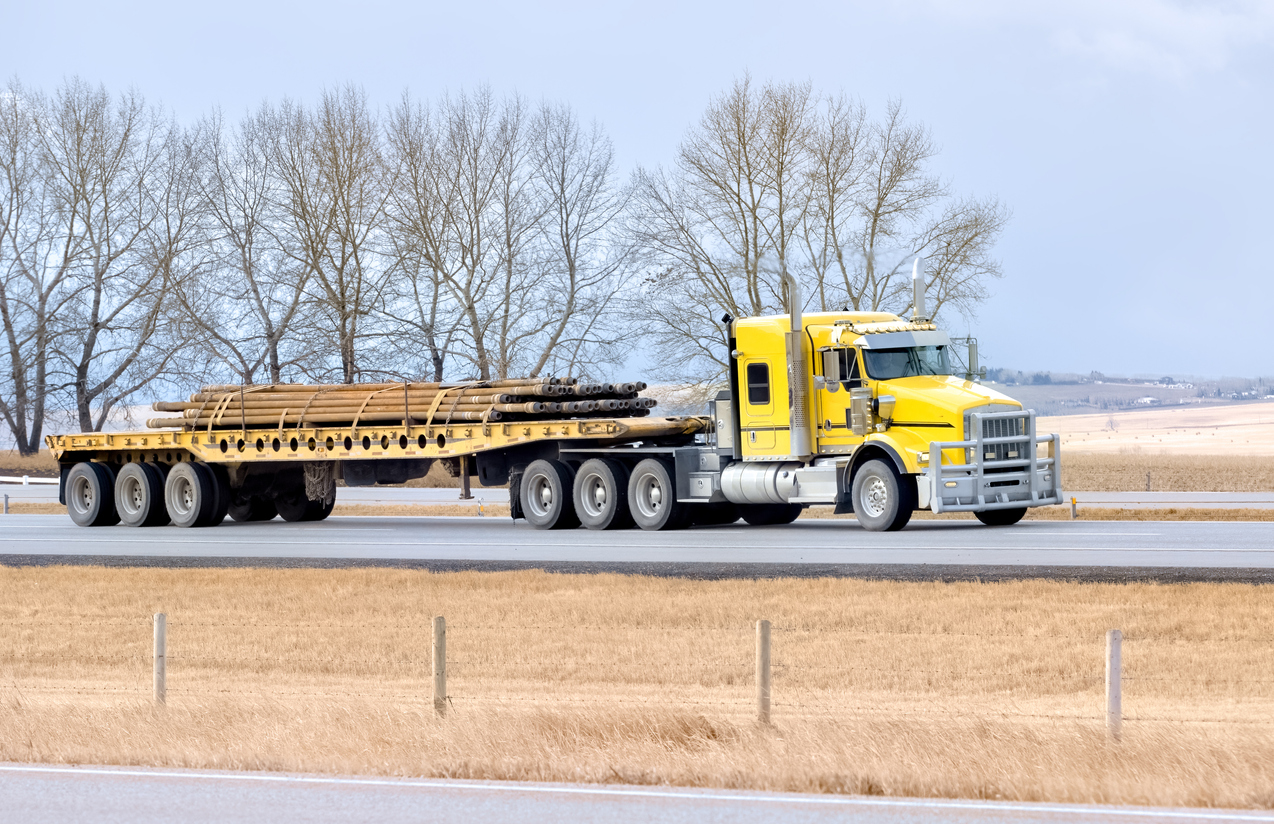
Because tunnel clearance so often decides the route, Colorado work leans toward getting the deck low. A double drop or a removable gooseneck that drops the load into a well is frequently what makes the difference between using I-70 and taking the long way around. A step deck handles moderate heights, and a flatbed suits anything comfortably inside the limits.
Mountain job sites bring their own loading problems: limited turning space, soft ground during spring melt, and access roads that were never built for a 100-foot combination. Describe the site honestly when quoting, including the last mile.
Preparing the Machine
- Clean it thoroughly. Mud carried from a job site sheds onto mountain highways where stopping distances already matter.
- Photograph every side, the undercarriage and the hour meter before the machine leaves.
- Handle fluids and the battery as the manual specifies, and remember cold at altitude is harder on a marginal battery than either alone.
- Get the height down: booms stowed, buckets curled, arms retracted, ROPS folded where possible. On a Colorado job this may decide your route.
- Remove or secure attachments and counterweights; heavy items travel separately.
- Give the driver keys and explain anything unusual about cold starting.
Cost and Timing
Pricing follows loaded dimensions, weight and route rather than mileage. A legal-dimension machine on Front Range roads costs about what comparable freight costs. Crossing the Divide with a permitted load is a different exercise: escorts, a route survey and possibly a pilot car over the pass, with the schedule set by the permit and the weather rather than by the driver.
Allow one to two weeks for a legal load, three to four or more for a permitted mountain crossing, and additional buffer between September and May.
Common Questions
Can my load use the Eisenhower tunnel? Only within its clearance limit and only if it carries no hazardous materials. Otherwise the route goes over Loveland Pass or around.
What happens if the pass closes? The load waits, or takes a long detour. This is why winter mountain jobs need schedule slack and often a reissued permit.
Does altitude really matter? Yes. Engines lose power climbing and brakes take the strain descending, so carriers plan mountain loads around braking rather than pulling.
Who arranges permits? The carrier, since each is tied to a specific truck, trailer and route. Confirm the cost is in your quote.
Can you reach a mountain job site? Usually, given honest information about the access road, turning space and ground conditions. Send photographs of the last mile if you have them.
Get a Quote
Call Ship A Car, Inc. at (866) 452-3657 with the machine’s make, model, working weight, loaded height and both locations, and we will tell you how the load crosses the Divide before you commit to a date.