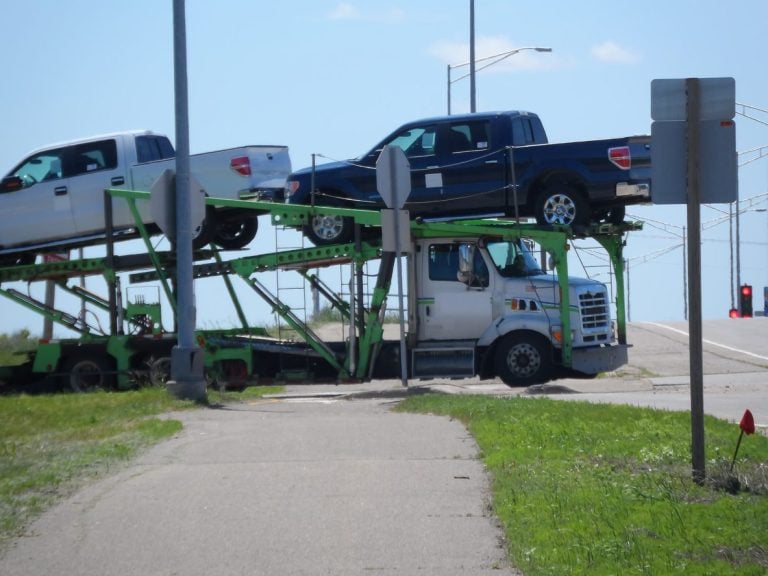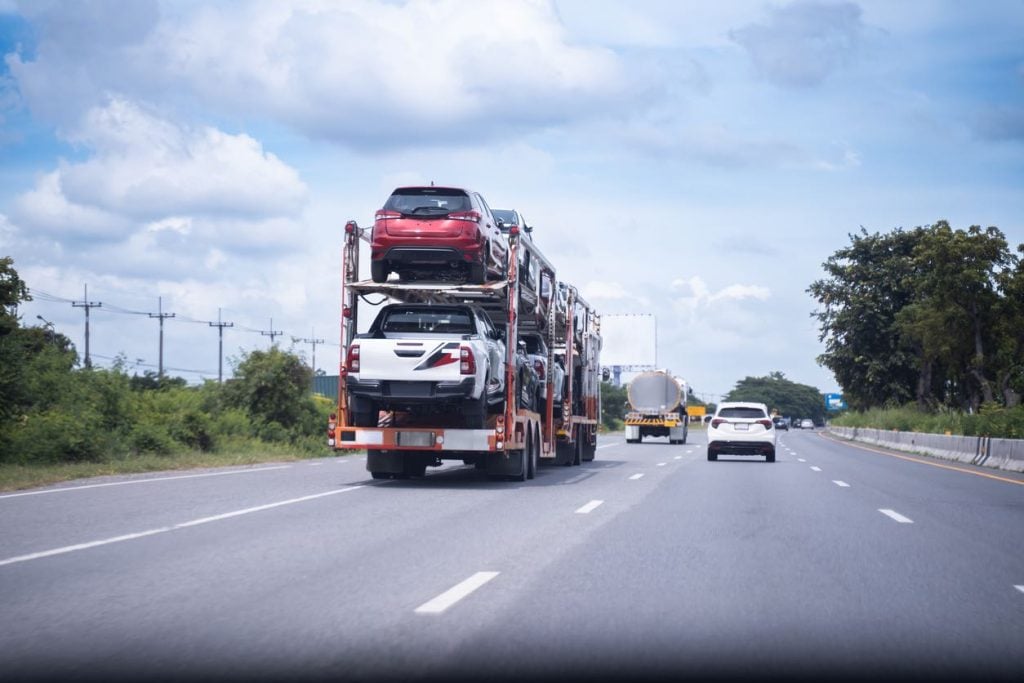
Transporting a car to another state is, for most people, open transport, door to door, booked one to two weeks ahead with a flexible pickup window. That combination moves the overwhelming majority of vehicles in this country, and it is what delivers new cars to dealerships. Everything else is a variation you choose for a specific reason: enclosed because the paint is worth protecting, expedited because a date is fixed, terminal because it happens to suit you. This is how the process actually works, start to finish, so you know what you are agreeing to.
The Four Choices You Actually Make
Interstate transport sounds complicated and comes down to four decisions.
Door to door is worth a word, because the name oversells it slightly. It means the driver gets as close to your address as a 75 foot rig legally and safely can. On a suburban street that is your driveway. In a city with narrow streets, low branches or permit parking, it is a large lot a few minutes away. That is normal and not a downgrade.
How the Booking Actually Works
Understanding this explains most of what people find confusing later.
Most consumer transport is arranged by a broker, who posts your vehicle to a national load board. Carriers running that direction choose the loads that fill their trucks. So the quote you receive is a prediction of what a carrier will accept, not a fixed rate off a price list, which is why quotes for the same trip vary.
It also explains the single most common frustration. A quote set too low never gets picked up, so the car sits unassigned while your dates pass and you are eventually asked for more money. Judge a quote on whether it is plausible rather than on being the smallest number. Our guide on the cheapest way to ship between states goes into what genuinely lowers the price.

What It Costs
What our own customers paid since 2023 for an ordinary car on open transport, the middle half by road distance. Cost per mile falls as distance rises, because the handling work is much the same whether the trip is 300 miles or 3,000.
A full size truck or SUV adds meaningfully, a vehicle that will not start or roll adds roughly $100 to $250 for winching, and enclosed transport adds about a third, more on short runs.
The Timeline, Step by Step
What happens, and roughly when.
- Two to four weeks out. Get quotes with both zip codes, the year and model, whether it runs, and your date range. Book once a quote looks plausible rather than merely cheap.
- A few days to a week out. A carrier is assigned. You should get the company name, the driver’s contact and a pickup window rather than a single time.
- The day before. The driver confirms an approximate arrival and, if your street is difficult, proposes a meeting point.
- Pickup. You and the driver walk the car, complete the condition report and both sign. Transit time starts here, not when you booked.
- In transit. Contact your coordinator rather than the driver for updates. Expect the estimate to move by a day either way.
- Delivery. Inspect against your photographs before you sign anything, then pay any balance by the agreed method.
Preparing the Car
The full pre-pickup checklist covers this properly, and the essentials are short. Wash it so existing marks are visible and photograph every panel in daylight, including the roof and the odometer. Empty the car completely, since personal items are not covered by cargo insurance and add weight. Leave about a quarter tank of fuel, or 30 to 50 percent charge on an electric vehicle. Disable the alarm, remove toll transponders and take off any roof rack or loose trim.
Mention anything unusual in advance: a lowered suspension, an aftermarket body kit, a car that does not start, or one that does not roll or steer. Each of those changes the equipment needed, and a driver arriving with the wrong trailer costs you a day.

Pickup and Delivery Day
Someone has to be present at both ends to walk the vehicle with the driver and sign the condition report. It does not have to be you. A friend, relative, neighbor or property manager can act, provided the carrier knows in advance who it will be and they have your pickup photographs to compare against.
At delivery, inspect before signing rather than after. Compare the car against the pickup report and your photographs, check the roof and lower panels where damage hides, and start the engine. If something is wrong, write it on the bill of lading while the driver is still there. Signing a clean report is a formal statement that the car arrived undamaged, and it is very hard to revisit later.
Common Questions
How long does state to state shipping take? One to three days regionally, three to five around 1,000 miles, five to eight coast to coast, counted from pickup rather than booking.
Is door to door really to my door? As close as a full size carrier can legally and safely get. On a tight street expect a nearby meeting point, which is standard.
How far ahead should I book? One to two weeks on most lanes, three to four in summer and around major holidays.
Do I have to be there? Someone does, at both ends, to sign the condition report. It can be anyone you nominate in advance.
Can I leave belongings in the car? No. Carriers are not licensed for household goods and personal items are not covered by cargo insurance.
Open or enclosed? Open for almost everything. Enclosed for fresh paint, collectibles and unusually low vehicles.
Get a Quote
Call Ship A Car, Inc. at (866) 821-4555 with both zip codes and your date range, or request an estimate for the move through the quote calculator.