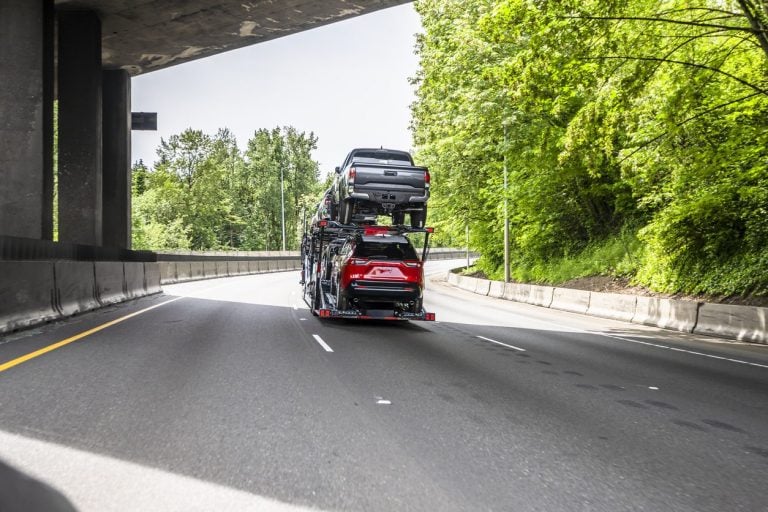
Snowbird migration has changed in one specific way over the last few years. The destinations are the same, but the cost of being in them is not, and that has pushed part of the traffic inland and west. Florida still takes the largest share by a wide margin. Arizona, the Texas Gulf coast and the Carolina low country now get serious consideration from people who would once have gone to Florida without a second thought. Where the people go, the cars follow, and the cars are what we book.
Florida Still Leads, but Not Where It Used To
The Gulf coast from Sarasota to Naples remains the busiest winter destination in the country, and the Treasure Coast and the Villages are close behind. What has shifted is the price of a season there. Coastal rents and insurance have pushed some long-time snowbirds to the interior, to the Ocala and Lakeland corridors, and some out of the state entirely. The lanes have not moved. Our Florida guide shows what a standard sedan has paid from the Northeast and the Midwest, from our own bookings, and those bands hold whether the destination is Naples or Ocala.
Arizona Takes the Overflow
Phoenix, Scottsdale, Tucson and Yuma absorb most of the traffic that leaves Florida. The draw is dry heat, lower housing cost outside the resort corridors, and a golf and RV culture built for winter residents. For a snowbird from Chicago or Minneapolis the lane is longer than Florida and the car is on the truck a little longer, but the carriers know it well. The Arizona guide carries the lane bands from the Midwest and the Northeast, again from bookings rather than estimates.
Texas, the Carolinas and the Quiet Third Option
The Rio Grande Valley around McAllen and Harlingen has hosted Winter Texans for generations, mostly from the upper Midwest, and it is the least expensive of the major destinations. The Carolina low country, from Myrtle Beach through Charleston to Hilton Head, draws snowbirds who want a milder winter without the full Florida distance, and it is a shorter, cheaper lane from the Northeast. Our Texas and South Carolina guides cover both.
Why the Car Ships Instead of Drives
The drive from Detroit to Fort Myers is two long days in November, in the first weather of the season, at the end of a month spent closing up a house. Most snowbirds who have done it a few times stop doing it. The car ships door to door, the owner flies, and the car is in the driveway in Florida within a few days of the flight. For a couple with two cars, both can travel on one order at a combined rate that is usually below two separate bookings. The snowbird transport page covers the whole process, including what to leave in the car and what to take out.
When to Book, and Why the Two Legs Differ
Southbound demand builds from October and peaks between Thanksgiving and the New Year. Northbound demand runs from March through May. The two legs do not price the same. In our own bookings the northbound median has run about $125 higher than the southbound one, because more cars want to leave Florida in April than there are trucks heading north to carry them. Shipping a week or two either side of the peak, in either direction, produces noticeably better rates.
The practical advice is to book both legs at once. Set the southbound pickup for early or mid November, set the spring return for the date you expect to travel home, and let the coordinator hold both. Two to three weeks of lead time is comfortable outside the holiday weeks. Inside them, book a month ahead.
What the Snowbird Lanes Cost, From Our Bookings
The state guides on this site carry the lane bands in detail, and they come from orders we have booked since 2023 rather than from estimates. As planning figures for a standard sedan on an open carrier: the Northeast to Florida has run roughly $500 to $1,200, the Midwest a similar range, and the West Coast to Florida $1,400 to $2,500. Chicago or Minneapolis to Phoenix has run $950 to $1,500, the Northeast to Phoenix $1,200 to $1,700, and Texas to Phoenix $700 to $1,100. The Northeast to the Carolinas is the short lane at $600 to $1,000. Enclosed transport adds about a third, a full-size SUV or pickup prices above a sedan, and the holiday weeks sit at the top of every band. These are middle-of-the-market bands, not quotes, and the calculator emails an estimate for your own car and snowbird dates.
Preparing the Car for a Seasonal Move
- Clear it out. Personal belongings are not covered by carrier cargo insurance. The trunk, the back seat and the glove box travel empty, apart from the spare and the jack.
- Quarter tank. Enough to load and unload, no more.
- Photograph it. Every panel, the wheels and the glass, in daylight, the day before pickup. The bill of lading at pickup and delivery is the record.
- Name a receiver. If the car arrives before you do, a neighbor, a property manager or a family member can sign for it. Tell the coordinator who.
- Gated communities. Give the gate code or arrange a meet point at the entrance. A large carrier cannot always enter a gated street.
Common Questions
How long is the car on the truck from the Northeast to Florida? Typically a few days after a pickup window of a few days. The Midwest to Arizona runs about a week. Your coordinator gives the window for your lane.
Can I put things in the car? The carrier’s insurance covers the car, not the contents. Some carriers allow a light bag in the trunk with the coordinator’s approval, and nothing above the window line.
Is it cheaper to ship both cars together? Usually, yes. Two cars on one order often share a carrier and price below two separate bookings.
What if my dates change? Tell your coordinator as soon as you know. Before a carrier is assigned, dates move freely. After assignment, a change may mean a new carrier and a new window.
Do I pay anything up front? No. No deposit is taken until a carrier has been assigned to your order.
Get a Quote
Put your two addresses, the car and your dates into the quote calculator for an emailed estimate on the southbound leg, and ask the coordinator to hold the return at the same time. Or call (866) 821-4555. No deposit is taken until a carrier is assigned to your order.