Snowbird Routes: Shipping a Car To or From West Virginia
West Virginia is the one snowbird origin state where the roads themselves shape the plan, because there is barely a straight mile in it. Carriers work the interstates that cut through the mountains and generally will not climb a hollow road to a driveway. Once you accept that a meeting point is normal here rather than a compromise, a seasonal move south is straightforward and predictable.

Why Snowbirds Ship Instead of Drive
The drive from West Virginia to Florida is roughly 900 to 1,100 miles depending on where you start, which is two days at a sensible pace.
Count what that actually costs: fuel, a night of lodging, meals, and two days of driving that many people no longer want to do twice a year. Add the mileage on the car, which has a value whether you sell it or not. Then set that against a shipping quote and a one way flight, and for a lot of seasonal residents the arithmetic settles it.
The other argument is the one people mention after their first season: you arrive rested, with your own car waiting, instead of arriving tired at the end of a long drive through the mountains in November.
The Routes Carriers Actually Use
Three corridors carry almost all of the southbound traffic out of the state.
Interstate 77 runs north to south the length of West Virginia, through Charleston and Beckley and out into Virginia, joining the corridor to the Carolinas and on to Florida. That is the main snowbird road and the West Virginia Turnpike is part of it.
Interstate 79 runs from Morgantown through Clarksburg to Charleston, feeding traffic from the northern part of the state into I-77. Interstate 64 crosses east to west through Charleston and Huntington and connects toward the Virginia coast and, in the other direction, Kentucky.
Interstate 81 sits just east of the state line in Virginia and carries the Eastern Panhandle, so a car from Martinsburg or Charles Town is usually running a different route from one in Beckley. That matters when you are quoting.
Mountain Access Is the Constraint
A loaded car hauler is around 75 feet long and 13 feet 6 inches tall, and West Virginia’s terrain is not friendly to it.
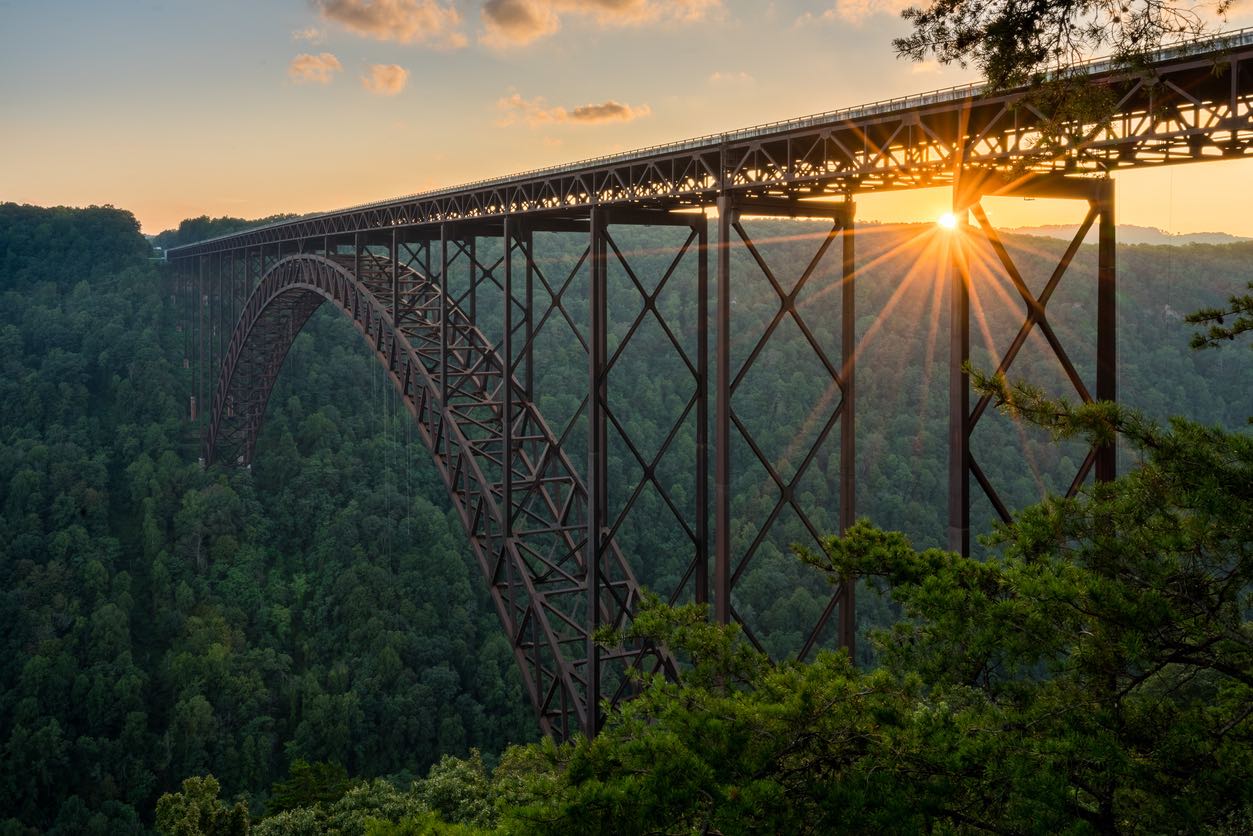
Roads follow the creeks and the ridges, which means switchbacks, narrow lanes with no shoulder, steep grades and hairpin turns. A truck that turns into a hollow may have nowhere to turn around for miles. Add low bridges, weight posted crossings and trees meeting over the road, and a great many rural addresses are simply not reachable.
Charleston, Huntington, Morgantown, Parkersburg, Beckley and Martinsburg have areas that work fine. Outside them, expect to meet the truck.
Good meeting points are large lots near an interstate exit: a shopping center, a park and ride, a truck stop. Agree it when you book rather than discovering the problem on pickup day, which is the single most common cause of a wasted trip in this state.
Book Around the Season
Snowbird lanes are the most seasonal in the industry, and the peaks are sharp.
Southbound demand builds through October and peaks in November, when everybody leaves at once. Northbound spikes in March and April for the return. In both windows rates rise, carriers fill early, and a flexible pickup date does less to speed things up because everyone wants the same week.
Book three to four weeks ahead for a peak season move instead of one to two. Shifting your pickup a week either side of the crush frequently saves real money, and leaving in late September or returning in early May avoids the worst of it entirely.
The other reason to go early in the fall is weather. Once snow arrives in the mountains, pickups get harder and the schedule gets less reliable.
Winter Weather Cuts Both Ways
The West Virginia end of the trip is the weather risk, not the Florida end.
Mountain snow, ice on the grades and fog in the valleys all delay carriers, and the Turnpike through the higher country sees conditions that the Kanawha Valley does not on the same day. A driver who is running late in December is usually running late for a good reason.

Build slack into a winter schedule and treat delivery estimates as estimates. Do not book a flight that depends on the car arriving on a specific morning.
Road salt is the other winter factor and it argues for enclosed transport on a car you care about, particularly on a northbound spring move when the roads have been treated all season.
Open or Enclosed
Open transport carries the overwhelming majority of snowbird vehicles and it is right for an ordinary car.
Enclosed costs about a third more and is worth it on a collector vehicle, fresh paintwork or a wrap, and on winter moves where salt and slush are a real concern. It has a second advantage in this state: enclosed carriers are frequently smaller trucks, which can sometimes reach an address a ten car open trailer cannot.
Preparing a Car That Will Sit
A snowbird car is different from an ordinary shipment because it sits for months at the other end, and that changes the preparation.
Wash it so existing marks are visible, then photograph every panel in daylight, including the wheels, the lower bumpers and the rocker panels, which are what loading marks. Leave about a quarter tank of fuel.
Empty the cabin and the trunk, since personal items are not covered by cargo insurance and they add weight. Fold the mirrors, disable a motion sensitive alarm and hand over a key.
Then think about the months ahead: a battery tender if the car will be parked for a season, tire pressures checked at both ends, and fresh fluids if it is due. Keep your insurance active for the whole period the car is away. Our guide to shipping in extreme weather covers the seasonal risks in more detail.
At delivery, inspect before signing, compare against your photographs, and note anything unexpected on the bill of lading while the driver is present.
Common Questions
How long does West Virginia to Florida take? Typically two to four days once the vehicle is collected, with a few days for assignment on top.
Can a hauler reach my house? In and around Charleston, Huntington, Morgantown, Parkersburg, Beckley and Martinsburg, often yes. On hollow and ridge roads, usually not. Plan a meeting point.
When should I book? Three to four weeks ahead for the October to November southbound peak and the March to April return. One to two weeks outside them.
Will winter weather delay my car? It can. Mountain snow, ice on the grades and valley fog all slow carriers at the West Virginia end.
Should I choose enclosed? For an ordinary car, no. For a collector vehicle, fresh paint or a winter move where road salt matters, it is worth the difference.
Get a Quote
Call Ship A Car, Inc. at (866) 821-4555 with both zip codes, your date range and an honest description of the access at your address, or request an estimate for the move through the quote calculator.