
America’s Busiest Car Shipping Corridors and Why They Matter to You
Vehicle transport is not spread evenly across the country; it concentrates into a handful of corridors, and where your move sits relative to them decides what you pay. Understanding which routes carriers actually run is the difference between accepting a quote and improving it.

The Corridors That Carry the Volume
Five routes carry the bulk of domestic vehicle transport, and a load on any of them is cheap to move because a truck is passing anyway.
Interstate 95 runs the East Coast from Florida to New England and is the busiest of all, carrying both ordinary relocation traffic and the enormous seasonal snowbird flow. Interstate 10 crosses the south from Florida to California and is the year round route between the Southeast and the Southwest, open when northern routes are not.
Interstate 40 and Interstate 80 cross the middle and north of the country respectively, and Interstate 5 runs the West Coast from San Diego to Seattle. Between them these five account for most of the mileage on most quotes.
The practical test for your own move is not how far you are going. It is how far you are from the nearest of these.
The Metros That Anchor Them
Volume concentrates in metropolitan areas because that is where carriers can fill a trailer locally rather than running partly empty.
Los Angeles is the largest single market, handling both domestic volume and the port traffic that comes with it. Chicago is the biggest inland hub, where seven interstates converge and trucks constantly rebuild loads. Dallas anchors the south central network, Atlanta the Southeast, and the New York and New Jersey region the Northeast, with the caveat that dense city cores need a meeting point rather than a door delivery.
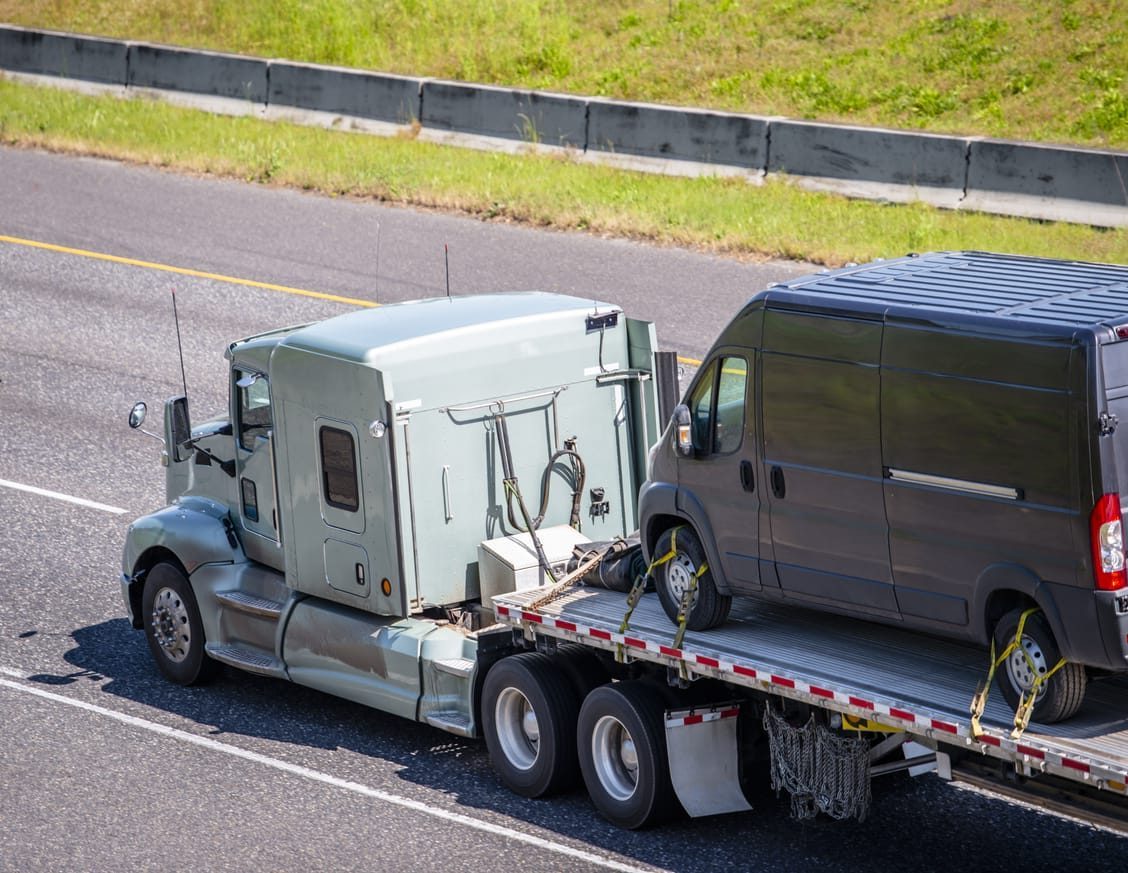
Florida deserves its own mention because it behaves differently. Miami, Tampa and Orlando generate enormous seasonal volume in both directions, which makes the state cheap to reach in the off direction and expensive in the peak one.
Why Direction Changes the Price
This is the factor most people never consider and on some lanes it is the largest single influence on cost.
Freight does not flow evenly. When far more vehicles move one way than the other, carriers fill easily in the busy direction and struggle in the quiet one, and rates diverge accordingly. The same route can differ substantially depending on which way you are going in a given month.
The clearest case is the snowbird flow: southbound to Florida and Arizona in October and November is the expensive direction, northbound in the same weeks is cheap, and in March and April it reverses entirely.
If your dates are flexible, moving against the flow is the single largest saving available on a seasonal lane.
How Seasons Move the Whole Network
Corridor volume is not constant, and four patterns repeat every year across the entire network.
Summer is the industry peak, because that is when most households move. From June through August rates rise and lead times stretch on essentially every lane, and it collides with the university calendar in August, which concentrates demand into specific college towns.
Autumn and spring belong to the snowbird flows, southbound in October and November and northbound in March and April, and those pull trucks onto the Florida, Arizona and Texas corridors and away from everything else. That is why an unrelated lane can be quietly more expensive in November.
Winter is the quietest period overall and the cheapest time to move, with the caveat that northern routes are weather affected and a delivery estimate needs more slack from December through March.
The useful conclusion is that flexibility is worth more at some times of year than others. Moving your dates by a week in July saves more than moving them by a week in February.
What This Means for Your Quote
Three things are within your control and each is worth real money.
Quote from a corridor address if you can. If you live two hours off a major interstate, ask what a pickup at a large lot near the nearest exit would cost, because the difference is sometimes substantial and the drive is twenty minutes.

Give a range of pickup days rather than one. It lets a carrier fit you into a route already forming instead of building one around you, which usually costs less and moves sooner.
And be realistic about the destination. A delivery into a dense city core is not a higher rate so much as a different arrangement: a meeting point outside the center, agreed at booking, which costs nothing when planned and costs a wasted trip when it is not.
Where the Corridors Do Not Reach
Rural and remote addresses are the other half of this picture, and the honest answer is that they cost more for structural reasons.
There is no second vehicle nearby to make a detour worthwhile, so one customer carries the whole cost of it. In genuinely remote areas the wait for assignment stretches too, because fewer trucks pass at all.
Terminal to terminal shipping is worth pricing as an alternative if you are well off a route, because the terminal sits where carriers already go. The trade is two extra trips and storage charges that begin after a free period, so ask what that period is. Our guide to how location affects what you pay covers this in more detail.
Common Questions
Which routes carry the most vehicle transport? Interstates 95, 10, 40, 80 and 5. A load near any of them is cheaper because a truck is passing anyway.
Why is a shorter move sometimes more expensive? Because price follows corridors rather than miles. A short trip needing a long detour can cost more than a longer one along a busy route.
Does direction really matter? On seasonal lanes, substantially. Southbound to Florida in November and northbound in April are the expensive directions.
Are big cities cheaper? Consistently, yes, because carriers can fill a trailer locally. Dense city centers need a meeting point rather than a higher rate.
What if I live somewhere remote? Expect a higher rate and a longer wait. Ask what a pickup near the nearest interstate exit would cost, and price terminal service as an alternative.
Get a Quote
Call Ship A Car, Inc. at (866) 821-4555 with both zip codes, your date range and an honest description of the access at each end, or price the move with the instant calculator.