Personal Belongings in a Shipped Car: The Rules and the Risks
Almost every carrier will tell you not to leave personal items in a vehicle being shipped, and the reason is not pettiness: those items are not covered by anyone’s insurance, they add weight the carrier is liable for, and federal authority to carry household goods is a separate thing from authority to carry vehicles. Knowing where the line sits saves an argument at pickup.

Why the Rule Exists
Three separate reasons, and they compound.
Insurance. A carrier’s cargo policy covers the vehicle. It does not cover the contents, and it generally excludes them explicitly. If a box of belongings is stolen or damaged, there is nothing to claim against, and your own homeowner’s or renter’s policy may or may not respond to property in a vehicle in someone else’s custody.
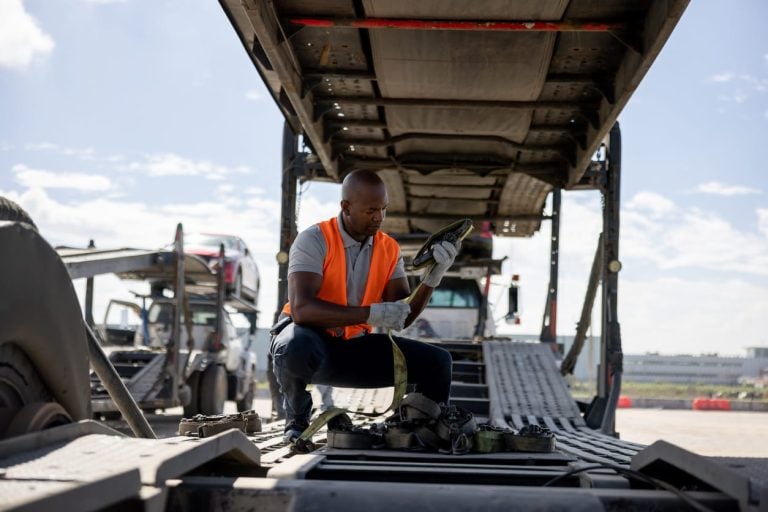
Weight and liability. A loaded car hauler runs close to legal weight limits. Undeclared items in ten vehicles add up, and if the rig is weighed and found over, the fine is the carrier’s. That is a real operational risk, not an excuse.
Authority. Moving household goods interstate requires a specific type of operating authority, separate from carrying vehicles. A car carrier hauling boxes of belongings is arguably operating outside its authority, which is a regulatory problem rather than a policy preference.
What Is Generally Accepted
In practice, most carriers tolerate a limited amount, and the common convention looks like this.
Items in the trunk only, below the window line, up to around 100 pounds. Nothing on the seats, nothing in the passenger compartment where it can move, nothing visible from outside.
That convention is a courtesy rather than a right. It varies by carrier, and a driver who says no is within their rights. Ask when you book rather than assuming, and if the answer matters to you, get it confirmed in writing.
Understand what you are accepting either way: anything you leave travels uninsured, and if it is lost you have no claim.
What Should Never Go In
Some of this is safety and some is common sense.
Anything valuable or irreplaceable. Electronics, jewelry, documents, medication, keys, laptops. If losing it would be a problem, it goes with you.
Anything hazardous. Fuel cans, propane, aerosols, paint, cleaning chemicals, fireworks, ammunition. These are prohibited outright and they are a genuine danger on a loaded trailer.
Anything perishable or heat-sensitive. A closed car on an open deck crossing the Southwest reaches extreme interior temperatures. Candles melt, aerosols burst, vinyl records warp, medication degrades and electronics fail.
Anything that blocks visibility. The driver has to see through the vehicle to position it and to check it. Items above the window line get refused.
Firearms. Prohibited by essentially every carrier regardless of local law, and not worth the conversation.
The Practical Reasons Beyond the Rules
Even where a carrier permits some weight, there are reasons not to use it.
Loose items move. A car on a trailer experiences constant vibration and lateral movement for days, and anything not secured slides, tips and marks the interior. Scratched trim and stained upholstery from a shifting box are common and not covered.
Items in a vehicle are also a theft target. A car on an open trailer sits in truck stops overnight, and visible belongings are exactly what attracts attention. That is a risk to the vehicle as well as to the contents.
And the weight affects handling. A trunk loaded to 100 pounds changes how the vehicle sits and how it is secured, which is a small thing multiplied across a full trailer.
If Something Does Go Missing
Worth knowing the position in advance, because the answer is unwelcome and it is better to hear it now.
Items left in a vehicle are not on the bill of lading, and the bill of lading is the contract. There is no record of what was in the car, no agreed condition, and no coverage. A claim against the carrier for missing contents will almost certainly be declined, and declined correctly.
Your own insurance is the only realistic avenue. Some homeowner’s and renter’s policies extend limited coverage to personal property away from the home, which can include property in a vehicle, but limits are usually low and a deductible applies. Check your policy wording before you rely on it rather than after.
If you do leave permitted items, photograph them in place before pickup. It does not create coverage, but it creates a record, and a record occasionally resolves something a claim would not.
The practical conclusion is unchanged: the things worth photographing are the things that should have traveled with you.
What to Do Instead
Three options, in order of how most people solve it.
Ship the belongings separately. Parcel carriers and freight services are inexpensive for boxes, and the items are insured and tracked. For a household quantity, a proper household goods mover has the right authority and the right coverage.
Take the important things with you. Documents, valuables, medication and electronics travel in your hand luggage, not in a car on a trailer.
Use the permitted allowance for the low-value bulky things if your carrier allows it: bedding, non-valuable clothing, a folded chair. Things you would be annoyed rather than devastated to lose.
Before the Truck Arrives
Empty the vehicle properly rather than approximately. Check the glove box, the center console, the door pockets, under the seats and any compartment under the load floor.
Remove the toll transponder so you are not billed for the truck’s route, take out any parking permits or access devices, and remove aftermarket electronics that are easy to detach.
Then photograph the interior along with every exterior panel, so there is a record of the condition inside as well as out. At delivery, inspect before signing and note anything unexpected on the bill of lading while the driver is present. Our guide to what car shipping insurance actually covers explains what the cargo policy does and does not include.
Common Questions
Can I leave anything in the car? Many carriers allow a limited amount in the trunk, below the window line, up to around 100 pounds. Ask when you book; it is a courtesy, not a right.
Are my belongings insured? No. Cargo coverage applies to the vehicle and generally excludes contents explicitly.
Why does weight matter? A loaded hauler runs near legal weight limits, and an overweight fine falls on the carrier.
What is absolutely prohibited? Hazardous materials, firearms, anything blocking visibility, and anything valuable or irreplaceable.
What should I do with boxes instead? Ship them separately by parcel or freight, where they are insured and tracked.
Get a Quote
Call Ship A Car, Inc. at (866) 821-4555 with both zip codes and your date range, or request an estimate for the move through the quote calculator.