Shipping a Car from Illinois to Florida
This is the snowbird lane, and the direction you are traveling matters more to the price than the 1,200 to 1,400 miles do. Southbound fills from October into December as people head for the winter, and northbound fills from March into May as they come back. In the peak direction demand outruns the trucks; in the quiet direction the same route is cheap because carriers need loads for the return. Everything else on this page is secondary to which way and which month.
Book Around the Season
If your dates move at all, this is where the money is.
Shifting a fortnight either side of a peak makes a real difference here. So does the direction: shipping south in November and back north in April means traveling in the expensive direction twice, so both legs want booking early rather than hoping capacity appears.
Two to three weeks ahead is the useful window in normal months. In October and in March, further out is better, because on this corridor the constraint becomes available trucks rather than price.
Route and Timing
Expect three to five days in transit once loaded, plus a few days to a week to get assigned.
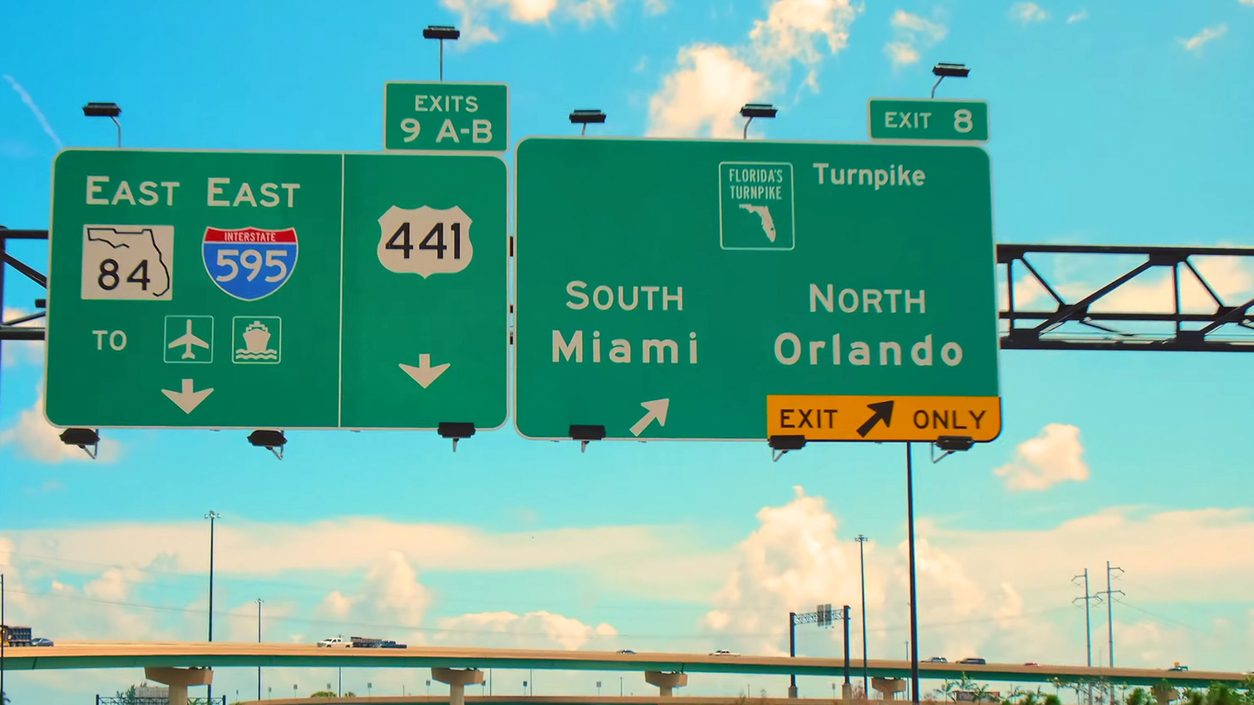
Carriers generally run I-57 south to I-24 or I-65, picking up I-75 through Georgia and down into Florida. Where in Florida you are going matters: Jacksonville and Orlando are shorter runs than Miami, Naples or the Keys, and the southern tip adds most of a day on its own.
Winter at the Illinois end is the delay risk rather than the Florida end. Snow and ice across the Chicago area can push a pickup back by a day or two, which is worth knowing if you are trying to leave ahead of weather.

Access at Both Ends
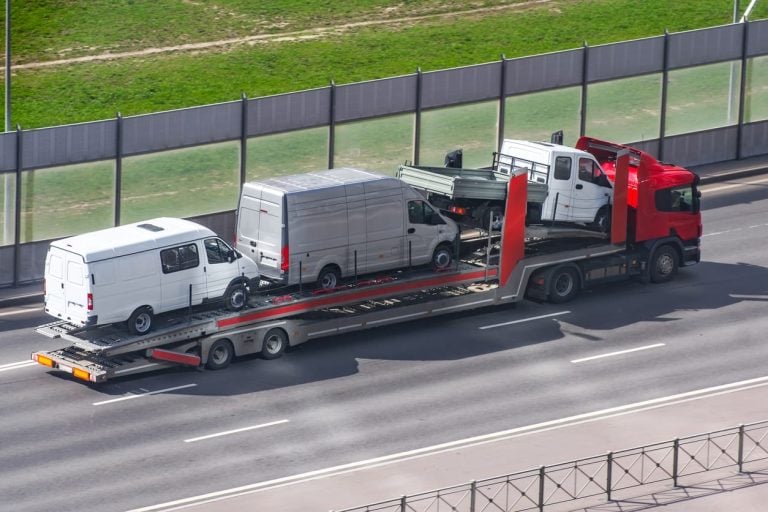
A car hauler is around 75 feet long and both ends of this lane have places it cannot work.
In Chicago the dense North Side and lakefront neighborhoods have permit parking on both sides, narrow one way streets, and viaducts with clearance a loaded hauler cannot pass under. Downtown is effectively impossible.
In Florida the problem is different: gated communities, active adult developments and canal built neighborhoods are common, and a great many of them do not admit commercial vehicles at all. That catches snowbirds particularly often, because the destination is frequently exactly that kind of community.
Ask the community office before you book rather than on the day, and plan a meeting point at a large lot nearby if the answer is no. It is faster than waiting for a driver willing to try, and it widens the pool of carriers.
What It Costs
Open transport for a standard sedan runs roughly $900 to $1,400 on this lane, and the range is wide precisely because of the season.
A full size truck or SUV adds meaningfully, and enclosed adds about a third on top. A car that will not start or roll adds roughly $100 to $250 for winching, declared at booking rather than discovered at the curb. Those are planning estimates. Our own book since 2023 puts the middle half of our Illinois to Florida open-carrier car orders at $950 to $1,100 southbound, and the middle half of our Florida to Illinois open-carrier car orders at $1,000 to $1,350 northbound; each direction has its own page, Illinois to Florida car shipping and Florida to Illinois car shipping, with the wait for a carrier and the calendar.
In peak season treat a quote well below the rest with real suspicion. A rate no carrier will accept simply means the car sits in Illinois while your window passes and the price is revised upward.
If the Car Has Been Sitting
Common on this lane in both directions, and worth ten minutes before collection.
A car left through a Chicago winter or a Florida summer may not start. Check the battery and the tire pressures, and if it has been standing for months, check that the brakes are not seized. A car that will not start becomes a winch job at the curb and you pay for it either way.
Wash it so existing marks are visible, photograph every panel in daylight including the wheels and lower bumpers, and leave about a quarter tank of fuel. Empty the cabin and trunk, since personal items are not covered by cargo insurance, and take the toll transponder out before it collects charges across four states.
At delivery, inspect before signing, compare against your photographs, and note anything unexpected on the bill of lading while the driver is there.
Common Questions
How long does it take? Three to five days in transit, plus a few days to a week to get assigned.
When is it cheapest? Outside the snowbird peaks, and always in the quiet direction on the lane.
Does it matter where in Florida? Yes. Jacksonville and Orlando are shorter runs than Miami, Naples or the Keys.
Can the truck enter my community? Many Florida developments bar commercial vehicles. Ask the office before booking.
What does it cost? Roughly $900 to $1,400 for a sedan on open transport, with the season moving it within that range.
Get a Quote
Call Ship A Car, Inc. at (866) 821-4555 with both zip codes and your date range, or request an estimate for the lane through the quote calculator.