Small Business Freight Shipping: Where Parcel Stops and Freight Starts
The small business freight shipping decision that saves the most money is knowing where parcel stops making sense and LTL freight starts, and that line sits at roughly 150 pounds or anything on a pallet. Below it, parcel carriers are cheaper and simpler. Above it, you are paying parcel oversize surcharges on something that should have been a pallet, and those surcharges are where margin quietly disappears. Most businesses cross that line without noticing.

Parcel, LTL or Full Truckload
Three tiers, and each has a range where it is clearly the right answer.
Parcel suits individual boxes under about 150 pounds and within normal dimensional limits. It is fast, tracked and priced per package, and it is what most small businesses use by default.
Less than truckload, or LTL, is for palletized freight from roughly 150 to 15,000 pounds. Your pallets share a trailer with other shippers’ freight, moving through terminals along the way. It is cheaper per pound than parcel at these weights and slower, because of the consolidation.
Full truckload makes sense above roughly 15,000 pounds, or when the shipment fills a trailer, or when it is fragile or time critical enough that you want it to travel alone. It goes direct, with no terminal handling, which is both faster and gentler on the freight.
Freight Class Decides Your LTL Rate
LTL is not priced on weight alone. It is priced on a classification that mostly reflects density.
Classes run from 50 to 500, and lower is cheaper. Dense, sturdy, easily stacked freight sits at the low end; light, bulky or fragile freight sits at the high end. A pallet of bricks and a pallet of pillows weigh very differently but occupy the same trailer space, and the classification system exists to price that.
The practical consequence is that packing tighter genuinely lowers your rate. Getting the same goods onto fewer or smaller pallets raises the density, and that can move you into a cheaper class. We cover the mechanics in our guide to freight class.
Accessorial Charges Are Where Quotes Break
The base rate is rarely the final invoice, and the difference is almost always accessorials.
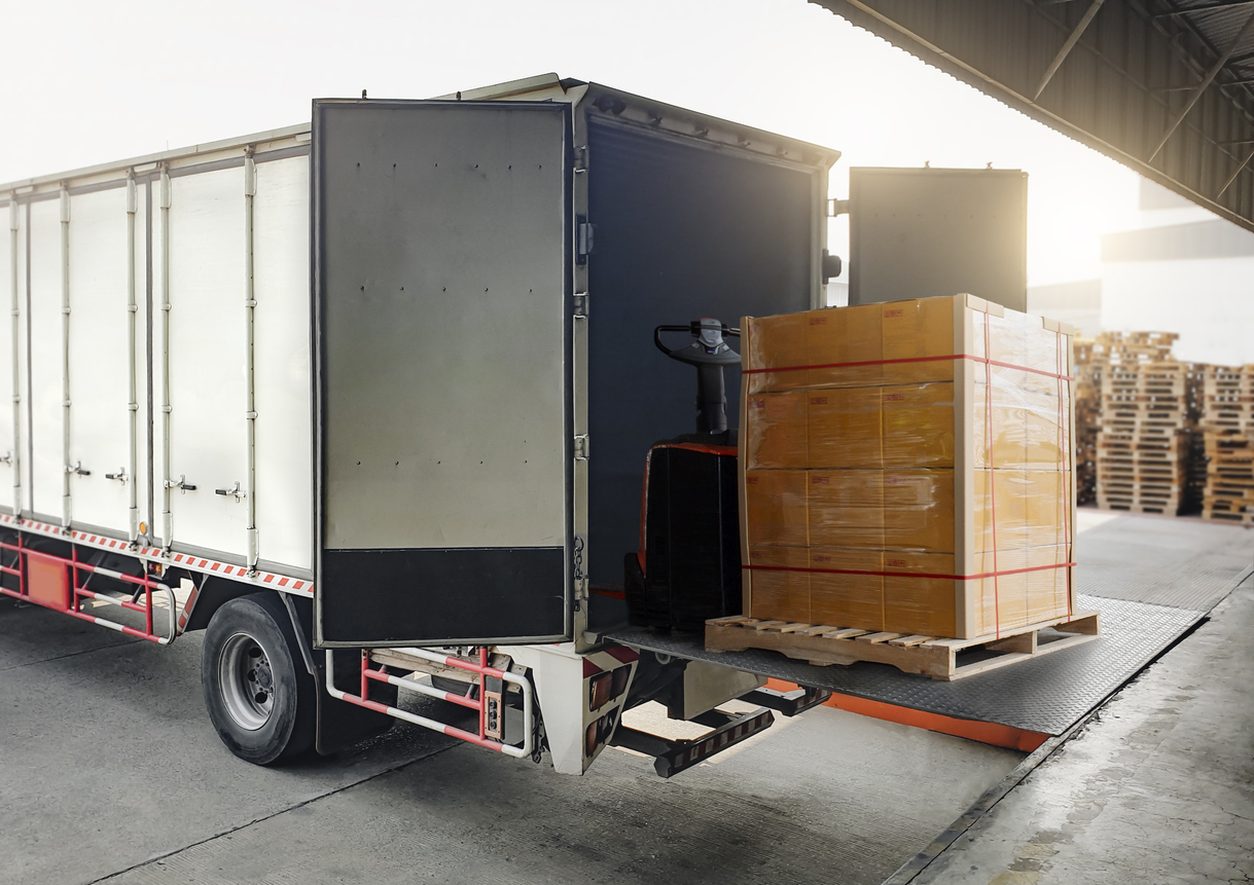
A liftgate is needed at any end without a loading dock or forklift, and it is charged. Residential delivery costs more than commercial. Inside delivery, where the driver brings freight past the threshold, is extra. So are limited access locations, which includes schools, construction sites, farms and many self storage facilities. Appointment delivery, where a specific time is arranged, is charged too.
Declare all of these when you get the quote. Discovered at delivery, they are added to the invoice at a worse rate and you have no opportunity to plan around them.
Pack the Pallet Properly
LTL freight is handled several times between origin and destination, and the pallet has to survive all of it.
Use a pallet in good condition, rated well above the load. Stack boxes squarely with nothing overhanging the edges, since overhang is what forklifts catch and what neighboring freight crushes. Distribute weight evenly and keep heavy items low. Then stretch wrap thoroughly, several turns including over the pallet itself, and band it if the load is heavy.
Label every box and put a copy of the bill of lading on the pallet. Freight separated from its paperwork in a terminal is genuinely difficult to reunite.
How Long It Takes, and Why
LTL transit is quoted in business days and it is an estimate, not a commitment.
Roughly, expect one to two days regionally, three to five across half the country, and five to eight coast to coast. The variability comes from consolidation: your pallet is picked up locally, taken to a terminal, loaded onto a line haul trailer with other freight, and handled again at the destination terminal before final delivery. Each of those steps is a place it can wait a day for a full trailer.
Guaranteed service exists on most lanes and costs more, and it is worth it only when a missed date actually costs you something. For everything else, quote your customers the estimate plus a buffer rather than the estimate itself.
Liability Is Not Insurance
This surprises people the first time they file a claim.
Standard carrier liability is limited and calculated by weight and freight class, not by what the goods are worth. On a light, valuable shipment it can be a small fraction of the value. It is a liability limit, not cover.
If a shipment is worth materially more than that limit, declare the value and arrange additional cover. Then photograph the packed pallet before it goes, because a claim without evidence of condition at pickup is difficult to win.
Common Questions
When should I switch from parcel to LTL? Around 150 pounds, or as soon as goods go on a pallet.
What sets an LTL rate? Freight class, which mostly reflects density, plus distance and any accessorial services.
Do I need a liftgate? If either end lacks a dock or a forklift, yes. Declare it at quoting, not at delivery.
How can I lower my rate? Pack denser onto fewer pallets, ship commercial rather than residential where possible, and declare accessorials up front.
Are my goods insured? Only to the carrier’s liability limit, which is set by weight and class. Declare higher value separately.
Get a Quote
Call Ship A Car, Inc. at (866) 452-3657 for freight and specialized transport, with the pallet count, dimensions, weight and whether either end needs a liftgate.