Shipping a Car with Low Ground Clearance
The number that matters is your ground clearance and your approach angle, and the threshold to watch is roughly 4 inches. Below that, a standard steel ramp at its usual angle will scrape the front lip, the exhaust or the underbody before the car is halfway on. This is not an exotic problem confined to supercars: lowered daily drivers, many modern sports cars, classics with period suspension and anything with an aftermarket body kit all sit in the same territory.

Measure Before You Book
Two measurements, taken with the car on level ground.
Ground clearance is the distance from the ground to the lowest fixed point of the car, which is usually the front air dam, the exhaust or the differential. Measure the actual lowest point rather than the manufacturer’s figure, since that figure assumes standard suspension and no aftermarket parts.
Approach angle matters as much and gets overlooked. A car can have adequate clearance under the middle and still catch its front lip on a ramp, because what fails is the overhang ahead of the front wheels meeting a rising slope. If the front bumper extends well forward, say so.
Give both numbers at booking. A carrier can plan around a 3 inch car; a driver discovering it at the curb cannot.
What Actually Solves It
There are three real answers and they cost differently.
A liftgate trailer raises the car horizontally onto the deck with no ramp angle at all. It is the cleanest solution and the one most enclosed specialists use for low vehicles. It is also the most expensive, and the carriers with them are fewer.
Extended or low angle ramps reduce the slope enough for many mildly lowered cars. Combined with race ramps or blocks under the ramp ends, this handles a good proportion of cases at ordinary cost.
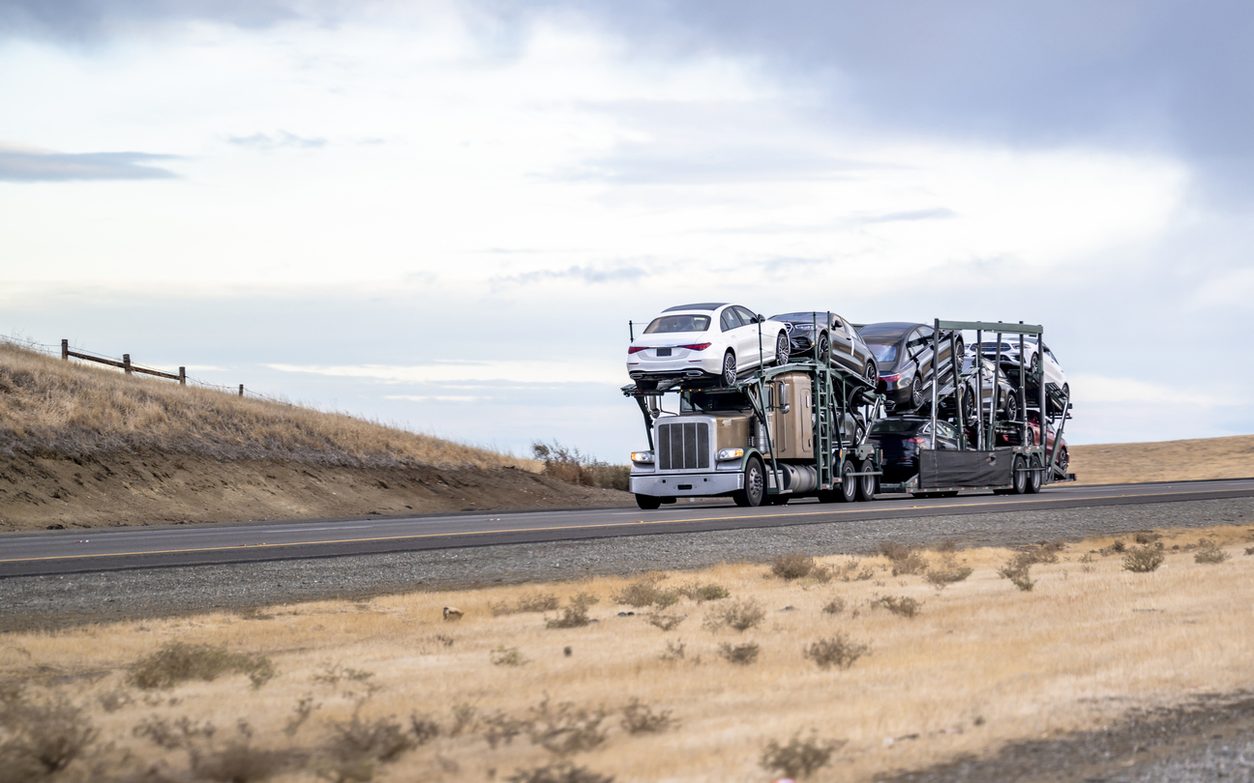
Loading onto the top deck of an open hauler is a genuine option people forget. The top deck loads at a shallower angle than the lower one on many trailers, and it costs nothing extra.
Open or Enclosed
Low clearance and enclosed transport correlate, but they are separate decisions.
Enclosed costs about a third more than open. It earns that on genuinely valuable, rare or freshly restored cars, where a stone chip is a real loss, and enclosed carriers are far more likely to have a liftgate as standard.
But a lowered daily driver does not need enclosed transport simply because it is low. If the clearance problem can be solved with extended ramps on an open carrier, that is a much cheaper answer and the car is exposed to the same weather it meets when you drive it.
Preparing the Car
A few things specific to low vehicles, on top of the usual preparation.
If the car has adjustable or air suspension, raise it to its highest setting for loading and tell the driver how the system works. If it has a nose lift, show them. If a front splitter or lip is removable and the car is genuinely marginal, take it off and ship it in the trunk.
Then photograph the underside, the front lip and the side skirts specifically, in daylight, before it goes. On a low car these are exactly the surfaces most likely to be marked and the hardest to argue about afterwards. Note any existing scrapes on the condition report rather than letting it say “good”.
The rest is standard: wash it so marks are visible, leave about a quarter tank of fuel, empty the cabin, fold the mirrors, disable a motion sensitive alarm and hand over a key.
At Delivery
Watch the unload if you can, and check the same surfaces first.
Inspect the front lip, the underside and the side skirts before signing, compare against your photographs, and note anything unexpected on the bill of lading while the driver is still there. Damage recorded at delivery is a claim; damage found the following day usually is not.
Common Questions
How low is too low? Around 4 inches of ground clearance is where a standard ramp becomes a problem, but approach angle matters as much.
What do you need from me? Ground clearance to the lowest fixed point, and whether the front bumper overhangs a long way ahead of the wheels.
Do I have to use enclosed transport? No. Low clearance and enclosed are separate decisions. Extended ramps on an open carrier often solve it.
What is a liftgate trailer? One that raises the car horizontally onto the deck with no ramp angle. It is the cleanest answer and costs more.
Should I raise the suspension? Yes, if it is adjustable, and tell the driver how the system works before loading.
Get a Quote
Call Ship A Car, Inc. at (866) 821-4555 with the ground clearance and both zip codes, or request an estimate for the move through the quote calculator.