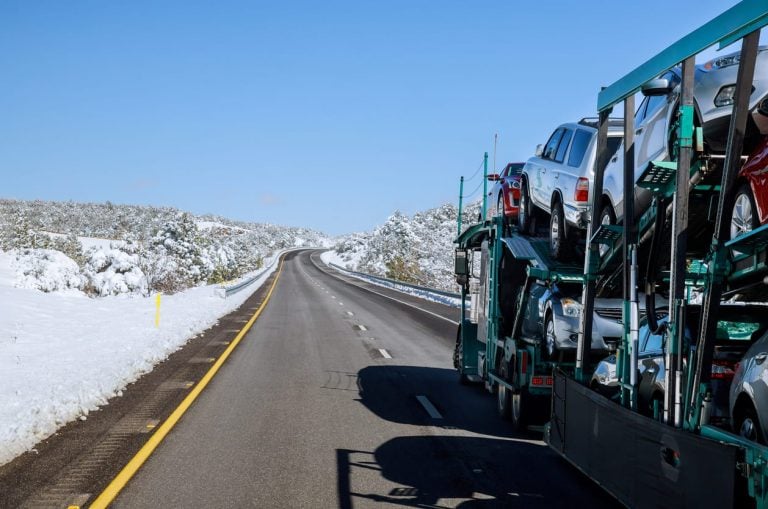
How to Ship a Car to California
Before you book anything, confirm the car can actually be registered in California. For most movers the answer is yes: a car first registered to you in your home state is accepted even if it was built to the federal standard for the other 49 states, with proof of that registration and a smog check. The cars the DMV refuses are nearly new 49-state cars bought out of state by people who already live in California, and shipping one of those 2,500 miles before checking is an expensive way to learn the rule. Once that is settled, the transport itself is routine: California is one of the best served destinations in the country.
The Registration Gate
The rule that catches people turns on who bought the car, when and where. A California resident cannot register a nearly new vehicle without California certification bought out of state, under 7,500 miles at purchase; a new resident can register a 49-state car first registered in the home state, and older cars with more miles are treated as used and accepted subject to a smog check.
Thresholds and exemptions change, so check your specific year and model with the California DMV or the Bureau of Automotive Repair before booking transport, not after. Two related points: new residents currently have 20 days from establishing residency to register, and most vehicles need a smog check as part of that, with exemptions for newer cars and for electric vehicles.
Our California registration walkthrough covers the detail. It is ten minutes of checking that protects the whole move.
What It Costs
Our own book since 2023 does not agree with all of the figures below. The middle half of California orders to and from Washington ran $950 to $1,250 and to and from Texas $950 to $1,450, close to what is shown; but to and from Illinois it ran $1,200 to $1,450 and to and from New York $1,550 to $2,000, both below the figures below.
Open transport ranges for a standard sedan into the Los Angeles area, outside peak season.
Northern California adds roughly $150 to $250 over the Los Angeles figure. A full size truck or SUV adds meaningfully, a vehicle that will not start or roll adds roughly $100 to $250 for winching, and enclosed transport adds about a third.

Which California You Are Going To
The state is about 800 miles long, and the destination changes both the price and how the delivery works.
- Southern California, from Los Angeles through Orange County to San Diego, is the busiest destination in the West. Capacity is excellent and pricing competitive. The complication is local: hillside streets, canyon roads and dense older neighborhoods where a full size rig cannot turn.
- The Bay Area is well served on I-880 and I-580. Berkeley and Oakland hills, and the older grid streets with permit parking, are the parts that need a meeting point.
- The Central Valley, along I-5 and Highway 99, is straightforward and often the easiest delivery in the state.
- The far north and the Sierra are thinner. Expect longer windows, and in winter expect chain control on mountain routes.
Give a zip code rather than the state name. Redding and San Diego are 750 miles apart and price nothing like each other.
Traffic Is Part of the Estimate
California has several of the most congested freight corridors in the country, and a loaded carrier cannot make up time lost sitting in them because federal hours of service rules cap the driving day.
That is why delivery windows into Los Angeles and the Bay Area are ranges rather than appointments. Take an early morning slot when one is offered, since a driver clearing the basin before the commute is meaningfully further along by evening.
Timing and Season
Summer is the busiest window nationally and California is no exception, so book three to four weeks ahead between June and August and one to two weeks the rest of the year.
The other seasonal factor is wildfire. From roughly midsummer into autumn, fires occasionally close interstates in the north and east of the state, and carriers reroute rather than wait. It rarely affects a shipment, but it is a reason to keep a buffer rather than tying a flight or a lease handover to a delivery estimate in September.
Preparing and Receiving
Standard preparation applies and the pre-pickup checklist covers it. Wash the car so existing marks show, photograph every panel in daylight, empty it completely and leave about a quarter tank of fuel.
One California specific point at the far end: if you are keeping a toll transponder from your old state, take it off the windshield before pickup, and be aware that the Bay Area bridges are tolled and use FasTrak. A transponder left in the car gets billed for the truck’s crossings rather than yours.
At delivery, inspect before signing. Compare the car against the pickup condition report and your photographs, check the roof and lower panels, start the engine, and note any exception on the bill of lading while the driver is present.
Common Questions
Can any car be registered in California? Most cars arriving with a new resident can be: registration in your home state first is what makes a 49-state car acceptable, along with a smog check. What the DMV refuses is a nearly new 49-state car bought out of state by someone who already lives in California.
How long do I have to register? Currently 20 days from establishing residency, and most vehicles need a smog check as part of it.
How long does transport take? One to two days from Phoenix, three to five from Texas, five to eight from the East Coast, counted from pickup.
Is Northern California more expensive? Usually by $150 to $250 over a Los Angeles delivery on the same lane.
Can the truck reach my street? In the suburbs and the Central Valley, usually. In the hills and older city neighborhoods, expect a nearby meeting point.
Get a Quote
Call Ship A Car, Inc. at (866) 821-4555 with both zip codes and your dates, or request an estimate for the move through the quote calculator.